


Setting up a commercial kitchen in the UAE in 2026 involves a wide range of costs depending on the size and type of the operation. Here's a quick summary of what you need to know:
- Small kitchens (e.g., cloud kitchens): AED 35,000–80,000
- Medium-sized kitchens (e.g., casual dining): AED 60,000–300,000
- Large kitchens (e.g., hotel or banquet kitchens): AED 100,000–600,000+
Key costs include equipment (45–55% of total), ventilation systems (15–20%), civil works (10–15%), and regulatory approvals (5–8%). Expect additional expenses for trade licenses, food permits, and compliance approvals, which vary by location and kitchen size.
To avoid fines and delays, budgeting for compliance with Dubai Municipality and HACCP standards is critical. Factor in a 10–20% contingency to cover unexpected costs like inflation or regulatory changes.
Pro Tip: Partnering with experienced kitchen setup providers can save 20–35% on costs through smart design, efficient equipment sourcing, and streamlined compliance processes.

Commercial Kitchen Setup Costs in UAE 2026 by Size and Category
Commercial Kitchen Costs by Business Type and Size
The overall cost of setting up a commercial kitchen depends heavily on the size of your operation and the type of foodservice business you’re planning. For instance, a cloud kitchen designed for delivery services costs much less than a hotel kitchen catering to 400 guests daily.
Total Cost Ranges for Small, Medium, and Large Kitchens
Small cloud kitchens, typically delivery-only operations ranging from 20–50 square metres, are estimated to cost AED 35,000–80,000 by 2026. These setups focus on essential equipment like combi ovens and refrigeration units, which alone can cost between AED 20,000 and AED 40,000. Basic civil works and municipality approvals are also included. For example, a 30-square-metre cloud kitchen might cost around AED 50,000, though expenses can rise if you choose high-end appliances.
Medium-sized restaurant kitchens, covering 50–150 square metres, range from AED 60,000 to AED 300,000. A casual dining setup for 50–75 covers, with fryers, grills, and proper exhaust systems, typically costs AED 100,000–150,000. An 80-square-metre café-restaurant serving 75 covers might require about AED 120,000. Upscale restaurants with custom cold rooms and a capacity of 100 covers often exceed AED 200,000, particularly in Abu Dhabi, where location costs are higher.
Large hotel or banquet kitchens, spanning over 150 square metres, start at AED 100,000 and can exceed AED 600,000. For instance, a 300-square-metre hotel kitchen serving 400 covers might cost approximately AED 450,000. The upper end of this range reflects investments in high-capacity equipment like multiple ovens, large walk-in freezers (often costing AED 150,000 or more), and advanced ventilation systems. Kitchens in Dubai’s five-star hotels can surpass AED 500,000 due to the need for structural reinforcements and extensive ducting to meet local standards.
Professional design services for layouts and MEP drawings, which are essential for Dubai Municipality and HACCP approvals, start at AED 5,000 + VAT. It’s also advised to include a 20% buffer for small kitchens, 15% for medium kitchens, and 10% for large kitchens to account for inflation (5–7% expected by 2026) and unforeseen regulatory changes.
Cost Distribution by Category
Here’s how costs typically break down across key categories:
- Equipment and installation: These account for 45–55% of the total budget, making them the largest expense. For a small kitchen with a AED 50,000 budget, equipment costs might range from AED 22,500 to AED 27,500. In a medium kitchen with a AED 150,000 budget, equipment expenses could hit AED 70,000. Larger kitchens may benefit from bulk purchasing but still allocate 50–55% of their budget to equipment.
- Ventilation, exhaust, and gas systems: These represent 15–20% of the budget. A small kitchen might spend AED 6,000–14,000 on these systems, while larger kitchens requiring extensive ducting and fire suppression systems could exceed AED 100,000 in a AED 500,000 setup.
- Civil works, plumbing, and cold room installations: These typically take up 10–15% of the total budget. Small kitchens might only need AED 4,000–10,000 for minimal work, while larger setups may require reinforced flooring, grease traps, and enhanced drainage systems to comply with Dubai Municipality’s sanitation standards.
- Regulatory approvals and compliance: These costs, covering Dubai Municipality fees, Civil Defence Fire Life Safety, and HACCP certifications, usually make up 5–8% of the total budget. These proportions are consistent across kitchen sizes. However, kitchens in Dubai often face an additional 15–20% cost compared to those in Sharjah. This translates to about AED 10,000 more for small setups, AED 30,000 for medium setups, and AED 100,000 for large facilities.
Understanding these cost distributions can help guide your budgeting and investment decisions, no matter the size of your kitchen.
sbb-itb-19c3c9a
Main Cost Components of Commercial Kitchen Setup
When setting up a commercial kitchen, understanding where your money goes can help you make smarter decisions. The main cost areas - equipment, ventilation systems, and civil works - each come with their own pricing and compliance requirements, depending on your kitchen's size and needs. These categories mirror the previously discussed cost breakdown, ensuring every dirham is spent wisely.
Kitchen Equipment and Installation Costs
Cooking equipment forms the backbone of any commercial kitchen. Expect to spend anywhere between AED 10,000 and AED 25,000 on equipment and utensils. Choosing the right tools and ensuring they are installed correctly is crucial, not just for smooth operations but also to meet local safety standards. This is one area where careful planning can make a big difference.
Ventilation, Exhaust, and Gas System Costs
A proper ventilation system is vital to keeping your kitchen safe and functional. For appliances that generate grease and smoke, Type I hoods are mandatory and must meet NFPA 96 and UL 710 standards. Costs in this category can vary significantly based on the complexity of the system, which includes ducting, exhaust motors, and gas pipelines. Kitchens in high-rise buildings or architecturally challenging spaces may require specialised engineering, which can push costs higher. These factors should be part of your budget considerations.
Civil Works, Plumbing, and Cold Room Costs
Civil works cover the essential structural and utility setups for your kitchen. This includes plumbing, electrical installations, and features like grease traps for waste management. Additionally, investments in cold rooms or chillers are a must for maintaining food safety. These elements are critical and should be factored into your overall budget planning.
UAE Compliance and Regulatory Approval Costs
Setting up a commercial kitchen in the UAE involves more than just purchasing equipment and installation - it also requires meeting specific regulatory compliance standards, which can significantly impact your budget. In Dubai, every commercial kitchen must secure three key approvals: a Fit-out Permit (issued by Dubai Municipality, Dubai Development Authority, or Trakhees), a Civil Defence Fire Safety NOC, and a Dubai Municipality Food Safety Permit. The approval process generally takes 3 to 8 weeks, so it's essential to account for both the time and costs involved when planning your setup. These compliance expenses are a crucial part of your overall budget, tying directly into operational requirements.
Municipality and HACCP Approval Costs
Dubai Municipality enforces strict adherence to HACCP (Hazard Analysis and Critical Control Points) guidelines, which include ensuring a unidirectional food flow from receiving to washing to minimise cross-contamination risks. The cost of obtaining a DM Food Safety Permit depends on the size of your establishment:
- Small cafés or quick-service restaurants (under 100 square metres): AED 1,500–2,500.
- Full-service restaurants (100–300 square metres): AED 2,000–3,500.
- Larger hotel operations: AED 3,000–5,000.
Failure to secure valid permits can result in fines of up to AED 50,000 and even closure. Common reasons for inspection failures include improper separation of raw and cooked food zones. To avoid these issues, ensure dedicated non-manual hand-wash sinks in preparation areas and maintain proper food temperatures - hot food at ≥63°C and cold food at ≤5°C.
Gas Leak Testing and Safety Compliance Costs
Gas and fire safety are equally critical in ensuring compliance. For kitchens using gas, a Civil Defence LPG gas system approval is mandatory, which includes obtaining a gas pressure test certificate from a DCD-registered technician and installing an automatic solenoid shut-off valve. Gas leak testing costs typically fall between AED 250–450.
Fire safety approvals from Civil Defence vary based on kitchen size:
- Small kitchens: AED 5,000–9,000.
- Mid-sized operations: AED 7,000–15,000.
- Large establishments: AED 10,000–20,000.
From Q1 2026, Dubai Civil Defence requires all new installations to feature addressable fire alarm systems, as conventional systems will no longer be accepted. Additionally, all restaurants must connect their fire alarms to a DCD-approved 24/7 monitoring station, with annual fees ranging from AED 1,200–2,400. Specific requirements for suppression agents and nozzle positioning for deep-fat fryers are also part of the updated mandates.
Silverline Kitchens' Compliance Services
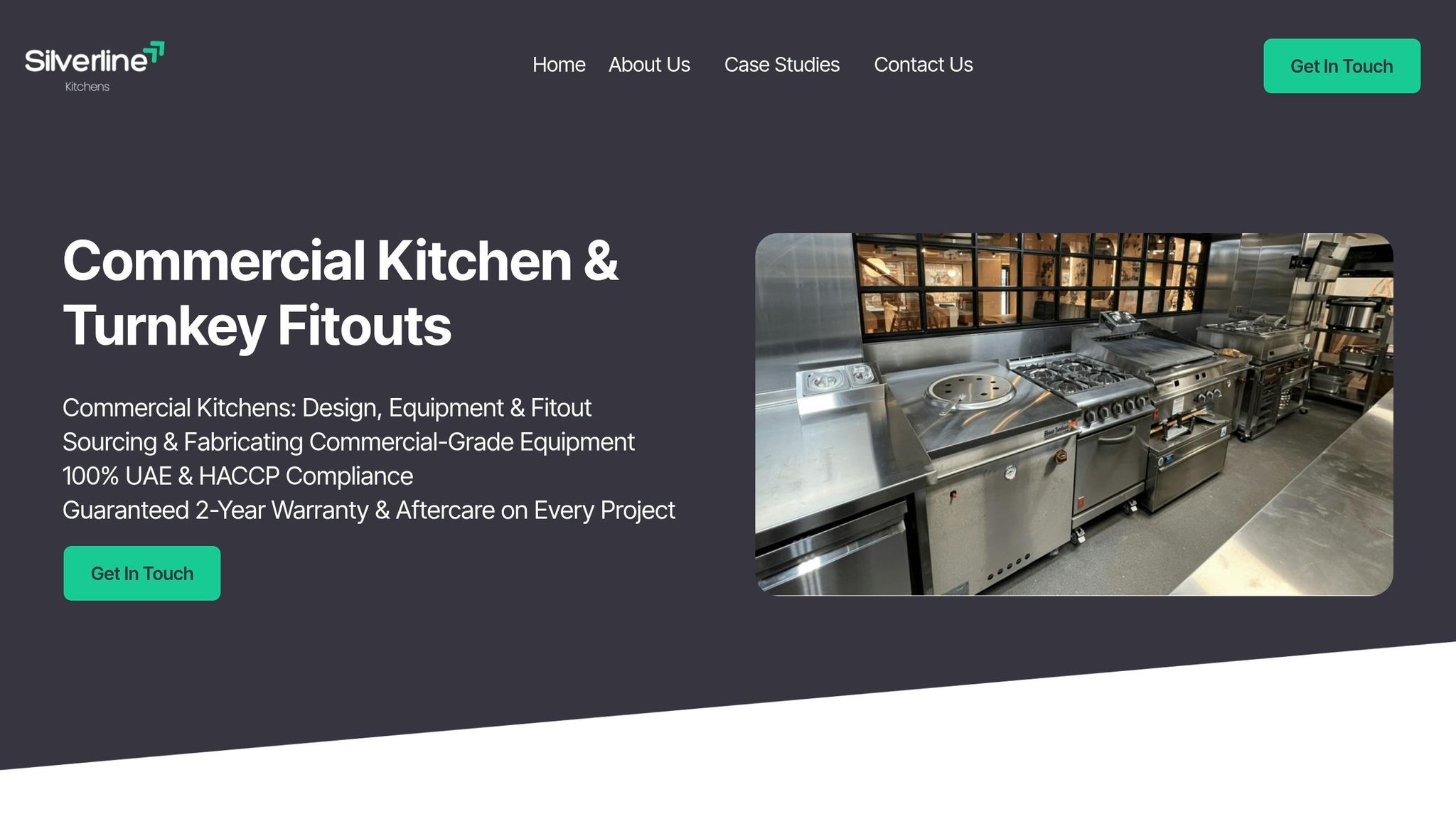
Silverline Kitchens offers comprehensive support throughout the approval process. Their services include preparing compliant MEP (Mechanical, Electrical, and Plumbing) and layout drawings, coordinating with DCD-certified technicians for gas pressure tests, and ensuring that your kitchen passes inspections on the first attempt. This all-inclusive approach not only saves time but also reduces the risk of costly redesigns or delays.
Consultant fees for managing the full approval process depend on the size of the kitchen:
- Small kitchens: AED 6,000–12,000.
- Mid-sized operations: AED 10,000–18,000.
- Large establishments: AED 15,000–28,000.
Budget Optimization Strategies with Silverline Kitchens
A carefully planned kitchen setup can help reduce costs by 20–35% while maintaining quality and meeting compliance standards. The secret lies in partnering with a provider who knows how to balance cost savings with long-term efficiency.
Custom Design and Equipment Sourcing
Silverline Kitchens offers tailored 3D design consultations that focus on optimising space, improving staff workflow, and reducing construction expenses. By analysing space utilisation and equipment placement, they can cut wasted space by up to 20%. For instance, in a Dubai restaurant project, their design consolidated cooking stations, saving AED 50,000 in civil works while boosting workflow speed by 15% - all while complying with UAE municipality standards. Additionally, their sourcing approach leverages bulk discounts on modular equipment, reducing initial costs by 15–25% compared to standard retail prices.
"Every layout is designed around how the kitchen will actually operate day to day, not just how it looks."
In another example, a Sharjah hotel saved AED 80,000 by sourcing energy-efficient ovens that met HACCP energy standards. These ovens came with warranties that ensured long-term cost benefits. Similarly, a 50m² café in Abu Dhabi reduced setup costs from AED 250,000 to AED 190,000 - a 24% saving - by opting for compact, multi-functional units. These strategies align with earlier cost distribution insights, ensuring every dirham is spent wisely.
Renovation and Upgrade Solutions
Silverline Kitchens also specialises in cost-effective upgrades and renovations. Their modular retrofits for ventilation, plumbing, and cold room expansions ensure compliance with updated Dubai Municipality and HACCP rules without requiring complete demolitions. These plug-and-play solutions can lower upgrade costs by 40–60%, with phased implementations to minimise downtime.
Through detailed audits, they identify non-compliant elements and recommend upgrades like LED lighting or insulated panels, which can save AED 30,000–100,000. For example, a 2025 renovation in Ras Al Khaimah brought a facility up to new fire safety codes for AED 120,000 - far less than the AED 300,000 needed for a full rebuild. This approach also helped avoid fines of up to AED 50,000.
Maintenance and After-Sales Support
The savings don’t stop after setup. Silverline Kitchens provides robust after-sales support to ensure long-term performance and reduced operational costs. Their service includes 24 months of free aftercare on replacements and parts, which significantly cuts maintenance expenses in the first two years. Their maintenance plans, starting at AED 5,000 annually for small kitchens, include quarterly inspections, IoT-enabled predictive maintenance, and 24/7 emergency support. These measures prevent 80% of equipment breakdowns, reducing repair costs by 30% and mitigating downtime losses, which can reach AED 10,000 per day in high-volume operations.
"Our service doesn't stop at handover - it's just getting started."
For example, a large catering firm in Abu Dhabi averted AED 20,000 in spoilage when Silverline resolved a refrigeration issue within four hours. Over three years, their annual maintenance plans have delivered an average of 25% savings on maintenance costs. Remote diagnostics further reduce site visits by 50%, ensuring compliance with 2026 standards while minimising disruptions. Using genuine parts also extends equipment life, preserves warranties, and keeps operations aligned with Dubai Municipality and HACCP requirements.
Conclusion
In 2026, kitchen setup costs in the UAE vary based on size: small kitchens range from AED 150,000 to AED 300,000, medium kitchens fall between AED 400,000 and AED 800,000, and large kitchens exceed AED 1 million. Equipment typically accounts for 40–50% of these costs, while ventilation systems, civil works, and compliance approvals make up the rest. Understanding these cost divisions is crucial for businesses to allocate resources efficiently and avoid delays. Alarmingly, up to 70% of food businesses in the UAE face non-compliance delays, which can be avoided with proper planning.
Regulatory compliance is another major investment. Key costs include municipality approvals (AED 3,000–8,000), HACCP certification (AED 5,000–12,000), and gas safety tests (AED 2,000–5,000). These upfront expenses are essential to avoid fines ranging from AED 10,000 to AED 100,000 or, worse, operational shutdowns. Collaborating with experienced providers ensures these compliance requirements are incorporated from the very beginning, saving you from rework costs that could add AED 20,000–50,000 to your budget.
Spending 5–8% of your budget on expert design and compliance guidance can help avoid errors that might otherwise cost 15–30% of your total investment. A well-planned kitchen delivers tangible benefits, including 20–30% improved food preparation efficiency, 15–25% reduction in waste, and a 99%+ pass rate on compliance audits - all of which directly boost profitability and operational efficiency.
"Every kitchen we deliver is built to meet UAE Food Code and Dubai Municipality standards, ensuring smooth inspections and approvals."
To stay on track, set aside 10–15% of your budget as a contingency to cover unexpected costs like permit delays, design changes, or post-installation adjustments. It’s also wise to plan for ongoing expenses, such as annual maintenance contracts and equipment replacements, which typically occur every 7–10 years for major items. These steps will help you avoid budget overruns and maintain smooth operations.
When planning your kitchen, start by defining your business type and setting a realistic budget that includes contingencies. Engaging Silverline Kitchens for a custom assessment can make all the difference. Their fixed-price model and in-house expertise ensure your kitchen is compliant, cost-effective, and ready to support long-term profitability from day one.
FAQs
What costs the most when setting up a commercial kitchen in the UAE?
When setting up a commercial kitchen in the UAE, one of the biggest financial commitments is procuring and installing equipment. The expenses can differ significantly based on the kitchen's size and the complexity of its operations. For larger or more intricate setups, costs can range anywhere from AED 300,000 to AED 1.5 million or more. This investment ensures the purchase of durable, high-quality equipment and professional installation, both of which are essential to meet operational needs and comply with regulatory standards.
Which approvals do I need before opening a commercial kitchen in Dubai?
Before launching a commercial kitchen in Dubai, it's crucial to obtain approvals from Dubai Municipality and Civil Defence. These approvals confirm that your kitchen complies with local safety regulations and operational standards, ensuring everything is set up correctly for your business.
How can I cut setup costs without risking Dubai Municipality compliance?
To keep setup costs manageable while aligning with Dubai Municipality requirements, strategic planning is essential from the outset. Start by designing your kitchen to meet UAE regulations, particularly regarding fire safety and hygiene. This proactive approach helps you avoid expensive redesigns or project delays down the line.
Secure all necessary permits early, factoring in approval timelines to keep your project on schedule. Additionally, choose equipment that complies with local standards well in advance. Thoughtful workflow design and selecting cost-effective yet durable materials can further help you control expenses while staying within regulatory boundaries.
