


Stainless steel equipment lasts longer when cleaned and maintained regularly. In UAE kitchens, high heat, humidity, and salty air increase corrosion risks, making upkeep even more critical. Neglect can lead to fines, hygiene violations, or damaged equipment. Here's what you need to know:
- Daily care: Clean food-contact surfaces with neutral detergents, rinse, and dry thoroughly. Avoid bleach or abrasive tools.
- Weekly tasks: Deep clean hard-to-reach areas, like behind equipment, and descale filters and drainage.
- Staff training: Teach proper cleaning methods and the importance of avoiding scratches and stains.
- Prevent corrosion: Use citric acid for passivation every 45–90 days in high-risk areas.
- Design tips: Opt for rounded corners, welded seams, and raised equipment for easier cleaning.
- Professional help: Schedule hood cleaning, re-polishing, and equipment servicing to tackle advanced wear.
Proper care saves money, ensures compliance with UAE food safety standards, and keeps your kitchen running efficiently.
Stainless Steel in Commercial Kitchens
Stainless Steel Grades for Commercial Kitchens: 304 vs 316 vs 430
Stainless Steel Grades and Finishes Explained
Stainless steel isn’t a one-size-fits-all material. The grade and finish you select play a major role in how durable, low-maintenance, and suitable your equipment is for the demanding environment of a commercial kitchen.
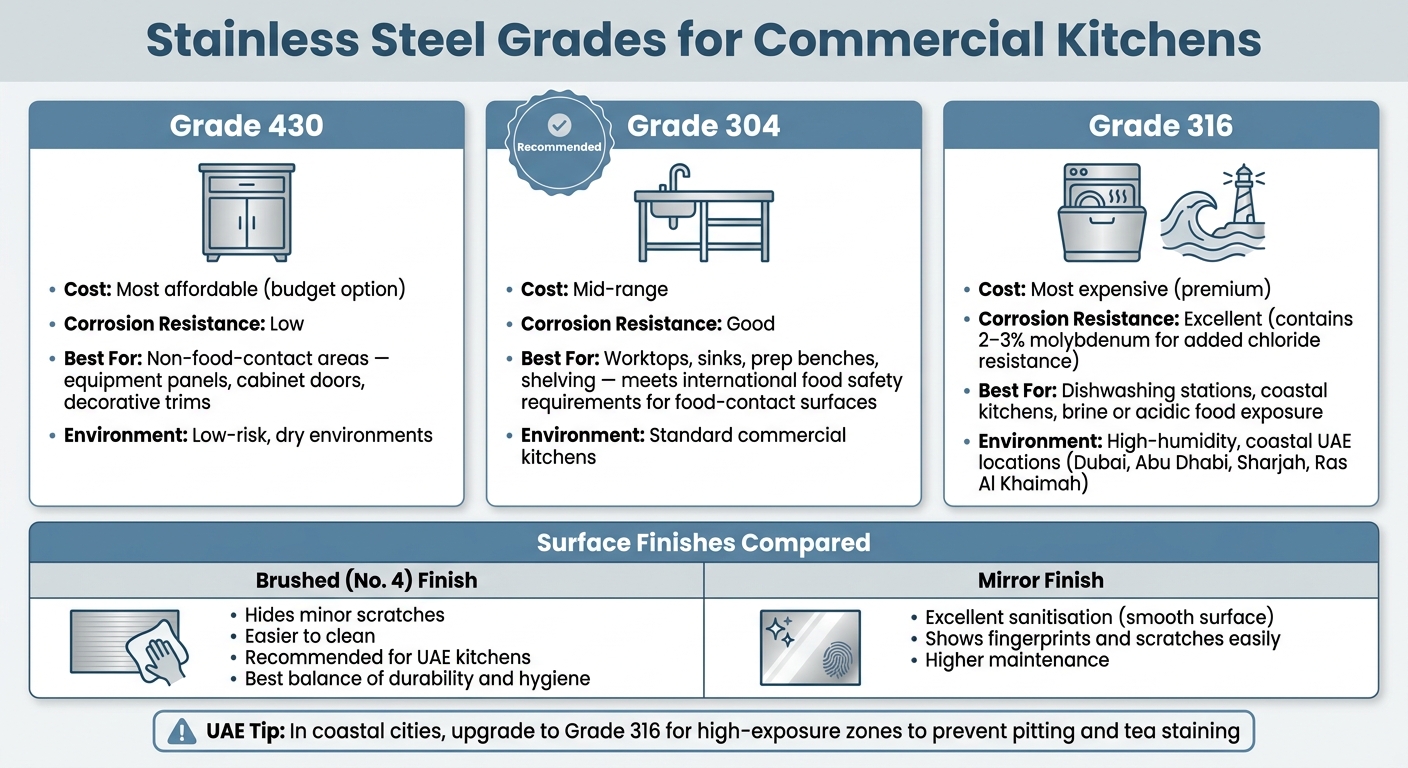
Grade 304 is the go-to option for most commercial kitchen needs. It’s commonly used for worktops, sinks, prep benches, and shelving, as it meets international food safety requirements for food-contact surfaces. Grade 316, on the other hand, includes 2–3% molybdenum, giving it added resistance to chlorides and harsh cleaning chemicals. This makes it ideal for areas like dishwashing stations, coastal kitchens, or spaces exposed to brine or acidic foods. Meanwhile, Grade 430 is a more budget-friendly choice but offers less protection against corrosion. It’s best suited for non-food-contact areas like equipment panels, cabinet doors, or decorative trims in low-risk, dry environments.
When it comes to cost, Grade 430 is the most affordable, followed by Grade 304, with Grade 316 being the most expensive. However, focusing solely on upfront costs can backfire, as cheaper grades may lead to higher replacement expenses over time.
The finish of the stainless steel is equally important. A brushed (No. 4) finish is practical for commercial kitchens because its fine grain hides minor scratches and makes cleaning easier. For a more polished look, a mirror finish offers excellent sanitisation due to its smooth surface but is prone to showing fingerprints and scratches. Considering the conditions in UAE kitchens, a brushed finish strikes the right balance between durability and hygiene, keeping maintenance manageable while maintaining a professional appearance.
How UAE Conditions Cause Corrosion and Wear
The UAE’s environment presents unique challenges for stainless steel. Coastal cities such as Dubai, Abu Dhabi, Sharjah, and Ras Al Khaimah face salt-laden winds that carry chlorides into kitchens, even indoors. These chlorides can break down the chromium-oxide layer that protects stainless steel, leading to problems like pitting (small, deep cavities) and tea staining (brown discoloration often found near welds or sink edges).
Another issue is the region’s hard, mineral-rich water, which leaves behind scale deposits. These deposits trap chlorides and food particles, creating tiny pockets where crevice corrosion can develop, especially along seams, joints, and drain channels. On top of that, frequent temperature fluctuations cause condensation, which concentrates salts and cleaning agents. Without regular upkeep, even Grade 304 stainless steel can start showing rust-like stains in high-exposure areas within just a few months.
Meeting UAE Food Safety Standards Through Proper Maintenance
Maintaining stainless steel isn’t just about aesthetics - it’s essential for meeting UAE food safety standards. Both the Dubai Municipality Food Code and ADAFSA guidelines in Abu Dhabi require food-contact surfaces to be smooth, non-porous, and easy to clean. Damaged or corroded surfaces can trap bacteria, making sanitation difficult and leading to potential health risks.
Most UAE food safety frameworks are built on HACCP principles, which emphasise that kitchen equipment must not become a source of contamination. Regular maintenance ensures stainless steel remains in compliance, making inspections smoother and reducing the risk of penalties. By choosing the right grade and finish initially and maintaining it properly, you can avoid expensive repairs or replacements while staying aligned with local regulations.
Up next, we’ll outline daily and weekly maintenance routines to keep your stainless steel in top condition.
Daily and Weekly Maintenance Routines
Building a Cleaning Schedule That Works
To create an effective cleaning schedule, it’s crucial to align it with your kitchen’s daily flow. In UAE kitchens, this means factoring in split shifts, late-night operations, and adjusted hours during Ramadan. The easiest way to manage this is by grouping tasks by how often they need to be done and assigning them to natural breaks in the day - like the lull between prep and lunch, the quieter period after lunch, and the final clean-up at the end of the night.
For daily cleaning tasks, the order of operations is key: always work from top to bottom, and prioritise food-contact surfaces before moving on to others. Spills on worktops and prep tables should be wiped immediately, followed by a full clean at the end of service. Use warm water (40–50 °C) with a neutral detergent, rinse thoroughly, and dry completely. At the end of every shift, focus on sinks, cooking ranges, refrigeration unit doors, and extraction hood splashbacks.
For weekly tasks, go deeper. Move equipment away from walls (where possible) to clean behind and underneath. Pay attention to joints, undersides, and hard-to-reach areas. Remove and soak extraction filters, and empty refrigeration units one at a time to avoid disrupting the cold chain.
Make sure to display a clear, laminated cleaning schedule near the dishwashing area. This helps staff stay on track and ensures compliance with UAE food safety inspections, which often require documented cleaning records. Once your schedule is in place, choosing the right cleaning products becomes the next step.
Recommended Cleaning Products and What to Avoid
The products you use on stainless steel are just as important as how often you clean it. The aim is to clean thoroughly without damaging the surface’s passive layer - an invisible chromium-oxide film that protects stainless steel from corrosion.
For daily cleaning, stick to pH-neutral detergents (pH 6–8). For tougher grease on cooking equipment and extraction hoods, use a mild alkaline degreaser (pH 9–11) that’s non-caustic and chlorine-free. Just be sure to rinse thoroughly. When sanitising food-contact surfaces, choose quaternary ammonium or peracetic acid-based products approved for use in UAE food establishments, and always follow the recommended contact time before rinsing.
Avoid products that can harm stainless steel, such as bleach, abrasive powders, steel wool, and carbon-steel brushes. Bleach (sodium hypochlorite) is a common culprit for pitting and should never be used. Abrasive materials can scratch the surface and embed iron particles, which can rust over time. For descaling, skip hydrochloric acid-based products and opt for citric or phosphoric acid alternatives, which are gentler on stainless steel.
The British Stainless Steel Association reminds us that stainless steel is "stain less, not stain-proof." Even high-quality grades like 316 can suffer from tea staining and pitting in chloride-rich environments if neglected.
For cleaning tools, microfibre cloths and non-scratch nylon pads (white or blue) are your go-to options for everyday use. Stubborn food residue can be tackled with a non-metallic scraper, which won’t damage the surface. On brushed stainless steel, always wipe with the grain to minimise visible scratches and maintain a uniform finish. Proper training ensures these protocols are followed consistently.
Training Staff for Consistent Cleaning Results
Hands-on training is essential to ensure every team member knows how to clean properly. In busy kitchens with rotating shifts and temporary staff, verbal instructions alone won’t cut it. Training should cover key topics like the correct dilution of cleaning agents, why abrasive materials and bleach are prohibited, how to spot early signs of corrosion, and the importance of drying surfaces thoroughly to avoid water spots - particularly important given the mineral-rich, hard water in the UAE.
Tying stainless steel care to HACCP training helps staff understand the bigger picture: a scratched or corroded surface is harder to sanitise and can harbour bacteria, directly impacting food safety compliance. When employees grasp the why behind these protocols, they’re more likely to follow them consistently across all shifts. Regular refresher sessions, especially after inspections or product updates, help maintain these standards.
Preventing Corrosion, Stains, and Scratches
Keeping the passive layer intact and addressing surface damage quickly is crucial for meeting food safety standards in the UAE.
How to Protect the Passive Layer
Beyond regular cleaning, safeguarding the passive layer is key to avoiding corrosion. This layer, a microscopic chromium oxide film only 15–25 angstroms thick, forms naturally when chromium in stainless steel reacts with oxygen. When damaged, it leaves the material vulnerable to corrosion.
Simple habits like rinsing and drying stainless steel after contact with acidic or salty foods can prevent etching. In coastal areas like Dubai or Abu Dhabi, where humidity and salt exposure are high, pitting can occur if not managed properly.
For equipment frequently exposed to chlorides - such as brine systems, seafood prep stations, or dairy surfaces - regular passivation with citric acid every 45–90 days can help restore the passive layer and prolong the equipment's lifespan. A dull or matte surface where there was once a glossy finish is often a sign that passivation is overdue.
"Stainless steel is named for what it resists, not what it cannot fail at - and food-grade equipment fails far more often through the slow corrosion nobody schedules around." - Jack Edwards, OxMaint
After cleaning, applying food-safe mineral oil can create a temporary barrier, helping to maintain the surface's appearance between deep cleans.
Removing Stains and Surface Rust
Not all stains are permanent, and recognising the type of stain can guide the right treatment.
- Tea stains: These are surface-level and can be removed with a non-abrasive cleaner and a microfibre cloth. Always wipe along the grain of the steel.
- Stubborn stains or early Class I rouge: A paste made from baking soda and water, gently applied with a soft cloth, works well. Rinse thoroughly and dry completely afterwards.
If rust has advanced to a red-brown stain (Class II rouge) that doesn’t wipe off easily, the passive layer has been compromised. In such cases, a citric acid-based derouging solution is necessary. Follow the manufacturer’s instructions for application, rinse thoroughly, and complete the process with passivation to rebuild the protective layer.
Addressing stains promptly is essential. Waiting until rust is visibly severe - a reactive approach - can reduce the lifespan of food-grade equipment by as much as three years. Regular stain treatment helps maintain the passive layer and extends the durability of your equipment.
How to Reduce Scratches on Stainless Steel
Deep scratches not only compromise the passive layer but also create crevices where bacteria can thrive, posing both hygiene and corrosion risks.
To minimise scratches:
- Always use a cutting board instead of cutting directly on stainless steel surfaces.
- Avoid dragging heavy cookware or equipment across the surface; lift and place items instead.
- Use soft microfibre cloths or non-scratch nylon pads for cleaning, and always wipe with the grain.
When selecting new equipment or worktops, finishes matter. Brushed finishes, like a No. 4 finish, are practical for busy kitchens as they hide wear better than mirror-polished surfaces. For areas with high exposure or frequent use, electropolished finishes offer significantly greater corrosion resistance - up to 30 times more than standard mill finishes - and are easier to clean, making them ideal for high-contact zones.
sbb-itb-19c3c9a
Deep Maintenance and Professional Support
Daily and weekly cleaning routines are great for keeping surfaces tidy and hygienic, but they only scratch the surface - literally. Hidden spots like the undersides of counters, inside hoods, and behind refrigeration units require more thorough attention on a scheduled basis. While daily cleaning keeps things looking good, deep maintenance tackles those unseen areas, preventing long-term damage and ensuring durability, especially in the UAE’s challenging environment.
Monthly and Quarterly Maintenance Tasks
Monthly maintenance should focus on areas that daily cleaning often skips. Move equipment away from walls to clean underneath and behind. Don’t forget to wipe the undersides of counters, cross-braces, and shelf supports. Pay special attention to leg bases where corrosion can start at floor contact points. Plan to spend about 20–40 minutes per workbench and 30–60 minutes per hood section. For exhaust hoods, remove and soak baffle filters in a food-safe degreaser, clean the internal stainless panels, and check for grease drips on external surfaces.
Refrigeration units need extra care in the UAE's dusty conditions. Dirty condenser coils can increase energy use by 20–30% and shorten the compressor’s lifespan, so cleaning them at least quarterly is a must. While working on refrigeration units, descale drainage channels, wipe door gaskets, and clean handles. Budget 45–90 minutes per unit for these tasks.
Quarterly maintenance involves a more thorough approach, including shutting down the entire kitchen line for deep cleaning. Focus on stainless wall claddings, splashbacks, and areas behind fixed equipment. Appliances like dishwashers and combi ovens suffer from hard water scale buildup, which can damage surfaces and reduce efficiency. Descaling these high-use appliances every quarter is crucial. Operators typically schedule these sessions during quieter periods, setting aside 4–8 hours for a full kitchen line cleanup.
Inspecting Mechanical Components
Monthly and quarterly inspections of high-wear components are just as important as cleaning.
- Hinges and door pivots: Check for sagging doors, stiff movement, or rust. Poorly closing doors on refrigeration units can affect temperature control. After cleaning, apply a food-grade lubricant where specified by the manufacturer. Avoid lubricating dirty or corroded hinges, as this can worsen wear.
- Drawer slides, casters, and adjustable feet: Look for jerky movement, bent rails, or locked casters. Clean the threads on adjustable feet and re-level any wobbly equipment to prevent stress on welds, which can lead to cracking.
- Joints and welds: Inspect for hairline cracks, pinholes, or discolouration. These are early signs of wear and should be flagged for professional evaluation. Avoid DIY fixes that could compromise food safety standards.
- Fasteners and bolts: Ensure that bolts connecting shelves, wall cladding, and equipment stands are tight. Replace any corroded fasteners with stainless steel or manufacturer-recommended alternatives to avoid galvanic corrosion.
Keeping a digital maintenance log to track dates, findings, and actions can help identify recurring issues and schedule professional servicing before problems escalate.
When inspections reveal persistent wear or damage, it’s time to call in the pros.
When to Use Professional Servicing and Refurbishment
Some repairs, like re-welding cracked joints or replacing damaged cladding, should always be handled by qualified stainless steel fabricators. DIY attempts can lead to uneven surfaces or welds that fail to meet food safety standards.
Exhaust hood and duct cleaning beyond accessible areas should be left to certified contractors. According to NFPA 96-based guidelines referenced by UAE Civil Defence, professional hood and duct cleaning is required every 3–6 months, depending on cooking volume and fuel type. This is especially critical for high-volume frying or charcoal operations, as grease buildup in ductwork poses a serious fire hazard. A BRE study found that around 70% of commercial kitchen fires began in cooking appliances, with poor maintenance of extraction systems often worsening fire spread.
For tasks like electrical and gas connections, refrigerant circuits, and burner calibration, always hire licensed technicians. Not only does this ensure safety, but it also keeps equipment warranties intact. Companies like Silverline Kitchens provide after-sales support, covering maintenance and repairs, so operators don’t need to juggle multiple contractors.
In coastal areas like Dubai and Abu Dhabi, high humidity and salt air can take a toll on stainless steel surfaces. An annual professional passivation or re-polishing can restore the protective layer on these surfaces, extending their lifespan and maintaining a polished appearance.
Designing Kitchens to Support Long-Term Durability
A well-thought-out kitchen design plays a key role in maintaining stainless steel equipment over time. Even with regular cleaning routines, the layout and design of a kitchen can significantly impact the lifespan of stainless steel. By incorporating features that simplify cleaning and reduce wear, kitchens can not only extend the life of their equipment but also meet UAE standards more efficiently.
Design Features That Make Cleaning Easier
Small design tweaks can make a big difference when it comes to maintaining stainless steel. For instance, rounded internal corners with a radius of 10–20 mm at wall-to-counter and counter-to-floor junctions help prevent food debris and cleaning chemicals from accumulating in hard-to-reach spots. Sharp 90° corners, on the other hand, often become hotspots for hidden corrosion in commercial kitchens.
Where possible, opt for single-piece worktops over long prep areas. If joints are necessary, fully welded and ground-smooth seams are far better than silicone-filled joints, which tend to trap contaminants. Similarly, integrated splashbacks measuring 100–150 mm behind cooking lines and prep areas protect the rear edges from steam and grease, making daily cleaning faster and reducing the risk of corrosion in unseen areas.
"According to EHEDG documentation, poor hygienic design can increase cleaning time by up to 25–30% and still leave more residues compared with equipment designed with smooth welds, radiused corners, and sealed joints".
Another practical feature is raising equipment on 150–200 mm adjustable stainless legs. This allows for proper cleaning underneath and prevents corrosion at the base edges, which is common when equipment sits directly on the floor.
Once these features are in place, the overall layout of the kitchen can further enhance the durability of stainless steel surfaces.
Zoning and Workflow Layout
A well-organised kitchen layout not only improves efficiency but also reduces exposure to conditions that can damage stainless steel. For example, separating hot cooking lines - such as ranges, fryers, and grills - from cold prep and plating areas keeps thermal cycling, steam, and grease contained within a designated zone. In these high-stress areas, using heavier-gauge stainless steel (1.5–2.0 mm tops) ensures better durability, while lighter materials can be used in less demanding spaces.
Dishwashing and pot-wash areas should be positioned far from dry storage and prep zones. Steam and chemical aerosols from dishwashers can drift onto nearby stainless steel surfaces, causing gradual damage that's often overlooked until it's too late. A logical dirty-to-clean workflow - starting with receiving, followed by storage, prep, cooking, plating, service, and finally washing - also reduces the risk of scratches caused by trolleys and pans in busy kitchens across the UAE.
In high-traffic areas, installing polymer or stainless bump rails along bench fronts and trolley paths can protect stainless steel surfaces from repeated impacts. Additionally, placing dedicated landing shelves near ovens and blast chillers provides a safe spot for heavy GN pans, preventing them from being dropped directly onto prep counters.
Utilities That Support Equipment Longevity
The right utilities are just as important as the layout when it comes to protecting stainless steel. In the UAE, desalinated water often contains high levels of chloride. When chloride levels in water or cleaning solutions exceed 200 ppm, especially at higher temperatures, the risk of pitting corrosion increases significantly - even for grade 304 stainless steel. Installing water softeners or reverse osmosis units for dishwashers, combi ovens, steamers, and ice machines can address this issue effectively. In fact, water treatment systems have been shown to reduce service calls related to scale and corrosion by over 50%.
Proper drainage is another crucial factor. Ensuring a 1–2% floor slope towards drains prevents standing water from pooling under or behind equipment, which can lead to pitting at leg bases and floor contact points. Additionally, dedicated electrical circuits with surge protection and proper earthing can safeguard motors, heating elements, and other components from the voltage fluctuations commonly experienced in the UAE. Companies like Silverline Kitchens incorporate these considerations into their designs from the start, helping operators avoid unnecessary wear that could shorten the lifespan of their equipment.
Conclusion
Caring for stainless steel equipment is a continuous process that pays off in the long run. Simple habits like daily wipe-downs with food-safe, non-abrasive cleaners, combined with quarterly professional check-ups, can significantly extend the life of your equipment while reducing unexpected malfunctions.
In the UAE, regulatory compliance requires strict maintenance routines. Keeping detailed digital logs of cleaning, repairs, and part replacements not only simplifies inspections but also helps avoid penalties.
Smart design choices - like rounded edges, welded seams, and proper drainage slopes - help minimise wear and tear on stainless steel surfaces and make cleaning easier. These design features, paired with consistent cleaning routines and thorough staff training, work together to improve equipment durability.
Interestingly, many equipment failures are caused by improper use rather than age. This highlights the value of educating staff on correct usage and cleaning methods. When employees understand the "why" behind these practices, they’re more likely to follow them consistently across all shifts.
FAQs
How do I know if my stainless steel needs passivation?
You can determine if your stainless steel requires passivation by inspecting it for surface issues like contamination, damage, or oxidation. If the surface has undergone mechanical processes like grinding or displays visible contaminants such as grease or dirt, passivation might be needed. Signs like dullness, discolouration, or oxidation are also indicators that treatment is required. Before starting the passivation process, make sure to clean the surface thoroughly for the best results.
What should I do if I’ve already used bleach on stainless steel?
If you've accidentally used bleach on stainless steel, it's important to act fast to reduce potential damage. Start by rinsing the affected area thoroughly with warm water to wash away any bleach residue. Then, use a soft cloth to gently clean the surface - steer clear of abrasive tools that could scratch the steel.
For tougher stains, try applying a paste made of baking soda and water, which is safe for stainless steel. After scrubbing gently, rinse the area thoroughly again. Consistent upkeep is essential to keep stainless steel in good condition. However, if the damage is severe, you may need to consider professional restoration. To avoid future issues, it's best to keep bleach away from stainless steel altogether, as it can cause corrosion over time.
Which water treatment option helps most with scale and corrosion in UAE kitchens?
Water softening is an excellent solution for tackling scale and corrosion issues in UAE kitchens. By reducing mineral deposits, it prevents the buildup of scale, protects kitchen equipment, and enhances their durability. Additionally, it improves the efficiency of appliances, making it a practical choice for maintaining a smooth-running kitchen.
