


Opening a restaurant in Dubai requires more than just great food and location. Your kitchen must meet Dubai Municipality's strict standards to secure approvals and avoid costly delays. Here's what you need to know:
- Regulations: Kitchens must comply with UAE Food Code, HACCP, and Civil Defence fire safety codes. Key requirements include non-absorbent flooring, non-manual taps, and proper ventilation systems.
- Approval Process: Design approvals take 7–14 working days, followed by 3–7 days for site inspections. Mistakes in layout or systems can delay openings by weeks or months.
- Kitchen Layout: Unidirectional food flow (receiving → storage → preparation → cooking → serving → washing) reduces cross-contamination and improves efficiency.
- Equipment: All equipment must use Grade 304 stainless steel, meet CE certifications, and align with UAE electrical standards.
- Fire Safety: Automatic fire suppression systems, heat sensors, and proper ventilation are mandatory.
- Grease Management: Installing and maintaining a grease trap is legally required to prevent sewage issues.
Planning your kitchen with compliance in mind saves time, money, and ensures smooth operations. Partnering with experienced professionals like Silverline Kitchens can simplify the process, from design to installation and aftercare.

Dubai Restaurant Kitchen Approval Process Timeline and Requirements
UAE Restaurant Kitchen Regulations
Before opening a restaurant in the UAE, your kitchen must meet three key regulatory frameworks: Dubai Municipality food safety standards, Civil Defence fire safety codes, and drainage system requirements. Each has its own approval process, and missing even one can delay your launch.
Dubai Municipality and HACCP Standards
Securing approval from Dubai Municipality is non-negotiable for operating a commercial kitchen. You’ll need to comply with the UAE Food Code and obtain HACCP (Hazard Analysis and Critical Control Point) certification to activate your trade licence.
One critical requirement is the 40% rule, which mandates that your kitchen occupy at least 40% of your total restaurant area or a minimum of 300 sq. ft., whichever is larger. The minimum total restaurant size for approval is 750 sq. ft., while cafeterias must be at least 500 sq. ft..
Structural compliance is another area where inspections are strict. Kitchens must have seamless, non-absorbent flooring (Epoxy or Polyurethane), curved coving, and walls tiled or clad in stainless steel up to 2 metres. Ceilings should be light-coloured, smooth, and free of exposed wiring.
Hand wash stations are a frequent inspection failure point. Only non-manual taps - like sensor-based, elbow-operated, or foot-operated - are allowed. These must be separate from food prep sinks and strategically placed throughout the kitchen.
All food-contact equipment must be made of Grade 304 stainless steel. Equipment should either be on wheels or elevated at least 150 mm off the ground to allow for easy cleaning. Using lower-grade materials like SS 201 often leads to failed inspections. Additionally, many items require a CE (Conformité Européenne) certificate to meet international safety standards.
With complete documentation, the approval process typically takes 15 to 30 working days. Once these food safety standards are met, you’ll need to focus on fire and drainage compliance.
Fire Safety and Civil Defence Guidelines
Fire safety is just as critical as food safety. Dubai Civil Defence (DCD) enforces fire safety codes based on NFPA 96 (ventilation and fire protection) and UL 300 (fire suppression systems). Installing an automatic kitchen hood fire suppression system is legally required for all commercial kitchens.
These systems use UL 300-listed wet chemical agents like potassium acetate or carbonate to handle Class K fires caused by cooking oils and fats. The system must integrate with gas and electrical shutoff valves, the central fire alarm, and the exhaust hood ventilation.
You’ll also need automatic heat sensors (fusible links) and a manual pull station near the kitchen exit. Staff should be trained on how to use this station in emergencies.
Ventilation systems must meet strict standards, including exhaust ducts that extend at least 2 metres above the nearest building to minimise fire and odour risks. Kitchens producing heavy grease, such as those cooking fried foods or steaks, must install Electrostatic Precipitators (ESP) and carbon filters. Maintaining negative air pressure is essential to contain odours while ensuring fresh air circulation.
Only DCD-certified contractors are permitted to install these systems. You’ll also need an Annual Maintenance Contract (AMC) for permit renewals, with professional inspections every six months and hydrostatic testing of suppression cylinders every 12 years. Cylinders must maintain a pressure range of 175 to 250 psi to remain operational.
Grease Trap and Drainage Compliance
Environmental compliance is another crucial requirement. Installing a grease trap is a legal obligation for all commercial kitchens in Dubai. These devices manage Fats, Oils, and Grease (FOG) to prevent sewage blockages.
Your grease trap must be properly sized for your kitchen’s load and approved by Dubai Municipality. All drainage from cooking areas must flow through the grease trap before entering the municipal sewage system. Proper drainage slope is essential to prevent backflow.
The trap’s location should allow easy access for cleaning and maintenance. You’re required to sign maintenance contracts with licensed service providers and keep detailed records of all cleaning and pumping services for inspections. Missing these logs often leads to compliance issues.
Failure to meet grease trap regulations can result in hefty fines, operational suspensions, or even business closure. Dubai Municipality strictly enforces these measures to manage FOG pollution and ensure effective waste management.
sbb-itb-19c3c9a
Kitchen Layouts for Dubai Restaurants
Choosing the right kitchen layout can make or break a restaurant's operations. As Kitchen Works points out:
A poorly planned kitchen design is the number one reason approvals get rejected
. In Dubai, your kitchen must not only run efficiently but also comply with the strict standards set by Dubai Municipality. Let’s explore how different layouts can influence workflow and equipment placement.
Common Kitchen Layouts
Zone-style layouts split the kitchen into specific areas like raw preparation, cooking, plating, and washing. This setup ensures a clear separation between raw and cooked food, aligning with HACCP and UAE Food Code requirements. By keeping each zone independent, it reduces the chances of staff collisions during peak hours.
Assembly line layouts are designed for efficiency, with equipment arranged in a straight line to follow the food’s journey from preparation to service. This layout is ideal for high-volume kitchens, such as cloud kitchens, where speed is critical. The linear design also supports the required unidirectional workflow: Receiving → Storage → Preparation → Cooking → Serving → Washing.
Island layouts place cooking equipment at the centre, while preparation and plating stations surround it. This design is often seen in upscale restaurants with open kitchens, where the cooking process is part of the dining experience. However, it demands ample space and careful ventilation planning to ensure compliance with Civil Defence standards for hood coverage.
While choosing a layout is important, optimising workflow and planning your space effectively are just as critical to running a smooth operation.
Workflow and Space Planning
Once the layout is set, efficient space planning ensures smooth operations and compliance. Maintaining a unidirectional food flow is key to preventing cross-contamination. Inspections will verify that raw ingredients and cooked food remain strictly separated.
A well-thought-out workflow also avoids costly redesigns and delays. As RadyInterior warns:
If the kitchen doesn't work, the restaurant doesn't work. If the workflow breaks, the brand breaks
.
Hand wash stations are another essential. These should be strategically placed in preparation areas, equipped with non-manual taps to ensure staff hygiene and reduce the risk of contamination. Proper equipment clearance, grease trap integration, and drainage systems should align with approved drawings to meet inspection standards.
Different restaurant types require tailored spatial strategies. For example, a small 35-seat breakfast café might benefit from compact, multi-functional zones, while a 200-cover dinner restaurant will need distinct areas for preparation, cooking, plating, and cleaning. Cloud kitchens, meanwhile, often prioritise dedicated zones for packaging and driver pickups.
The cost of kitchen fit-outs in Dubai can range from AED 200,000 to AED 800,000 or more, depending on factors like size, cuisine, and ventilation requirements. A well-planned kitchen layout can save you from expensive post-construction changes down the line.
Selecting Equipment for Your Kitchen
Once you've finalised your kitchen layout and workflow, the next step is choosing the right equipment. This decision is critical for ensuring smooth operations while adhering to UAE regulations. Considering that equipment typically accounts for 20-30% of a restaurant's initial investment, making informed choices early on can save both time and money in the long run.
Kitchen Zones and Required Equipment
Every kitchen is divided into specific zones, each requiring specialised equipment:
- Cooking Zone: This area should include commercial ovens (convection, combi, or deck), multi-burner ranges, deep fryers, grills, and steamers.
- Refrigeration and Cold Storage Zone: Essential items here include reach-in refrigerators/freezers, undercounter chillers, walk-in cold rooms, and blast chillers.
- Food Preparation Zone: Equip this zone with planetary mixers, food processors, commercial blenders, meat slicers, and vegetable prep machines.
- Dishwashing and Sanitisation Zone: Key equipment includes commercial dishwashers (hood-type or undercounter), three-compartment sinks, and integrated grease traps. Ensure these are connected to approved drainage and grease management systems.
- Ventilation and Safety Zone: This area must comply with Dubai Civil Defence regulations and include exhaust hoods with high suction, fire suppression systems (like Ansul), and grease interceptors.
UAE-Compliant Appliances
In the UAE, all kitchen equipment must meet strict regulatory standards. Appliances should align with the UAE Food Code and Dubai Municipality guidelines to ensure compliance during inspections. As noted by Silverline Kitchens:
Every kitchen we deliver is built to meet UAE Food Code and Dubai Municipality standards, ensuring smooth inspections and approvals.
When selecting appliances, ensure they meet UAE electrical standards (220-240V, 50Hz) and have NSF or UL certifications for food-contact surfaces. For coastal areas, Grade 316 stainless steel is recommended over Grade 304 to resist salt corrosion. Ventilation systems must also be certified by Dubai Civil Defence and include integrated fire suppression systems to meet Fire Life Safety requirements.
Partnering with local suppliers familiar with UAE regulations can prevent costly errors. It's also wise to choose providers offering readily available spare parts within the UAE to reduce downtime. To meet HACCP hygiene requirements, consider using colour-coded cutting boards (e.g., green for vegetables, red for meat). For unique kitchen setups, custom equipment solutions may be the best option to balance compliance and functionality.
Custom Equipment Solutions by Silverline Kitchens
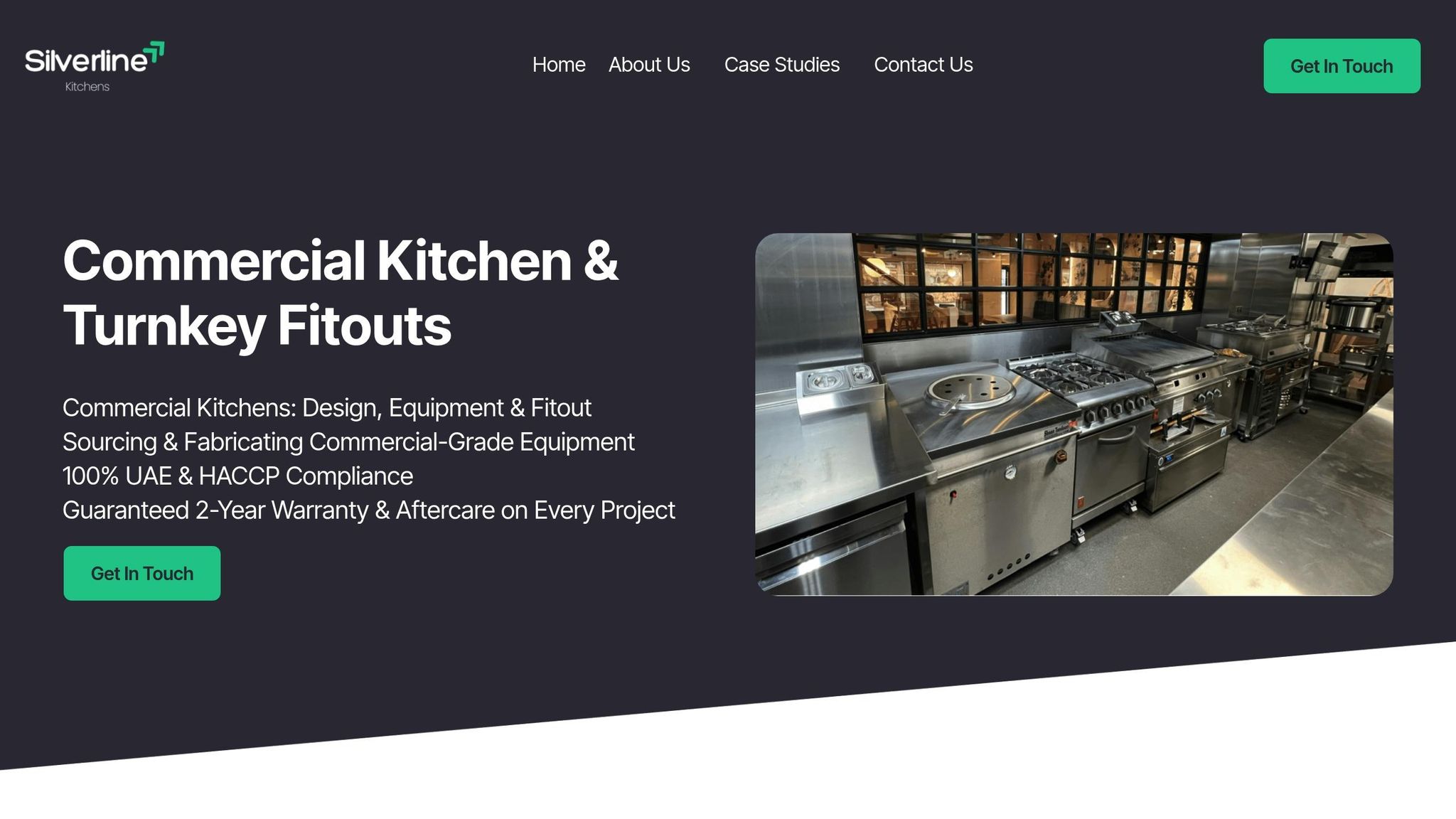
Not all kitchens can rely on standard equipment. For unique layouts or specific menu demands, Silverline Kitchens offers custom fabrication and sourcing services. Their approach focuses on your business goals rather than pushing standardised products. They ensure all equipment meets Civil Defence requirements.
Silverline Kitchens provides a comprehensive service, including independent equipment sourcing tailored to your workflow and operational needs. Their 2-year warranty and aftercare - which includes 24 months of free maintenance on replacements and parts - ensures long-term support. By managing design, supply, installation, and compliance, they eliminate the hassle of coordinating with multiple vendors. This end-to-end solution not only simplifies the installation process but also supports the long-term success of your kitchen operations.
Silverline Kitchens' Design and Installation Process
Silverline Kitchens takes pride in ensuring that every step of their design and installation process adheres to the highest standards set by UAE regulations. From initial planning to final handover, they aim to deliver efficient and compliant commercial kitchens.
Project Management from Start to Finish
Silverline Kitchens handles every aspect of your project, starting with a detailed consultation to understand your specific needs. Whether you're setting up a café, restaurant, or large-scale catering operation, their team customises layouts to suit your workflow and menu demands, ensuring every square metre is optimised for functionality.
A key advantage is their in-house manufacturing facility, which eliminates delays caused by third-party suppliers and ensures projects stay on schedule. Designs are crafted to meet UAE Food Code, Dubai Municipality, and HACCP standards, with careful consideration for essentials like grease traps, drainage slopes, and mechanical ventilation. Plus, their fixed pricing model means no unexpected cost increases during the project.
Once the design is finalised, the focus shifts to a seamless installation process.
Installation and Quality Control
The installation phase covers everything from extraction systems to fire suppression, all while meeting Civil Defence and Fire Life Safety requirements. With three decades of UK experience and adherence to European installation standards, Silverline Kitchens ensures your kitchen is ready to pass Dubai Municipality inspections without any issues.
Their track record speaks volumes, with a client list that includes Tesco, Choithrams, Filli Cafe, and even HMP Prisons, showcasing their ability to handle high-demand commercial kitchen environments.
After installation, their commitment to your kitchen's success doesn't end - it extends into comprehensive after-sales support.
After-Sales Support and Maintenance
Every project comes with a 2-year warranty and dedicated aftercare service. Silverline Kitchens offers ongoing maintenance, routine servicing, and emergency repairs to minimise disruptions. They also ensure that all equipment supplied has readily available spare parts in the UAE, reducing downtime when replacements are needed.
Their after-sales support team is focused on helping your kitchen maintain compliance with Dubai Municipality, HACCP, and Civil Defence standards, ensuring smooth operations well beyond the opening day. This long-term partnership helps keep your kitchen running efficiently and reliably.
Budgeting for Kitchen Design and Installation in Dubai
Once the design and installation process is outlined, creating a budget becomes essential to keep your project on track. Estimating the financial requirements for a commercial kitchen in Dubai helps you plan effectively and avoid unexpected expenses. The overall cost depends on factors like the size of your restaurant, the complexity of your menu, and the regulatory standards set by UAE authorities.
Cost Breakdown by Kitchen Size
If you're opting for a design package that includes 2D/3D layouts and MEP (Mechanical, Electrical, Plumbing) drawings, the cost is approximately AED 5,000 + VAT. This fee is crucial for obtaining initial approval from Dubai Municipality.
For smaller projects, such as cafés or small eateries, budgets typically range from AED 15,000 to AED 55,000, covering basic equipment, installation, and compliance needs. Larger kitchens for medium to large-scale restaurants can cost between AED 40,000 and AED 100,000, especially when high-end materials, layout modifications, or specialised equipment like tandoors are involved. Dubai Municipality also enforces a minimum kitchen size of 300 sq.ft or 40% of the total restaurant area, whichever is larger.
Additional permits include the DDA building permit, priced at AED 1.00 per square foot of built-up area (minimum AED 200), and a mobilisation permit costing AED 5,000 for general projects. Specific installations such as cabinetry, tiling, and electrical work can add AED 10 to AED 75 per square foot, depending on your chosen specifications.
Main Cost Factors
Your menu plays a central role in determining kitchen design. For example, a high-volume burger joint will need entirely different equipment compared to a fine-dining seafood restaurant or a wedding banquet facility. These choices directly affect your budget, as specialised equipment and higher power requirements from DEWA or ADDC can drive up infrastructure costs.
Material selection also impacts your expenses. While premium options like granite or marble countertops may be pricier, they can reduce long-term replacement costs. Similarly, compliance-related installations - such as ventilation systems, fire suppression units, grease traps, and drainage - are a must to meet Dubai Municipality, HACCP, and Civil Defence standards.
Benefits of Quality and Compliance
Investing in high-quality, UAE-compliant equipment can lead to long-term savings. For instance, induction cooking technology transfers over 90% of its energy to cookware, compared to just 40–50% for traditional gas stoves. This efficiency not only lowers utility bills but also reduces the heat generated in the kitchen, cutting down on air conditioning costs - a critical factor in the UAE's hot climate.
"The right kitchen equipment isn't just an expense, but a strategic investment in your success." - Tina, Project Consultant
Modern ventilation systems can reduce energy consumption by up to 25% compared to older models. Additionally, automated dishwashers and prep tools cut down on manual labour and water usage. Choosing equipment with local UAE-based warranties ensures faster repair times, minimising revenue loss during breakdowns.
Compliance is another area where careful budgeting pays off. Meeting regulatory standards from the start helps avoid costly rejections during fit-out inspections, which could delay your trade licence and opening. Using durable materials like 304-grade stainless steel prevents corrosion and reduces the need for frequent replacements, saving money over time. It's also wise to overestimate your budget to account for unexpected structural challenges or fluctuations in material costs.
Conclusion
Setting up a restaurant kitchen in Dubai is about more than just functionality - it's about creating a space that meets strict compliance standards while ensuring operational efficiency. Approval from Dubai Municipality is not optional; without it, your trade licence cannot be activated. Moreover, a poorly designed layout is one of the top reasons for approval rejections.
Every choice, from the initial layout to the equipment you install, plays a critical role in meeting these standards and ensuring smooth operations. A well-thought-out design prioritises a unidirectional food flow, reducing the risk of cross-contamination. Regulatory bodies in Dubai enforce these requirements strictly, and failure to comply can lead to costly redesigns, delayed openings, or even outright licence rejections. As Kitchen Works aptly puts it:
Compliance is the foundation of profitability.
Collaborating with experts who are well-versed in the UAE Food Code, HACCP standards, and Civil Defence regulations is crucial. Such professionals can help navigate the technical requirements, from installing grease traps and hand wash stations to ensuring fire suppression systems and drainage systems meet approved specifications. Companies like Silverline Kitchens take a comprehensive approach to project management, reducing delays and ensuring that every piece of equipment aligns with the approved plans.
Planning with compliance in mind from the very start - rather than attempting to fix issues later - can save significant time and money. As Rady Interior wisely states:
If the kitchen doesn't work, the restaurant doesn't work. If the workflow breaks, the brand breaks.
FAQs
What documents do I need for Dubai Municipality kitchen approval?
To secure Dubai Municipality kitchen approval, you’ll need to navigate several key requirements. Start by obtaining the necessary permits from Dubai Municipality itself. Compliance with strict health and safety standards is a must, including proper layout assessments to ensure your kitchen design meets official guidelines. Certifications like HACCP (Hazard Analysis and Critical Control Points) are also essential to demonstrate food safety management.
Additionally, approvals from other authorities such as the Dubai Civil Defence (DCD), Roads and Transport Authority (RTA), and Dubai Economic Department (DED) are required. Make sure all your kitchen equipment adheres to regulatory standards and aligns with the UAE’s specific guidelines to avoid any delays in the approval process.
How can I avoid approval delays during kitchen fit-out?
To keep things moving smoothly, make sure you're aligned with Dubai Municipality regulations right from the beginning. Here’s how:
- Plan your layouts early to ensure they meet all space and workflow requirements.
- Get your permits ahead of time, such as food safety and fire safety approvals.
- Work with experienced consultants who understand the technical requirements and can guide you through compliance.
Don’t forget to submit complete and accurate documentation - it’s a key step to avoid delays during the approval process. Taking the time to plan properly and seeking expert advice can save you from costly rework and keep things on track.
What grease trap size is required for my restaurant?
The size of the grease trap your restaurant requires hinges on the amount of wastewater your kitchen produces. Selecting the right size is not just about functionality - it’s also necessary to meet local UAE regulations. A correctly sized grease trap helps maintain hygiene standards and ensures your kitchen runs smoothly without the risk of blockages.
