


When setting up a commercial kitchen in the UAE, compliance with local regulations is non-negotiable. From meeting Dubai Municipality standards to ensuring fire safety and ventilation, the right design company can make or break your business. Here’s what you need to know:
- Regulatory Knowledge: The company must understand UAE Food Code requirements, HACCP protocols, and approvals from Dubai Municipality, Civil Defence, and other authorities.
- Efficient Layouts: Ensure the firm designs unidirectional workflows to prevent cross-contamination and optimise operations for your specific business type (e.g., restaurant, café, or cloud kitchen).
- Fire Safety & Ventilation: Proper systems like fire suppression and exhaust hoods are essential for passing inspections and maintaining safety.
- Complete Support: Look for end-to-end services, including design, equipment sourcing, installation, and after-sales care.
Choose a partner with a strong portfolio, proven compliance record, and the ability to manage the entire project lifecycle. Delays or rejections from authorities can cost you time and money. Your kitchen is the backbone of your business - invest wisely.

UAE Commercial Kitchen Compliance Workflow and Requirements
Regulatory Requirements for UAE Commercial Kitchens
When choosing a commercial kitchen design company in the UAE, their knowledge of local regulations is critical. Every food business in the Emirates must comply with the UAE Food Code (for Dubai) or the Codes of Practice issued by the Abu Dhabi Food Control Authority. These regulations shape the design and safety measures of your kitchen, making compliance a non-negotiable aspect of the planning process.
HACCP Standards and Food Safety Requirements
In the UAE, all food establishments are required to implement a HACCP-based Food Safety Management System. This system directly impacts kitchen design, as it requires careful planning to identify and manage critical control points in food handling. A good design company should be able to map out these points and create detailed flow diagrams to demonstrate compliance.
For example, a compliant kitchen must follow a strict, one-way workflow: Receiving → Storage → Preparation → Cooking → Serving → Washing. This unidirectional flow minimises the risk of cross-contamination. Additionally, each food establishment must have at least one certified Person In-Charge (PIC), so the design company should account for both staffing needs and space allocation.
If you’re a small food business, you may qualify for a 50% discount on HACCP certification fees. A knowledgeable design partner should guide you through these cost-saving opportunities during the planning phase.
Dubai Municipality and Civil Defence Approvals
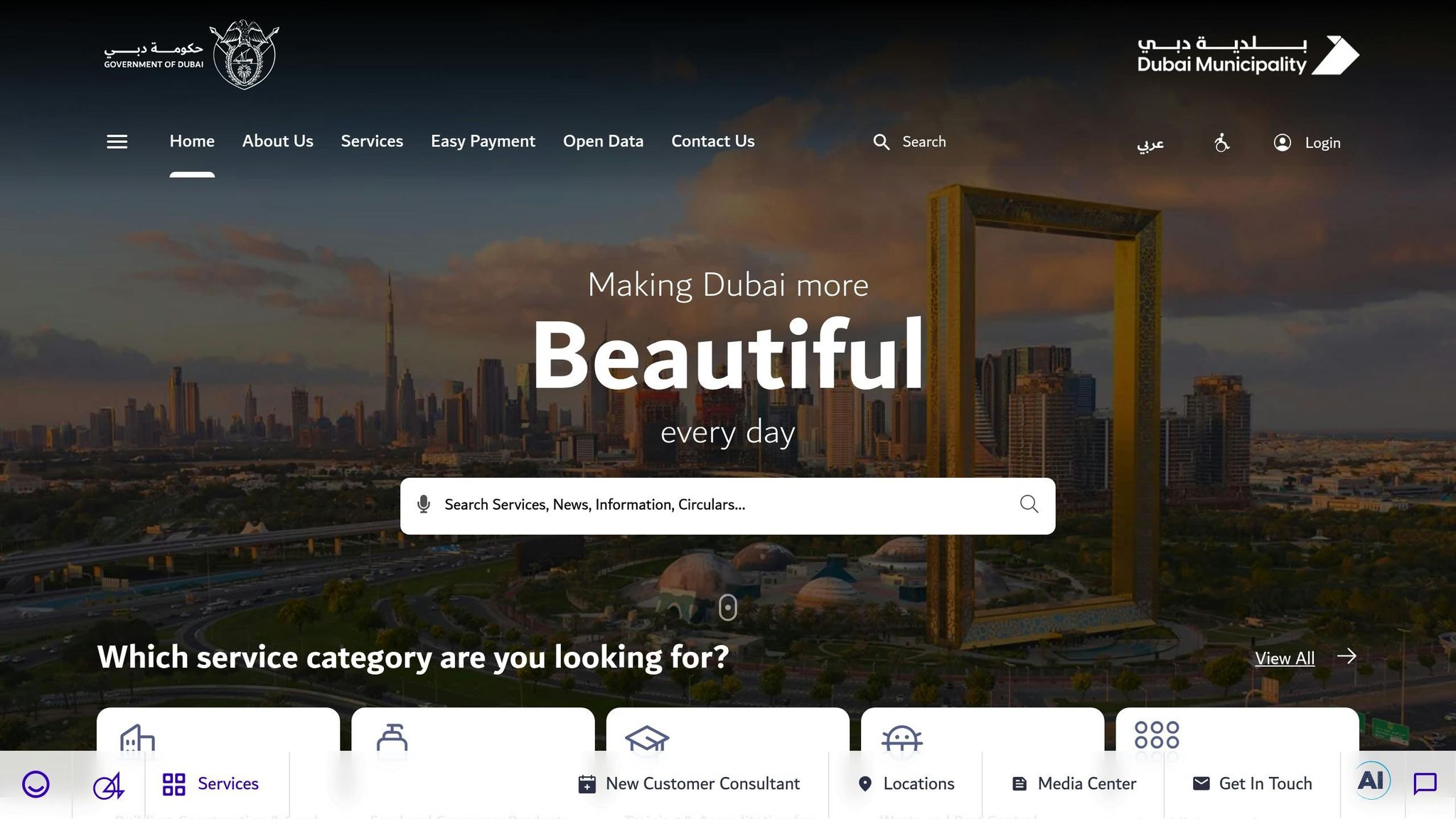
While HACCP focuses on food safety, approvals from Dubai Municipality and Civil Defence ensure that your kitchen’s physical infrastructure supports these safety measures. The design company must prepare plans that meet both Dubai Municipality Food Safety and Dubai Civil Defence standards.
"Dubai Municipality approval ensures that every commercial kitchen in Dubai: Meets food safety standards, Prevents cross-contamination, Protects public health, Complies with environmental and waste regulations." - Kitchen Works
Municipality approval primarily addresses hygiene-related infrastructure, while Civil Defence approval focuses on fire safety. This includes fire suppression systems, smoke detectors, emergency exits, and proper ventilation ducting that leads outside the building. Both approvals require precise documentation and adherence to design standards to avoid delays.
Additionally, the design company should handle coordination with DEWA for utilities, the Department of Economy and Tourism for licensing, and other authorities like Trakhees or DDA for free zone businesses. They should also ensure that all equipment used in your kitchen carries CE (Conformité Européenne) certification, meeting international safety requirements. A professional design firm will manage these submissions through the appropriate online portals, streamlining the approval process.
Assessing Design Experience and Capabilities
While compliance lays the groundwork, practical design experience is what ensures a kitchen operates smoothly. A designer's ability to optimise workflow and tailor layouts to specific foodservice formats is essential for creating an efficient kitchen. Here's how to evaluate their expertise.
Workflow Efficiency and Space Planning
A well-designed kitchen revolves around workflow efficiency. Look for a design firm that adheres to the mandated unidirectional workflow, which reduces the chances of staff collisions and cross-contamination risks.
"Workflow is a core part of how we design our commercial kitchens. We carefully plan how food, staff, equipment, and waste move through the kitchen to ensure smooth operations." - Silverline Kitchens
Ergonomics play a crucial role too. Details like counter heights (85–95 cm) and aisle widths (107–122 cm) must be tailored to support high-volume operations. These specifications become even more critical during peak hours when every second counts.
The design should also align with your unique business needs. For instance, a fine dining restaurant with 200 covers will have vastly different requirements compared to a delivery-focused cloud kitchen. A professional design firm will customise layouts based on your menu, staffing, and service style. They should also conduct a thorough site study to determine kitchen load instead of relying on generic templates.
Once you're confident in their approach to workflow and space planning, the next step is to review their previous projects to see these principles in action.
Reviewing Project Portfolios and Past Work
A portfolio offers more than just a glimpse into a company’s work - it’s proof of their ability to deliver functional designs. When reviewing portfolios, look beyond glossy photographs. A comprehensive portfolio should include 2D layout plans, 3D renderings, and MEP (Mechanical, Electrical, and Plumbing) plans. These details show how well the company integrates equipment with service points, drainage systems, and other critical infrastructure - avoiding costly installation errors.
Diversity in their project experience is another key indicator. A strong portfolio should cover various foodservice sectors, such as restaurants, cafés, bakeries, catering facilities, and cloud kitchens. For example, experience with cloud kitchens demonstrates their ability to manage complex layouts, including brand separation and dedicated storage zones.
Finally, check if their designs have consistently passed first-time inspections with Dubai Municipality and Civil Defence. This ensures that their layouts not only meet UAE regulatory standards but also perform well in practice.
Fire Safety and Ventilation Systems
Fire safety is a non-negotiable aspect for commercial kitchens in the UAE. To comply with the UAE Fire & Life Safety Code and Dubai Civil Defence standards, design companies must skillfully implement fire suppression and ventilation systems.
Fire Suppression and Smoke Control Systems
In the UAE, commercial kitchens are required to install automatic wet chemical fire suppression systems specifically designed to combat Class K grease fires. These systems use potassium acetate or carbonate agents to initiate saponification, which smothers flames and cools oils to temperatures below 93°C.
These systems must activate swiftly - within 3 to 10 seconds - and are designed to cut off fuel and power within 10 seconds. Nozzles should be installed no higher than 0.9 metres above cooking surfaces and spaced every 3 metres along exhaust ducts.
To meet compliance, design companies must secure Dubai Civil Defence approvals, working with licensed fire protection engineers and ESMA-certified components. Opt for firms that provide thorough documentation packages, including equipment data sheets, to simplify the approval process.
Another critical safety measure involves maintaining a minimum clearance of 450 mm between fryers and other appliances unless a thermal barrier is installed. This reduces the risk of fire spreading between equipment.
Once fire suppression measures are in place, proper ventilation becomes essential to ensure both safety and operational efficiency.
Ventilation and Temperature Management
Ventilation systems do more than just remove smoke - they also regulate heat, manage grease, and create safe working conditions, especially under the UAE's extreme climate. Kitchen hoods should be made from stainless steel with a minimum thickness of 1.2 mm and extend 150–300 mm beyond all cooking equipment.
Exhaust ducts must also be stainless steel and have a 120-minute fire rating to prevent structural failure and limit flame spread.
A well-designed ventilation system is tailored to the actual BTU output of the kitchen's cooking equipment, rather than relying on generic designs. Additionally, Make-Up Air (MUA) units should be included to supply pre-cooled air, essential for countering summer temperatures that can soar to 50°C.
For energy efficiency, consider Demand-Controlled Kitchen Ventilation (DCKV) systems. These systems adjust fan speeds based on the level of cooking activity and can reduce energy consumption by as much as 97%. To ensure effective smoke and heat capture, hood canopies should be mounted 700 mm to 1,200 mm above the cookline.
Finally, ease of maintenance is crucial. Ductwork should include clean-out panels at every change in direction or every 3 metres, facilitating the bi-annual inspections mandated by UAE law.
sbb-itb-19c3c9a
Full-Service Support and After-Sales Care
A well-designed commercial kitchen isn't just about the initial setup - it's a long-term commitment. Full-service support ensures your kitchen stays efficient and compliant long after installation is complete. From the first design draft to ongoing maintenance and future upgrades, the right design company will stand by you every step of the way.
Complete Project Management Services
Leading kitchen design companies take care of the entire project lifecycle. This includes everything from creating detailed designs and sourcing equipment to coordinating on-site installations. They also handle regulatory submissions to authorities like Dubai Municipality, Civil Defence, and master developers such as Emaar or Nakheel. By managing these processes, they simplify coordination between contractors, ensuring your kitchen is ready to open on schedule.
Professional design packages meeting Dubai Municipality standards typically cost around AED 5,000 + VAT. These packages include all necessary drawings and equipment recommendations. While this may seem like a significant upfront cost, it helps avoid expensive redesigns later if equipment doesn’t fit or workflows fail inspections. This comprehensive approach ensures your kitchen operates smoothly from day one.
Maintenance and Renovation Options
Once your kitchen is up and running, maintaining those high standards is crucial. Companies offering preventive maintenance schedules - rather than just reactive repairs - are worth prioritising. Regular servicing ensures vital systems like extraction, fire suppression, and mechanical ventilation continue to meet regulatory standards during inspections by Dubai Municipality and Civil Defence.
"Our service doesn't stop at handover - it's just getting started."
– Silverline Kitchens
Top design firms in the UAE often include a 2-year warranty and an aftercare package with every project. These packages frequently feature locally stocked original spare parts, which can be a lifeline during equipment breakdowns. Quick access to spare parts and local support teams helps minimise downtime and keeps your kitchen running smoothly.
When your business grows or regulations change, renovation services can help you adapt. Whether it’s reconfiguring workflows, integrating new equipment, or upgrading to energy-efficient technology like commercial induction ranges (which transfer over 90% of energy directly to cookware), these services ensure your kitchen evolves with your needs. With strategic after-sales care, you can meet new food safety laws and sustainability requirements without the need for a complete overhaul.
Conclusion
Choosing the right design company for your kitchen is critical. Ensure the company is registered with Dubai Municipality and Dubai Civil Defence and has a thorough understanding of the UAE Food Code. Without these qualifications, you could face costly rejections, rework, or delays in obtaining your licence - potentially pushing back your opening by weeks.
Look for a company with a proven track record in creating unidirectional workflows, as evident in their project portfolios and HACCP-compliant layouts.
"If the kitchen doesn't work, the restaurant doesn't work. If the workflow breaks, the brand breaks".
The company must also excel in integrating extraction systems, fire suppression, and mechanical ventilation that meet Civil Defence standards. These elements are crucial for passing final inspections.
Additionally, opt for a company that provides end-to-end support. This includes everything from design and authority submissions to installation and ongoing maintenance. Having a single point of accountability for the entire project eliminates the confusion and delays often caused by involving multiple contractors. Look for companies that offer preventive maintenance services and maintain a stock of local spare parts to minimise downtime.
Key Points for Business Owners
When assessing potential partners, prioritise these three areas:
- Compliance capabilities: Ensure the company is registered with Dubai Municipality and Civil Defence and has expertise in HACCP standards.
- Technical competence: Look for firms that can deliver comprehensive MEP drawings, workflow-optimised layouts, and fire safety systems.
- Complete service offerings: Choose companies that handle project management, installation, and after-sales care.
Verify that the company can provide all necessary technical documentation for government approvals, including 2D layouts, 3D visuals, and full MEP plans. Check if they have in-house fabrication facilities for stainless steel equipment, as this prevents delays caused by relying on third parties. Finally, confirm they offer a strong warranty - leading firms in the UAE typically provide a 2-year guarantee along with aftercare packages - and ensure they maintain a local inventory of spare parts for quick repairs. Your kitchen is the engine of your business; partner with a company dedicated to its long-term success.
FAQs
What are the key regulations for designing a commercial kitchen in the UAE?
Setting up a commercial kitchen in the UAE involves meeting a range of strict regulations designed to uphold food safety, hygiene, and fire safety standards. One of the primary requirements is compliance with Dubai Municipality (DM) guidelines, which outline specific standards for kitchen space, layout, ventilation, and waste management systems. Additionally, you’ll need to secure approval from Dubai Civil Defence (DCD) to ensure your kitchen meets fire safety and structural requirements.
Another crucial step is obtaining HACCP certification. This certification is essential for food establishments to prevent contamination risks and safeguard public health. The UAE Food Code serves as a comprehensive, science-based guide, covering all aspects of food safety - from preparation to consumption.
Given the complexity of these regulations, working closely with experienced kitchen design specialists can make the approval process much smoother and help ensure every requirement is met efficiently.
How does a design company improve kitchen workflows in the UAE?
A professional kitchen design company transforms workflows by setting up clearly defined zones for various tasks, allowing activities to flow seamlessly. They prioritise ergonomic layouts to minimise staff fatigue, make the most of space with vertical storage options, and include multi-functional equipment to boost overall efficiency.
On top of that, these companies ensure your kitchen adheres to the UAE's stringent safety and hygiene standards. This includes implementing fire safety protocols and meeting food safety guidelines like HACCP, ensuring your kitchen runs efficiently while staying fully compliant with local regulations.
What should I check in a design company's portfolio to ensure they follow UAE regulations?
When reviewing a design company's portfolio, focus on projects that show clear adherence to UAE-specific regulations. This includes compliance with Dubai Municipality guidelines, HACCP standards, fire safety protocols, and food safety requirements. Look for design elements like non-porous surfaces, stainless steel equipment, and layouts that support smooth workflows while aligning with these local standards.
It’s also important to see proof of successful project approvals and client testimonials from within the UAE. A solid portfolio should highlight the company’s understanding of local operational needs and food safety laws, ensuring that kitchen designs are practical, efficient, and meet all regional compliance requirements.
