


Looking for the right stainless steel for your UAE commercial kitchen? Here's everything you need to know:
- Grade 304: A reliable choice for most kitchens. Resistant to corrosion, hygienic, and suitable for food-contact surfaces like prep tables and sinks. Costs AED 6–12 per kg.
- Grade 316: The best option for coastal or high-salt environments, thanks to added molybdenum for extra corrosion resistance. Ideal for seafood handling and outdoor setups. Costs AED 12–20 per kg.
- Grade 430: A budget-friendly option for non-food surfaces like range hoods and dishwasher linings. Not suitable for high-moisture or corrosive environments.
Key Tips:
- Use 16-gauge steel for heavy-use areas and 18-gauge for lighter applications.
- Avoid bleach or chlorine-based cleaners to prevent damage.
- Always ensure compliance with UAE standards like HACCP and Dubai Municipality regulations.
Choosing the right grade ensures durability, hygiene, and compliance in your kitchen setup.
Key Properties of Stainless Steel for Food Safety and UAE Compliance
Corrosion Resistance in Hot and Humid Conditions
The UAE's hot, humid climate poses a serious challenge for commercial kitchen equipment due to the accelerated risk of corrosion. Stainless steel, with its minimum 10.5% chromium content, forms a protective oxide layer when exposed to oxygen, shielding the metal from moisture and air damage.
However, in coastal areas like Dubai and Abu Dhabi, the salt-laden air increases the likelihood of rust and pitting. This is where selecting the right stainless steel grade becomes crucial. Austenitic grades such as 304, which are rich in nickel and chromium, provide strong protection for most kitchen setups. But Grade 316, often referred to as "marine grade", includes molybdenum, which offers extra resistance against salt and chlorides. This makes it the ideal choice for coastal kitchens or those handling seafood.
"Stainless steel corrodes because 'stainless' doesn't mean invincible. If the protective chromium oxide layer on the surface becomes damaged... the underlying steel can react with oxygen and moisture." - Schmidt Industrial Services
Middle Eastern cuisine often involves acidic ingredients like tomatoes, citrus fruits, and salty brines, which can damage the chromium oxide layer, especially at high cooking temperatures. To extend the lifespan of stainless steel equipment, rinse and dry surfaces immediately after exposure to these substances. Additionally, avoid using bleach or chlorine-based cleaners, as these can cause permanent pitting.
This strong resistance to corrosion is a key reason stainless steel is so well-suited for maintaining hygiene in demanding kitchen environments.
Hygiene and Maintenance Requirements
Stainless steel isn't just about durability; it also plays a vital role in maintaining food safety. Its non-porous surface prevents bacteria and odours from being absorbed, making it a go-to material for high-volume food preparation.
One of the standout features of stainless steel is its self-repairing protective layer. If the chromium oxide layer is scratched during use, it regenerates in the presence of oxygen, ensuring continuous protection against environmental damage. This makes stainless steel a reliable choice for busy kitchens where wear and tear are unavoidable.
Grades like 304 and 316 are also prized for their flavour neutrality, meaning they won't transfer metallic tastes to food, preserving the original flavours of your dishes. That said, proper cleaning is still essential. Using suitable detergents keeps the passive oxide layer intact and prevents surface contamination. Stainless steel can also handle frequent sanitisation without breaking down, meeting the UAE's strict food safety standards.
Durability in High-Use Kitchen Environments
In addition to its corrosion resistance and hygiene benefits, stainless steel offers unmatched durability, making it a practical choice for UAE commercial kitchens. Its high strength-to-weight ratio allows it to handle heavy daily use while remaining adaptable for custom designs. This durability reduces the need for frequent repairs, helping kitchens avoid unnecessary downtime.
The thickness of the stainless steel, indicated by its gauge, also plays a role. Lower gauge numbers, such as 16-gauge, mean thicker steel that resists dents and scratches better. This is particularly important for surfaces like prep tables and countertops, which endure constant knife work, heavy pots, and frequent equipment movement. Smooth, intact surfaces mean fewer spots for bacteria to hide, ensuring compliance with UAE hygiene standards.
Even in the UAE's challenging climate, stainless steel holds up where other materials might fail, resisting corrosion and avoiding mould growth. Its combination of chemical resistance, physical strength, and long-term reliability makes it an essential material for kitchens that need to perform efficiently while meeting health inspections year after year.
sbb-itb-19c3c9a
Common Stainless Steel Grades for Commercial Kitchens
304 and 304L Stainless Steel
Grade 304, an austenitic stainless steel, contains high levels of chromium and nickel, making it highly resistant to corrosion and ideal for maintaining a hygienic surface. Its counterpart, 304L, has a lower carbon content, which reduces the risk of intergranular corrosion during welding.
For welded structures like custom sinks and counters, 304L is an excellent choice, particularly for long-lasting durability in the UAE's humid climate. When selecting thickness, opt for 16-gauge steel for heavy-duty surfaces such as prep tables, and 18-gauge for lighter applications like backsplashes.
In the UAE, SS 304 typically ranges from AED 6–12 per kg. To ensure authenticity, request Mill Test Certificates from trusted suppliers in areas like Ras Al Khor and Jebel Ali. This grade performs exceptionally well in the UAE’s fluctuating temperatures and high humidity, maintaining its protective chromium oxide layer even with frequent cleaning using strong detergents.
However, for environments with higher exposure to chlorides, a more advanced grade may be necessary.
316 and 316L Stainless Steel
Grade 316 stands out from 304 due to its added molybdenum content, which boosts its resistance to corrosion, particularly in chloride-rich settings.
"Grade 316: Contains molybdenum, providing superior corrosion resistance, especially against chlorides. It is specified for marine hardware, chemical processing equipment, and medical implants." – Nifty Alloys
This makes 316 a must-have for coastal kitchens or facilities that handle high-salt ingredients, common in the UAE. Its variant, 316L, also features low carbon content, making it ideal for custom-fabricated equipment requiring extensive welding in humid conditions.
Because of its enhanced corrosion resistance, SS 316 typically costs more, ranging from AED 12–20 per kg, compared to AED 6–12 per kg for SS 304 sheets. Both grades are non-magnetic austenitic steels, but the molybdenum in 316 makes it the better choice for harsh, corrosive environments.
Next, let’s explore a more budget-friendly option for less demanding conditions.
430 Stainless Steel
Grade 430 is a ferritic stainless steel with 16–18% chromium and minimal nickel, making it a cost-effective option. It meets FDA and NSF/ANSI 51 requirements for mild environments and is suitable for applications like magnetic trim, range hoods, and dishwasher liners. Daily cleaning with pH-neutral detergents helps maintain its protective layer.
Its magnetic properties are an advantage for certain uses, such as magnetic knife strips, spice racks, or keeping doors propped open. Additionally, 430 can handle high temperatures, resisting oxidation up to 425°C.
"430 stainless steel is widely considered food grade and is approved for many food-contact applications, especially in mild, non-aggressive environments." – Gangsteel
However, 430 is less resistant to pitting and corrosion in high-chloride environments, or when exposed to strong acids like vinegar or tomato sauce, as well as chlorine-based sanitizers. In the UAE, this grade is best suited for controlled indoor environments, particularly in air-conditioned spaces, and not for outdoor setups or coastal areas.
To avoid damage, do not leave standing water or salt on its surface, and steer clear of aggressive cleaners like bleach or chlorine-based products. While 430 works well for decorative trim, appliance components, and bakery trays, it is not recommended for prep tables, sinks, or other high-moisture food contact surfaces.
Stainless Steel Grade Comparison Table
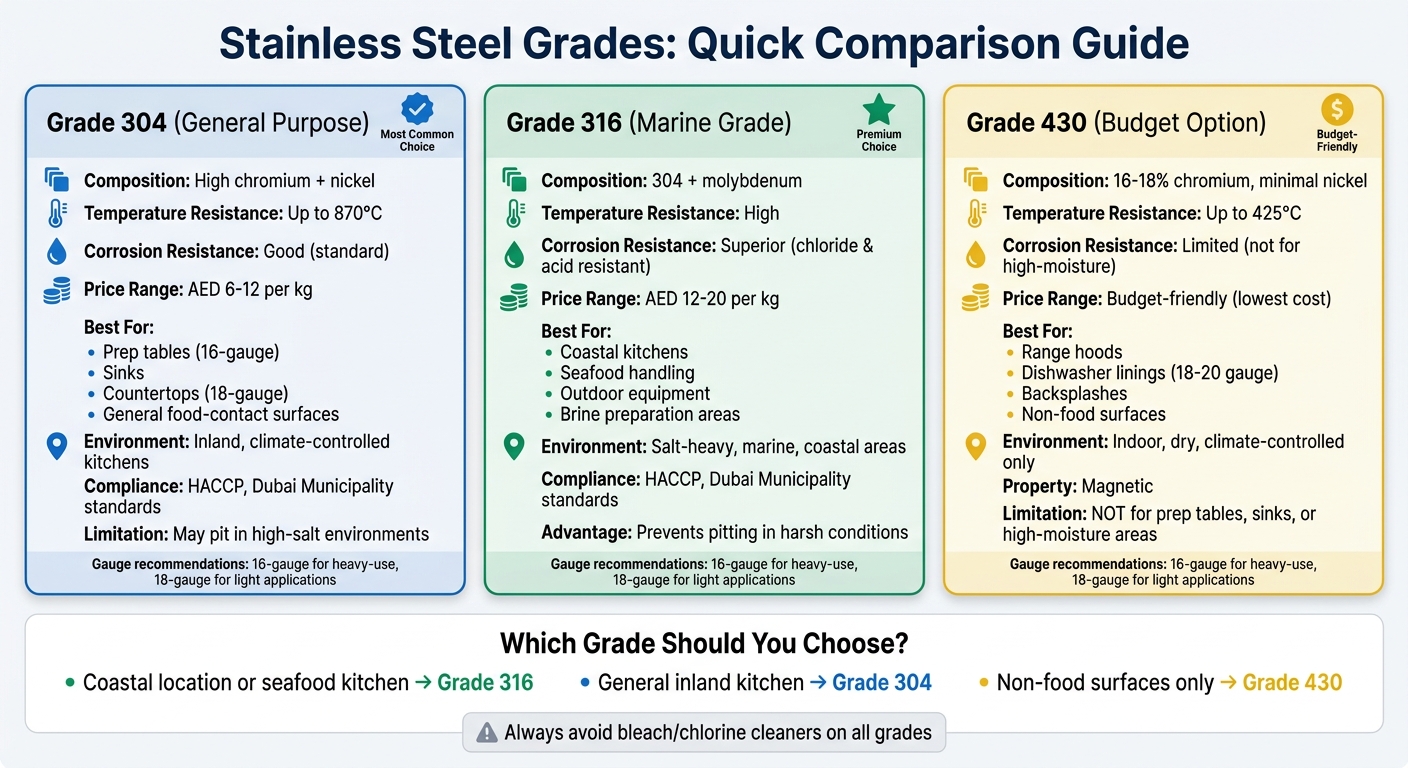
Stainless Steel Grades Comparison for Commercial Kitchens in UAE
Grade Properties and Applications
Choosing the right stainless steel grade can make all the difference in meeting UAE compliance standards and ensuring your kitchen runs efficiently. Each grade has its own strengths, tailored to specific needs like location, food preparation, and budget considerations. Here's a breakdown of the most commonly used grades:
Grade 304 is a reliable all-rounder. Known for its solid corrosion resistance, it can handle temperatures up to 870°C, making it a go-to choice for general kitchen applications. It complies with HACCP and local hygiene standards, but it’s worth noting that prolonged exposure to high-salt environments may lead to pitting over time.
Grade 316 stands out for coastal kitchens or any setting exposed to salty air. The added molybdenum boosts resistance to chlorides and acids, offering better durability against harsh conditions. It’s especially effective in preventing pitting in marine environments, making it ideal for salt-heavy applications like brine preparation.
Grade 430 is a budget-friendly option, perfect for indoor, climate-controlled spaces. Its magnetic properties make it useful for mounting applications, but it lacks the nickel content found in 300-series grades, which limits its corrosion resistance. This grade works best for non-food surfaces like exhaust hoods, backsplashes, and dishwasher linings, especially in dry environments.
For specialised needs, Grade 321 is your go-to for high-temperature applications or heavy welding tasks where 304 might fail due to intergranular corrosion. On the other hand, Grade 17-4 PH excels in high-stress scenarios, offering exceptional strength for components like mixer gears and pump shafts.
In summary:
- Use Grade 304 for general kitchen needs.
- Opt for Grade 316 in salt-heavy or coastal environments.
- Choose Grade 430 for non-food surfaces in indoor settings.
- Select Grade 321 or 17-4 PH for high-temperature or high-stress applications.
Each of these grades brings something unique to the table, ensuring you can match the material to your specific requirements.
How to Select the Right Grade for Your Commercial Kitchen
Factors to Consider When Choosing a Grade
When setting up a commercial kitchen in the UAE, selecting the right stainless steel grade is crucial for meeting compliance standards and ensuring durability. The operating conditions of your kitchen play a big role in this decision. For example, coastal kitchens should prioritise Grade 316 due to its resistance to chloride corrosion, while Grade 304 is often sufficient for inland, climate-controlled spaces.
For work surfaces that endure heavy use, opt for 14 or 16-gauge stainless steel to prevent dents and warping. Meanwhile, 18-gauge stainless steel is ideal for backsplashes and equipment housings. To maintain a clean and professional appearance, brushed finishes are preferable over mirror-polished ones - they hide scratches better and are easier to clean. Always ensure your materials align with UAE Food Code, Dubai Municipality, and HACCP standards by using non-porous surfaces in food-contact areas.
Below are some specific recommendations for different kitchen applications.
Grade Recommendations for Specific Applications
Here’s a breakdown of which stainless steel grades work best for various uses:
- Prep tables and sinks: Choose 16-gauge Grade 304 for its durability and hygienic properties.
- Countertops: Use 18-gauge Grade 304 for a balance of corrosion resistance and structural strength.
- Range hoods and exhaust systems: Grade 430 performs well in these areas.
- Outdoor equipment or coastal setups: Grade 316 offers excellent protection against salt corrosion.
- Dishwasher linings: Grade 430 in 18-20 gauge handles the stress of repeated wet-dry cycles.
- High-temperature zones (e.g., welding areas): Grade 321 resists intergranular corrosion better than Grade 304.
- Components under mechanical stress (e.g., mixer gears, pump shafts): Grade 17-4 PH provides exceptional strength.
Working with Silverline Kitchens for Stainless Steel Solutions
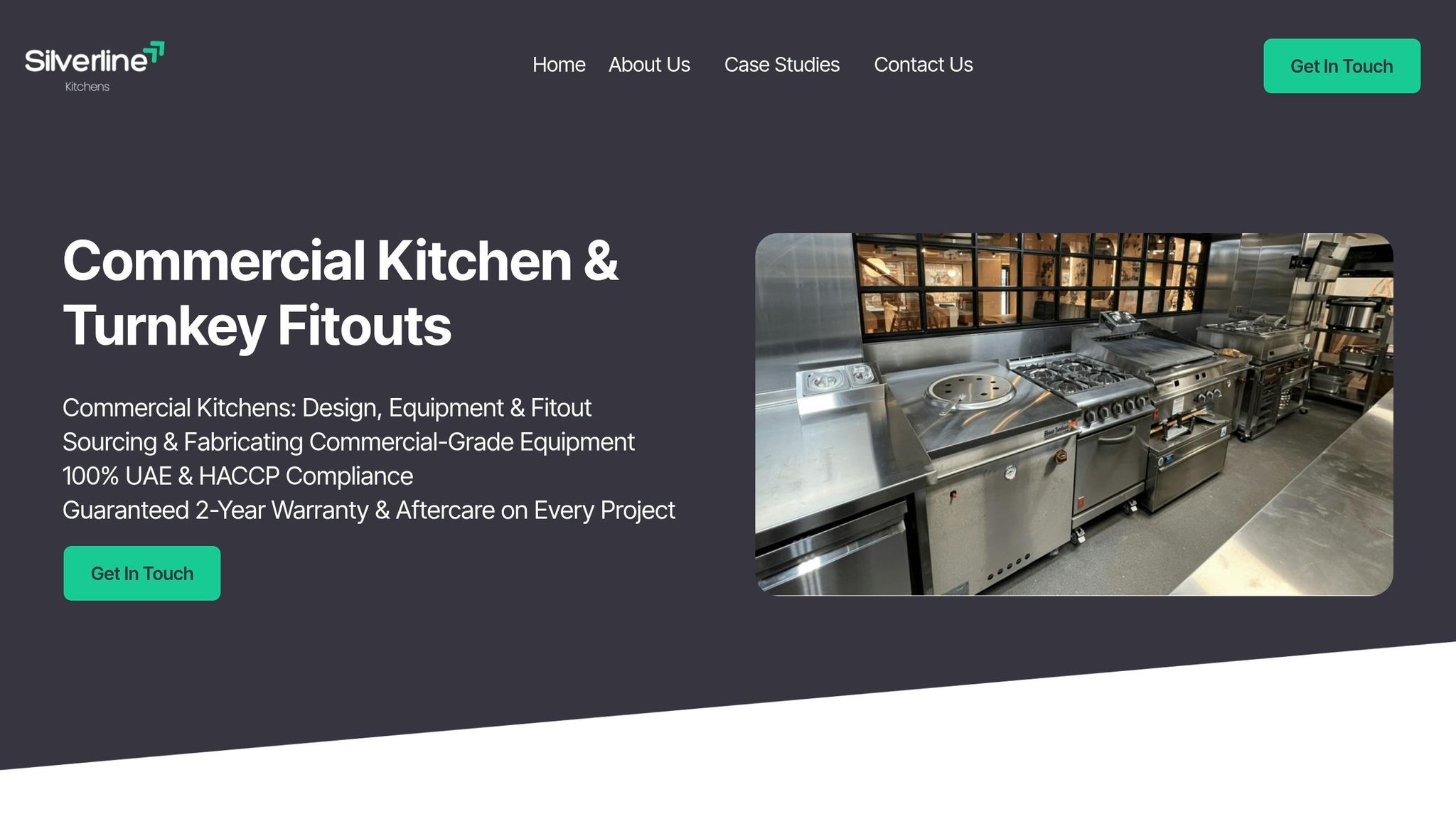
Silverline Kitchens brings over 40 years of expertise in the foodservice industry, delivering stainless steel solutions that adhere to UAE standards. They ensure full compliance with the UAE Food Code, Dubai Municipality, Civil Defence, and HACCP requirements for every project.
"Independent - We choose what fits you, not our supply deals." – Silverline Kitchens
Their AED 5,000 + VAT design package includes 2D/3D drawings, detailed MEP specifications, and tailored equipment recommendations with precise stainless steel grade selections. By sourcing materials independently, Silverline Kitchens prioritises your budget and needs over pre-existing supplier agreements. They also provide custom fabrication services, allowing them to create bespoke components like benches, shelving, and prep stations to fit your exact requirements.
Every project comes with 24 months of aftercare, including replacements and parts, ensuring your installations remain in top condition. Silverline Kitchens has worked on major commercial projects like Talabat’s kitchens and high-end residential spaces such as Villa Chef's Kitchen at Hattan 2 in The Lakes, Dubai. They offer a free initial consultation and site visit to assess your space and discuss customised stainless steel solutions before you make any commitments.
Conclusion
When it comes to commercial kitchen performance, the choice of stainless steel grade plays a key role in ensuring durability, hygiene, and efficiency. The grade you select directly affects how well your surfaces resist corrosion, uphold food safety standards, and endure the rigorous demands of UAE kitchens.
"304 is the most commonly used stainless steel for benches. However, 316 has a higher resistance to corrosion and saltwater environments and is the choice for areas exposed to alkaline materials regularly or under stringent hygiene standards." – Martin Stainless Steel
For inland kitchens, Grade 304 is ideal for food-contact surfaces like prep tables, sinks, and shelves. On the other hand, coastal kitchens benefit from Grade 316, which offers better resistance to salt and chlorides, reducing the risk of pitting or accelerated wear. Meanwhile, Grade 430 is best reserved for high-heat, non-food areas such as range hoods or dishwasher linings.
Additionally, choosing the right gauge is just as important. Opt for 16-gauge for heavy-use surfaces and 18–20 gauge for lighter applications. Pairing the correct grade and gauge with specific kitchen functions ensures both compliance with hygiene standards and operational efficiency in UAE commercial kitchens.
FAQs
How can I tell if stainless steel is genuine 304 or 316?
To differentiate between stainless steel grades 304 and 316, examining their chemical composition is key. Grade 316 includes molybdenum, an element that boosts its resistance to chloride-rich environments, setting it apart from 304. You can also test their corrosion resistance properties to validate the grade further.
What stainless steel finish is easiest to keep clean in a busy kitchen?
A smooth and polished stainless steel finish, such as the standard finish of Grade 304, is ideal for busy kitchens. Its non-porous surface helps prevent the build-up of bacteria and food particles, making it both hygienic and easy to maintain.
Can I use stainless steel cleaners or sanitisers with chlorine in the UAE?
Stainless steel cleaners or sanitisers containing chlorine are suitable for use in the UAE. Thanks to its strong resistance to corrosion and compatibility with various cleaning agents, including chlorine-based disinfectants, stainless steel is a popular choice for ensuring hygiene in commercial kitchens.
