


Running a successful food business in the UAE requires more than great food - it starts with choosing the right kitchen equipment. From industrial ovens to heavy-duty refrigerators, these tools ensure efficiency, food safety, and compliance with UAE regulations. Here's what you need to know:
- Compliance is non-negotiable: Follow UAE standards like HACCP and Dubai Municipality guidelines. Violations can lead to fines up to AED 500,000 or business closure.
- Key certifications: Equipment must have a Certificate of Conformity (CoC) under ECAS or EQM for legal operations.
- Durability matters: Stainless steel equipment (Grade 304 or 316) is preferred for its hygiene and long lifespan.
- Energy efficiency: Invest in energy-saving appliances to cut costs and meet sustainability goals.
- Gas vs Electric: Gas offers instant heat control, while electric ensures consistent cooking - choose based on your kitchen's needs.
Whether you're setting up a restaurant, café, or catering service, the right equipment lays the foundation for a smooth, regulation-compliant operation.
UAE Regulations and Compliance Standards
Running a commercial kitchen in the UAE involves adhering to a detailed regulatory framework aimed at ensuring public health and safety. At the national level, Federal Law No. 10 of 2015 establishes food safety standards, while the Dubai Municipality Food Safety Department oversees compliance on a local scale.
To meet UAE quality and safety requirements, all catering equipment must have a valid Certificate of Conformity (CoC) under the Emirates Conformity Assessment Scheme (ECAS) or the Emirates Quality Mark (EQM). Introduced in 2015 and enforced through Cabinet Resolution No. 35 of 2016, the ECAS programme covers areas such as low-voltage equipment, energy efficiency, and devices used in potentially explosive environments (ECAS Ex) - all critical for commercial kitchens. To secure your CoC, you'll need a valid UAE industry or trade licence, test reports from an accredited lab, and bilingual equipment labels and user manuals in Arabic and English.
Up next, let's explore the HACCP guidelines and the specific requirements from Dubai Municipality that influence kitchen design.
HACCP and Dubai Municipality Standards
Before opening a food business in Dubai, you must obtain approval from Dubai Municipality. This involves submitting your proposed kitchen layout and equipment specifications, prepared by a registered engineering office, in three copies to the Food Control Department. Approval is based on meeting rigorous hygiene, food storage, and handling standards.
Kitchen construction must comply with strict hygiene and safety rules. These include using fire-resistant, easy-to-clean surfaces, ensuring proper ventilation, and designating areas for storage and pest control. Minimum space requirements differ depending on the type of establishment: restaurants need at least 750 sqft, cafeterias require 500 sqft, and kitchens must be either 300 sqft or 40% of the total restaurant area - whichever is greater. For kitchens with tandoors, the minimum area increases to 380 sqft.
Additionally, a Food Safety Certification and a No Objection Certificate (NOC) for foodstuff establishment trade licences from the Dubai Municipality Food Safety Department are mandatory.
Gas Equipment Certification and Fire Safety
In addition to hygiene standards, gas equipment in commercial kitchens must meet stringent safety certifications. Dubai Municipality enforces safety guidelines through its Technical Guidelines for Liquefied Petroleum Gas Cylinders, which regulate the use of gas-powered equipment. Any gas equipment must have ECAS Ex certification to meet safety standards for potentially explosive environments. Improper installation of gas systems can lead to serious risks, such as fire hazards and gas leaks.
The municipality also issues Building & Planning Circulars that address fire prevention and centralised gas distribution systems. Professional installation of gas equipment is not just a safety requirement but also ensures compliance with manufacturer warranties and avoids penalties for non-compliance. Overlooking these regulations can lead to operational shutdowns and costly retrofitting. Cutting corners on certification is a gamble that no business can afford.
Types of Commercial Catering Equipment
Commercial catering equipment is built to handle the demands of high-volume kitchens - designed for heavy, frequent use that keeps up with the fast pace of the food industry. In the UAE, where Dubai’s vibrant culinary scene blends traditional and modern flavours, your choice of equipment plays a major role in delivering consistent results, especially during busy service periods.
The type of equipment you need depends on your menu and service style. For example, a large kitchen serving international buffets will require different tools compared to a shawarma stand or an Italian trattoria. Key items like industrial ovens, refrigerators, and dishwashers are the backbone of any efficient and regulation-compliant operation.
While the initial cost of commercial-grade equipment may seem high, it often pays off in the long run with durability and less downtime - two critical factors for busy kitchens. Here’s a closer look at the essential equipment categories for high-volume operations.
Cooking Equipment – Ranges, Ovens, and Fryers
Gas and electric ranges are the cornerstone of most commercial kitchens. A 4-burner or 6-burner gas range can handle essential cooking techniques like boiling, simmering, sautéing, and pan-frying, which are staples across many cuisines .
When it comes to ovens, flexibility is key. Convection ovens are ideal for baking, roasting, and preparing dishes from European, American, and Middle Eastern menus, thanks to their even heat distribution . For added versatility, combi ovens combine convection, steam, and hybrid cooking modes, allowing you to roast, bake, steam, grill, and reheat - all in one unit.
Specialised ovens cater to specific needs. Electric pizza ovens are perfect for achieving the high temperatures necessary for authentic Italian pizzas , while rapid cooking ovens are a must for quick-service restaurants. For smoky Middle Eastern and BBQ flavours, charcoal ovens deliver that signature taste, and tandoor stations are indispensable for Indian, Pakistani, and some Middle Eastern dishes. These are often available in durable stainless steel designs for live cooking setups .
Fryers, whether gas or electric, and flat-top gas griddles are versatile tools for frying and griddling across various cuisines .
For large-scale cooking, specialised equipment simplifies complex tasks. Gas boiling pans are perfect for preparing soups, stews, and sauces in bulk . Italian restaurants may benefit from gas pasta cookers, while tilting pans offer multi-functional capabilities like frying, boiling, braising, and pressure cooking . Additionally, BBQ grills and shawarma machines are widely available to meet the demands of popular regional dishes.
Refrigeration and Storage Equipment
In the UAE’s intense heat, refrigeration systems need to work harder to maintain safe temperatures. Equipment designed for such climates often features better cooling capacity, efficient heat exchange, and insulation to minimise energy loss.
Walk-in coolers and freezers are essential for large-scale storage, ensuring fresh produce, meat, dairy, and frozen goods stay at the right temperature for several days. These are particularly important for hotels, catering businesses, and high-volume restaurants.
For daily operations, reach-in refrigerators and freezers provide easy access to ingredients in prep areas. Space-saving options like under-counter refrigerators are ideal for compact kitchens, while display refrigerators are perfect for showcasing desserts, drinks, and grab-and-go items - making them a must-have for cafés and bakeries.
Blast chillers are another crucial piece of equipment, rapidly cooling food to safe temperatures. This is especially important in the UAE’s hot climate to ensure food safety and quality.
Food Preparation and Service Equipment
Behind every great dish is a range of preparation tools that keep the kitchen running smoothly. Commercial mixers, such as planetary, spiral, and dough mixers, handle everything from whipping cream to kneading bread dough. Food processors and vegetable slicers save time by speeding up tasks like chopping, slicing, and dicing - essential for kitchens focusing on fresh salads, garnishes, and vegetable-heavy dishes.
Hygienic stainless steel work tables offer durable, easy-to-clean prep surfaces that meet Dubai Municipality standards. Well-organised sinks support handwashing, food prep, and cleaning, while shelving units keep ingredients off the floor and within easy reach, ensuring compliance with food safety regulations.
For dishwashing, options range from compact under-counter machines - ideal for smaller cafés - to large conveyor systems designed for hotels. High-temperature dishwashers, operating between 82°C and 90°C, meet strict sanitation requirements. Meanwhile, serving equipment like bain-maries, heated display cases, and hot holding cabinets keep food at safe serving temperatures (above 63°C) - a critical feature for buffets and catering events.
With the right preparation and service equipment, your kitchen becomes a well-oiled machine where each tool contributes to a seamless workflow. Up next, we’ll explore the differences between gas and electric catering equipment to help you refine your choices.
Gas vs Electric Catering Equipment
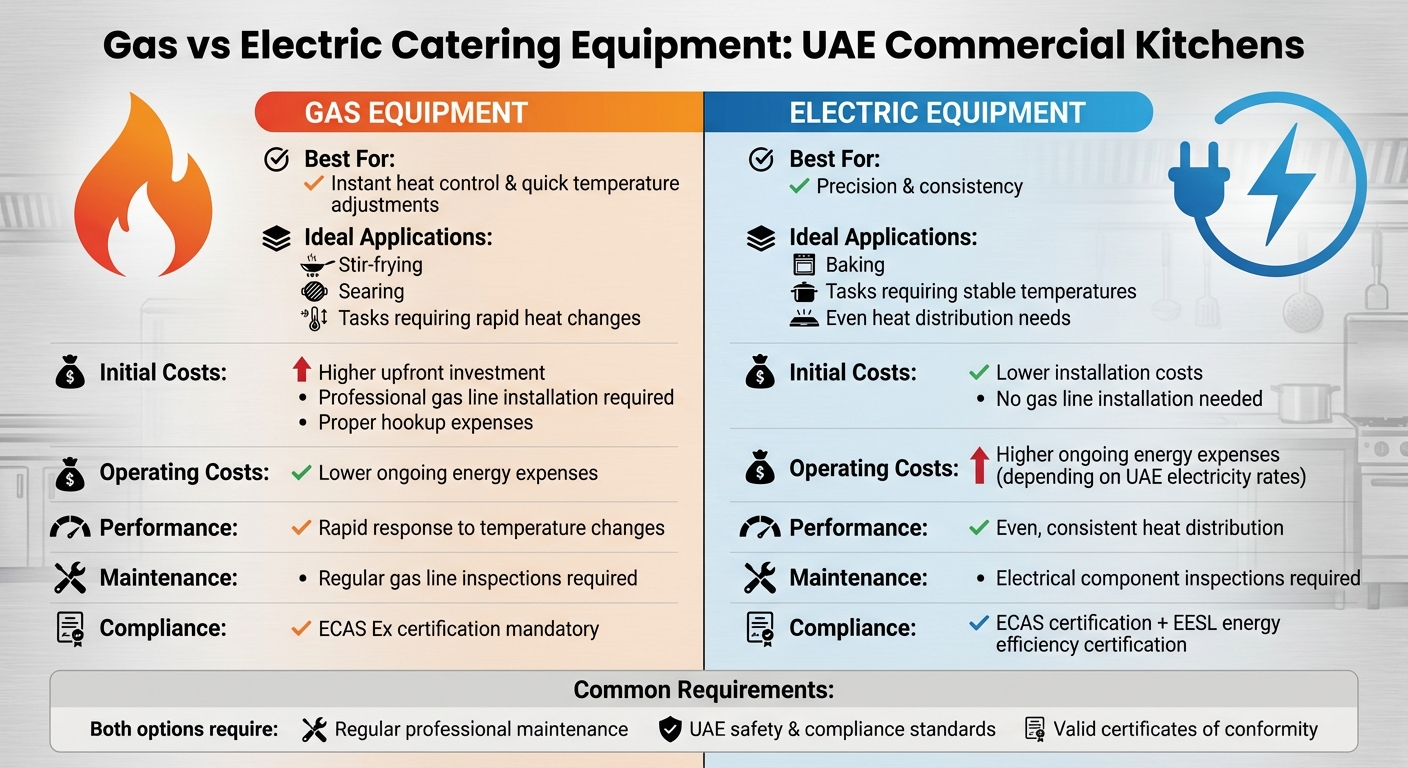
Gas vs Electric Commercial Kitchen Equipment Comparison UAE
When deciding between gas and electric catering equipment in the UAE, the choice often comes down to performance, operating costs, and how well the equipment aligns with your cooking style and budget. Both options are readily available and certified for use locally, so the focus should be on what suits your specific needs.
Gas equipment is ideal for tasks that require instant heat control and quick temperature adjustments, such as stir-frying or searing. Its ability to respond rapidly to changes makes it a favourite for chefs who need flexibility. However, the initial costs can be higher since professional installation of gas lines and proper hookups is required, adding to the upfront investment.
Electric equipment, on the other hand, excels in precision and consistency. It provides even heat distribution, which is especially important for baking, where maintaining stable temperatures is key. While electric equipment tends to have lower installation costs, the ongoing energy expenses can be higher, depending on your usage and the electricity rates in the UAE.
Both types of equipment need regular maintenance to ensure safety and optimal performance. For gas equipment, technicians will check gas lines, while electric equipment requires inspections of electrical components. Meeting UAE safety and compliance standards is a must for both options.
In high-volume kitchens where rapid heat changes are essential, gas equipment often takes the lead. Meanwhile, bakeries and establishments that prioritise consistent and even cooking temperatures may find electric equipment to be the better choice. By understanding these differences, you can make an informed decision about sourcing and maintaining the right equipment for your needs.
sbb-itb-19c3c9a
Sourcing, Installation, and Maintenance
Once you've chosen the right equipment, the next steps are sourcing, installing, and maintaining these essential assets. In the UAE, acquiring commercial catering equipment requires meticulous planning to meet local regulations and safeguard your investment.
End-to-End Project Management with Silverline Kitchens
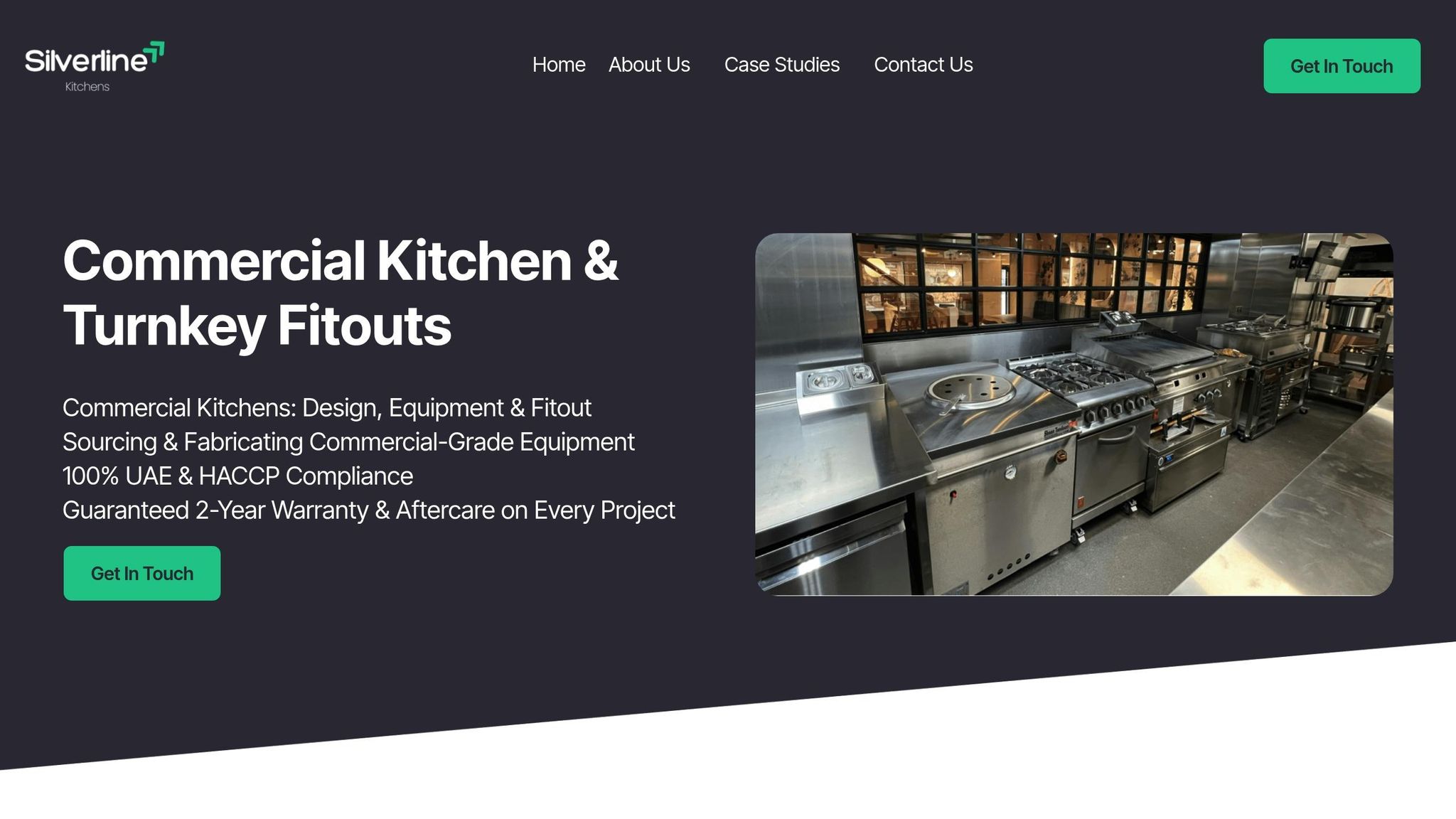
Managing a commercial kitchen project is no small feat - it involves coordinating design, equipment procurement, compliance checks, and installation. Silverline Kitchens takes care of the entire process, starting with in-depth discussions about your space and operational needs. From there, they handle equipment specifications and high-level planning, ensuring everything aligns with HACCP standards and gains local authority approval.
Navigating UAE regulations can be tricky. Electrical and gas appliances need valid certificates of conformity, while energy-regulated products must have EESL certification to confirm energy efficiency. A knowledgeable partner like Silverline Kitchens helps you avoid unnecessary delays and compliance headaches.
This comprehensive project management approach ensures everything runs smoothly, setting the stage for efficient installations and operations.
Installation for Workflow Efficiency
Proper installation is key to streamlining staff workflow, enhancing food preparation, and maintaining hygiene. Professional teams handle everything - from setting up appliances and installing ventilation systems with exhaust hoods and ductwork to calibrating equipment for peak performance. The layout is carefully planned to optimise space, allowing for seamless movement and food handling while adhering to HACCP guidelines.
Electrical work must comply with DEWA Regulations 2025 in Dubai or CIBSE standards in Abu Dhabi to ensure safety. Installation teams trained and certified by manufacturers guarantee that your setup is not only safe but also durable enough to handle Dubai's challenging conditions.
After-Sales Support and Maintenance Services
Keeping your equipment in top shape requires regular maintenance to prevent breakdowns and extend its lifespan. Silverline Kitchens offers a range of services, including scheduled inspections, preventative maintenance, and access to genuine spare parts for reliable performance.
For added peace of mind, an Annual Maintenance Contract (AMC) provides regular check-ups and 24/7 emergency support. This ensures minimal downtime and consistent performance, all while meeting UAE safety standards.
Conclusion
When setting up a commercial kitchen in the UAE, it's essential to prioritise equipment that aligns with the three key factors: compliance, durability, and efficiency. Ensure your choices meet local safety certifications like SASO, G-Mark, and hygiene standards to avoid customs issues and operate within the law.
In the UAE's challenging environment, the quality of materials truly matters. Stainless steel, particularly Grade 304 or 316, is widely regarded as the best option for commercial kitchens. It offers excellent hygiene, resists corrosion, and stands the test of time. Opting for cheaper alternatives often leads to frequent breakdowns, so it’s wise to choose ISO 9001-certified manufacturers known for their strict quality standards.
Energy efficiency is another critical factor that can directly affect your operating costs. Equipment with Energy Star ratings or eco-certifications not only reduces utility expenses but also supports your sustainability goals. Modern, IoT-enabled appliances take it a step further by offering predictive maintenance, which helps minimise downtime and keeps operations smooth.
For a hassle-free experience, Silverline Kitchens provides a complete solution. From design and sourcing to installation and after-sales maintenance, they ensure your kitchen complies with UAE regulations, including HACCP, Dubai Municipality, and Civil Defence standards, from the very beginning. Their ongoing maintenance and after-sales support give you confidence that your investment is safeguarded for the long haul.
With expert advice and top-tier equipment, you can turn your kitchen into a compliant, efficient, and highly profitable operation.
FAQs
What are the main regulatory standards for commercial kitchens in the UAE?
Commercial kitchens in the UAE are required to follow strict regulatory standards to ensure safety and compliance. Key requirements include adhering to the UAE Fire & Life Safety Code, installing fire-rated ductwork with a minimum resistance of 120 minutes, and meeting NFPA 96 standards for ventilation and fire prevention.
Kitchens must also be equipped with a UL 300-approved fire suppression system and obtain certification from the appropriate civil defence authorities. Proper ventilation and strict compliance with these rules are essential to maintain safety and align with UAE regulations.
Should I choose gas or electric catering equipment for my restaurant in the UAE?
The decision between gas and electric catering equipment hinges on your restaurant's unique requirements. Gas equipment stands out for its fast heat-up times, precise temperature control, and potentially lower operational costs over time. Meanwhile, electric equipment is known for delivering consistent, even heating, enhanced safety features, and easier cleaning and maintenance.
When making your choice, take into account factors like your menu, available energy sources, installation setup, and utility costs in the UAE. For instance, if your kitchen focuses on high-temperature cooking or operates wok stations, gas might be the more practical option. Conversely, for tasks like baking or precision cooking, electric equipment could better meet your needs. Be sure to select equipment that adheres to UAE regulations, such as HACCP and Dubai Municipality standards, to ensure smooth and compliant operations.
Why is stainless steel the preferred choice for commercial kitchen equipment in the UAE?
Stainless steel is a popular choice for commercial kitchens in the UAE, and it’s easy to see why. Its durability and hygienic surface make it perfect for maintaining the high cleanliness standards required in the region. The non-porous surface doesn’t just resist bacteria but also makes cleaning a breeze. Plus, it stands up well to corrosion, heat, and impact, ensuring it performs reliably even in the busiest kitchens.
Beyond its practical benefits, stainless steel adds a sleek, professional touch to modern kitchen designs. It’s also a long-term investment - requiring less maintenance and offering exceptional longevity. This makes it not only a smart choice for functionality but also a cost-effective solution for commercial kitchens.
