


Running a bakery in the UAE can be costly due to high energy demands. Here's how you can cut those costs while staying compliant with local regulations:
- Energy Costs: Bakeries consume up to 590 kWh per tonne of bread, with cooling and ventilation systems running constantly due to UAE’s extreme heat.
- Regulations: Compliance with standards like Estidama, Barjeel, and Dubai's Green Building Regulations is mandatory to reduce energy use and meet sustainability goals.
- Heat Loss: Up to 50% of heat in ovens is wasted due to poor insulation and flue gases, creating opportunities for savings with better equipment.
- Energy Breakdown: 63% of energy use in bakeries comes from electricity, with 37% from natural gas.
Key Solutions:
- Efficient Equipment: Invest in energy-saving ovens, refrigeration units, and mixers with features like heat recovery and variable-speed drives.
- Optimized Layouts: Separate high-heat zones (e.g., ovens) from cooling areas to reduce energy strain.
- HVAC Upgrades: Use anti-corrosion coatings and maintain systems regularly to handle UAE’s dusty, saline air.
- LED Lighting: Replace traditional bulbs with LEDs to reduce electricity use by up to 90%.
- Waste Heat Recovery: Reuse oven flue gases to preheat air, saving 161.93 tonnes of natural gas annually with a payback period of less than a year.
By designing smarter layouts, choosing efficient appliances, and adhering to local energy codes, you can lower costs and meet UAE sustainability targets while maintaining high operational standards.

Energy Consumption and Savings in UAE Bakeries: Key Statistics
UAE Regulations for Energy-Efficient Kitchens
HACCP and Municipality Compliance Requirements
When designing an energy-efficient bakery in the UAE, it’s crucial to align with both Dubai Municipality guidelines and HACCP standards. These regulations emphasise maintaining precise temperature control across different zones, which directly affects your energy systems. Your HVAC system must meet the UAE Energy Efficiency codes, which outline specific requirements like proper ventilation rates, energy recovery systems, and zoning for commercial kitchens. Additionally, they enforce strict limits on duct leakage, require robust insulation, and recommend high-efficiency chillers with variable-speed drives (VFDs).
Separating high-heat areas (like ovens) from refrigeration zones not only improves workflow but also reduces the cooling demand significantly. Fire safety is another critical consideration. Civil Defence regulations mandate the integration of fire safety equipment with ventilation systems, along with annual testing of all safety devices. The challenge lies in designing energy-efficient systems that also accommodate fire suppression equipment without disrupting airflow efficiency. These requirements reflect the UAE’s broader focus on energy conservation and environmental responsibility.
Energy and Environmental Standards in the UAE
In the UAE, the Emirates Authority for Standardisation and Metrology (ESMA) enforces Minimum Energy Performance Standards for all industrial equipment used in bakeries, such as motors, pumps, and commercial appliances. To avoid potential fines or project delays, ensure that essential equipment like ovens, mixers, and refrigeration units carry the ESMA energy efficiency label.
Beyond HVAC regulations, national standards influence the selection of equipment and refrigerants. Many new bakery projects follow green building frameworks like LEED or Estidama, which impose stricter requirements for HVAC systems, air quality, and energy management. The UAE is also phasing out older refrigerants in favour of eco-friendly alternatives with lower global warming potential, such as R-32 or R-454B, to support its climate goals.
"The Dubai Supreme Council of Energy has set a dynamic strategic direction to achieve a savings in power & water consumption." - Dubai Supreme Council of Energy
Maintaining compliance and efficiency requires a proactive approach to upkeep. Regular maintenance practices - like monthly filter replacements, quarterly refrigerant inspections, and semi-annual system calibrations - are essential to meet regulatory standards and ensure long-term energy savings.
sbb-itb-19c3c9a
Bakery Layout Design for Energy Savings
Equipment Placement for Energy Efficiency
How you arrange your bakery equipment can have a big impact on energy efficiency. Take baking ovens, for example - they’re the most energy-hungry part of any bakery. Shockingly, up to 50% of the heat they generate is wasted through flue gases, poor insulation, and heat loss via baking tins.
To combat this, position ovens and related equipment to make the most of waste heat. For instance, the exhaust flue gas from ovens can reach temperatures as high as 336°C. Capturing this heat effectively is key. Installing air pre-heaters near oven burners to warm up combustion air can cut fuel consumption by 4%. This approach could save 161.93 tonnes of natural gas annually - worth approximately AED 343,600 - with a payback period of just 0.77 years.
Another smart move is thermal zoning. Keep high-heat areas, like ovens, separate from refrigerated zones to reduce cooling demands. For example, placing proofing cabinets close to ovens allows them to use waste heat to maintain the ideal 40°C fermentation temperature. Similarly, connecting ovens to water heating systems can channel waste heat to produce 70°C hot water for cleaning, cutting down on boiler usage.
While managing waste heat is essential, creating well-defined workflow zones further enhances energy efficiency.
Workflow Zones to Reduce Energy Consumption
In addition to strategic equipment placement, setting up clear workflow zones can significantly reduce energy losses throughout the bakery. By dividing the bakery into zones - such as preparation, baking, cooling, storage, and display - you can limit heat transfer and reduce the need to open doors frequently. For example, placing refrigerated storage too close to ovens forces refrigeration units to work harder to counteract the heat, driving up energy use. Proper thermal separation between these areas eases the load on HVAC systems.
Operational strategies also play a major role in making zones efficient.
"We map how ingredients, staff and customers move: separating prep, baking, cooling, storage and display zones while keeping routes short and intuitive." – Dina Group
A well-thought-out layout keeps distances between prep areas, ovens, and cooling racks short. This reduces the time doors stay open, helping maintain stable temperatures across zones. For smaller bakeries in the UAE, using multifunctional equipment - like planetary mixers that can mix, knead, and whip, or compact electric deck ovens - saves both space and energy. On the other hand, larger bakeries can benefit from industrial tunnel ovens with individually controlled baking zones, which use up to 40% less energy compared to older gas-fired models.
Lastly, aligning your mechanical, electrical, and plumbing (MEP) systems with your layout ensures power and drainage are exactly where you need them. This avoids inefficient, temporary setups that waste energy. Combining units like retarder-proofers, which refrigerate dough overnight and automatically shift to proofing temperatures, can also streamline operations while conserving energy.
Choosing Energy-Efficient Bakery Equipment
Selecting the right equipment is a game-changer when it comes to managing energy costs in bakeries. In the UAE, where electricity makes up around 63% of purchased energy in commercial bakeries, energy-efficient appliances are a must to stay profitable. Add to that the high ambient temperatures, and refrigeration systems are forced to work overtime, further driving up energy bills.
When purchasing equipment, don’t just focus on the initial price tag. While energy-efficient models might cost more upfront, the long-term savings can be significant. Features like heat recovery systems and variable-speed drives can help cut operational costs over time. Let’s take a closer look at how key bakery appliances - ovens, refrigeration systems, and mixers - can help save energy and money.
Energy-Efficient Ovens for UAE Bakeries
Ovens are the biggest energy consumers in bakeries. For example, indirect ovens require about 590 kWh per tonne of bread, while direct ovens use roughly 221 kWh per tonne. Unfortunately, up to 50% of the heat in commercial ovens can be lost due to flue gases and poor insulation. This makes proper insulation crucial, especially in the UAE’s hot climate. Improved insulation can slash energy costs by 6% to 26%.
Modern ovens come with technologies like inverter drives and heat recovery systems that make a huge difference. Inverter drives allow precise control of fan speeds, and reducing fan speed by just 20% can result in a 50% energy saving.
"A mere 20% reduction in fan speed yields a 50% energy saving, making the BX Eco-Wash not just efficient, but eco-friendly too".
Another energy-saving feature is air pre-heaters, which use waste heat from flue gases (reaching up to 336°C) to preheat combustion air. This method can save up to 161.93 tonnes of natural gas annually, translating to approximately AED 343,600, with a payback period of less than a year.
Convection ovens, which circulate hot air with fans, are about 20% more energy-efficient than standard ovens. For artisan bread production, deck ovens with stone soles retain heat exceptionally well, while rotary rack ovens ensure even heat distribution for large batches.
Other energy-saving features to look for include adaptive heat algorithms for maintaining consistent temperatures, "eco" modes for idle periods, and LED chamber lighting, which uses up to 88% less energy than traditional halogen bulbs. When buying ovens, ensure they comply with UAE standards (220–240V, 50Hz) and that local maintenance support is available.
Low-Energy Refrigeration and Proofing Systems
Refrigeration and proofing systems are another area where energy efficiency matters, especially because they run continuously. In the UAE’s hot climate, these systems face extra strain, making efficient cooling cycles essential. Since a significant portion of energy is lost during baking, cooling, and freezing, upgrading these systems can lead to substantial savings.
Modern refrigeration units with advanced compressors and better insulation reduce electricity consumption while maintaining stable temperatures. Combination units like retarder-proofers, which handle both refrigeration and proofing, streamline operations and save energy. For example, a UNOX proofer (10 trays, 60×40) is priced at about AED 7,033.95, while a Rollergrill proofer (8 trays) costs around AED 3,885.00. A lowboy chiller with four drawers is available for approximately AED 4,700.00.
Look for equipment that carries UAE efficiency labels or meets Barjeel regulations, as these units typically consume 30% less energy. Asking manufacturers for case studies can also help you understand payback periods. With energy costs representing about 4% of the total cost of materials in commercial baking, even small improvements in efficiency can lead to major savings over time.
Energy-Saving Mixers and Dough Sheeters
Mixers and dough sheeters may not consume as much energy as ovens, but efficient models are still important, especially in high-volume bakeries. Variable speed drives, programmable controls, and automatic shutoff features are becoming standard.
Variable speed drives are particularly useful because they let you adjust motor speeds based on the task, ensuring no energy is wasted. Planetary mixers with variable speed controls are ideal for pastries and cakes, while spiral mixers are better suited for large batches of bread and heavy doughs.
Compliance with Federal Law No. 10 of 2015 on Food Safety is mandatory, requiring strict hygiene and traceability standards. Equipment must also meet UAE electrical standards (220–240V, 50Hz) and carry certifications like NSF or UL as required by Dubai Municipality. Stainless steel construction is essential for durability and hygiene, with non-compliance fines exceeding AED 100,000.
In the UAE, spiral mixers (40L–50L) cost between AED 4,200 and AED 5,145, while planetary mixers (20L–40L) range from AED 8,800 to AED 26,250. Heavy-duty planetary mixers (60L) can cost up to AED 38,850. Dough sheeters are typically priced around AED 4,368 for standard commercial models.
Automation is also on the rise in large-scale bakeries. Automatic dough sheeters reduce manual labor, ensure consistency, and minimise waste, while automated mixing systems maintain uniformity and uphold hygiene standards. Combined with an efficient kitchen layout, modern equipment can reduce labor costs by up to 15%.
When choosing mixers and dough sheeters, opt for brands with established service centres in the UAE, such as Hobart, Rational, or Bühler Group, to ensure reliable maintenance and warranty support. Size mixers appropriately by calculating peak-hour requirements and adding a 20–30% buffer to avoid overworking the equipment, which can lead to energy waste. For added efficiency, consider IoT-enabled models that monitor real-time performance and energy consumption.
Lighting and Ventilation for Energy Savings
Lighting and cooling systems can significantly drive up energy bills, especially in the UAE, where electricity makes up 63% of the energy used in commercial bakeries. The region's climate further increases HVAC demands, particularly when dealing with the heat from ovens that can reach up to 336°C. However, by adopting LED lighting and efficient ventilation technologies, bakeries can cut costs while maintaining a comfortable and productive workspace. These upgrades are crucial for keeping operations cost-efficient.
LED Lighting for Bakery Workspaces
Switching to LED lighting is a straightforward way to save on energy expenses. LEDs consume 40% to 90% less electricity than traditional bulbs, depending on the type of bulb being replaced. In the Middle East, lighting accounts for about 22% of all energy use, making the potential savings substantial. A great example is the Dubai Lamp, developed by Philips in partnership with Dubai Municipality, which has been tailored for the region and delivers notable annual savings.
LEDs also bring practical benefits to bakery settings. They are mercury-free and come in shatterproof designs, which are essential for meeting food safety standards like HACCP and NSF/ANSI Standard 2. Unlike conventional bulbs that emit a lot of heat, LEDs stay cool, reducing the strain on HVAC systems - a major advantage in the UAE's hot climate.
"One of the things about normal lightbulbs is that they give off a lot of heat, and that means more air conditioning is required to cool down homes... because these bulbs [LEDs] use so little energy that will result in less of a demand for cooling."
– Ivano Iannelli, Dubai Carbon
LEDs also excel in cold environments like proofers and refrigerators, where fluorescent lamps often dim. With lifespans ranging from 50,000 to 100,000 hours - over three times longer than older lighting technologies - you’ll save on replacement costs and labour. For areas with high humidity or exposure to water, opt for fixtures with at least an IP65 rating to ensure durability against moisture and dust. While LEDs can significantly cut lighting expenses, efficient ventilation systems are another key component in reducing energy use.
Efficient Ventilation and HVAC Systems
Good ventilation systems are just as important as efficient lighting when it comes to energy management. They help regulate heat and air quality without wasting energy. For example, waste heat recovery (WHR) systems capture heat from ovens and reuse it to preheat combustion air, heat provers, or generate hot water. Air preheating is particularly economical, offering a payback period as short as 0.77 years and saving up to 161.93 tonnes of natural gas annually. Demand-controlled exhaust systems are another smart choice. These systems use sensors to adjust airflow based on production activity, cutting unnecessary energy use and retaining conditioned air.
If upgrading an entire HVAC system isn’t feasible, standalone air cleaners can help. These units recirculate air to remove flour dust and other particles, reducing the workload on primary cooling systems.
When planning your ventilation system, ensure air flows from high-hygiene areas (kept at higher pressure) to less clean zones like storage or receiving before being exhausted. This setup prevents cross-contamination and improves airflow efficiency. Additionally, using filters rated MERV 14 to MERV 16 can prevent flour and sugar dust from building up on HVAC cooling coils, which can otherwise reduce heat transfer efficiency and increase energy costs. In the UAE, HVAC designs must adhere to the "Design Guide for Dubai: Mechanical", which sets minimum standards for cooling load calculations and ventilation requirements in the region's harsh climate.
Working with Silverline Kitchens for Energy-Efficient Design
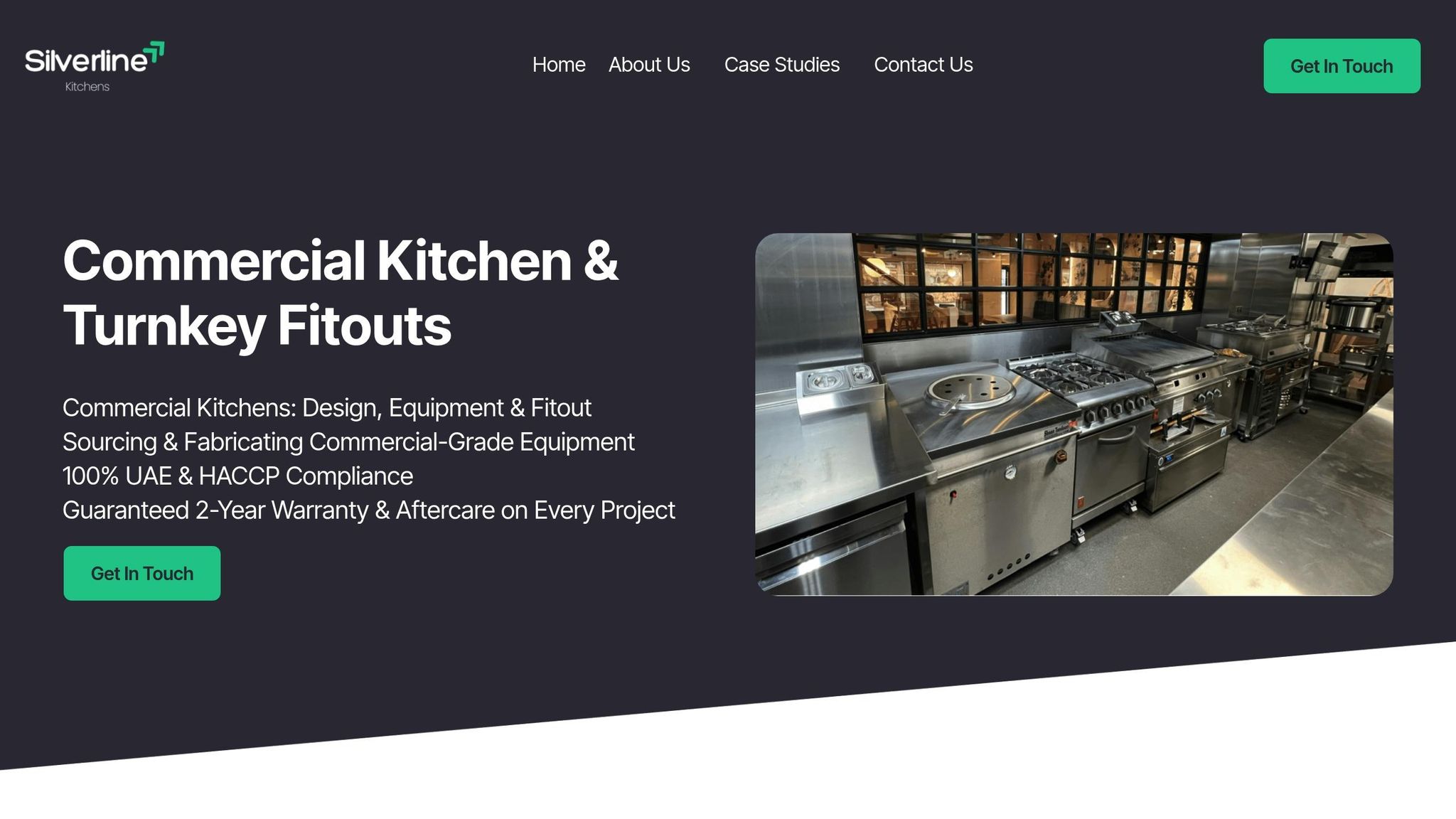
Creating an energy-efficient bakery that complies with UAE standards is no small task. It demands a mix of technical know-how, regulatory understanding, and thoughtful design. Silverline Kitchens brings all of this together to help bakery owners reduce energy costs while meeting required certifications. Their all-inclusive approach - covering everything from site surveys to post-installation support - ensures your bakery is set up for efficient operations from the start. Let’s break down how their custom designs and project management services can lead to real energy savings.
Custom Design and UAE Regulatory Compliance
Silverline Kitchens specialises in HACCP-compliant designs that not only meet Dubai Municipality standards but also optimise workflow. Their layouts are carefully planned to create smooth transitions between refrigeration, cooking, and preparation areas, cutting down on unnecessary energy use. High-quality stainless steel is a cornerstone of their designs, with SS304 used for food contact surfaces and SS316 for environments prone to corrosion, such as coastal areas. This ensures durability, hygiene, and easy cleaning.
The design process aligns with the UAE Energy Strategy 2050, which aims for a 42–45% improvement in energy efficiency by 2030. By incorporating energy-saving ovens, fryers, and smart refrigeration systems, Silverline Kitchens helps bakery owners tackle the high energy demands of industrial baking. Every piece of equipment is installed with precision - professionally levelled and sealed to meet Dubai Municipality inspection standards.
Complete Project Management Services
Energy-efficient design is just the beginning. To ensure these measures deliver results over time, effective project management is crucial. Silverline Kitchens manages every stage of the project, from consultation and design to fabrication, delivery, and installation. They provide quotes within a single working day, and custom stainless steel units are typically ready within five working days after design approval.
Their commitment doesn’t end at installation. Silverline Kitchens offers ongoing maintenance and support to keep your equipment running efficiently. Their Annual Maintenance Contracts (AMC) are particularly valuable, ensuring long-term energy savings and consistent compliance with safety standards. With expertise spanning regulatory bodies like Dubai Municipality's Food Control Department and Civil Defence, they help you maintain compliance for years to come.
Conclusion
Designing bakeries with energy efficiency in mind isn’t just about cutting costs - it’s about securing a long-term foothold in the UAE's competitive market. Even small steps toward improving efficiency can lead to noticeable savings. Experts in the field consistently highlight energy efficiency as a cornerstone of sustainable manufacturing. Additionally, the UAE’s national policies strongly encourage businesses to prioritise sustainability.
The UAE’s Energy Strategy 2050 sets a clear directive, aiming for nearly 50% of the country’s energy to come from sustainable sources. For bakery owners, this means aligning operations with these forward-thinking goals.
To truly manage energy effectively, it’s essential to treat it as a dynamic resource. Simply upgrading individual pieces of equipment isn’t enough. The real game-changer lies in using an Energy Management System for continuous monitoring. By targeting energy-heavy areas like ovens, refrigeration units, and steam systems, and combining thoughtful design with regular upkeep, bakeries can create a solid foundation for sustainable success. This approach not only supports profitability but also ensures compliance with UAE regulations, keeping your bakery competitive in a rapidly evolving market.
FAQs
How can I design an energy-efficient bakery that complies with UAE regulations?
To design an energy-efficient bakery in the UAE, it’s essential to align your plans with the Dubai Green Building Regulations. These regulations emphasise the importance of efficient building elements like insulation, glazing, and thermal mass, as well as systems such as HVAC, lighting, and hot water. Start by conducting energy performance calculations during the design phase, ensuring that your plans incorporate high-efficiency equipment to meet these standards.
When it comes to appliances, all major equipment - such as ovens, refrigeration units, and dishwashers - must comply with the UAE Emirates Conformity Assessment Scheme (ECAS) Energy-Efficiency Standards. Opt for appliances with certified energy-efficiency labels, as they confirm compliance and make the approval process smoother.
For a streamlined approach, Silverline Kitchens offers customised energy-efficient designs. They can source ECAS-certified equipment and optimise layouts to enhance ventilation and lighting. With their expertise, your bakery will not only adhere to UAE regulations, including HACCP and Dubai Municipality standards, but also lower energy costs and minimise its environmental footprint.
How can I reduce energy costs in my bakery in the UAE?
Reducing energy costs in your UAE bakery starts with smart planning and efficient techniques. Make the most of natural daylight to cut down on artificial lighting needs, and where lighting is necessary, opt for high-efficiency LED options. Ensuring compressed-air systems are properly sealed and optimised can also help reduce unnecessary energy loss.
You might also explore capturing and reusing oven waste heat for secondary purposes, like heating water or warming other areas of your bakery. Installing high-efficiency ventilation systems is another smart move to maintain good air quality while keeping energy usage in check. To stay on top of it all, a continuous energy-management programme can help monitor energy use, maintain equipment, and fine-tune operations for better efficiency.
Silverline Kitchens offers solutions to seamlessly incorporate these energy-saving strategies into your bakery's design, aligning with UAE regulations and helping you create a cost-effective, sustainable workspace.
What energy-efficient equipment is essential for running a bakery in the UAE?
To improve energy efficiency in a UAE bakery, it’s worth looking into Energy Star-rated commercial refrigeration units and high-efficiency convection ovens. These appliances are built to use less energy without compromising performance - an important factor given the UAE’s hot climate and the high demands of daily operations.
Using energy-saving equipment not only cuts down on electricity bills but also supports sustainability initiatives, benefiting both your business and the environment.
