


Building a commercial kitchen in the UAE requires careful planning to meet strict regulations and ensure smooth operations. Here's what you need to know:
- Compliance is mandatory: Adhere to HACCP standards, Dubai Municipality guidelines, Civil Defence rules, and more to pass inspections and avoid delays.
- Key focus areas: Proper ventilation, fire safety systems, and waste management are critical for meeting legal requirements.
- Efficient design matters: Plan zones for food prep, cooking, and cleaning to prevent cross-contamination and improve workflow.
- Permits required: Obtain a trade license, food establishment permit, and other approvals to operate legally.
- Equipment and materials: Choose food-safe surfaces and commercial-grade appliances that align with UAE standards.
Tip: Working with experts like Silverline Kitchens can simplify the process by ensuring compliance and efficient design. A well-planned kitchen saves money, boosts safety, and supports long-term success.
UAE Commercial Kitchen Regulations You Must Follow
Navigating the regulatory framework in the UAE is essential when setting up a commercial kitchen. Several authorities oversee the design and operation of such kitchens, and compliance with their guidelines is vital. These rules ensure safety, hygiene, and operational efficiency, forming the basis of the standards and permits outlined below.
Main Regulatory Standards
To meet compliance requirements, several key standards must be followed:
- HACCP Implementation: Kitchens must adopt the Hazard Analysis and Critical Control Points (HACCP) system. This internationally recognised framework identifies and manages risks in food preparation. Tailoring the HACCP plan to your kitchen's layout and conducting regular updates are crucial for maintaining its effectiveness.
- Municipal Regulations: Local authorities set rules covering structural and operational aspects. These include using approved materials for surfaces, designing spaces for easy cleaning, and ensuring adequate hand-washing stations. Fire safety measures are also mandatory, requiring certified prevention systems, suppression systems, and clearly marked emergency exits.
- Ventilation and Waste Management: Proper ventilation systems are needed to control exhaust and grease buildup. Additionally, waste management practices must align with local environmental standards to minimise risks and maintain hygiene.
Required Permits and Approvals
Operating a commercial kitchen legally in the UAE requires obtaining several permits and approvals. The process involves coordination with multiple regulatory bodies:
- Trade Licence: Issued by the Department of Economic Development (DED), this licence requires submission of documents such as detailed kitchen layout plans, lease agreements, and other business-related paperwork.
- Food Establishment Permit: Local municipalities issue this permit after reviewing key documents, including your HACCP plan, health certifications, and equipment specifications.
- Building Completion Certificate: This certificate confirms that your kitchen's construction complies with structural and design standards. It is granted after inspections conducted at different stages of the project.
- Civil Defence Approval: Fire safety plans, including details of fire suppression systems and evacuation procedures, must be submitted to obtain this approval.
- Environmental Clearance: This ensures your kitchen meets standards for waste management, ventilation, and noise control.
Following these regulations not only ensures legal compliance but also creates a safer, more efficient environment for food preparation and operations.
How to Design a Functional and Compliant Kitchen Layout
Creating a commercial kitchen layout that aligns with UAE regulatory standards is essential for ensuring food safety and operational efficiency. A carefully thought-out design not only supports compliance but also enhances staff productivity and overall workflow.
Kitchen Zones and Workflow Planning
To meet UAE compliance standards, your kitchen layout must include clearly defined zones to prevent cross-contamination. For example, raw and cooked food preparation areas should be physically separated, with distinct sinks, cutting boards, and storage spaces for each. This separation is critical for adhering to HACCP guidelines.
Position the receiving and storage area near the main entrance. This setup reduces delivery travel time and provides sufficient space for inspecting and temporarily holding incoming ingredients. Cold storage units should be nearby to maintain consistent temperature control and ensure easy access.
The preparation zone should allow for a smooth transition from storage to cooking. Allocate enough counter space and equipment to handle food processing efficiently. Include hand-washing stations within easy reach of preparation surfaces, as required by local regulations.
The cooking zone is the core of your kitchen and requires strategic planning. Arrange cooking equipment to optimise heat management and ventilation while ensuring chefs can move seamlessly between stations. Leave enough clearance for safe operation and maintenance access.
Dishwashing and sanitation areas should be placed away from food preparation zones. Separate drainage systems are essential to prevent contaminated water from impacting clean areas. These zones must handle soiled items without disrupting the kitchen's workflow.
Efficient staff movement is another key factor. Design pathways that minimise crossing between clean and dirty areas. Ensure corridors are at least 1.2 metres wide to accommodate multiple staff members and trolley movement during peak hours.
Space Planning and Measurement Guidelines
Once the zones are defined, precise measurements ensure compliance with UAE standards. Proper space allocation is critical for both functionality and adherence to regulations.
- Work surfaces: Provide at least 0.6 square metres of preparation space per chef during peak times. This ensures enough room for staff to work efficiently.
- Equipment spacing: Follow manufacturer guidelines and fire safety standards. For example, maintain a minimum clearance of 0.9 metres behind cooking equipment for safe operation and cleaning. Gas-fired appliances require additional ventilation space as per Civil Defence rules.
- Storage requirements: Plan for 3-5 days of inventory based on your menu and delivery schedule. Allocate 0.3 cubic metres of dry storage space per AED 1,000 of weekly food purchases and 0.15 cubic metres for refrigerated items.
- Ceiling height: Ensure at least 2.7 metres in food preparation areas to accommodate proper ventilation. In cooking zones, higher ceilings of 3.0 metres or more are preferred for better air circulation and heat dissipation.
- Temperature control zones: Refrigerated areas need proper insulation, door seals, and sufficient space for air circulation. Position these zones away from heat sources and ensure they are easily accessible for loading and cleaning.
Layout Planning Checklist
Use this checklist to confirm your layout meets all regulatory and operational requirements. A systematic review can help avoid costly revisions during the approval process.
- HACCP compliance: Ensure raw and cooked food paths never cross, and place hand-washing stations within 6 metres of all preparation areas. Verify separation between different food handling zones.
- Equipment placement: Check that all appliances meet clearance and ventilation requirements. Cooking equipment should have proper hood coverage, with at least 15 centimetres of overhang on all sides.
- Workflow efficiency: Walk through your layout to identify potential bottlenecks. Ensure storage areas are accessible without disrupting cooking zones.
- Safety measures: Confirm emergency exits are accessible from all areas. Fire suppression systems should cover all cooking zones, and emergency equipment must be clearly visible and easy to reach.
- Utility infrastructure: Verify that electrical, gas, water, and drainage systems have adequate capacity. Ensure floor drains have the proper slope and grease traps are positioned according to municipal standards.
- Future flexibility: Design spaces to accommodate menu changes or increased capacity. Modular equipment setups can simplify future adjustments without major renovations.
Selecting Equipment and Materials for Your Kitchen
In the UAE, setting up a commercial kitchen that runs smoothly, meets daily demands, and adheres to regulations requires careful selection of equipment and materials. Everything you choose should align with HACCP guidelines, ensure proper temperature control, and support efficient operations. The right equipment also plays a crucial role in monitoring Critical Control Points (CCPs) and maintaining safe cooking and storage temperatures.
Essential Commercial Kitchen Equipment
To meet regulatory standards, your kitchen needs specific equipment designed for commercial use. For instance, refrigeration systems must consistently maintain the correct storage temperatures. Cooking appliances should offer accurate temperature control to ensure food safety.
Hand-washing stations and sanitiser dispensers should be strategically placed near food preparation areas to promote hygiene. Additionally, dishwashing systems must be capable of thoroughly cleaning utensils and maintaining sanitation standards.
While equipment is essential, the materials you select for surfaces are equally important in upholding hygiene and compliance.
Food-Safe Surface Materials
Surfaces that come into contact with food must be made from food-grade materials approved by regulatory authorities like Dubai Municipality or ADAFSA. Non-porous, easy-to-clean materials are essential for maintaining the high hygiene standards required in commercial kitchens.
Once you've chosen your equipment and surfaces, professional guidance can ensure everything is installed and integrated correctly.
How Silverline Kitchens Simplifies Equipment Selection
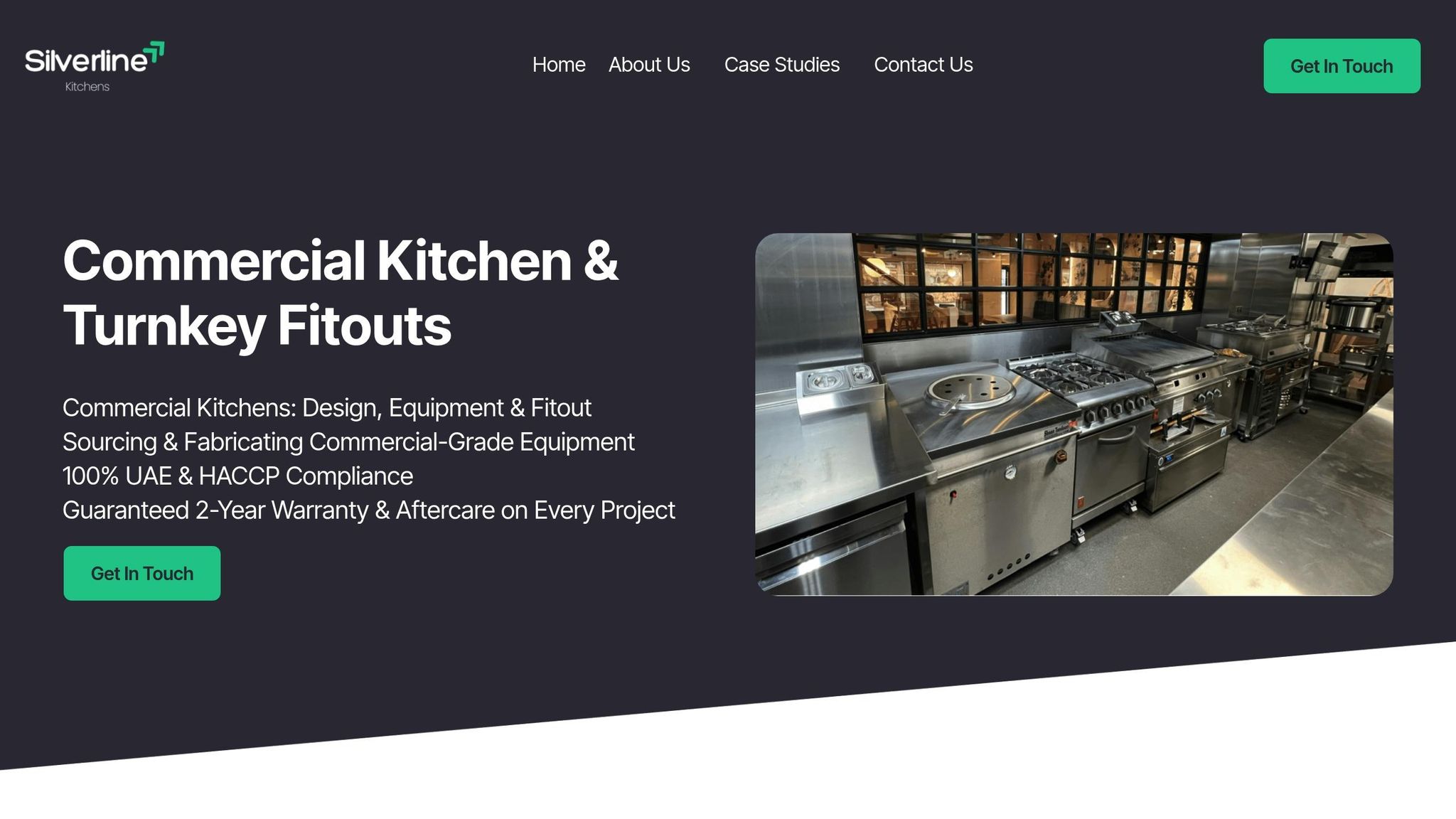
Silverline Kitchens offers expert assistance in selecting and installing the right equipment for your commercial kitchen. With a deep understanding of UAE regulations from bodies like Dubai Municipality, ADAFSA, and Civil Defence, they ensure every piece of equipment meets local standards.
Their services include sourcing equipment from approved suppliers and providing access to verified commercial-grade appliances. For unique requirements, Silverline Kitchens also offers custom fabrication services, creating tailored work surfaces and storage solutions that fit your kitchen's layout while maintaining hygiene and safety compliance.
From installation to regulatory compliance and after-sales support, Silverline Kitchens handles every aspect to ensure your kitchen is up and running efficiently. Their comprehensive approach helps your kitchen remain compliant and operational for years to come.
The choices you make during the design phase directly influence your kitchen's performance and compliance in the long run. Partnering with experts who understand both the technical details and regulatory requirements ensures your investment delivers lasting value.
sbb-itb-19c3c9a
Safety, Energy Efficiency, and Technology Integration
Designing a commercial kitchen in the UAE involves balancing safety, energy efficiency, and modern technology. These elements work together to protect staff, lower operational costs, and ensure smooth, reliable performance. They also help you meet regulatory requirements while maintaining high standards.
Fire Safety Systems and Requirements
Fire safety is a top priority in any commercial kitchen in the UAE. Local Civil Defence regulations require fire suppression systems specifically designed for cooking environments. For instance, kitchen hood suppression systems using wet chemical agents are essential for handling grease fires effectively.
Fire-rated doors must separate kitchen areas from dining spaces. These doors should close automatically when fire alarms are triggered. Emergency exits need to be clearly marked in both Arabic and English, easily visible, and equipped with battery-backed lighting systems.
For fire extinguishers, place Class K extinguishers near cooking stations and Class A extinguishers in other areas. Staff must be trained to use these extinguishers properly, and records of the training should be readily available for inspections.
To maintain compliance and ensure safety, all fire safety equipment should undergo regular maintenance.
Energy-Saving and Eco-Friendly Measures
Energy efficiency plays a crucial role in reducing costs and environmental impact. Opt for ENERGY STAR-certified appliances, induction cookers, LED lighting, and motion-activated sensors. Low-flow pre-rinse spray valves, grease recovery systems, and variable frequency drives can also help conserve resources and manage waste efficiently.
Smart thermostats for refrigeration units are another valuable addition. They help maintain ideal temperatures while reducing energy consumption during off-peak hours. Additionally, implement separate bins for organic waste, recyclables, and general trash to streamline waste management.
Smart Kitchen Technology Options
Incorporating smart technology can significantly improve both safety and efficiency. IoT sensors, touchless fixtures, digital kitchen displays, and smart inventory systems are just a few examples of how technology can transform your kitchen operations. Energy monitoring systems and digital temperature logging can also enhance compliance and streamline processes.
Digital temperature logging, in particular, automates data collection from refrigeration units, cooking equipment, and food storage areas. This eliminates the need for manual checks and ensures accurate records are available for health inspections.
Building Your Compliant Commercial Kitchen
Setting up a compliant commercial kitchen in the UAE requires careful attention to regulations, smart design choices, and strict safety protocols. Food businesses must comply with a range of standards, including the UAE Fire & Life Safety Code, NFPA 96, DW172, Dubai Municipality rules, and the guidelines of the Abu Dhabi Agriculture and Food Safety Authority (ADAFSA). These regulations dictate essential aspects of kitchen design and safety measures.
Safety is a top priority. Your kitchen must include robust fire safety systems, such as UL 300-approved fire suppression setups, to align with regulatory standards. On top of that, implementing HACCP protocols is crucial for maintaining high food safety levels. Once these safety foundations are in place, the focus shifts to ensuring the kitchen operates efficiently.
A well-thought-out workflow design, strategic use of space, and careful equipment selection are key to reducing costs and boosting long-term efficiency. Logical layouts with proper clearances, reliable ventilation systems, and energy-efficient technologies not only meet regulations but also create a smoother workflow for your team.
Ventilation plays a critical role in both safety and comfort. High-quality kitchen hood systems effectively remove heat, smoke, grease, and odours, ensuring a safer and more pleasant working environment while meeting air quality and fire safety requirements.
Silverline Kitchens provides comprehensive project management services tailored to UAE regulations, including HACCP, Dubai Municipality, and Civil Defence standards. From sourcing and fabricating equipment to planning essential features like grease traps and drainage systems, they simplify the kitchen construction process. This allows you to focus on growing your business while ensuring your kitchen meets all compliance standards.
A well-designed commercial kitchen does more than just meet regulatory requirements. It reduces running costs, enhances staff safety, and streamlines operations, all while protecting your business from expensive fines or potential shutdowns. With expert guidance, you can build a kitchen that is not only compliant but also efficient and built to last.
FAQs
What are the essential steps to design a commercial kitchen that complies with UAE regulations?
To make sure your commercial kitchen meets UAE regulations, start with a well-thought-out layout that promotes seamless workflow and efficient operations. It's crucial to adhere to HACCP guidelines to maintain food safety and incorporate strong fire safety measures as mandated by local authorities.
When selecting equipment, prioritise options that not only fulfil your kitchen's practical requirements but also comply with UAE standards. Opt for durable, high-performance appliances that are energy-efficient, as these are designed to handle the demands of a busy kitchen. By focusing on these essential aspects, you can set up a kitchen that is compliant and ready to thrive in the UAE's foodservice sector.
How does a well-designed commercial kitchen help prevent cross-contamination and improve efficiency?
A well-thought-out commercial kitchen layout plays a crucial role in maintaining hygiene by establishing distinct zones for specific tasks like raw food preparation, cooking, and plating. These clearly defined areas help minimise the risk of cross-contamination by keeping bacteria from spreading between different sections. Choosing materials that are easy to clean and sanitise, along with adding well-placed handwashing stations, makes it easier to uphold hygiene standards.
An efficient design also boosts workflow by cutting down on unnecessary movement of both staff and ingredients. For instance, arranging equipment and workstations in a logical order - such as moving from storage to preparation to cooking - saves time and reduces mistakes. Smart planning doesn’t just promote food safety; it also enhances the overall efficiency of the kitchen.
How does technology improve safety and efficiency in a commercial kitchen in the UAE?
Technology is a game-changer when it comes to improving safety and efficiency in commercial kitchens. For instance, advanced fire suppression systems can automatically identify and extinguish fires, helping businesses stay compliant with UAE fire safety regulations while safeguarding both staff and equipment. On top of that, smart sensors and monitoring tools play a crucial role in maintaining food safety. They provide real-time tracking of storage temperatures, ensuring everything stays within the guidelines of HACCP standards.
Incorporating modern technology allows kitchens to streamline workflows, minimise risks, and consistently meet the stringent regulatory requirements of the UAE foodservice industry.
