


Bespoke commercial kitchens are tailored to your restaurant or café's specific needs, helping you meet UAE regulations while improving kitchen efficiency. Unlike standard setups, these kitchens are designed around your menu, workflow, and space, ensuring compliance with Dubai Municipality, Civil Defence, and HACCP standards. Key highlights include:
- Customised layouts: Ensure smooth workflows with a "Raw to Cooked" process, minimising cross-contamination.
- Compliance with UAE standards: Kitchens must occupy at least 40% of the restaurant area or 300 sq. ft., with fire-safe materials, grease traps, and proper ventilation.
- Efficient equipment: Use energy-saving induction cooktops, combi ovens, and SS 304-grade stainless steel surfaces for hygiene and durability.
- Climate-specific solutions: Ventilation systems and materials are designed to handle the UAE's high temperatures, reducing energy costs.
Silverline Kitchens offers end-to-end kitchen solutions, from design and compliance to installation and maintenance, ensuring your kitchen is ready for inspections and daily operations.
UAE Kitchen Design Standards and Compliance Requirements
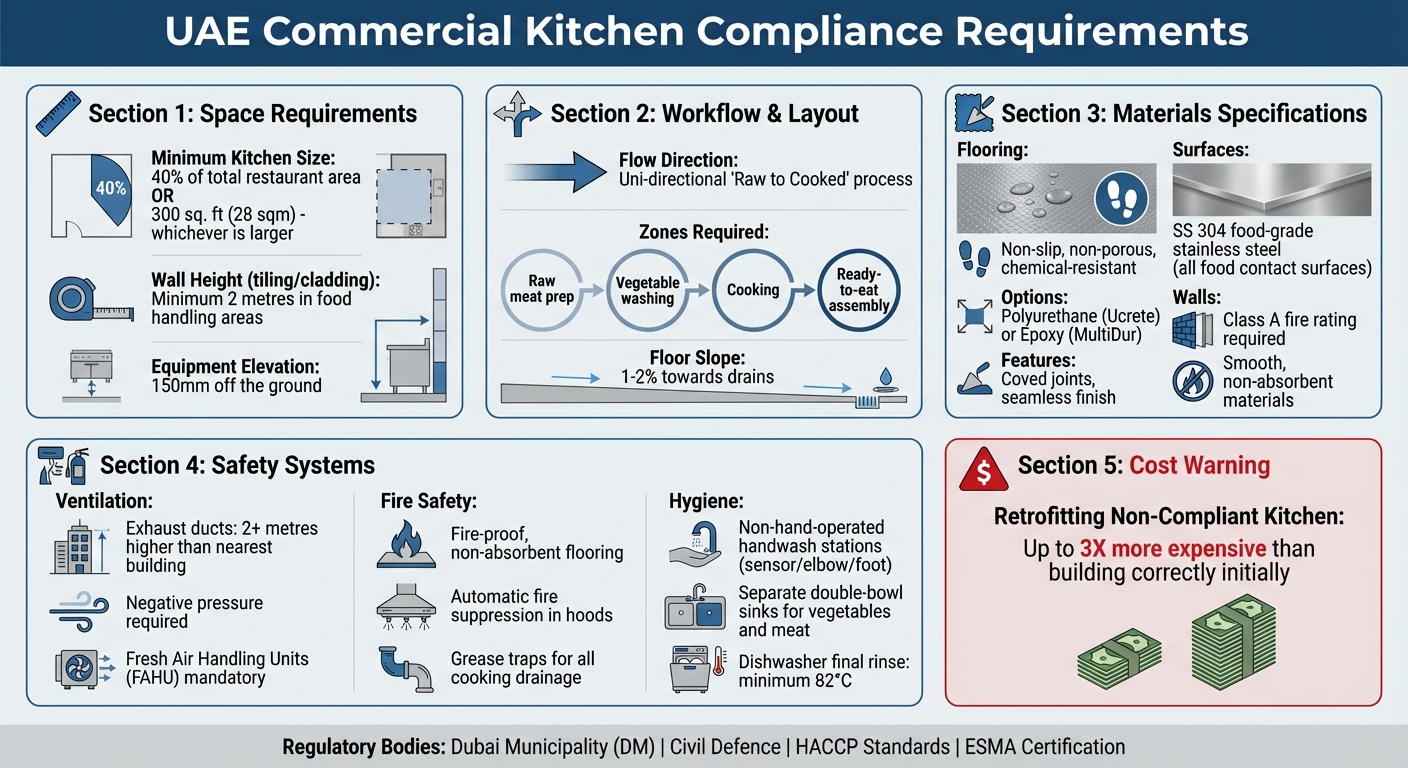
UAE Commercial Kitchen Compliance Requirements and Standards
Running a restaurant or café in the UAE means adhering to a strict set of regulations aimed at ensuring public safety. The Dubai Municipality (DM) and Civil Defence are the key authorities responsible for setting these standards. From kitchen size and layout to ventilation systems and materials, every detail must align with their guidelines before you can open your doors. Here's a closer look at the essential requirements for space, workflows, and safety.
Minimum Space and Layout Requirements
Dubai Municipality requires commercial kitchens to occupy at least 40% of the total restaurant area or a minimum of 300 sq. ft (about 28 sqm), whichever is larger. Additionally, restaurants and cafeterias must meet specific minimum area standards overall.
The kitchen layout must follow a uni-directional "Raw to Cooked" workflow. This means raw ingredients should enter through a designated area, move through preparation and cooking zones, and exit as finished dishes. This flow is designed to minimise cross-contamination risks. Floors must be seamless, constructed with PU or Epoxy materials, and feature coved joints (curved transitions where the floor meets the wall) to prevent bacterial growth. Similarly, walls in food handling areas should be tiled or clad in stainless steel to a height of at least 2 metres. These structural details are essential for maintaining a hygienic environment.
HACCP Zoning and Safety Standards
HACCP zoning is a critical part of kitchen design, ensuring clear separation of food preparation areas. Kitchens must have dedicated zones for tasks such as raw meat preparation, vegetable washing, and ready-to-eat food assembly. This requires distinct workstations and separate double-bowl stainless steel sinks for vegetables and meat or fish thawing. Handwash stations are another requirement, and these must use non-hand-operated faucets - such as sensor, elbow, or foot-operated models - to maintain hygiene standards.
Food contact surfaces must be made from SS 304 food-grade stainless steel, while equipment should either be on wheels or elevated at least 150mm off the ground to allow for easy cleaning. Additionally, all drainage from cooking areas must pass through a grease trap. While hygiene is a priority, meeting fire safety and ventilation standards is equally important.
Fire Safety and Ventilation Regulations
Civil Defence regulations place a strong emphasis on fire prevention and proper air circulation. Exhaust ducts must extend at least 2 metres higher than the nearest building to manage odours and ensure effective ventilation. For kitchens involved in heavy grease cooking - like those preparing burgers or steaks - installing electrostatic precipitators (ESP) and carbon filters is mandatory to control emissions.
Maintaining negative pressure within the kitchen helps contain odours, while Fresh Air Handling Units (FAHU) ensure staff have access to adequate fresh air. Flooring materials must be fire-proof, non-absorbent, and seamlessly finished with options like Epoxy or PU. Getting these systems right from the start is crucial, as retrofitting a non-compliant kitchen can cost up to three times more than building it correctly in the first place.
sbb-itb-19c3c9a
How to Optimise Space and Workflow in Bespoke Kitchens
Efficient kitchen design isn't just about meeting compliance standards - it's about creating a space that works seamlessly, even during the busiest hours. A well-thought-out layout can transform a chaotic kitchen into a hub of smooth operations. Here’s how to organise your bespoke kitchen for peak functionality.
Creating Zones for Key Operations
A commercial kitchen should flow logically through its key stages: receiving, storage, preparation, cooking, plating, service, and cleaning. This linear setup reduces unnecessary movement, prevents backtracking, and lowers the risk of cross-contamination.
Each zone should be equipped with the tools and storage it needs to operate efficiently. For instance, the prep area should feature undercounter refrigeration and cutting surfaces within arm’s reach. Meanwhile, the cooking zone should have easy access to spices, oils, and plating tools. Designing pathways that avoid staff crossing each other’s routes can also prevent delays and reduce accidents during busy shifts.
Compact and Modular Designs
In the UAE, where many cafés and smaller restaurants face space limitations, clever design solutions are essential. Modular equipment can be a game-changer. For example, combi ovens that handle steaming, roasting, and baking can replace several single-purpose appliances, saving valuable space. Similarly, undercounter fridges tucked beneath prep tables keep ingredients accessible without taking up extra room.
Vertical storage is another smart option. Install shelving units that make use of height and add wall-mounted racks for utensils used frequently. This approach frees up floor space while keeping everything organised. Always ensure clear walkways between stations to minimise hazards, and opt for equipment that’s easy to clean - whether through elevation or mobility - to maintain hygiene in tight spaces.
Workflow Optimisation Techniques
A well-designed layout can eliminate bottlenecks and streamline tasks. For example, adding handwashing stations within each zone ensures hygiene without interrupting the workflow.
Spacing between workstations is equally important, especially during peak hours, to avoid overcrowding. Efficient layouts not only improve productivity but also meet the UAE’s high safety standards. By reducing the physical distance staff need to travel and ensuring food moves smoothly from raw ingredients to plated dishes, you can significantly enhance operational efficiency. In the fast-paced world of hospitality, every second counts, and a well-optimised kitchen layout ensures you make the most of your time and space.
Choosing Durable and Compliant Materials
Continuing from operational layout and safety standards, selecting the right materials plays a critical role in maintaining compliance and ensuring efficient upkeep. In the UAE, where inspections are thorough and standards are stringent, the materials you choose can make or break your operation. Durable and compliant materials not only enhance hygiene and safety but also contribute to the long-term success of your kitchen.
Flooring and Wall Specifications
When it comes to kitchen floors, they must be non-slip, non-porous, and chemical-resistant. Polyurethane flooring, like Ucrete, and epoxy systems, such as MultiDur, are both compliant options. Polyurethane stands out for areas near fryers and ovens due to its ability to withstand thermal shock. Additionally, floors should slope by 1–2% towards drains and include integral coving to eliminate bacterial hiding spots. According to Duraamen Engineered Products, a seamless, non-porous floor is key to promoting hygiene.
For walls, the specifications are just as rigorous. They need to be smooth, non-absorbent, and extend at least 2 metres above the floor. Stainless steel panels are the top choice for their hygiene and heat resistance. Alternatively, Fiberglass Reinforced Plastic (FRP) offers good impact resistance, but its seams need careful sealing to prevent contamination. If glazed ceramic tiles are used, large-format tiles are recommended to reduce grout lines, and the grout must be sealed to block bacterial growth. All wall materials must also meet Civil Defence requirements by carrying a Class A fire rating.
Food-Grade Surfaces and Equipment
For worktops, prep tables, and other surfaces, SS 304 food-grade stainless steel is the standard in the UAE. This material is non-porous, corrosion-resistant, and capable of withstanding heavy use without absorbing grease, moisture, or odours.
"304-Grade Stainless Steel is the gold standard for countertops, shelving, and sinks" – LeadsToV
All equipment must be made from heat-resistant, food-safe materials and hold ESMA (Emirates Authority for Standardisation & Metrology) certification. Before investing in equipment, it’s essential to ensure it complies with both the UAE Food Code and Dubai Municipality standards to avoid costly replacements during inspections. This attention to compliance naturally extends to the design and maintenance of all equipment.
Equipment Elevation and Maintenance
Proper elevation of equipment is a must. Equipment raised on legs, typically 150 millimetres high, prevents the accumulation of dirt and moisture in hard-to-reach areas, which is vital for maintaining HACCP compliance. Additionally, equipment should be designed for easy disassembly, with accessible gaps to simplify cleaning.
"Every kitchen we deliver is built to meet UAE Food Code and Dubai Municipality standards, ensuring smooth inspections and approvals" – Silverline Kitchens
Required Equipment for Bespoke Kitchens
Once compliant materials are in place, the next step is choosing equipment that meets both operational needs and UAE regulatory standards. The right equipment is essential for a kitchen to function smoothly, pass inspections, and consistently deliver quality service. Below are the key categories of equipment to consider.
High-Quality Cooking and Refrigeration Units
Busy kitchens need durable cooking ranges, combi ovens, and reliable refrigeration systems. Combi ovens, which combine steam and dry heat, are space-saving and versatile solutions for diverse cooking needs. For bulk storage, walk-in coolers are ideal, while smaller cafés can benefit from upright reach-in refrigerators and freezers. Blast chillers are also crucial as they rapidly cool food, helping kitchens maintain HACCP compliance.
"Stainless steel is the industry standard due to its durability, corrosion resistance, and hygiene-friendly properties." – Bravo Kitchen Equipments
All cooking and refrigeration equipment should be made from AISI 304 stainless steel to comply with Dubai Municipality and ADAFSA standards. Given the UAE’s warm climate, refrigeration units designed specifically for Middle Eastern conditions are essential to maintain consistent temperatures.
Specialised Equipment for Cafés and Restaurants
Cafés often require under-counter refrigeration units (lowboys) for prep stations where space is at a premium. Additional tools like panini grills, waffle or crepe machines, and coffee-specific equipment can expand menu offerings. High-volume cafés serving over 200 cups daily should invest in 3-group espresso machines to keep up with demand. Display coolers, placed strategically in front-of-house areas, can also boost revenue by showcasing items effectively.
Integration with Ventilation and Plumbing Systems
Equipment must integrate seamlessly with ventilation and drainage systems to meet compliance standards. High BTU output units and grease-heavy cooking methods require ventilation systems with higher exhaust air volumes (CFM). Kitchen hoods should include automatic fire suppression systems with heat sensors and nozzles, and installation should only be handled by Civil Defence-approved vendors. Proper layout planning is critical - floor drainage slopes, grease trap placement, and separate stations for handwashing, food prep, and warewashing are all necessary to prevent cross-contamination and maintain HACCP compliance. Additionally, commercial dishwashers must reach a final rinse temperature of at least 82°C to ensure effective sanitisation.
Silverline Kitchens: Tailored Kitchen Solutions
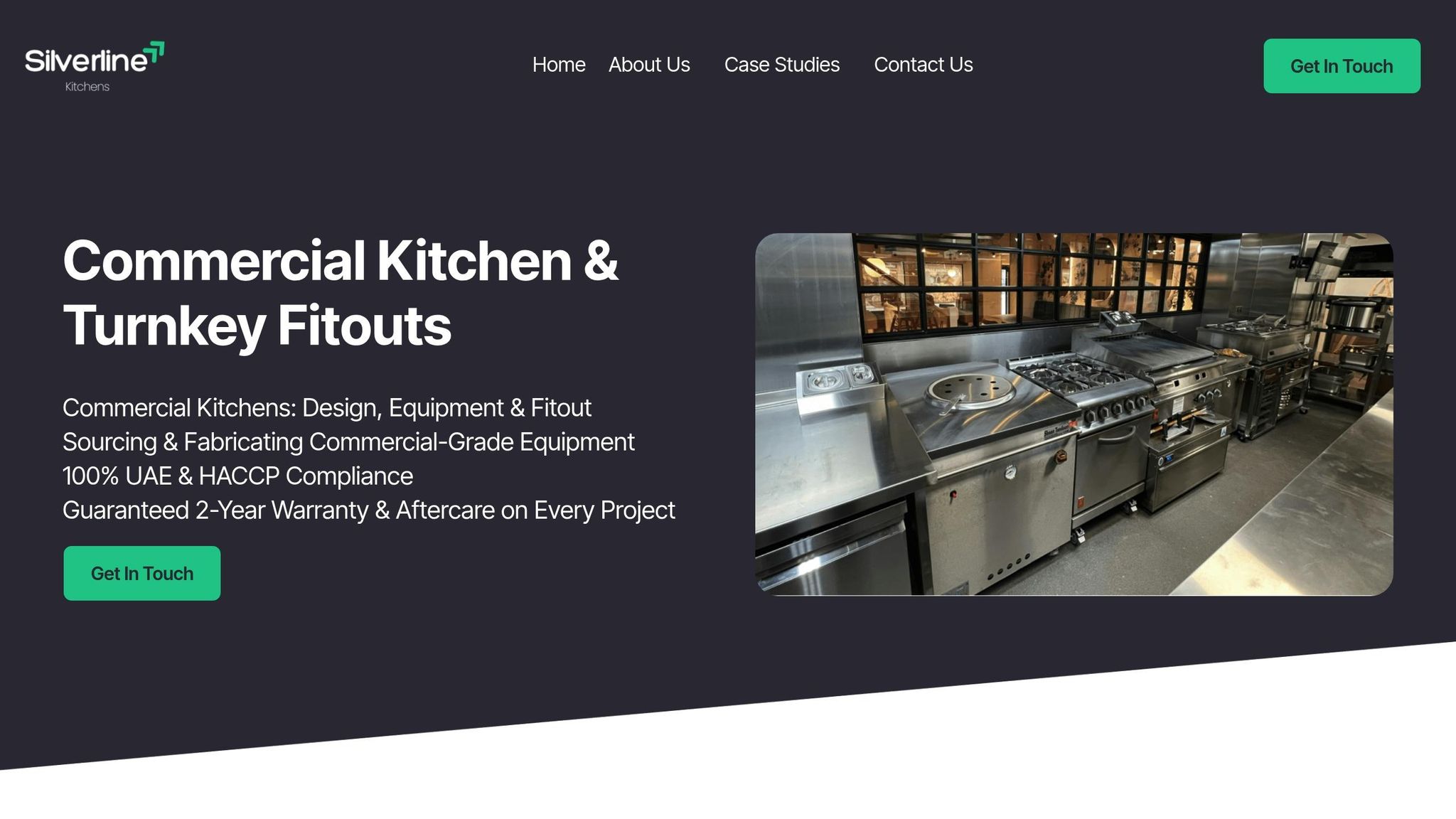
Silverline Kitchens combines decades of expertise with a deep understanding of local regulations to create customised kitchen solutions. With 30 years of experience, they merge European precision with insights into UAE compliance standards. Their impressive portfolio includes collaborations with Tesco, HMP Prisons, Choithrams, and Filli Cafe.
End-to-End Project Management
Silverline Kitchens takes care of every stage of your kitchen project, from the initial consultation to the final handover. They kick things off with a free expert consultation and a complimentary site visit to evaluate your space and operational needs. For AED 5,000 + VAT, their design package includes 2D layouts, 3D visuals, and MEP drawings, all aligned with UAE standards.
"We handle everything from initial consultation and layout design to supply, installation and final handover. We ensure all equipment is fitted correctly and that your kitchen is fully operational and ready for service." – Silverline Kitchens
Their in-house production ensures total control over fabrication quality and timelines, eliminating reliance on third parties. They prioritise sourcing equipment with easily available replacement parts, reducing downtime during maintenance. Installation covers all aspects, from equipment to extraction systems and ventilation, ensuring a fully functional and reliable kitchen setup.
Maintenance and Renovation Services
Silverline Kitchens doesn’t just stop at installation - they continue to support your kitchen long after it’s operational. Their services include a 2-year warranty on replacements and parts, covering both preventative maintenance and emergency repairs. For businesses looking to modernise or improve efficiency, their renovation services focus on enhancing workflow, updating equipment, and meeting current compliance standards.
"Our service doesn't stop at handover - it's just getting started." – Silverline Kitchens
This ongoing support ensures your kitchen remains in optimal condition for years to come.
Custom Pricing Plans
Silverline Kitchens operates with a transparent pricing policy, meaning the initial quote is the final cost. By managing manufacturing in-house and avoiding third-party markups, they maintain competitive pricing while delivering high-quality results. Whether your project involves a new kitchen, equipment upgrades, or a full renovation, their tailored pricing ensures you get solutions that align with your business needs - without unnecessary extras.
Conclusion
Designing a kitchen tailored to your needs is about more than just aesthetics - it's about creating a workspace that aligns with UAE regulations, enhances workflow, and ensures long-term functionality. From selecting food-grade materials to choosing durable equipment, every decision plays a crucial role in how efficiently your kitchen runs.
"Every kitchen we deliver is built to meet UAE Food Code and Dubai Municipality standards, ensuring smooth inspections and approvals." – Silverline Kitchens
Meeting UAE compliance standards is not just a requirement; it’s the backbone of a well-functioning kitchen. Bespoke layouts are designed to improve processes while maintaining safety standards, helping you avoid costly redesigns and operational hiccups.
A seamless journey from design to maintenance is key to your kitchen’s success. Working with a provider that handles everything - from consultation and design to manufacturing, installation, and ongoing support - removes the hassle of managing multiple vendors. Silverline Kitchens offers UAE-compliant solutions, backed by years of expertise, a 2-year warranty, and clear pricing.
Whether you're opening a new venue or upgrading an existing kitchen, investing in a regulation-compliant design ensures smoother operations, minimises downtime, and creates a safer environment for your team.
FAQs
How can I ensure my kitchen layout meets Dubai Municipality and Civil Defence standards?
To comply with local regulations, it's essential to design your kitchen in line with Dubai Civil Defence fire safety regulations and Dubai Municipality health and safety guidelines. Engage approved consultants to confirm the use of fire-resistant materials, ensure proper ventilation, and establish correct zoning within the kitchen space. Make sure to submit all necessary documentation for inspection. Careful planning and strict adherence to these standards can greatly improve your chances of passing inspections without any issues.
What kitchen equipment gives the best output in a small café space?
In a small café, having compact yet efficient equipment is key to keeping operations smooth. Appliances that serve multiple purposes, like combi ovens, can handle baking, roasting, steaming, and grilling in a single unit, making them a smart choice. Induction cooktops are another space-saving option, offering faster cooking times while being energy-efficient. For refrigeration, high-quality units with inverter technology are ideal for maintaining consistent cooling - especially crucial in the UAE’s hot weather. Focus on energy-efficient, multi-functional appliances that fit your menu’s needs, and don’t overlook proper ventilation and fire safety measures to ensure a safe and compliant workspace.
How can I reduce heat, odours, and energy costs in a UAE kitchen?
Minimising heat, odours, and energy costs in UAE kitchens can be achieved with a few smart strategies. Start by installing advanced ventilation systems, such as energy-efficient air handling units and modulating fans, which help manage airflow effectively. Opt for energy-saving appliances like induction cooktops, insulated ovens, and LED lighting to reduce consumption.
A well-thought-out kitchen layout is equally important. Ensuring proper airflow, insulation, and spacing can make a big difference in maintaining comfort while keeping energy use in check. Regular maintenance of ventilation systems is crucial, too, as it ensures they perform efficiently and remain aligned with the UAE’s energy conservation standards.
