


Setting up a commercial kitchen in Dubai or Abu Dhabi involves different cost considerations. Here's what you need to know:
- Costs: A 50 m² kitchen starts at AED 120,000 in Dubai and AED 140,000+ in Abu Dhabi. Larger kitchens (100 m²) range from AED 450,000 to AED 600,000 in Dubai and AED 380,000 to AED 520,000 in Abu Dhabi.
- Labour: Dubai labour rates are AED 50–80/hour, while Abu Dhabi is slightly lower at AED 40–65/hour.
- Materials: Dubai benefits from proximity to import hubs, making materials 5–15% cheaper than Abu Dhabi.
- Regulations: Compliance adds 10–20% to costs. Abu Dhabi's ADCD fees are AED 15,000–25,000 higher than Dubai Municipality charges.
- Suppliers: Dubai's dense network ensures faster sourcing, while Abu Dhabi may incur extra logistics fees.
Quick Tip: Allocate 40% to materials, 30% to labour, 20% to compliance, and keep a 20% contingency for unexpected changes. For faster approvals, Dubai is ideal, while Abu Dhabi offers lower labour costs for flexible timelines.
Below is a quick comparison to help you decide:
| Criteria | Dubai | Abu Dhabi |
|---|---|---|
| Labour Costs | AED 50–80/hour | AED 40–65/hour |
| Material Costs | 5–15% lower | Higher due to logistics |
| Compliance Fees | Lower (Dubai Municipality) | Higher (ADCD requirements) |
| Supplier Network | Dense, faster sourcing | Limited, higher logistics costs |
| Approval Timelines | 4–6 weeks | Slightly longer |
| Total Costs (100 m²) | AED 450,000–600,000 | AED 380,000–520,000 |
Your choice depends on priorities: speed and supplier access (Dubai) or lower labour costs (Abu Dhabi).
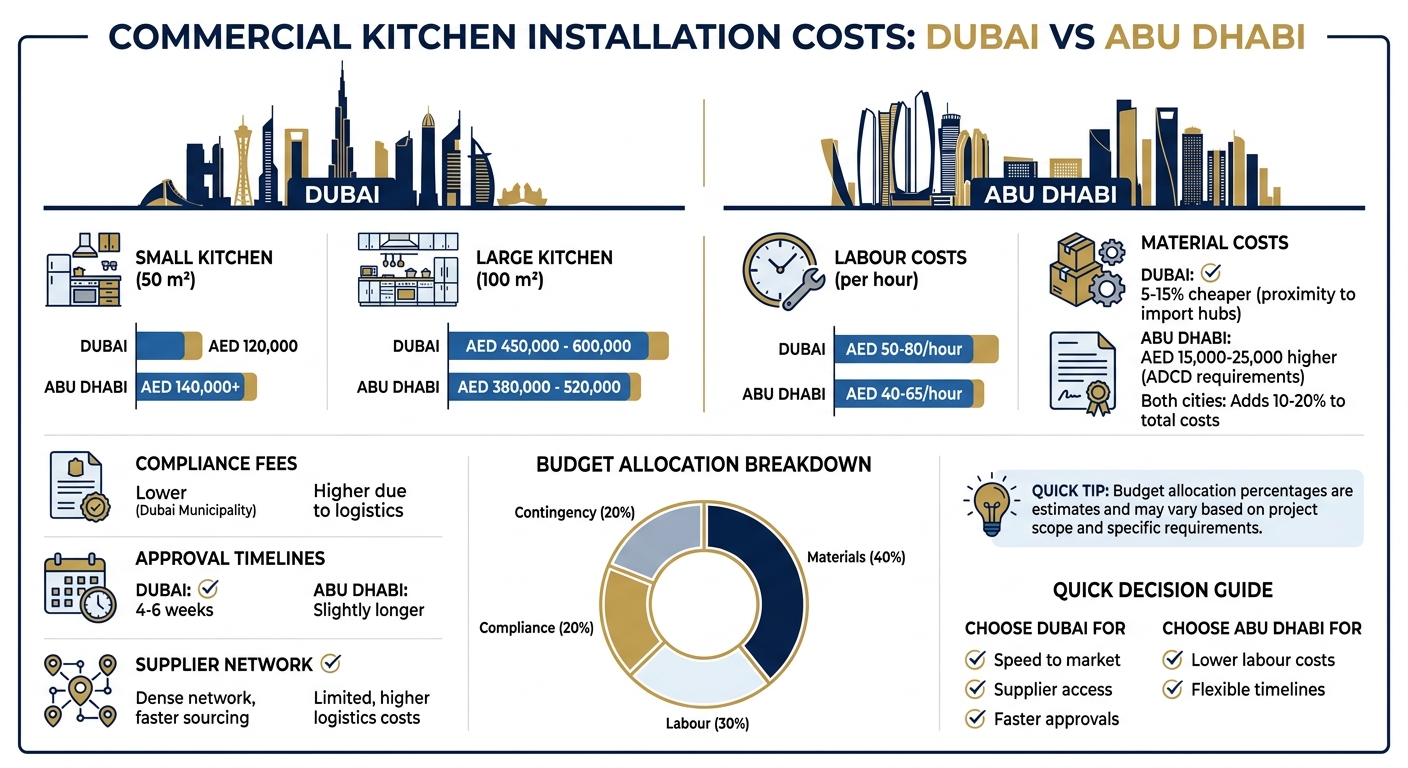
Commercial Kitchen Installation Costs: Dubai vs Abu Dhabi Comparison
1. Dubai Installation Costs
Labour Costs
In Dubai, many commercial kitchen projects benefit from turnkey packages that combine design, sourcing, fabrication, and installation services. The labour needs for these projects depend heavily on their size and complexity. For instance, a small café may only require a basic fit-out team, while larger ventures like catering facilities or cloud kitchens demand specialised technicians. These experts handle essential systems like extraction, fire suppression, and ventilation, ensuring compliance with Civil Defence FLS standards.
However, costs can rise unexpectedly when multiple third parties are involved. To avoid surprises, it’s wise to request fixed-price quotes. Providers with in-house manufacturing capabilities often offer more consistent and competitive pricing. Additionally, the choice of materials significantly impacts both cost efficiency and adherence to regulations.
Material Costs
Dubai’s prime location near major logistics hubs helps keep material costs manageable, especially for specialised kitchen equipment. However, all materials must meet HACCP and Dubai Municipality standards to ensure quality and safety.
Opting for locally fabricated materials can reduce delays and maintain stable costs. It’s also a smart move to select equipment with locally available parts. This choice not only lowers future maintenance expenses but also minimises downtime when repairs are needed. Given Dubai’s strict municipal and Civil Defence regulations, choosing compliant materials is essential to avoid complications.
Regulatory Compliance
Strict standards set by Dubai Municipality and Civil Defence play a significant role in installation costs. For example, kitchens must feature specialised extraction systems, fire suppression equipment, and mechanical ventilation that meet FLS requirements. Designs must align with these regulations to avoid expensive retrofits after inspections.
To prevent such setbacks, ensure your designs are "Dubai Municipality Ready" before purchasing equipment. Additionally, hiring installation teams with the appropriate Civil Defence qualifications is crucial to passing inspections without delays.
Supplier Availability
Dubai’s extensive supplier network makes sourcing commercial kitchen equipment faster and more cost-effective. The market caters to a wide range of projects, from large-scale catering facilities to commercial kitchens in residential properties. This diversity allows suppliers to provide robust after-sales support and maintenance services, ensuring minimal operational downtime for businesses.
sbb-itb-19c3c9a
2. Abu Dhabi Installation Costs
Labour Costs
Abu Dhabi offers competitive labour rates, making it an attractive option for commercial kitchen projects. Skilled professionals in the capital provide turnkey solutions across the emirates. Labour costs depend heavily on the complexity of the design. Simpler layouts, which require less specialised skills, are more affordable. On the other hand, designs involving custom fabrication demand more time and expertise, increasing the expense. For small to medium-sized establishments, total fit-out costs - which include labour, equipment, and materials - typically range from AED 100,000 to AED 500,000. To keep costs manageable, it's a good idea to request detailed quotes from multiple contractors. Comparing Abu Dhabi-specific rates can reveal negotiation opportunities, especially when labour is bundled with equipment purchases.
Material Costs
The choice of materials plays a significant role in both the initial installation expenses and future operational costs. Opting for high-quality materials can reduce repair and maintenance needs over time. Pre-assembled units, while more expensive upfront, save on labour costs and may lower overall expenses. Custom stainless steel tables and storage solutions are another way to balance material and labour costs. Investing in durable materials not only helps with immediate budgeting but also ensures compliance with strict local standards, aligning with the strategic considerations seen in Dubai.
Regulatory Compliance
Abu Dhabi follows the same UAE-wide regulations that govern commercial kitchens in Dubai. Businesses must secure proper licensing and meet technical safety requirements, such as ventilation systems, fire alarms, and emergency exits. For high-risk operations like central kitchens, HACCP certification is mandatory and costs between AED 5,000 and AED 10,000+. These regulatory requirements add predictable expenses to the budget. Ignoring these costs during the planning phase can lead to costly modifications and delays in licensing. Factoring in these compliance-related expenses is essential for creating an accurate budget and avoiding unnecessary complications.
Supplier Availability
Abu Dhabi boasts a strong supplier network, ensuring reliable installation and maintenance services. This consistency supports a wide range of projects, from large-scale catering facilities to smaller commercial kitchens in residential spaces. Access to dependable suppliers guarantees that professional standards are upheld, no matter the scale or location of the project.
Pros and Cons
When comparing Dubai and Abu Dhabi, each city presents distinct advantages and challenges, particularly in terms of costs and design considerations.
Dubai's strengths lie in its highly standardised "Dubai Municipality Ready" designs, which align with the UAE Food Code and local standards. This standardisation helps reduce the risk of costly redesigns following inspections. Additionally, Dubai benefits from local manufacturing facilities, which cut out middleman fees and ensure readily available parts. However, areas like Downtown Dubai and Jumeirah come with higher rents and labour costs. The strict requirement for unidirectional food flow - from receiving to washing - can also complicate kitchen layouts, potentially increasing design expenses.
Abu Dhabi, on the other hand, offers a different cost structure. Labour rates are more competitive, and the city boasts a strong supplier network. Its integrated approach to installations helps reduce post-installation downtime. That said, businesses must carefully plan grease trap placement and drainage slopes to meet UAE plumbing codes.
Both cities face rising project costs. Fixed pricing models can help manage these increases. As noted by Silverline Kitchens:
"The price quoted at the start is the final price".
This pricing transparency, along with standard two-year warranties and comprehensive aftercare support, helps reduce financial risk in both emirates.
For businesses prioritising speed to market, Dubai’s streamlined approval process - typically 7–14 working days for design approvals and 3–7 days for final inspections - can be a major advantage. Meanwhile, Abu Dhabi’s lower labour costs may appeal to those with more flexible timelines and tighter budgets. Carefully weighing these factors can guide your decision-making process.
Conclusion
Budgeting effectively for commercial kitchens in the UAE begins with recognising the cost differences between Dubai and Abu Dhabi. For a 100 sqm kitchen, expenses range from AED 450,000 to AED 600,000 in Dubai, compared to AED 380,000 to AED 520,000 in Abu Dhabi. These differences stem from variations in labour costs, material sourcing, and regulatory timelines.
Strict compliance with UAE standards is mandatory in both cities and can increase budgets by 10–15%. A good rule of thumb is to allocate 40% to materials, 30% to labour, and 20% to compliance, while keeping a 20% contingency for unforeseen regulatory changes.
Making strategic choices can help manage costs in either location. For example, a 150 sqm café in Dubai saved 13% by sourcing materials in bulk from approved vendors. Meanwhile, a project in Abu Dhabi reduced costs by 9% through the use of pre-fabricated units that met local codes. Modular designs can shorten project timelines by 20%, saving around AED 25,000, while scheduling ADAFSA approvals six weeks in advance can prevent delays that might otherwise add AED 20,000 in holding costs. These examples highlight how thoughtful planning can lead to cost efficiency.
Each cost factor - labour, materials, and compliance - plays a critical role in shaping your budget. Dubai is better suited for businesses prioritising speed to market, with its faster approval timelines (typically 4–6 weeks) and greater access to suppliers. On the other hand, Abu Dhabi’s lower labour costs make it a strong choice for operations with more flexible timelines. For both cities, working with certified installers and opting for fixed pricing models can help avoid costly retrofits and budget overruns.
"The price quoted at the start is the final price".
Ultimately, whether you choose Dubai or Abu Dhabi should depend on your project’s timeline and long-term operational goals.
FAQs
What’s the biggest hidden cost in a UAE commercial kitchen fit-out?
The largest hidden expense in setting up a commercial kitchen in the UAE is regulatory compliance. This involves acquiring the required permits, adhering to safety regulations, and obtaining all necessary approvals. Overlooking or poorly planning for these aspects can result in unexpected delays and additional costs. Staying on top of these requirements is crucial to prevent surprises and keep the installation process running smoothly.
How can I reduce approval delays in Dubai or Abu Dhabi?
To avoid delays in obtaining approvals in Dubai or Abu Dhabi, preparation and adherence to local regulations are key. Begin the process early by coordinating with Dubai Municipality and Civil Defence, ensuring all requirements are met. Collaborating with experienced consultants can streamline permit handling and minimise potential issues.
Pay close attention to creating designs that align with safety and environmental standards, as these are crucial for approval. Additionally, factor in adequate lead times, as the process can take anywhere from 10 to 40 working days. Taking a proactive approach can save time and prevent unnecessary setbacks.
Should I choose prefabricated modules or custom fabrication to save money?
The decision comes down to your budget and specific operational requirements. Prefabricated modules tend to be more affordable and faster to set up, making them a great choice for standard layouts that don’t require much customisation. On the other hand, custom fabrication - though pricier - provides tailored solutions that maximise space, streamline workflow, and ensure compliance with UAE standards. For projects with tighter budgets, prefabricated options can still meet regulatory needs while keeping costs in check.
