


Setting up a commercial kitchen in the UAE? Here's what you need to know:
- Regulations are strict: UAE Federal Law No. 10 of 2015 mandates HACCP-based food safety systems. Non-compliance leads to delays and costly retrofits.
- Efficient design is critical: Kitchens must follow unidirectional workflows, use food-grade materials like SS 304 stainless steel, and include features like grease traps, proper ventilation, and fire suppression systems.
- Space requirements matter: Dubai Municipality requires kitchens to occupy at least 40% of the restaurant area or a minimum of 28 square metres.
- Climate challenges: High temperatures demand durable materials (e.g., Grade 316 for coastal areas) and advanced refrigeration and ventilation systems.
- Consultants save time and money: From layout design to regulatory approvals, they handle everything to ensure compliance and efficiency.
Hiring a consultant ensures your kitchen meets UAE standards, avoids penalties, and operates smoothly from day one.
UAE Regulations for Commercial Kitchens

UAE Commercial Kitchen Compliance Requirements: HACCP, Dubai Municipality & Civil Defence Standards
Operating a commercial kitchen in the UAE means adhering to a strict set of rules designed to prioritise public health and safety. At the heart of these regulations is UAE Federal Law No. 10 of 2015, which requires all food businesses to implement a food safety management system based on HACCP principles. This isn't just a recommendation - it's a legal requirement for every compliant kitchen. Additionally, businesses must meet specific guidelines set by Dubai Municipality and Civil Defence, both of which influence kitchen design and operation.
Skipping these regulations or failing inspections can be costly. Retrofitting a kitchen that doesn't meet standards can cost three times more than building it correctly from the start. Knowing these requirements upfront is critical for designing a compliant kitchen in the UAE.
HACCP Compliance Requirements
HACCP compliance revolves around maintaining a unidirectional workflow, ensuring a strict "Raw to Cooked" linear process from food receiving to washing. This setup requires clear physical separation between raw meat, vegetable preparation, and ready-to-eat areas to avoid cross-contamination. Physical separation is non-negotiable.
Equipment used in kitchens must meet stringent standards. All surfaces in contact with food must be made from SS 304 food-grade stainless steel, and equipment needs to be either elevated at least 150mm off the floor or mounted on wheels for easy cleaning. Using grade 201 stainless steel is prohibited due to its tendency to rust.
Hygiene requirements are equally detailed. Every kitchen must have dedicated handwash stations equipped with non-manual faucets, such as elbow-operated, foot-operated, or sensor-based systems. According to NMT Services, "Standard twist taps are a violation", and this is a frequent reason for inspection failures. Additionally, using colour-coded cutting boards and utensils for different food types is considered a best practice during health inspections.
Dubai Municipality Standards
Dubai Municipality enforces a 40% rule: a commercial kitchen must occupy at least 40% of the total restaurant area or have a minimum size of 300 square feet (approximately 28 square metres), whichever is larger. NMT Services highlights that "insufficient space allocation is the most common reason for initial layout rejection".
Structural requirements are highly specific. Floors must be light-coloured, non-absorbent, fireproof, and seamless - polyurethane or epoxy flooring is typically recommended. The junction between the floor and walls must be coved (curved) to prevent bacterial buildup. Walls in food handling areas must be tiled or clad in stainless steel up to a height of at least 2 metres.
Ventilation systems also face rigorous scrutiny. Exhaust ducts need to extend at least 2 metres higher than the nearest building to control odours. Kitchens must maintain negative pressure and use Fresh Air Handling Units to ensure proper ventilation. Other requirements include separate double-bowl stainless steel sinks for tasks like vegetable washing and meat/fish thawing, as well as mandatory grease traps for all drainage in cooking areas.
Civil Defence Fire Safety Rules
Fire safety is a top priority for commercial kitchens. Civil Defence requires automatic fire suppression systems in kitchens that handle cooking oils and fats, and these systems must comply with UL 300 standards to effectively manage grease fires. Regular inspections are mandatory, and non-compliance can lead to severe penalties or even business closure.
Staff training is also essential. Employees must complete Civil Defence-approved programmes covering fire extinguisher usage (ABC type) and manual activation of suppression systems. Kitchens are required to have clearly marked emergency exits, conduct regular fire drills, and maintain updated evacuation plans.
To reduce fire hazards, the UAE Food Code and Civil Defence regulations demand monthly professional cleaning of exhaust hoods and ducts, with an annual deep clean. The region's high temperatures during summer increase the risk of chemical and oil volatility, making climate-controlled storage and efficient ventilation systems critical for fire prevention.
Services Offered by Commercial Kitchen Consultants
Commercial kitchen consultants in the UAE oversee every step of the process - from the initial concept to final approval - ensuring smooth operations and compliance with regulations. Their expertise spans technical documentation, equipment procurement, and regulatory checks, all aimed at avoiding costly adjustments later. These services form the groundwork for more detailed planning in areas like equipment placement and drainage systems.
Custom Kitchen Layout Design
Consultants craft precise 2D and 3D layouts to optimise workflows, covering everything from receiving goods to washing, all while adhering to HACCP standards. Every detail, from appliance placement to the flow of movement, is designed to maximise efficiency. The process begins with a site assessment to identify any constraints and incorporate essential utilities like gas banks, waste lines, and floor drains.
"From the siting of appliances to the pattern of foot traffic, everything is deliberately planned to let your culinary ambition express itself to the fullest." – Metal Master
Professional design packages typically start at around AED 5,000 + VAT. These include detailed MEP (Mechanical, Electrical, and Plumbing) drawings, which are crucial for obtaining approvals from Dubai Municipality and Civil Defence. Consultants also prepare technical specifications and a Bill of Quantities (BOQ) to manage tenders effectively, ensuring the project stays within budget from start to finish.
Equipment Sourcing and Fabrication
Leveraging their design expertise, consultants independently source appliances that align with your menu, capacity needs, and budget - free from supplier limitations. They ensure equipment choices remain within the facility's power capacity, a particularly important factor in Dubai. For materials, Grade 304 stainless steel is recommended for standard environments, while Grade 316 is better suited for coastal areas due to salt exposure, as highlighted in UAE regulations.
Custom fabrication services include work tables, sinks, and cabinets tailored to meet UAE Food Code standards. Consultants also handle complex installations like extraction systems, fire suppression integrated into exhaust hoods, and specialised ventilation, all designed to meet Civil Defence Fire Life Safety requirements. Many consultants provide extended warranties, with some offering up to two years of aftercare support for parts and replacements.
Grease Trap and Drainage Planning
Proper drainage design is a key requirement for Dubai Municipality approval. Consultants determine the best placement for grease traps, establish effective drainage slopes, and plan floor drains to comply with local plumbing and sanitation rules. For example, the Kothalawala Defence University Hospital project showcases this expertise - CKC Hotel Consultants designed a main kitchen serving 3,450 people daily, complete with an integrated floor drain system, exhaust plan, and equipment BOQ. Addressing these systems during the design phase helps avoid costly retrofitting, which can be up to three times more expensive than getting it right the first time.
Silverline Kitchens' UAE Compliance Services
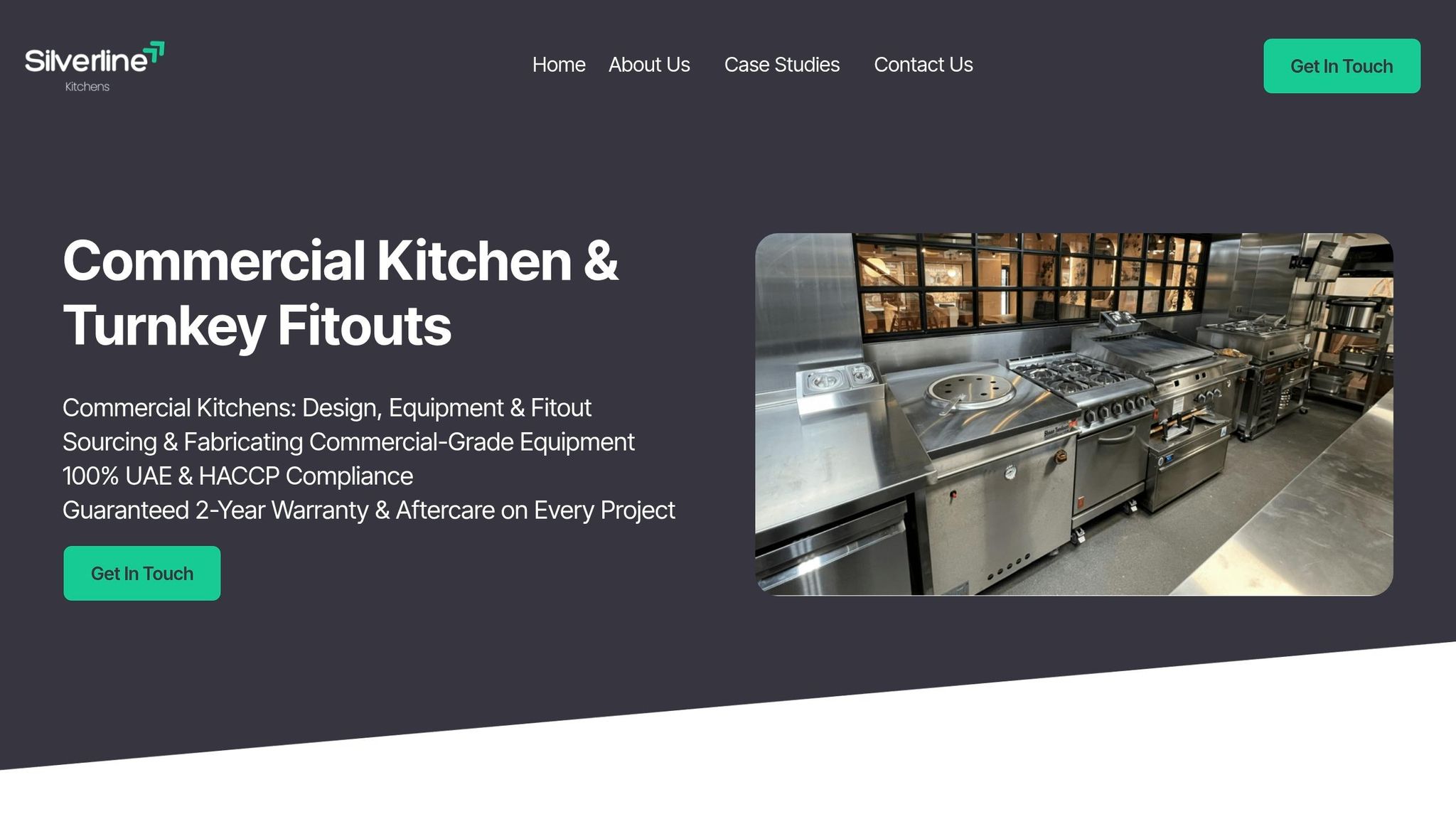
Silverline Kitchens brings over 30 years of expertise from the UK to the UAE, applying European standards to commercial kitchen projects across Dubai, Abu Dhabi, and the Emirates. Their approach ensures every kitchen aligns with HACCP, Dubai Municipality, and Civil Defence regulations, managing everything from consultation to final handover.
Their impressive client list includes Tesco, Choithrams, and Filli Cafe, showcasing their ability to cater to various foodservice environments. Each project is tailored with workflows, materials, and finishes that meet international HACCP standards. Fire suppression systems and extraction solutions are also incorporated to comply with Civil Defence requirements.
End-to-End Project Management
Silverline Kitchens simplifies the process of creating compliant kitchens by managing every phase of the project. It starts with a detailed site assessment to understand menu needs, workflow requirements, and space limitations. From there, they design customised layouts that streamline regulatory approvals and optimise operations. All equipment is sourced and fabricated to be ready for immediate use.
Key infrastructure elements, including plumbing and sanitation, are carefully planned to meet local standards. Mechanical ventilation and fire suppression systems are integrated early in the design to avoid costly adjustments later. Additionally, their registration with major UAE developers for villa kitchen projects ensures a smoother approval process.
After-Sales Support and Maintenance
Silverline Kitchens provides a 2-year warranty and comprehensive aftercare package with every project. Their dedicated support team handles maintenance, servicing, and repairs to minimise downtime and keep kitchens compliant with hygiene and safety regulations.
"Our support team ensures your kitchen runs smoothly and minimises downtime." – Silverline Kitchens
Regular servicing not only prevents equipment issues but also ensures continued compliance with HACCP and Dubai Municipality standards. Their after-sales services have supported high-profile clients, such as HMP Prisons, by maintaining rigorous standards in institutional food production.
This all-encompassing service highlights Silverline Kitchens' dedication to maintaining operational efficiency and long-term success.
sbb-itb-19c3c9a
Benefits of Hiring Professional Kitchen Consultants in the UAE
Improved Kitchen Efficiency
Professional kitchen consultants are masters at streamlining workflows. By analysing your menu, staff capabilities, and service speed, they help eliminate unnecessary movement and operational inefficiencies. This means chefs can focus on what they do best - cooking - while service becomes faster, and labour expenses are trimmed.
They also help you choose energy-efficient appliances, which is crucial in the UAE. With strict power consumption limits in many central kitchens across Dubai, the right equipment can prevent electricity overages and avoid circuit overloads during busy periods. This not only saves money but also ensures uninterrupted kitchen operations.
Meeting Regulatory Requirements
Navigating regulatory requirements in the UAE can feel like a maze, but consultants simplify this process. Their expertise ensures your kitchen complies with all necessary regulations from the outset, sparing you from failed inspections, hefty fines, or frustrating delays.
From securing mandatory approvals to integrating fire suppression systems within exhaust hoods, consultants help meet Dubai Civil Defence and Fire Life Safety standards. This proactive approach avoids costly retrofits and ensures your kitchen is ready for smooth operations from day one.
Climate-Appropriate Equipment Solutions
The UAE's climate presents unique challenges, and professional consultants know how to tackle them. For instance, they recommend refrigeration units with double-layered, argon-filled tempered glass and high-quality compressors from trusted brands like Embraco or Cubigel. These features help maintain consistent internal temperatures, even in the extreme external heat.
Additionally, consultants suggest corrosion-resistant materials tailored to different environments - like Grade 316 for coastal areas and Grade 304 for inland locations. They also design ventilation systems with high-suction exhausts to handle the region's persistent heat and fumes. This not only extends the lifespan of your equipment but also reduces long-term maintenance costs.
How to Work with a Commercial Kitchen Consultant
Initial Consultation and Site Assessment
The process kicks off with an initial consultation where consultants dive into your operational needs, culinary goals, and budget. Whether you're planning a delivery-focused cloud kitchen, a fine-dining restaurant, or a centralised production hub, this conversation sets the tone for the project.
Following this, a site survey is conducted. Consultants evaluate the space for potential challenges like power capacity, plumbing systems, and overhead utility lines. They also ensure the infrastructure aligns with UAE standards. For example, coastal locations typically require Grade 316 materials due to higher corrosion risks, while inland sites often use Grade 304.
"Operations must commence after obtaining layout assessment approval and permit." – HACCP.ae
Additionally, a gap analysis is performed to assess current safety practices and pinpoint areas needing improvement. Consultants ensure compliance with local regulations from authorities like Dubai Municipality and the Abu Dhabi Agriculture and Food Safety Authority (ADAFSA). This step is vital to avoid future regulatory hurdles and sets a strong foundation for the project.
Design Development and Planning
Using insights from the site assessment, consultants craft kitchen designs that make the best use of available space while streamlining workflows. They prepare detailed construction drawings, which are essential for obtaining regulatory approvals. Everything, from cooking stations to storage solutions, is tailored to your menu and service style.
"Your input is crucial. We collaborate closely with you throughout the process, ensuring the design aligns with your vision and operational requirements." – Craftline Kitchens
Key utilities like exhaust systems, gas banks, fresh air systems, and waste lines are also planned during this stage. Zoning the kitchen into areas for preparation, cooking, and cleaning helps minimise cross-contamination and improves staff efficiency. Before construction begins, layout approval from Dubai Municipality's Food Safety Department ensures the project stays on track without unexpected delays.
Installation and Final Compliance Checks
Once the design is approved, the installation phase begins. Consultants oversee the process, coordinating with contractors, managing deliveries, and ensuring compliance with regulatory standards.
After installation, thorough testing is carried out. Fire suppression systems are checked to ensure they meet Dubai Civil Defence standards, refrigeration units are tested for consistent temperatures, and ventilation systems are evaluated for proper suction. Drainage systems are also inspected for functionality. Additionally, a Person In-Charge (PIC) is appointed, and food handlers secure health certificates from authorised medical facilities.
The final step involves obtaining permits from the Department of Economy and Tourism (DET) and completing the handover process. Many consultants, such as Silverline Kitchens, also provide ongoing support, including technical maintenance and staff training, to help sustain long-term success.
Conclusion
Ensuring your commercial kitchen in the UAE is both compliant and efficient requires careful planning and expert guidance. The unique challenges of operating in this region - like adhering to strict HACCP protocols, Dubai Municipality standards, and Civil Defence fire safety regulations - can feel overwhelming. However, this is where the expertise of commercial kitchen consultants becomes indispensable.
These professionals oversee everything from initial assessments to final compliance checks, helping you avoid costly penalties and operational delays. In a country like the UAE, where food imports dominate the market, consultants also play a crucial role in reducing waste and maximising food utilisation - a practice that benefits both your bottom line and the environment.
But it’s not just about meeting regulations. Consultants streamline workflows, cut unnecessary costs, and ensure your kitchen operates efficiently from day one. By addressing critical aspects like grease traps, drainage, and ventilation systems, they help create a space that’s ready to handle the UAE’s demanding conditions. Their expertise ensures that every detail, from design to compliance, is executed flawlessly.
Take Silverline Kitchens, for example. They provide comprehensive project management tailored to foodservice businesses in the UAE, covering everything from the design phase to after-sales support. Their approach ensures that what’s planned on paper transforms into a fully operational, regulation-compliant kitchen that supports your long-term goals.
Whether you’re running a restaurant, café, bakery, or catering service, partnering with experienced consultants is key to navigating the complexities of the UAE’s foodservice industry. Their support not only ensures compliance but also sets the foundation for operational success in one of the world’s most competitive markets.
FAQs
Which approvals do I need for a commercial kitchen in the UAE?
To operate a kitchen in Dubai, you’ll need to secure approvals from Dubai Municipality. This includes getting your kitchen layout approved and ensuring compliance with food safety standards such as HACCP (Hazard Analysis and Critical Control Points).
On top of that, your kitchen must adhere to Dubai Civil Defence safety standards. This ensures that fire prevention and safety measures are properly implemented, keeping your facility safe for operations.
How long do Dubai Municipality and Civil Defence approvals usually take?
Dubai Municipality approvals usually take around 14 days. On the other hand, Civil Defence approvals can take anywhere from 7 to 30 working days, depending on how complex the project is and the inspections required. These timelines can shift based on individual project circumstances.
What documents should I prepare before hiring a kitchen consultant?
Before bringing a kitchen consultant on board, make sure you have all the necessary documents ready. These typically include your trade licence, layout assessment approval, relevant construction and design permits, and evidence of compliance with local food safety regulations, such as HACCP certification. Having these in order ensures the consultant can help you navigate your project while adhering to UAE standards.
