


Setting up a dark or cloud kitchen in Dubai offers a cost-effective way to enter the growing food delivery market without the expenses of a traditional restaurant. These kitchens focus solely on food preparation for delivery and takeaway, using platforms like Talabat and Deliveroo to reach customers. With the UAE's cloud kitchen market projected to grow from AED 1.01 billion in 2023 to AED 3.89 billion by 2030, the opportunity is significant.
Here’s a quick overview of the essentials:
- Licensing: Obtain a Trade Licence (AED 10,000–30,000) and a Food Licence (AED 5,000–8,000). Civil Defence approval and staff food safety training are also mandatory.
- Setup Costs: Initial investment ranges from AED 113,000 to AED 309,000 for private kitchens, while shared kitchens start at AED 22,500.
- Kitchen Design: Compliance with Dubai Municipality and HACCP standards is critical. Kitchens must have anti-slip flooring, food-grade stainless steel surfaces (SS 304), and proper ventilation.
- Operational Costs: Monthly rentals for shared kitchens are AED 5,000–15,000, while private kitchens cost AED 20,000–50,000. Delivery platforms take 25–35% in commissions.
- Popular Locations: Areas like Al Quoz offer lower rents and easy access for delivery services.
To ensure compliance and avoid costly mistakes, professional kitchen setup services, like those offered by Silverline Kitchens, can help with licensing, layout design, and equipment installation.

Cloud Kitchen Setup Costs and Requirements in Dubai: Mainland vs Free Zone Comparison
Regulatory Requirements for Kitchen Setup in Dubai
Setting up a dark or cloud kitchen in Dubai involves navigating several regulatory approvals. These include clearances from the Dubai Municipality, Department of Economy and Tourism, and Dubai Civil Defence. The approval process generally takes 15 to 30 working days.
The regulations primarily focus on food safety, fire prevention, and maintaining high hygiene standards. Dubai Municipality enforces strict rules regarding kitchen layout, equipment, and workflow. A poorly designed kitchen is one of the most common reasons for rejection. To avoid delays, ensure that your architectural and MEP (Mechanical, Electrical, Plumbing) plans are approved before construction begins.
Once your plans are in order, you’ll need to obtain the required licences and documents to legally operate your kitchen.
Licensing and Documentation
To start, secure a Trade Licence. For mainland kitchens, this comes from the Department of Economy and Tourism, while Free Zone setups require approval from the relevant Free Zone authority. Mainland licences cost between AED 10,000 and AED 20,000, whereas Free Zone licences range between AED 15,000 and AED 30,000.
After obtaining your trade licence, apply for a Food Licence through the Dubai Municipality Food Safety Department. This licence, costing between AED 5,000 and AED 8,000, is essential for any food handling, preparation, or storage activities.
You’ll also need approval from Dubai Civil Defence to ensure your fire safety systems - such as extinguishers, alarms, and ventilation - are up to code. If you plan to manage your own delivery fleet, a Delivery Service Permit from the Roads and Transport Authority (RTA) is necessary, with costs typically ranging from AED 6,000 to AED 7,000. Additionally, all staff members must complete food safety training approved by the municipality and hold valid occupational health cards.
With these licences secured, your kitchen design must meet strict municipal and HACCP standards.
Dubai Municipality and HACCP Compliance
Dubai Municipality requires all commercial kitchens to meet specific structural and hygiene benchmarks. The kitchen must cover at least 40% of the total business area or a minimum of 300 square feet, whichever is greater. Flooring must be anti-slip and non-absorbent, with materials like epoxy or polyurethane being common. Coved (curved) joints where walls meet floors are also mandatory.
Food contact surfaces must be made of food-grade Stainless Steel (Grade 304), and all equipment should either be mounted on wheels or elevated 150 millimetres off the ground to allow for easy cleaning. Separate handwash sinks are required, equipped with non-manual taps - such as sensor, foot, or elbow-operated options.
HACCP (Hazard Analysis and Critical Control Point) certification is compulsory for all food businesses in Dubai. This system ensures food safety by requiring documented procedures for monitoring critical control points, pest control, and waste management. Kitchens must also follow a unidirectional food flow - from receiving to washing - to minimise cross-contamination risks. Additionally, exhaust ducts must extend at least 2 metres above the nearest building to meet odour and environmental standards.
Cloud kitchens hosting multiple brands face even stricter requirements. These include ensuring proper brand separation and providing dedicated storage areas for each virtual restaurant.
sbb-itb-19c3c9a
Kitchen Layout Design for Compliance and Efficiency
When designing a kitchen, it's essential to consider both operational efficiency and adherence to Dubai's strict municipal and HACCP standards. A well-planned layout not only simplifies daily operations but also ensures smoother inspections.
Space Planning and Location Selection
Your kitchen space should occupy at least 40% of your total area or a minimum of 300 square feet, whichever is greater. For instance, if your premises measure 700 square feet, the kitchen must still meet the 300-square-foot minimum, even though 40% would be slightly less.
Choosing the right location is equally important. Areas like Al Quoz in Dubai or Mussafah in Abu Dhabi are popular choices due to their lower rental costs and accessibility for delivery services. Being close to major roads can also help reduce delivery times, a key factor for efficient operations.
To maintain compliance and avoid cross-contamination, design your kitchen with a unidirectional workflow. This means arranging spaces in a logical sequence - receiving, storage, preparation, cooking, serving, and washing. Additionally, separate areas for raw meat, vegetables, and ready-to-eat foods are crucial.
Incorporating MEP (mechanical, electrical, and plumbing) systems during the design phase is vital. Proper installation of features like grease traps and exhaust ducts will save you from costly retrofits. A poorly planned kitchen that fails inspection could cost up to three times more to fix.
Once the space is planned efficiently, the next step is to focus on sourcing the right equipment.
Equipment Selection and Sourcing
When selecting kitchen equipment, prioritise materials like SS 304 food-grade stainless steel. This material is durable, resistant to rust, and easy to clean. Avoid SS 201, which is prone to rust and less hygienic. Additionally, ensure equipment is mounted or elevated at least 150 mm above the ground to facilitate thorough cleaning.
Handwash stations in food prep areas should be equipped with non-manual taps - sensor, foot, or elbow-operated models are ideal for meeting hygiene standards. Walls should be clad or tiled up to a height of at least 2 metres, and the flooring should feature light-coloured, non-absorbent materials like polyurethane or epoxy. Coved joints where the floor meets the wall are also essential to prevent bacterial growth in hard-to-reach areas.
Step-by-Step Setup Guide for Dark and Cloud Kitchens
Business Registration and Leasing
First, decide whether to register your business in Dubai Mainland or a Free Zone. Mainland registration, overseen by the Department of Economy and Tourism (DET), allows operations across the UAE. Free Zones, on the other hand, offer benefits like 100% foreign ownership and lower startup costs but come with trading restrictions outside the zone.
Submit three trade name options for approval to the relevant authority. Once approved, obtain a No Objection Certificate (NOC) from either DET or the Free Zone authority. Next, secure a commercial lease, as residential kitchens aren’t permitted. Register your tenancy contract to receive an Ejari certificate, a mandatory document for licensing.
Obtaining Approvals and Certifications
Once your business licence and lease are in place, focus on obtaining the required municipal and safety approvals. Submit your kitchen layout plans to Dubai Municipality's Food Safety Department for pre-approval. Typically, design approvals take 7–14 working days, followed by a final site inspection within 3–7 working days.
Register on the Food Watch platform and appoint a certified Person in Charge (PIC) to oversee food safety compliance. You’ll also need a Civil Defence NOC, which involves meeting fire safety standards like installing suppression systems and ensuring emergency exits. Ensure all kitchen equipment is food-grade - Grade 304 stainless steel is standard - and carries necessary certifications, such as a CE certificate. These steps ensure your kitchen complies with UAE regulations for design, licensing, and safety.
Staff Training and Operational Launch
Before launching, ensure all food handlers have the required permits and complete food safety training. The PIC should also be trained in compliance and fire safety protocols.
Start with a soft launch to test your workflow, equipment efficiency, and staff preparedness. Connect your Point of Sale system with major delivery platforms like Talabat, Deliveroo, and Careem. Test your packaging materials under realistic conditions, such as exposure to heat, steam, and transit, to guarantee food quality upon delivery. Upload high-quality food photos and accurate menu descriptions to delivery apps to enhance customer experience. With these operational steps in place, the next section will explore the costs involved in setting up a cloud kitchen in Dubai.
Setup Costs for Cloud Kitchens in Dubai
When setting up a cloud kitchen in Dubai, accurate budgeting is essential to avoid unexpected expenses. The total cost depends on factors like the jurisdiction you choose, the type of kitchen model, and the scale of your operations.
Initial setup costs can range between AED 113,000 and AED 309,000 for a private kitchen. This includes licensing, equipment, rental deposits, and initial operational expenses. For those looking to minimise costs, shared kitchen facilities offer a more affordable entry point, starting at just AED 22,500.
Equipment expenses take up a significant chunk of the budget. Depending on your menu and the size of your kitchen, you might spend anywhere from AED 50,000 to AED 150,000 on commercial-grade refrigerators, cooking ranges, prep tables, and ventilation systems.
Monthly operational costs also need to be factored in. Renting a shared kitchen typically costs between AED 5,000 and AED 15,000 per month, while private kitchen rentals range from AED 20,000 to AED 50,000. Additionally, plan for 15% to 20% on top of your initial estimates to cover annual licence renewals, signage permits, and re-inspections. Delivery platform commissions, which take 25% to 35% of each order, further impact your profit margins.
Now, let’s look at how jurisdiction influences these costs.
Mainland vs. Free Zone Setup Costs
Your choice of jurisdiction significantly affects both setup fees and operational flexibility.
Mainland registration, facilitated by the Department of Economy and Tourism, involves trade licence fees of AED 10,000 to AED 25,000 and a Food Licence costing AED 5,000 to AED 8,000. Mainland businesses must also register a physical office with Ejari, which costs AED 220. However, this setup offers unrestricted trading across the UAE and access to government contracts.
Free Zone licences, on the other hand, cost between AED 5,750 and AED 15,000. Free Zones allow for flexi-desk arrangements instead of a dedicated office, which helps reduce overheads. However, Free Zone businesses face trading restrictions, often requiring a local distributor or reliance on delivery platforms to reach mainland customers. Both Mainland and Free Zone setups now allow 100% foreign ownership for most food-related activities.
Regardless of jurisdiction, certain mandatory costs apply. These include Civil Defence NOC fees ranging from AED 2,000 to AED 5,000, RTA Delivery Permits costing AED 6,000 to AED 7,000 annually, and staff visa processing fees of AED 3,000 to AED 10,000 per employee. Additionally, investing in technology like POS systems and kitchen management software will require an initial outlay of AED 10,000 to AED 30,000.
Working with Silverline Kitchens for Complete Setup Solutions
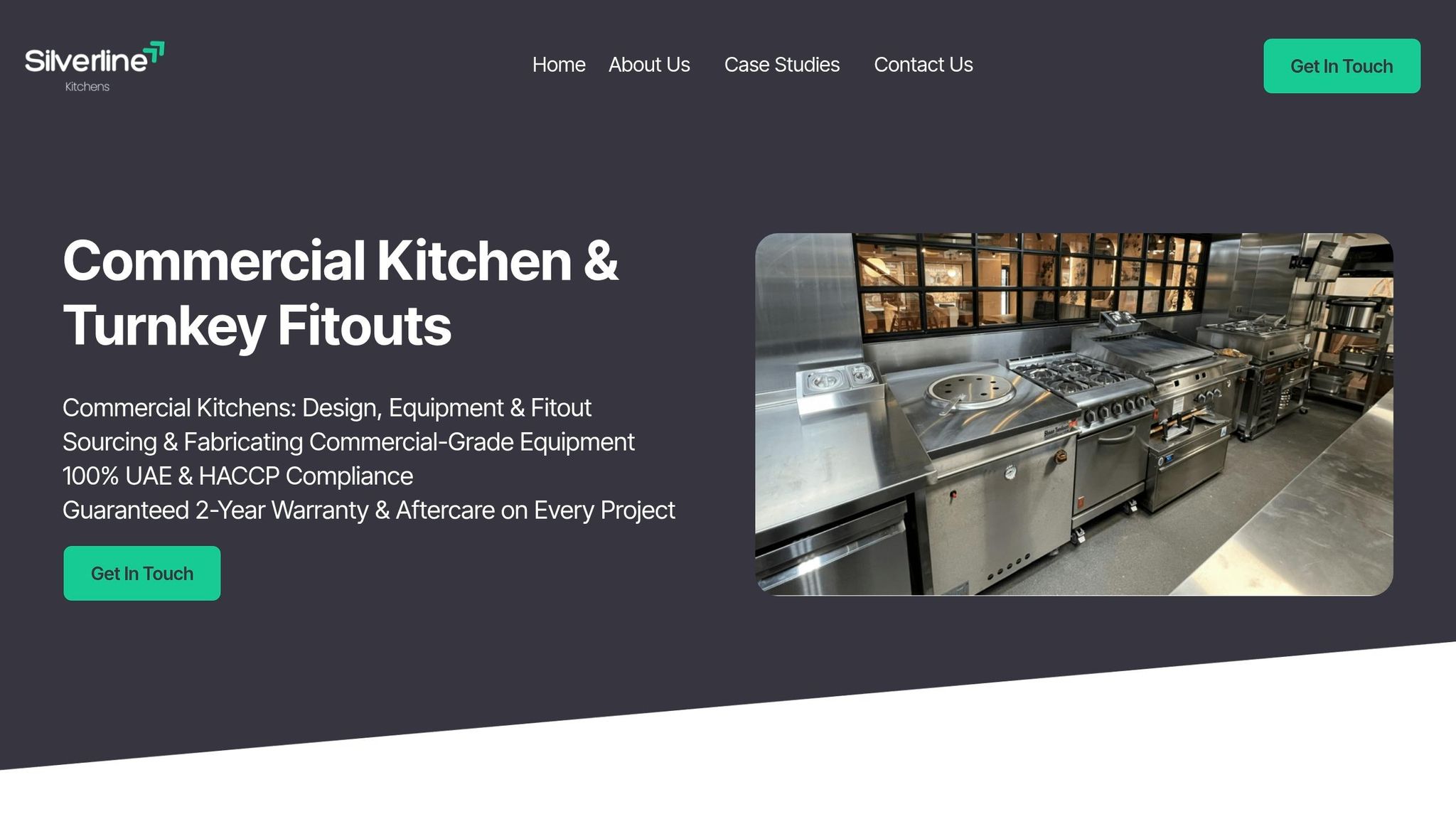
Silverline Kitchens provides end-to-end solutions for cloud kitchen setups, covering everything from initial consultations and layout planning to equipment supply, installation, and final handover. With a strong emphasis on compliance and efficient design, they transform these priorities into practical, integrated solutions tailored to meet industry standards.
With 30 years of experience in the UK, adapted to UAE-specific requirements, Silverline Kitchens applies European standards while ensuring alignment with local regulations. Their impressive client list includes prominent names like Tesco, Choithrams, and Filli Cafe, showcasing their ability to deliver compliant and scalable commercial kitchen solutions.
Custom Design and Compliance Services
Silverline Kitchens ensures that all designs meet the UAE Food Code and Dubai Municipality standards, creating workflows that minimise cross-contamination risks. Using internationally recognised HACCP guidelines, they craft layouts, select materials, and determine finishes that enhance hygiene and operational efficiency.
They also address critical compliance areas such as Civil Defence and Fire Life Safety (FLS) requirements. This includes the installation of extraction systems, fire suppression equipment, and mechanical ventilation, all designed to meet strict safety standards.
To maintain high material standards, they utilise food-grade equipment, anti-slip flooring, and washable, smooth wall finishes. This meticulous attention to detail ensures that kitchens not only meet but exceed operational and safety expectations.
Equipment Sourcing and Project Management
Silverline Kitchens sources high-quality, commercial-grade stainless steel equipment, ensuring that all installations are fully compliant with Dubai Municipality standards. Their project management services cover crucial technical elements like extraction systems, fire safety installations, mechanical ventilation, and grease trap planning.
"Our both projects were planned in co-operation and the goods have been delivered and installed on time."
- Mr Rafiq, Owner, Mr Crab – Dubai / U.A.E.
Whether working on new builds or renovating existing kitchens, Silverline focuses on optimising workflow and safety. Their precise installation process, combined with robust maintenance services, ensures long-term operational reliability.
Maintenance and After-Sales Support
Every project comes with a 2-year warranty and comprehensive aftercare. A dedicated support team is available to handle ongoing maintenance, emergency repairs, and equipment replacements, ensuring uninterrupted kitchen operations.
"From the first design stage to installation and after sales support, Silverline Kitchens provides a complete service that ensures your kitchen is compliant, optimised and ready for daily use."
- Silverline Kitchens
Conclusion
Setting up a dark or cloud kitchen in Dubai requires careful planning and strict adherence to regulatory standards. Dubai Municipality approval is a legal requirement for all commercial kitchens, and operating without it is prohibited by law. A well-designed kitchen layout that follows a unidirectional food flow - Receiving → Storage → Preparation → Cooking → Serving → Washing - is crucial. This design must comply with the UAE Food Code, HACCP guidelines, and Civil Defence standards to ensure smooth operations and safety.
One of the main reasons applications for municipality approval get rejected is poor planning. To avoid costly redesigns and delays, investing in professional design services is essential. Key features such as grease traps, effective ventilation systems with grease filters, and hands-free wash stations should be incorporated into the initial design phase to meet compliance requirements.
Silverline Kitchens offers turnkey solutions that ensure full compliance with UAE Food Code, HACCP, and Civil Defence regulations. Their expertise spans workflow-driven designs, sourcing high-quality equipment, and managing projects from start to finish. With over 40 years of experience in the foodservice industry, they provide end-to-end support, from initial design to installation and after-sales service, including a 2-year warranty and a dedicated aftercare programme. This comprehensive approach ensures your kitchen is not only compliant but also optimised for daily operations and long-term reliability.
FAQs
How long do approvals take in Dubai?
Approval processes in Dubai typically take 10 to 40 working days. The timeframe can vary based on the type of permits needed and the specific compliance requirements associated with your application.
Mainland or Free Zone for a cloud kitchen?
Choosing between mainland and free zone for setting up a cloud kitchen in Dubai largely depends on what your business requires.
Mainland businesses allow you to operate freely across Dubai and tap into the local market without restrictions. However, the licensing process can be more involved, and you may need a local sponsor, which adds another layer to the setup.
On the other hand, free zones offer perks like 100% foreign ownership, a simpler licensing process, and facilities designed specifically for delivery-driven businesses. These features make free zones appealing for entrepreneurs focused on streamlined operations.
Ultimately, your choice should reflect your business model and operational objectives.
What causes Dubai Municipality rejection?
Dubai Municipality may reject applications or projects for several reasons. Common causes include non-compliance with space and layout requirements, failure to maintain proper hygiene and safety standards, use of unsuitable equipment, or not adhering to food safety regulations such as HACCP. Additionally, incomplete or incorrect documentation and permits can also result in rejection. To avoid such issues, it’s crucial to ensure that all design, safety, and operational standards are thoroughly met before submission.
