


Setting up a hotel kitchen or cloud kitchen in the UAE requires strict adherence to local regulations and careful planning to avoid costly mistakes. From layout design to equipment installation, every step must align with the UAE Food Code, HACCP principles, and Dubai Municipality standards. Here’s what you need to know:
- Regulations: Kitchens must meet fire safety, ventilation, and hygiene standards. Examples include the 40% rule for kitchen size, unidirectional workflows, and mandatory use of food-grade stainless steel.
- Hotel Kitchens: Focus on high-capacity layouts, multi-zone workflows, and robust equipment to handle large-scale operations.
- Cloud Kitchens: Prioritize compact, efficient designs for multi-brand operations, with clear zoning and optimized workflows.
- Key Features: Proper ventilation, grease traps, and drainage systems are mandatory. Equipment like combi ovens and induction cooktops are common for efficiency.
- Approval Timelines: Design approvals take 7–14 working days, and final inspections require 3–7 working days.
Tip: Partnering with experts like Silverline Kitchens ensures compliance, smooth inspections, and efficient operations from day one.

Hotel vs Cloud Kitchen Design Requirements in UAE
Hotel Kitchen Design and Layout Principles
Designing a hotel kitchen involves creating a layout that can handle the demands of high-volume breakfast service while remaining flexible for à la carte and banquet operations. Using the uniflow principle is a smart way to streamline operations and reduce waste. Typically, around 10% of a hotel's total area is dedicated to kitchen space.
Creating Workflow Zones
A well-organised kitchen relies on clearly defined zones for each stage of food production. These zones include areas for receiving and inspection, cold and dry storage, preparation and cutting, cooking, assembly and plating, and cleaning and sanitisation. Dedicated walkways are essential to keep traffic flowing smoothly and avoid collisions, particularly during busy service times.
Island layouts are a popular choice, as they allow multiple chefs to work around a central cooking area without obstruction. Thoughtful proximity planning is equally important: placing dough stations near ovens, cold storage next to prep areas, and plating stations close to service corridors reduces unnecessary movement. Adding colour-coded zones - like green for vegetables and red for meat - can improve organisation and maintain hygiene standards.
Flexibility is another key factor. Modular equipment and movable prep tables make it easier to switch between service modes. Vertical storage solutions, such as overhead shelving, help maximise floor space. Keep raw ingredients within easy reach, while storing less frequently used items in remote areas to maintain an uncluttered workspace.
Once workflow zones are established, selecting the right materials ensures the kitchen stays durable and hygienic.
Choosing Materials for Durability and Hygiene
The materials used in a hotel kitchen must meet both durability requirements and UAE commercial kitchen standards. For hotels near the coast, SS 316 stainless steel is a smart choice due to its strong resistance to salt-air corrosion.
"Stainless steel is the industry standard in commercial kitchens, and for good reason - it is durable, hygienic, and easy to clean." - ANKE
Flooring should be seamless, non-absorbent, and slip-resistant. Polyurethane or epoxy finishes with coved edges (rounded transitions between floors and walls) are ideal, as they meet UAE Food Code requirements and are easy to clean thoroughly. Proper drainage slopes and grease traps must also comply with local plumbing regulations. Stainless steel workbenches with splash guards are another good choice, as they minimise dirt buildup and can withstand frequent sanitisation.
For walls in food prep areas, materials like tiles or stainless steel panels should extend at least 2 metres high. In front-of-house display areas, tempered glass - preferably double-layered and filled with argon - provides excellent thermal insulation. All materials should adhere to HACCP guidelines, ensuring they are non-porous and easy to sanitise.
sbb-itb-19c3c9a
Cloud Kitchen Design for Compact and Scalable Operations
Cloud kitchens are designed with a laser focus on efficiency, especially compared to hotel kitchens. These spaces prioritise speed, space optimisation, and the ability to house multiple brands under one roof. In Dubai, the cloud kitchen market has grown to around AED 1.2 billion, with operators achieving profit margins 60-80% higher than traditional restaurants when they successfully manage multi-brand operations. With such potential, every square metre must be maximised while adhering to UAE food safety regulations.
Space Optimisation for Compact Kitchens
The backbone of an efficient cloud kitchen is a linear workflow system: Receiving → Storage → Prep → Cooking → Assembly → Packaging → Dispatch. This straightforward, one-directional flow prevents staff from crossing paths and reduces bottlenecks during busy periods. In compact industrial areas like Al Quoz or Dubai Industrial City - where annual rents range from AED 80-120 per square metre - an island layout can be highly effective. Here, cooking equipment is placed centrally, surrounded by prep and storage zones.
For multi-brand kitchens, zoning is critical. Shared areas for receiving, storage, and prep can conserve space, but each brand needs its own assembly station to avoid mix-ups. Simple tools like colour-coded chopping boards, bins, and shelves help keep operations organised and prevent cross-contamination. Additionally, the dispatch area should be kept separate from the kitchen floor to minimise disruptions caused by delivery drivers.
"Layout is not just design - it's your profit engine." - Horeca Hut
Equipment placement plays a huge role in maintaining efficiency. Fryers should be located close to the packaging zone, ensuring fried items remain crispy when packed. Refrigeration units should sit next to prep counters to cut down on unnecessary movement. Using vertical stainless steel shelving and bulk storage bins can help make the most of limited space. A well-planned layout also sets the stage for seamless integration of technology.
Technology Integration for Kitchen Efficiency
Technology can turn even the smallest kitchen into a powerhouse of productivity. A Kitchen Display System (KDS) is a must-have for consolidating orders from multiple delivery platforms onto a single screen. This eliminates paper tickets, reduces clutter, and streamlines order management. In Dubai, multi-brand cloud kitchens often handle 200-400 orders daily, making digital coordination essential.
Automated inventory management systems with real-time tracking prevent ingredient shortages and maximise yield. IoT sensors continuously monitor refrigeration temperatures, ensuring compliance with HACCP standards set by Dubai Municipality or the Abu Dhabi Agriculture and Food Safety Authority. Predictive analytics can also forecast demand, helping to optimise staffing and prep schedules.
Investing in a technology suite - costing AED 30,000-60,000 - can significantly cut waste, speed up order processing, and support scalable growth. After an initial ramp-up period of 8-15 months, mature multi-brand cloud kitchens can achieve an annual ROI of 40-65%. These technological advancements go hand in hand with the meticulous equipment selection and installation processes discussed next.
Equipment Selection and Installation
Selecting and installing the right equipment is a crucial step in achieving operational efficiency while meeting regulatory standards. For cloud kitchens, space optimisation is a top priority. Compact, multifunctional equipment like a combi oven often takes centre stage. This versatile unit can replace steamers, grills, and traditional ovens, significantly reducing the kitchen's footprint. Other popular choices include induction cooktops, blast chillers, and undercounter refrigeration units, all known for their speed and energy efficiency. Given that cloud kitchens typically handle anywhere from 50 to 250 orders daily, these tools ensure smooth operations. A basic equipment setup might cost between AED 10,000 and AED 25,000, but high-efficiency configurations can go up to AED 160,000.
In contrast, hotel kitchens require larger, more robust equipment to handle high-volume operations. Essential items include walk-in cold rooms, hood-type dishwashers, and custom-fabricated stainless steel workstations to support multi-zone workflows. For coastal locations, upgrading to Grade 316 stainless steel is recommended to combat salt corrosion. Govinda Rai, Executive Chef at Park Regis Kris Kin Hotel Dubai, highlights the importance of working with local distributors:
"We prefer working with local, direct distributors or sub-dealers appointed by the factory because time is crucial and hospitality operates around the clock."
Required Equipment for Hotels and Cloud Kitchens
Both hotel and cloud kitchens rely on core cooking equipment such as combi ovens, induction or gas ranges, grills, charbroilers, and deep fryers. Refrigeration needs, however, differ: cloud kitchens often use reach-in units and undercounter chillers for quick access, while hotels require large-capacity cold rooms for bulk storage.
Sanitation is another critical area. Hotels typically use hood-type dishwashers, while cloud kitchens opt for undercounter models to save space. Grease traps, double-compartment sinks, and high-suction exhaust hoods with integrated fire suppression systems are essential to meet Dubai Civil Defence regulations. Additional tools like food processors, planetary mixers, and colour-coded cutting boards help streamline operations and prevent cross-contamination. All equipment must align with the UAE's stringent standards and support the kitchen's workflow zones.
Installation Best Practices
Proper installation is as important as selecting the right equipment. Begin with detailed Mechanical, Electrical, and Plumbing (MEP) drawings to ensure accurate placement of equipment. Carefully check power requirements to stay within DEWA thresholds and prevent overloads. Install grease traps and ensure drainage systems are sloped correctly to avoid clogging. For steam-based equipment like combi ovens, include water filtration systems to minimise scale buildup. Silverline Kitchens emphasises:
"Every kitchen we deliver is built to meet UAE Food Code and Dubai Municipality standards, ensuring smooth inspections and approvals."
Finally, establish a preventive maintenance schedule. High-efficiency equipment such as combi ovens and blast chillers can offer a return on investment within 12 to 18 months when properly maintained. Meticulous installation not only ensures compliance but also creates a seamless and efficient kitchen environment.
Ventilation, Plumbing, and Safety Compliance
When setting up a kitchen in the UAE, getting ventilation, plumbing, and safety systems right is more than just a technicality - it's a necessity. These elements play a key role in meeting local standards and avoiding delays in licence approvals. The Dubai Municipality Food Safety Department holds all kitchens to the UAE Food Code and HACCP principles, and cloud kitchens face even stricter checks due to their high production volumes and multi-brand operations.
Ventilation and Exhaust System Requirements
A well-designed ventilation system is essential for maintaining a safe and compliant kitchen. Exhaust ducts must extend outdoors and include hoods equipped with grease filters to effectively control odours and heat. When submitting your Mechanical, Electrical, and Plumbing (MEP) drawings to Dubai Municipality, your exhaust and ventilation plans must be detailed and precise to secure approval. For cloud kitchens, which handle larger production loads, these systems need to be particularly robust.
Kitchens using cooking oils and fats must also install automatic fire suppression systems approved by Dubai Civil Defence. These systems - UL 300-listed - use wet chemical agents like potassium acetate to tackle grease and oil fires. They are interlocked with the exhaust hood, ensuring that when the system activates, the exhaust fan clears smoke while shutting down make-up air to prevent the fire from spreading. Heat sensors, usually placed above cooking appliances, activate at temperatures between 57°C and 90°C. To stay compliant, it's recommended to have these systems inspected every six months by DCD-approved technicians.
Proper drainage systems, which are equally essential, are covered in the next section.
Plumbing and Drainage Planning
Once ventilation is sorted, attention must shift to plumbing and drainage to maintain hygiene and avoid health risks. In the UAE, drainage systems typically rely on gravity-based designs. Pressure systems are only used in basements or external areas, supported by sump pumps [[19]](https://services.dha.gov.ae/tahpi-app/HealthFacilityGuidelines/Guidelines/FileContent/Preview/DHAHFG/Part E_6 - Public Health - Sanitary Drainage System Design (DS)). To prevent contamination, wastewater from sinks and floor drains must be kept separate from soil water from WCs and urinals [[19]](https://services.dha.gov.ae/tahpi-app/HealthFacilityGuidelines/Guidelines/FileContent/Preview/DHAHFG/Part E_6 - Public Health - Sanitary Drainage System Design (DS)). Stainless steel (T304 and T316) is the preferred material for drainage systems due to its durability and non-porous nature.
Grease traps are mandatory in areas where oils, fats, and grease are present. These traps must be maintained regularly, ensuring they don't exceed 25% capacity. Drainage systems also require proper sloping to prevent backflow and make cleaning easier. In areas prone to evaporation, a primer valve connected to the potable water system can help block sewer gases [[19]](https://services.dha.gov.ae/tahpi-app/HealthFacilityGuidelines/Guidelines/FileContent/Preview/DHAHFG/Part E_6 - Public Health - Sanitary Drainage System Design (DS)). Place floor drains in high-water areas like dish pits and cooking lines, and ensure the floor slopes adequately to avoid water stagnation. Lastly, all plumbing installations must align with approved MEP drawings to pass final inspections.
Silverline Kitchens: Design and Installation Services
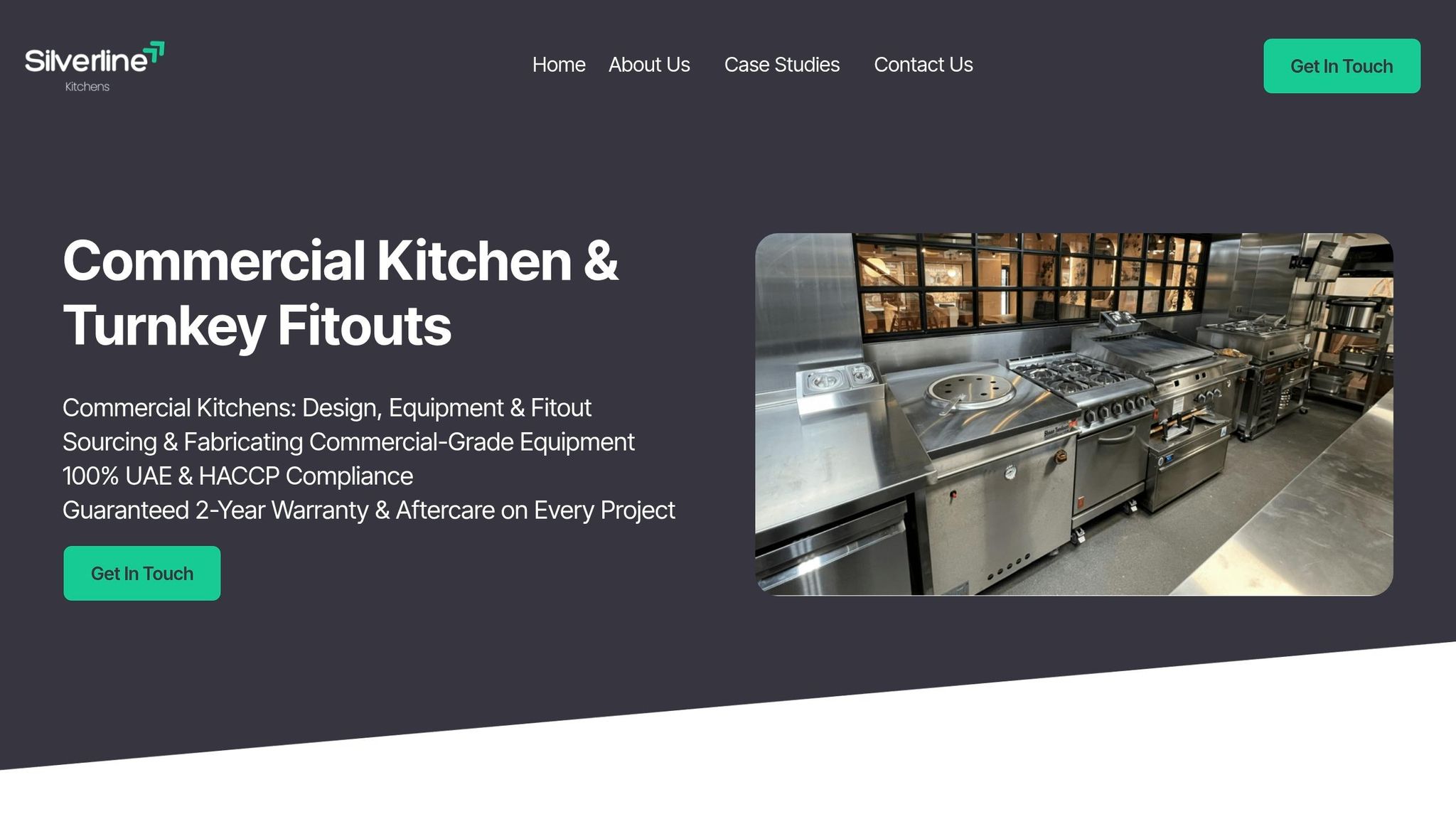
Setting up a hotel or cloud kitchen in the UAE requires careful planning, precise execution, and reliable support. That’s where Silverline Kitchens steps in. With 30 years of experience and a dedication to European standards, they bring precision and expertise to every UAE-based project. By adhering to the UAE’s stringent regulations, Silverline Kitchens ensures that every aspect - from initial design to equipment installation - prioritises safety and efficiency. The result? Kitchens that are ready to perform seamlessly.
Custom Design and Compliance
Every kitchen designed by Silverline Kitchens is customised to fit the specific needs of its business, whether it’s a sprawling hotel operation or a compact cloud kitchen serving multiple brands. The process begins with a deep dive into your menu, workflow, and space limitations. Based on this, they create layouts that maximise productivity while meeting all UAE regulatory requirements, including the UAE Food Code, Dubai Municipality standards, and HACCP hygiene guidelines.
This compliance-driven approach ensures that your kitchen is fully prepared for Dubai Municipality inspections right from the start, avoiding delays and unexpected costs. Designs also incorporate Civil Defence and Fire Life Safety standards, ensuring a smooth transition from concept to reality. This focus on compliance lays the groundwork for efficient project management.
Complete Project Management
Once the tailored design is finalised, Silverline Kitchens takes care of the entire project - from start to finish. Their comprehensive service includes everything from consultations and layout planning to sourcing equipment, custom fabrication, installation, and final handover. Every detail is meticulously planned, from grease trap placement to drainage slopes, to ensure adherence to strict hygiene and plumbing standards.
Post-installation, Silverline Kitchens offers a 2-year warranty along with ongoing maintenance and repair services for all equipment. This ensures minimal downtime and long-term compliance with UAE safety and hygiene regulations. Trusted by major names like Tesco, Choithrams, and Filli Cafe, Silverline Kitchens is a reliable partner for commercial kitchen solutions.
Case Studies: Hotel and Cloud Kitchen Projects
These examples highlight how implementing well-planned kitchen designs and installations can address the most demanding challenges in commercial kitchens. By focusing on compliance, workflow efficiency, and integrating smart technologies, these projects demonstrate how kitchens can deliver exceptional performance under pressure.
Hotel Kitchen: Large-Scale Layout Optimisation
Large hotel kitchens often face tough challenges when retrofitting spaces that weren't originally designed for high-volume operations. As RBnH Solutions points out:
"A new back of house design is less costly than a retro fit and rectifying errors previously made".
When retrofitting, enhanced zoning becomes critical. This includes creating dedicated areas for goods receiving, unpacking deliveries, and storing items like meat, poultry, fish, dairy, and produce in separate cold rooms. Fire-rated ductwork, with a minimum 120-minute rating, is mandatory, along with clean-out access panels installed at every 3-metre interval or change in direction to comply with DW172 standards.
Ergonomics must also be addressed, with equipment re-specified to handle higher electrical loads and ensure effective grease management that meets sanitation regulations. Adequate lighting is another priority, with a minimum of 50 Lumens per square foot (500 Lux) required in kitchen work areas. Additionally, chilled storage for waste is crucial to prevent odours and contamination, while a one-way traffic flow - from storage to preparation, cooking, and serving - helps avoid bottlenecks.
While hotel kitchens require sturdy infrastructure to handle large-scale service demands, cloud kitchens focus on compact, agile designs to support multiple brands under one roof.
Cloud Kitchen: Multi-Brand Operations
Cloud kitchens, on the other hand, rely on technology-driven solutions to optimise energy use and maintain brand separation. Between 2023 and 2026, Systemair implemented a custom ventilation system for a multi-brand cloud kitchen in Arjan, Dubai. This project required a system that could efficiently manage the needs of multiple brands operating simultaneously. The solution included a Fresh Air Handling Unit (FAHU) with a condensing unit and PLC control panels that adjusted ventilation based on real-time demand.
This approach resulted in a 22 KW power reduction, lowering the FAHU's input from 125 KW to 111 KW, and delivered energy savings of 20–30% within a tight 4–6 week timeline. It highlights how demand-controlled ventilation can cut costs while adhering to UAE standards.
For multi-brand kitchens, a zone-based layout is essential. Dedicated assembly stations for each brand prevent order mix-ups and cross-contamination. Shared heavy equipment, like fryers and ovens, should be centrally located for easy access, reducing unnecessary staff movement. Colour-coded bins and chopping boards help keep ingredients separate in shared storage areas, while a designated driver pickup zone ensures external personnel do not disrupt kitchen operations or compromise hygiene.
These case studies show how careful planning and execution not only meet UAE’s strict compliance requirements but also boost operational efficiency.
Conclusion
Setting up a hotel or cloud kitchen in the UAE involves much more than just purchasing equipment. Adhering to strict regulatory requirements is non-negotiable. Kitchens must comply with the UAE Food Code, Dubai Municipality standards, and Dubai Civil Defence regulations to ensure fire safety and proper ventilation. Skipping careful planning can lead to delays, failed inspections, or even operational shutdowns.
A well-thought-out design ensures workflows align with HACCP principles, reducing cross-contamination risks and improving staff efficiency. Using durable materials like high-grade stainless steel (304 or 316) is critical to withstand the UAE's challenging climate. Technical details, such as grease trap positioning, drainage slopes, and mechanical ventilation systems, must be meticulously planned from the start.
The UAE's food delivery sector hit USD 2.18 billion in 2022, growing at a 6.33% annual rate, with cloud kitchen orders surging by 400%. Whether you're modernising a hotel kitchen or launching a multi-brand cloud kitchen, efficient workflows and adaptable equipment are key to staying competitive in this booming market. These trends highlight the importance of expert kitchen design and management.
Silverline Kitchens offers comprehensive project management services, from initial design to final commissioning and ongoing support, backed by 30 years of experience and a 2-year warranty. As they emphasise:
"Every kitchen we deliver is built to meet UAE Food Code and Dubai Municipality standards, ensuring smooth inspections and approvals".
Partnering with professionals for design and installation ensures more than just regulatory compliance - it lays the foundation for a kitchen that runs efficiently, safely, and profitably for years to come.
FAQs
What documents are required for Dubai Municipality kitchen approval?
To get kitchen approval from Dubai Municipality, you'll need to prepare and submit the following documents:
- Restaurant layout plan: A detailed blueprint showing the kitchen's design and layout.
- Fire safety compliance documents: Proof that your kitchen meets fire safety standards.
- Civil Defence approval certificates: Official certification from the Civil Defence department.
- HACCP compliance certificates: Documentation showing adherence to Hazard Analysis and Critical Control Points (HACCP) standards.
Make sure all documents are accurate and align with the required guidelines before submitting them.
How do I apply HACCP zoning in a small cloud kitchen?
To implement HACCP zoning in a small cloud kitchen, it's crucial to align with UAE food safety regulations. Start by identifying potential hazards and establishing clear zones to minimise the risk of cross-contamination.
Here’s how you can do it:
- Perform a thorough hazard analysis and pinpoint critical control points.
- Designate separate areas for key activities like storage, food preparation, cooking, and cleaning.
- Ensure staff are trained on strict hygiene practices to maintain standards.
- Use non-porous materials for surfaces and install proper ventilation systems to meet safety requirements and promote a safe working environment.
Following these steps will help maintain compliance and ensure the smooth operation of your kitchen.
What are the most common inspection failures in UAE commercial kitchens?
In the UAE, commercial kitchens often face inspection failures due to food safety standard violations. Common issues include poor hygiene practices, misuse of equipment, and failure to comply with HACCP regulations. Such lapses can lead to fines or even forced closures. Staying compliant with hygiene protocols and regulatory standards is essential to keep operations running smoothly and avoid penalties.
