


When setting up a commercial kitchen in the UAE, you’ll need to decide between working with a consultant, a manufacturer, or both. This choice directly affects your kitchen’s efficiency, compliance with strict UAE regulations, and overall project success. Here’s a quick breakdown:
- Consultants: Focus on planning, layout design, workflow optimization, and regulatory approvals (e.g., Dubai Municipality, Civil Defence). They ensure your kitchen meets HACCP guidelines, zoning requirements, and safety standards before you invest in equipment.
- Manufacturers: Handle the physical production and installation of stainless steel equipment, ventilation systems, and fire suppression systems. They ensure technical compliance but don’t manage design or approvals.
- Combined Services (e.g., Silverline Kitchens): Offer end-to-end solutions, managing everything from design and approvals to equipment fabrication and installation.
Key factors to consider:
- Project complexity: Small cafés may work directly with manufacturers, while larger restaurants or hotels benefit from a consultant’s expertise.
- Regulations: UAE kitchens must comply with Federal Law No. 10 of 2015, HACCP standards, and specific drainage, ventilation, and fire safety rules.
- Costs: Kitchen projects in Dubai range from AED 200,000 to AED 800,000+ depending on size and complexity.
Quick Comparison:
| Criteria | Consultant | Manufacturer | Combined Services |
|---|---|---|---|
| Focus | Workflow design, approvals, compliance | Equipment production and installation | Full project management |
| Timeline | Early-stage involvement | Later-stage involvement | End-to-end |
| Expertise | Regulatory and design | Technical and fabrication | Both |
| Best for | Large, complex projects | Small-scale kitchens | Turnkey solutions |
Choosing the right partner depends on your kitchen’s scale, menu, and regulatory needs. For large projects, consultants are essential. For smaller setups, manufacturers may suffice. Combined services simplify the process while minimizing risks.

Consultant vs Manufacturer vs Combined Services for UAE Commercial Kitchens
Working with a Commercial Kitchen Consultant
What Consultants Do
Commercial kitchen consultants use your menu as the foundation for selecting the right equipment. By analysing each dish, they identify exactly what you’ll need - whether it’s a tandoor, pizza oven, or a dedicated pastry station. This menu-first approach ensures you’re only investing in equipment that aligns with your specific service needs.
Consultants also focus on creating an efficient workflow. They map out a sequence - Cold Prep → Cooking Line → Pass → Dish Drop → Cleaning - to minimise staff collisions and reduce the risk of cross-contamination between raw ingredients and ready-to-eat food. On the technical side, they design high-efficiency ventilation systems, position grease traps for easy maintenance and regulatory compliance, and specify fire suppression systems like ANSUL that meet Civil Defence standards.
"Your menu is the DNA of your entire kitchen design." - Tina, Guide Author, Lestov
Beyond layout planning, consultants navigate the regulatory landscape, which can be complex in the UAE. They handle submissions to Dubai Municipality for health and safety approvals, coordinate with Civil Defence for fire safety certifications, and manage DEWA or ADDC applications to ensure your electrical load meets requirements. They also ensure compliance with HACCP principles, such as separating high-risk areas from raw prep zones, using non-absorbent materials, and planning drainage slopes to prevent water accumulation.
These carefully considered design choices not only enhance operations but also help save money in the long run.
Benefits of Hiring a Consultant
Hiring a consultant helps you avoid costly mistakes by addressing essential factors upfront, such as property zoning and electrical capacity. This due diligence prevents issues like trade licence rejections or expensive retrofits down the line.
Consultants also recommend energy-efficient solutions tailored to the UAE’s climate. For example, commercial induction cooking transfers over 90% of energy to cookware, compared to just 40–50% for traditional gas systems. In a region where summer temperatures can soar to 50°C, such efficiency reduces the strain on air conditioning. High-efficiency ventilation systems can cut energy consumption by up to 25% compared to standard setups, which is a substantial saving for kitchens operating long hours.
"If the kitchen doesn't work, the restaurant doesn't work. If the workflow breaks, the brand breaks." - Muhammad Rady, Founder, RadyInterior
Another advantage is future-proofing. Consultants design layouts that can adapt to menu changes or increased capacity, which is particularly beneficial if you plan to expand from a single location to multiple outlets across the UAE.
Challenges and UAE-Specific Factors
While hiring a consultant adds to your initial costs, their expertise can help you avoid far more expensive mistakes later. For instance, Dubai Municipality approvals typically take 15–30 working days. Although consultants ensure your documentation is complete to reduce the risk of rejection, they can’t speed up government processing times.
Your input is crucial throughout the process. Consultants need details like your finalised menu, service speed goals, daily cover estimates, and operational preferences to create a design that works for you. Vague or incomplete briefs often result in generic layouts that fail to meet your needs.
There are also several UAE-specific considerations. Measurements here follow the metric system, and consultants must account for prayer schedules when designing staff break areas. Material selection is another key factor - Grade 304 stainless steel works well in most environments, but coastal locations require Grade 316 to resist corrosion from salt air. Additionally, the extreme heat demands specialised ventilation systems. As Lestov points out, "An inefficient ventilation system in the UAE's 50°C summer is a recipe for disaster - creating an unbearable working environment and skyrocketing electricity costs".
With the consultant’s role and regional challenges explained, let’s now explore the contributions of equipment manufacturers.
Working with an Equipment Manufacturer
What Manufacturers Do
Equipment manufacturers handle the physical creation of your kitchen setup. They craft custom stainless steel components like countertops, shelving, and sinks using 304-grade steel. This material is specifically required by Dubai Municipality due to its durability, non-absorbency, and ability to be cleaned easily.
Beyond fabrication, manufacturers integrate essential safety systems into your equipment to meet UAE regulations. For instance, they incorporate ANSUL fire suppression systems into exhaust hoods, ensuring compliance with Civil Defence standards. They also produce detailed technical drawings needed for utility approvals. Once your equipment arrives, their technicians take care of assembly, connect gas and water lines, calibrate appliances like ovens and refrigerators, and thoroughly test everything to ensure it aligns with local standards. This meticulous process ensures your kitchen is set up efficiently and safely.
"Proper commercial kitchen equipment installation determines not only the safety and efficiency of your operations but also your compliance with local health and safety regulations." - NMT Services
After installation, many UAE manufacturers go a step further by offering hands-on training for your staff. They teach proper usage and cleaning techniques, which can help extend the lifespan of your equipment and reduce the risk of accidents.
Benefits of Working with Manufacturers
Manufacturers bring a wealth of technical expertise tailored to UAE-specific conditions. For example, they design ventilation systems capable of handling the region’s extreme summer temperatures, often using computational fluid dynamics (CFD) to optimise airflow and manage heat. They also ensure that commercial dishwashers meet health standards by achieving a sanitising rinse temperature of at least 82°C.
Another key benefit is custom fabrication. If your kitchen has unique spatial requirements or your menu demands specialised stations, manufacturers can create bespoke units that fit your needs perfectly.
Many manufacturers also provide a 2-year warranty, ensuring quick access to replacement parts if needed. However, professional installation is usually required to keep the warranty valid, as attempting a DIY setup or using unlicensed installers can void the coverage.
Limitations of Using Only Manufacturers
While manufacturers excel in equipment production and installation, their expertise is limited to these areas. They typically do not handle workflow design or regulatory submissions, which are essential aspects of setting up a commercial kitchen.
In short, manufacturers provide high-quality equipment solutions and technical support, but consultants remain crucial for strategic design and navigating regulatory requirements.
Consultant vs Manufacturer: Direct Comparison
Side-by-Side Comparison
When tackling commercial kitchen projects in the UAE, knowing the roles of consultants and manufacturers can make all the difference in aligning your kitchen's design with its operational needs. Consultants focus on the big picture. They handle workflow design, ensure compliance with local regulations, and manage submissions to authorities like Dubai Municipality, Civil Defence, and ADAFSA. Their goal? To create a kitchen layout that works seamlessly with your menu and operations.
Manufacturers, on the other hand, are all about the details. They fabricate custom stainless steel equipment, oversee installations, and ensure that every piece of equipment meets technical standards. For example, while consultants manage the entire approval process - submitting architectural and MEP drawings - manufacturers ensure that hardware like ANSUL fire suppression systems in exhaust hoods meet Civil Defence regulations.
Another key difference is their approach to solutions. Consultants offer unbiased, brand-neutral advice tailored to your specific needs and budget. Manufacturers, however, often provide proprietary solutions tied to their own product lines.
The timing of their involvement also varies. Consultants typically join the project early, helping with concept development, site selection, and zoning (think Cold Prep, Cooking, and Pass areas). They integrate MEP systems into the overall design. Manufacturers come into play later, focusing on procurement, custom equipment fabrication, and installation. This distinction highlights why bringing the right expert onboard at the right time is essential for a successful project.
"A kitchen should feel like a sequence, not a room. Every step matters." - Muhammad Rady, RadyInterior
Which to Choose for Your Project
Deciding between a consultant and a manufacturer boils down to your project's scale and complexity. For a small café or cloud kitchen (around 35 seats or delivery-only), working directly with a manufacturer offering design-and-build services can be a practical choice. These setups often have simple menus and limited space, making a streamlined approach more effective.
For mid-sized restaurants (50–100 covers) with diverse menus, engaging a consultant early is often the better route. Consultants help implement HACCP zoning to avoid cross-contamination and reduce staff bottlenecks. They also collaborate with manufacturers to ensure the equipment aligns with your operational needs.
Large-scale projects, like hotels, hospitals, or multi-concept venues, demand a more sophisticated approach. Independent consultants are essential here, particularly for complex MEP coordination and advanced ventilation planning. These projects often require specialised techniques, such as computational fluid dynamics (CFD) engineering, to design ventilation systems that can handle the UAE's intense summer heat. Budgets for such ventures can range from AED 200,000 for smaller operations to over AED 800,000 for large-scale facilities.
If you're considering an open kitchen concept - a trend set to rise in popularity by 2026 - it's crucial to work with experts who understand "invisible design." This approach integrates features like under-counter refrigeration and concealed exhaust systems while prioritising aesthetics. Achieving this balance often requires both strategic consultancy and precise fabrication.
sbb-itb-19c3c9a
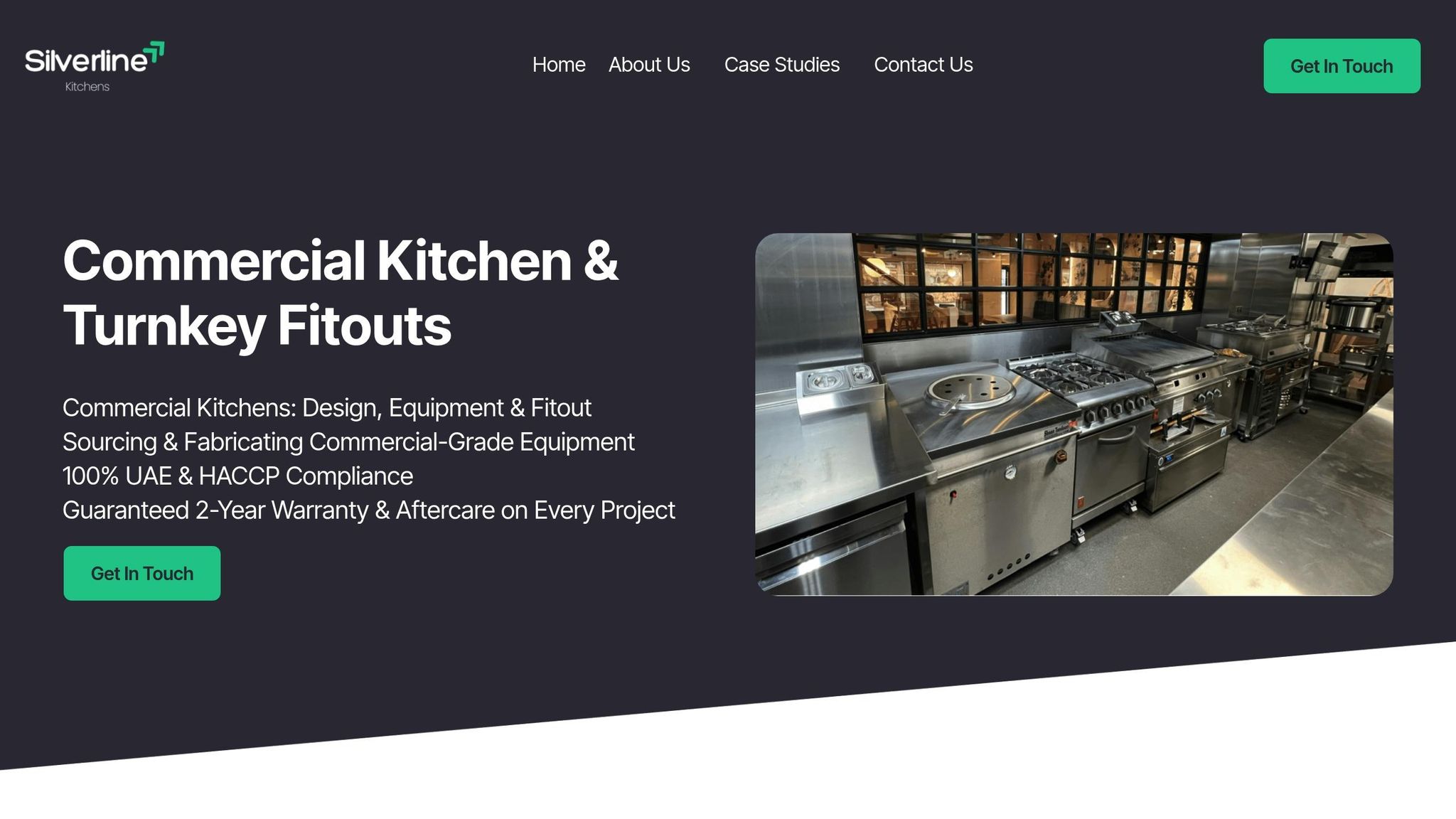
Silverline Kitchens' Combined Services
Complete Project Services
Silverline Kitchens takes care of every stage of your project, simplifying the entire process by managing everything in-house. From the first consultation to the final handover, they handle layout design, equipment sourcing and fabrication, installation, and compliance management. This eliminates the hassle of coordinating multiple contractors for tasks like MEP drawings, extraction systems, or fire suppression installations.
This all-in-one approach ensures that every technical requirement is seamlessly integrated. Such precision is especially important, as Dubai Municipality inspections pay close attention to these details. Any misalignment between the design and installation could lead to delays in opening.
"We handle everything from initial consultation and layout design to supply, installation and final handover. We ensure all equipment is fitted correctly and that your kitchen is fully operational and ready for service." - Silverline Kitchens
The service doesn’t stop at project completion. Silverline Kitchens offers a 2-year warranty and ongoing maintenance support. This aftercare service reduces operational disruptions and provides direct access to the team that built your kitchen. Their comprehensive approach is tailored to address the specific challenges of operating in the UAE.
UAE-Focused Solutions
Silverline Kitchens combines its integrated project approach with deep local expertise to meet the UAE’s strict standards. With three decades of European experience in the UAE, the company brings international quality while ensuring compliance with local regulations. Every project is planned to fully adhere to the UAE Food Code, Dubai Municipality standards, and HACCP guidelines from the outset.
The UAE’s unique climate plays a key role in their planning. With summer temperatures exceeding 50°C, refrigeration efficiency, ventilation, and material durability are carefully considered. For instance, Grade 304 stainless steel is standard for custom fabrication, while Grade 316 is recommended for coastal areas to resist salt corrosion. These material choices not only enhance durability but also ensure compliance with health inspections and HACCP requirements.
Their flexible service model supports a variety of commercial kitchen formats across the UAE. Whether it’s workflow design or equipment fabrication, every solution is aligned with your operational needs and local authority guidelines.
Conclusion: Making the Right Choice for Your UAE Kitchen
Key Takeaways
Consultants play a vital role in navigating the UAE's intricate regulatory requirements, especially for projects needing multiple authority approvals. While they oversee the design process, you'll need to coordinate separately for equipment installation.
Manufacturers focus on providing custom equipment tailored to your needs, often crafted using durable 304-grade stainless steel. They also offer maintenance services to meet technical specifications. However, they typically don't handle regulatory approvals or layout designs.
Combined service models offer an all-in-one solution, managing everything from layout design and regulatory approvals to equipment supply, installation, and final handover. This approach simplifies coordination and minimises delays, which is particularly helpful in the UAE, where mismatches between approved plans and actual installations can postpone openings. Added benefits like a 2-year warranty and aftercare support help ensure smoother operations.
Choosing the Right Partner
When making your decision, start by evaluating your menu and project complexity. High-volume or specialised setups, such as bakeries or fine dining restaurants, require meticulous workflow planning. For new builds or major renovations, it's essential to work with a partner well-versed in both developer-specific standards and Dubai Municipality regulations.
Check credentials early. Confirm that your chosen partner is registered with the necessary authorities, including Dubai Municipality, Civil Defence, and Trakhees. This can save you from costly delays during final inspections. For simpler tasks, like replacing equipment in an existing kitchen, a manufacturer might be sufficient. But for projects involving multiple government NOCs, look for a partner who can handle the entire MEP (mechanical, electrical, and plumbing) backbone, ensuring compliance with fire suppression systems, utility approvals, and trade licence requirements.
Ultimately, select a partner whose expertise matches the complexity and operational needs of your project.
FAQs
What are the key advantages of working with a kitchen consultant in the UAE?
Hiring a kitchen consultant in the UAE brings a host of advantages that extend well beyond simple design guidance. These professionals ensure your commercial kitchen layout is not only practical and efficient but also fully compliant with UAE regulations, such as the Dubai Municipality standards and the UAE Food Code. This means your kitchen is prepared for approval from the outset, sparing you from delays and expensive adjustments.
Their expertise also simplifies navigating the intricate regulatory requirements, including permits from authorities like Dubai Municipality, Dubai Civil Defence, DEWA, and free-zone regulators. Consultants ensure your kitchen adheres to HACCP and food safety standards, safeguarding your operation from potential fines or unexpected setbacks.
On top of that, they strike a balance between your vision and budget by focusing on essential equipment and suggesting cost-effective alternatives. The outcome? A well-equipped, regulation-compliant kitchen that runs efficiently, stays within budget, and is ready to support your business goals from day one.
How do manufacturers comply with UAE commercial kitchen regulations?
Manufacturers take several steps to ensure their equipment aligns with UAE kitchen regulations:
- Design and Certification: Equipment is crafted to meet the technical standards set by authorities like Dubai Municipality. This includes features like proper ventilation, fire safety measures, and surfaces that are hygienic and easy to clean. Each unit comes with a Conformity Certificate, proving it has passed all required quality and safety tests.
- Accreditations: Certifications like HACCP and ISO 22000 are obtained to show compliance with both local and global standards. These accreditations are crucial when submitting kitchen design plans for regulatory approval.
- Training and Support: Manufacturers offer training to ensure equipment is used and maintained correctly, in line with hygiene and safety guidelines. They also work with consultants to design layout plans that meet spacing and ventilation requirements, simplifying the approval process and minimising compliance risks.
These practices ensure the equipment not only functions effectively but also meets all UAE regulatory standards.
When should I choose a combined consultant and manufacturer for my commercial kitchen project?
Opting for a combined consultant and manufacturer can be a smart move when your commercial kitchen project demands strict compliance with UAE regulations and a smooth workflow from design to approvals and equipment installation. This approach works especially well for projects with tight timelines - like a hotel set to open on 15/02/2026 - by ensuring that design approvals and equipment delivery align perfectly, avoiding unnecessary delays.
This solution is also ideal for projects with complex technical needs, such as high-capacity gas ranges, specialised ventilation systems, or energy-efficient refrigeration units, especially if your team lacks in-house expertise. A consultant ensures the kitchen layout adheres to UAE standards, while the manufacturer supplies customised equipment and oversees its proper installation. By choosing a single provider for both services, you streamline communication, minimise risks, and benefit from reliable after-sales support and maintenance. It’s an efficient way to ensure your project runs smoothly from start to finish.
