


Achieving HACCP compliance during kitchen renovations in the UAE is mandatory for all food-handling businesses. It impacts everything from design to materials, equipment, and layout. Costs can range widely depending on the project scope, with smaller upgrades starting at AED 15,000 and larger renovations exceeding AED 100,000. Key expenses include:
- Structural Upgrades: Food-safe flooring, wall tiles, grease traps, and ventilation systems.
- Equipment: Grade 304/316 stainless steel, CE-certified appliances, and separated workstations.
- Permits: Dubai Municipality, Civil Defence, and DEWA approvals, costing AED 12,000–28,000+.
- Workflow Design: Efficient layouts to meet hygiene standards, reducing cross-contamination.
Delays in securing approvals or hidden costs like utility upgrades can increase budgets. Hiring experienced contractors and using durable materials can help control expenses while ensuring compliance.
HACCP Requirements That Increase Renovation Costs
Structural Changes for HACCP Compliance
Achieving HACCP compliance often means making structural upgrades that can significantly impact renovation budgets. For example, flooring must be replaced with food-safe materials like epoxy coatings or anti-microbial panels to meet hygiene standards. Similarly, walls require glazed ceramic tiles to prevent moisture absorption and bacterial growth. These specialised materials are far more expensive than standard finishes.
Another cost driver is the Mechanical, Electrical, and Plumbing (MEP) systems. These systems must include robust drainage equipped with grease traps, mechanical ventilation to handle cooking fumes, and electrical systems capable of supporting high-powered industrial appliances. Even lighting must meet specific standards, such as providing 50 Lumens per square foot (500 Lux) in work areas. Additionally, the design must incorporate dedicated handwash stations, staff restrooms with showers, and separate waste storage areas.
"A new back of house design is less costly than a retro fit and rectifying errors previously made." – RBnH Solutions
Storage requirements also add complexity. HACCP compliance demands separate cold storage rooms for different food categories, including meat, poultry, fish, dairy, and produce. Waste storage areas, particularly for chilled waste, must be located away from goods-receiving zones to minimise contamination risks.
Equipment Upgrades for Food Safety
After structural adjustments, upgrading equipment becomes a necessity to align with HACCP standards. This means investing in commercial-grade equipment made from specified materials. For instance, workbenches, sinks, and preparation surfaces must use Grade 304 stainless steel, or Grade 316 in coastal areas of the UAE where salt air accelerates corrosion. All equipment must carry a Conformité Européenne (CE) certificate to verify compliance with international safety standards.
HACCP also requires strict workflow separation, which further drives up equipment costs. Each functional area - raw food prep, cooked food prep, and dishwashing - must be physically separated. This necessitates purchasing multiple sets of equipment, such as sink tables with splash guards, HDPE cutting boards, and preparation tools, to avoid cross-contamination. Even seals must be made from food-grade silicone to prevent bacterial growth.
Workflow Design for HACCP Standards
Beyond structural and equipment upgrades, designing an efficient workflow is essential to meet HACCP standards. Kitchens must have clearly defined functional zones, such as receiving, de-boxing, sanitation, preparation, cooking, and cleaning. These zones must be arranged to ensure one-way traffic, moving from raw storage to serving without any backtracking. Often, this requires a complete reconfiguration of existing spaces.
Strict space requirements also come into play. Corridors must be wide enough to allow staff and goods to move simultaneously. Additionally, a dedicated de-boxing area must be located away from clean zones to prevent contamination from packaging materials.
While hiring an F&B consultant involves upfront costs, it can save money in the long run by preventing design errors that could lead to expensive retrofits. The approval process for HACCP-compliant designs typically takes 15 to 30 working days, and any issues identified during inspections can delay opening and increase holding costs. These workflow and design considerations are critical to managing renovation expenses effectively.
HACCP Compliance Costs in AED
HACCP Kitchen Renovation Costs Breakdown UAE
Main Cost Categories for HACCP Renovations
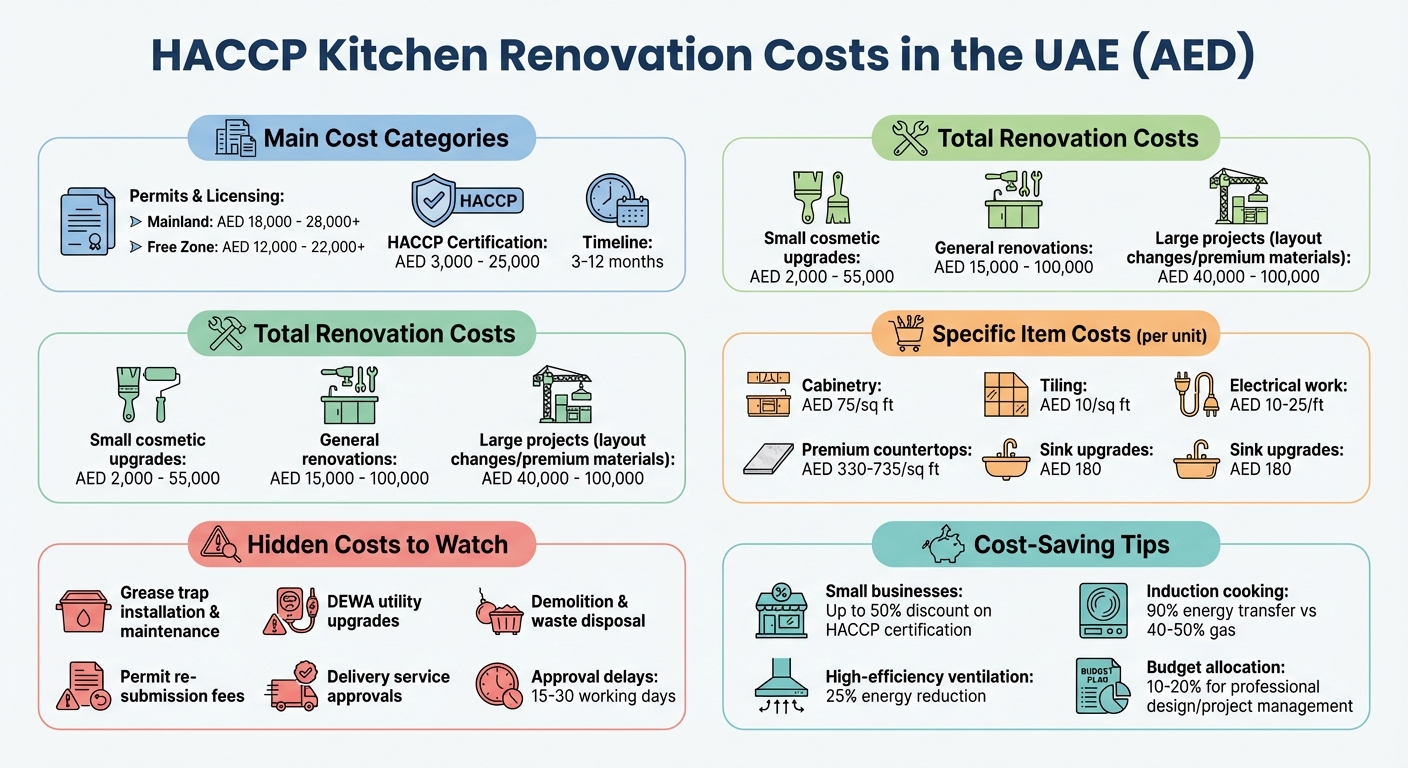
HACCP renovations involve several key expenses, including permits, finishes, MEP systems, equipment, and workflow redesign. Permits and licensing are essential, requiring approvals from authorities like Dubai Municipality (DM), Dubai Civil Defence (DCD), and sometimes the Roads and Transport Authority (RTA) or Free Zone regulators such as Trakhees or DIFC. Mainland authority setup fees typically range from AED 18,000 to AED 28,000+, while Free Zone packages start at AED 12,000 to AED 22,000+.
For structural and interior finishes, materials like food-grade epoxy flooring, glazed ceramic tiles, and stainless steel wall cladding are required. These materials must comply with UAE Food Code standards, being non-absorbent and washable. MEP (Mechanical, Electrical, and Plumbing) upgrades add costs due to high-capacity ventilation systems, grease traps, specialised drainage, and Civil Defence-approved fire suppression systems.
When it comes to equipment, only Grade 304 or 316 stainless steel items with CE certification are acceptable. Lastly, workflow design costs include architectural plans that ensure clear separation between raw and cooked food zones, as well as dedicated staff hygiene stations.
Average HACCP Renovation Costs in the UAE
The cost of kitchen renovations for HACCP compliance in Dubai varies widely, depending on size and material quality. General renovations range from AED 15,000 to AED 100,000. Smaller, cosmetic upgrades typically cost between AED 2,000 and AED 55,000, while larger projects involving layout changes or premium materials can range from AED 40,000 to AED 100,000.
Here’s a quick breakdown of specific costs:
- Cabinetry: AED 75 per square foot
- Tiling: AED 10 per square foot
- Electrical work: AED 10–25 per foot
- Premium countertops: AED 330–735 per square foot
- Sink upgrades: Approximately AED 180
Certification fees for HACCP compliance range from AED 3,000 to AED 25,000, with the process taking anywhere from 3 to 12 months, depending on the size of the business and its level of preparedness.
Keep in mind that unexpected costs can arise, further impacting your budget.
Hidden Costs to Watch For
Unplanned expenses can quickly escalate if you’re not prepared. For instance, grease trap installation and maintenance is often overlooked, as are charges for specialised food waste disposal. Utility upgrades may also require additional DEWA approvals to handle increased electrical loads for industrial appliances.
Other hidden costs include demolition and waste disposal fees, permit re-submission charges in case of rejected plans, and delivery service approvals - covering refrigerated vehicles and driver health cards.
Securing Dubai Municipality approval can take 15 to 30 working days, and delays during this process can lead to higher holding costs while your kitchen remains out of operation. Proper planning and budgeting are essential to avoid these pitfalls.
How to Reduce HACCP Compliance Costs
Focus on Critical Compliance Areas First
To manage HACCP compliance costs effectively, start by focusing on the most critical areas. Begin with the layout and workflow of your kitchen. A well-designed, linear setup - moving smoothly from delivery to disposal - helps minimise cross-contamination and reduces congestion among staff. This is a core HACCP requirement. Concentrate your resources on essential zones such as receiving, storage, preparation, cooking, assembly, and cleaning. Keep raw and cooked food preparation areas clearly separated, and ensure dishwashing zones are isolated from food prep spaces.
Securing layout approvals early is essential to avoid penalties and costly rework. Incorporate mechanical, electrical, and plumbing (MEP) planning from the start, with particular attention to grease traps and exhaust systems, to avoid expensive changes later. For small food businesses in the UAE, there’s good news - HACCP certification charges can be reduced by up to 50%.
Once the workflow and pre-planning are in place, the next step is choosing cost-effective materials.
Select Durable and Affordable Materials
Investing in the right materials can significantly lower long-term costs. For surfaces and equipment, 304-grade stainless steel is a smart choice, as it reduces maintenance and replacement expenses over time. For flooring, opt for epoxy or quarry tiles, which are non-absorbent, easy to clean, and compliant with UAE Food Code standards. Anti-microbial wall panels are another excellent option, as they help prevent bacterial growth and simplify cleaning.
Switching to induction cooking technology is another cost-saving measure. Induction transfers over 90% of energy directly to cookware, compared to just 40–50% for gas, making it much more efficient. It also generates less ambient heat, easing the load on air conditioning - a major advantage in the Gulf’s hot climate. Additionally, high-efficiency ventilation systems can cut energy use by up to 25% compared to traditional systems.
These material choices not only meet compliance requirements but also help reduce maintenance and energy costs in the long run.
Work with Experts for Better Project Management
To tie everything together, consider hiring experienced project managers. Working with contractors registered with Dubai Municipality, Civil Defence, and Trakhees ensures compliance from the outset. Licensed contractors are familiar with MEP layouts, HACCP standards, and fire safety plans, which can significantly speed up approval processes - often reducing them to just 15–30 working days.
For example, companies like Silverline Kitchens offer complete project management services for HACCP-compliant commercial kitchens. They handle everything from design and equipment sourcing to installation and regulatory approvals. Their expertise in UAE regulations can help you avoid costly errors that often result from skipping or rushing the pre-planning stage. It’s wise to allocate 10–20% of your total project budget for professional design and project management fees.
Bringing in experts ensures your kitchen aligns with regulatory standards while keeping costs under control from the very beginning.
sbb-itb-19c3c9a
How Silverline Kitchens Helps Control Compliance Costs

Managing HACCP compliance costs is a critical concern for businesses, and Silverline Kitchens tackles this issue head-on with their specialised designs, thorough project management, and dependable after-sales support.
Silverline Kitchens' HACCP-Compliant Design Expertise
Silverline Kitchens creates commercial kitchen layouts that align with UAE regulations, focusing on linear designs that streamline workflow - from receiving goods to disposal. This approach minimises cross-contamination risks and reduces congestion among staff.
They carefully select materials like 304-grade stainless steel and epoxy flooring, which are both durable and non-absorbent, meeting HACCP standards while keeping repair expenses in check. By recommending finishes that comply with Dubai Municipality's Food Code and HACCP guidelines, they help businesses avoid materials that might look appealing but fail to meet stringent health inspection requirements.
Comprehensive Project Management to Control Costs
In addition to their design capabilities, Silverline Kitchens offers full-scale project management services. They oversee every step, from the initial design phase to installation, including securing necessary approvals from Dubai Municipality, Dubai Civil Defence, and DEWA. This all-inclusive approach helps businesses avoid costly fines, project delays, and rework tied to non-compliant designs or missed permits.
They also introduce energy-efficient solutions, such as induction cooking, which transfers over 90% of energy directly to cookware compared to the 40–50% efficiency of gas. Their ventilation systems can reduce energy consumption by up to 25%. In the UAE's hot climate, these measures significantly ease the burden on air conditioning systems, leading to lower utility bills.
Long-Term Savings Through After-Sales Support
Silverline Kitchens doesn't stop at installation - they provide ongoing support to ensure long-term cost savings. Their post-installation services include maintenance for essential systems like fire suppression and high-temperature sanitising dishwashers (final rinse at 82°C). They also handle equipment replacements and renovations, ensuring businesses stay compliant as regulations change, avoiding unexpected expenses down the line.
Conclusion: Managing Compliance and Costs
Key Takeaways
Achieving HACCP compliance during kitchen renovations in the UAE doesn’t have to break the bank. One of the smartest ways to keep costs in check is to secure layout assessment approvals from Dubai Municipality or ADAFSA before starting construction. This proactive step can save you from costly rework or fines down the line. Direct your budget towards essential upgrades like hygiene-compliant flooring, efficient drainage, fire suppression systems, and properly designed ventilation. Opting for durable materials, such as 304-grade stainless steel and food-grade epoxy flooring, ensures you meet hygiene standards while avoiding frequent repairs or replacements.
Partnering with professionals who are well-versed in the overlapping requirements of Dubai Municipality, Civil Defence, and DEWA can significantly streamline the renovation process. MGM Interiors highlights this point well:
"Getting fit‑out right from the start saves time, cost, and frustration".
A menu-driven design approach can also help you avoid unnecessary spending. By aligning your equipment purchases with your actual operational needs, you can steer clear of overspending on high-end items that may not be essential. Additionally, small food businesses may benefit from a 50% discount on HACCP certification fees, offering a practical way to lower overall compliance costs.
Next Steps for UAE Kitchen Renovations
To set your renovation project up for success, start by consulting professionals registered with Dubai Municipality and Civil Defence. This ensures a smoother approval process, which typically takes 15 to 30 working days when all documentation is in order. Make it a priority to obtain the necessary permits before starting any construction. Also, coordinate your MEP (Mechanical, Electrical, and Plumbing) layouts early, as these systems often require government approval.
For businesses looking to balance HACCP compliance with budget considerations, Silverline Kitchens provides tailored solutions. Their comprehensive project management services cover everything from initial design and Dubai Municipality approvals to equipment installation and ongoing maintenance. By working with experts who understand UAE regulations and can recommend energy-efficient solutions - like induction cooking, which transfers over 90% of its energy directly to cookware - you can achieve compliance while cutting long-term operational costs.
FAQs
What unexpected expenses might arise during HACCP-compliant kitchen renovations?
When upgrading your kitchen to align with HACCP compliance, there are some costs that might not be immediately apparent. These could include fees for obtaining the required licences and permits, securing approvals for construction designs, and setting up detailed documentation and record-keeping systems. On top of that, you may need to allocate funds for staff training to ensure everyone understands HACCP standards, as well as plan for ongoing verification or audit expenses to maintain compliance over time.
By planning carefully and collaborating with seasoned professionals, you can better anticipate these expenses and manage them efficiently. This approach helps ensure your kitchen meets all regulatory standards without unnecessary delays or overspending.
What are some cost-effective ways for small businesses to meet HACCP compliance during kitchen renovations?
Small businesses can manage HACCP compliance costs more effectively with some smart strategies. One way to streamline the process is by narrowing down your menu or product range. This reduces the complexity of compliance requirements, making it easier and more cost-effective to meet standards.
Investing in basic food hygiene training for your staff is another practical step. It ensures your team understands essential practices without the need for expensive, advanced training programmes.
Another helpful tip? Use ready-made HACCP documentation templates. These templates save you time and cut down on the need for hiring specialised consultants. Plus, conducting a pre-assessment audit before an official inspection allows you to spot and fix any compliance gaps early, avoiding costly last-minute corrections.
Finally, look for providers who offer flexible payment plans. This can help spread out the financial burden, making compliance more manageable for smaller budgets.
Why is it important to work with experienced contractors for HACCP-compliant kitchen renovations?
Hiring seasoned contractors is crucial to ensure your kitchen renovation aligns with HACCP compliance standards. These professionals understand the detailed construction, design, and equipment specifications required to meet UAE food safety regulations. They also take care of securing permits and approvals, helping you sidestep potential delays or compliance challenges.
By entrusting your project to experts, you can be confident that your kitchen will meet local standards, operate efficiently, and prioritise safety. This approach not only streamlines the process and minimises costs but also provides reassurance that your renovation is being handled by skilled professionals.
