


Starting a café or restaurant in the UAE is not just about creating great food - it’s about meeting strict regulations and designing a functional, compliant kitchen. Here's what you need to know:
- Regulations: You must comply with food safety, fire safety, and hygiene standards set by Dubai Municipality, Civil Defence, and HACCP guidelines.
- Kitchen Setup: Separate zones for preparation, cooking, storage, and cleaning are essential to prevent contamination and ensure smooth workflow.
- Equipment: Invest in durable, regulation-compliant appliances, with proper ventilation and fire suppression systems.
- HACCP Standards: Implement food safety practices, train staff, and maintain records like temperature logs and cleaning schedules.
- Maintenance: Regularly service equipment and conduct compliance audits to avoid fines and disruptions.
Step 1: Know the UAE Commercial Kitchen Regulations
Before setting up a commercial kitchen in the UAE, it’s crucial to familiarise yourself with the regulatory framework. The Dubai Food Control Department, under Dubai Municipality, is responsible for enforcing food safety and hygiene standards across all commercial kitchens. Whether you’re planning a small café or a full-service restaurant, compliance with these rules is mandatory.
Multiple authorities play a role in enforcing these regulations. While Dubai Municipality oversees food safety and hygiene, fire safety and emergency protocols are also a critical part of your operational requirements. To secure a food trade licence, you must submit detailed kitchen plans that demonstrate compliance with these standards. Inspectors will review your layout, equipment, and procedures, ensuring they align with the regulations before granting approval. Regular inspections will also be conducted to ensure continued adherence. Below, we’ll explore the HACCP standards and inspection procedures required by Dubai Municipality.
HACCP Standards and Food Safety Requirements
In Dubai, all commercial kitchens must implement a Food Safety Management System (FSMS) based on HACCP (Hazard Analysis and Critical Control Points) principles. This system should cover every stage of food handling - from receiving ingredients to serving dishes - while addressing risks at critical control points like cooking, cooling, and storage.
Temperature control is a cornerstone of HACCP compliance. Commercial refrigerators must be kept at prescribed temperatures to prevent bacterial growth, and you’ll need to log these temperatures regularly. Similarly, cooking processes must ensure that food reaches safe internal temperatures.
Preventing cross-contamination is equally important. Use separate cutting boards and utensils for raw and cooked foods, and designate distinct zones for raw protein preparation and ready-to-eat items.
Staff training is another essential component. Every team member must complete certified food safety training, covering topics like proper handwashing techniques, personal hygiene (e.g., clean uniforms), and emergency procedures. Equip your kitchen with multiple handwashing stations stocked with soap and sanitiser. Additionally, maintain detailed records - such as temperature logs, cleaning schedules, and training certifications - to demonstrate compliance and conduct internal assessments.
Dubai Municipality Requirements
Dubai Municipality inspections go beyond food safety to include operational safety. These inspections assess your kitchen’s physical setup, equipment, food handling practices, and staff behaviour.
Your kitchen must have fire extinguishers, smoke detectors, and fire blankets, all positioned for easy access. Emergency exits should be clearly marked. Pest control is another priority - seal entry points, maintain cleanliness, and partner with licensed pest control providers. Keep proper documentation of pest control activities.
Waste management is a key focus area. Ensure that food waste and packaging materials are disposed of promptly and correctly. Waste storage areas should be separate from food prep zones, well-ventilated, and cleaned regularly to prevent pests and odours. Consistent cleaning routines for all kitchen spaces and equipment, backed by documented schedules, are essential.
Grease Trap and Drainage Systems
Dubai Municipality requires all commercial kitchens to install and maintain grease traps to manage fats, oils, and grease (FOG) effectively, reducing blockages and environmental risks.
"It is a legal requirement for any business dealing with hot food to install and maintain a grease trap."
– Sanco Environmental Services
The size and capacity of your grease trap should match your kitchen’s operational scale, equipment, and menu. Given Dubai’s hot climate, grease buildup happens quickly, making regular cleaning a must. High-volume restaurants may need to clean their grease traps every one to two weeks, while medium-volume kitchens should aim for at least once a month. Smaller outlets can manage with cleaning every two to three months, though some guidelines recommend more frequent maintenance - up to four times a month for smaller traps and twice a month for larger ones.
Signs that your grease trap needs attention include slow-draining sinks, unpleasant odours, or FOG accumulation reaching 25% of the trap’s capacity. Grease trap waste is classified as controlled waste and must be removed by registered waste carriers, with disposal carried out at municipality-approved facilities.
Keep detailed records of all grease trap cleaning and waste disposal activities. Many Dubai Municipality-approved cleaning services provide the necessary documentation to ensure compliance. Proper grease trap maintenance not only aligns with regulations but also supports the efficiency of your kitchen. Neglecting these requirements can result in heavy fines, operational disruptions, or even closure, which can harm your business reputation.
Step 2: Design Your Kitchen Layout for Efficiency and Compliance
The layout of your kitchen is more than just a design choice - it's the backbone of efficient and compliant operations. Every decision you make affects safety, regulatory adherence, and the speed at which your team can work. In the UAE, where both operational costs and customer satisfaction are closely tied to efficiency, a well-thought-out kitchen layout can make or break your business.
Beyond meeting local health and safety standards, your kitchen's design should create a seamless workflow. Poorly planned layouts can lead to cross-contamination, injuries, and even compliance violations. But with careful planning, you can create a space that prioritises both safety and productivity.
How to Organise Kitchen Zones for Better Workflow
Think of your kitchen as a collection of zones, each with a clear purpose. A well-organised commercial kitchen follows a logical flow, mirroring the journey of food - from delivery and storage to preparation, cooking, plating, and finally, service. This flow, often inspired by the "kitchen work triangle" concept, reduces unnecessary movement and keeps raw and cooked foods safely separated.
Here’s how to structure your zones:
- Receiving and Storage: Position the receiving area near an entrance to avoid disrupting other operations. Storage for dry, refrigerated, and frozen goods should be nearby, making it easy to transition items from delivery to storage.
- Food Preparation: Allocate plenty of counter space between storage and cooking areas for handling ingredients. Separate stations for raw meats and ready-to-eat foods are essential to prevent cross-contamination.
- Cooking: Place this zone centrally between food prep and plating areas. Group similar equipment together and leave enough space between them for safe use and easy cleaning.
- Plating and Service: This area connects the kitchen to the dining space. It should have enough counter space for busy periods and include features like warming equipment to keep food at the right temperature. Keep this zone distinct from raw food prep areas to maintain hygiene.
- Cleaning and Dishwashing: Position this zone away from food prep but close enough to the dining area for easy access when returning dishes. Equip it with proper sinks for washing and sanitising, as well as separate handwashing stations in line with UAE health regulations.
To keep your kitchen running smoothly, plan for a clear flow of items. Dirty dishes and food waste should move separately from fresh ingredients, reducing the risk of contamination and keeping things organised during peak hours.
Once your zones are defined, the next step is to optimise your space and ensure proper ventilation.
Space Planning and Ventilation Requirements
With your zones mapped out, focus on refining the layout to meet both operational needs and regulatory standards. In commercial kitchens, space planning must balance efficiency with safety, ensuring that your design complies with local rules.
UAE guidelines often specify minimum aisle widths, equipment clearances, and workspace dimensions to promote safe operations. These standards might seem restrictive, but they’re essential in fast-paced environments where staff handle hot equipment and heavy loads.
The size of your kitchen should align with your menu and service style. A small café may operate efficiently with a compact kitchen, while a full-service restaurant might need a larger, more segmented space to handle multiple tasks simultaneously. Many UAE regulations also require separate areas for specific functions, rather than a single open-plan layout.
Ventilation is especially critical in the UAE's climate. Your system should efficiently remove heat, smoke, and grease while bringing in fresh, conditioned air. Install extraction hoods above cooking equipment to capture heat and grease, ensuring the air is expelled outside the building. Make sure air intake vents are positioned away from potential contamination sources like exhaust outlets or waste areas.
Proper ventilation not only maintains a comfortable working environment but also prevents cooking odours from reaching customer areas. Ceiling height and equipment clearance are also important for installing ventilation systems effectively.
Temperature control is another key factor, particularly during the UAE’s scorching summer months. A well-designed HVAC system can keep your kitchen cool and ensure food is stored at safe temperatures.
To future-proof your kitchen, consider incorporating modular features like mobile prep tables and adjustable equipment. These allow you to reconfigure your space as your restaurant evolves, saving you from costly renovations or the hassle of seeking additional approvals down the line.
Step 3: Choose and Install the Right Equipment
Once you’ve finalised your kitchen layout, the next step is selecting equipment that aligns with your daily operations and complies with UAE regulations. The equipment you choose will directly influence your kitchen's efficiency, safety, and compliance. Making the wrong choices can lead to frequent breakdowns, failed inspections, and unnecessary expenses.
In the UAE’s busy foodservice industry, it’s essential to invest in equipment designed for heavy use, energy efficiency, and full compliance with local health and safety standards. This ensures your kitchen can handle high volumes while keeping operational costs under control.
How to Select Equipment That Meets Your Needs
When choosing equipment, prioritise stainless steel construction. It’s durable, resists corrosion, handles high temperatures, and is easy to clean - making it ideal for a commercial kitchen. Opt for models that are energy-efficient, as they not only reduce electricity costs but also align with sustainability goals. While such equipment might have a higher upfront cost, the long-term savings often make it worth the investment.
Capacity planning is another critical factor. Your equipment should match your expected service volume while leaving room for growth. Undersized appliances can cause delays during peak hours, while oversized ones waste energy and take up valuable space. Think about your menu, busiest service times, and projected customer numbers when determining the right capacity.
Reliability is key, so choose equipment from reputable brands that offer strong warranties and local service support. This minimises downtime and ensures quick access to spare parts. Also, confirm that the equipment meets UAE certification standards. Electrical appliances must comply with safety regulations, while gas equipment should meet Civil Defence requirements.
For refrigeration, maintain consistent temperatures to comply with food safety standards: 0–4°C for chilled storage and below -18°C for frozen goods. Fluctuating temperatures can compromise food safety and lead to compliance issues.
When it comes to cooking equipment, consider the heat output and ensure your ventilation system can handle it. High-powered burners and ovens generate significant heat, so proper extraction systems are essential to maintain a safe and comfortable working environment.
Once you’ve chosen the right equipment, don’t overlook fire safety measures.
Fire Safety and Emergency Equipment
Fire safety is a top priority in commercial kitchens, and UAE Civil Defence regulations require strict adherence to safety standards. Install an automatic fire suppression system above cooking equipment. These systems, which typically use wet chemical agents, detect and extinguish fires quickly. They must be professionally installed, regularly inspected, and integrated with your building’s fire alarm system.
Place portable fire extinguishers throughout the kitchen. Wet chemical extinguishers are ideal for cooking areas, while CO₂ or dry powder extinguishers should be placed near electrical equipment. Ensure all extinguishers are mounted in accessible locations.
Install smoke detectors and heat sensors following Civil Defence guidelines. Be mindful of positioning to avoid false alarms caused by normal kitchen smoke. Advanced systems can integrate with building management systems for early warnings and automatic responses.
Use fire-resistant materials for walls, ceilings, and floors to slow fire spread while maintaining hygiene standards. Emergency shut-off switches for gas and electrical supplies should be easily accessible, and staff must be trained in their use. Regularly clean grease filters and extraction ducts to reduce fire risks.
Equipment Sourcing with Silverline Kitchens
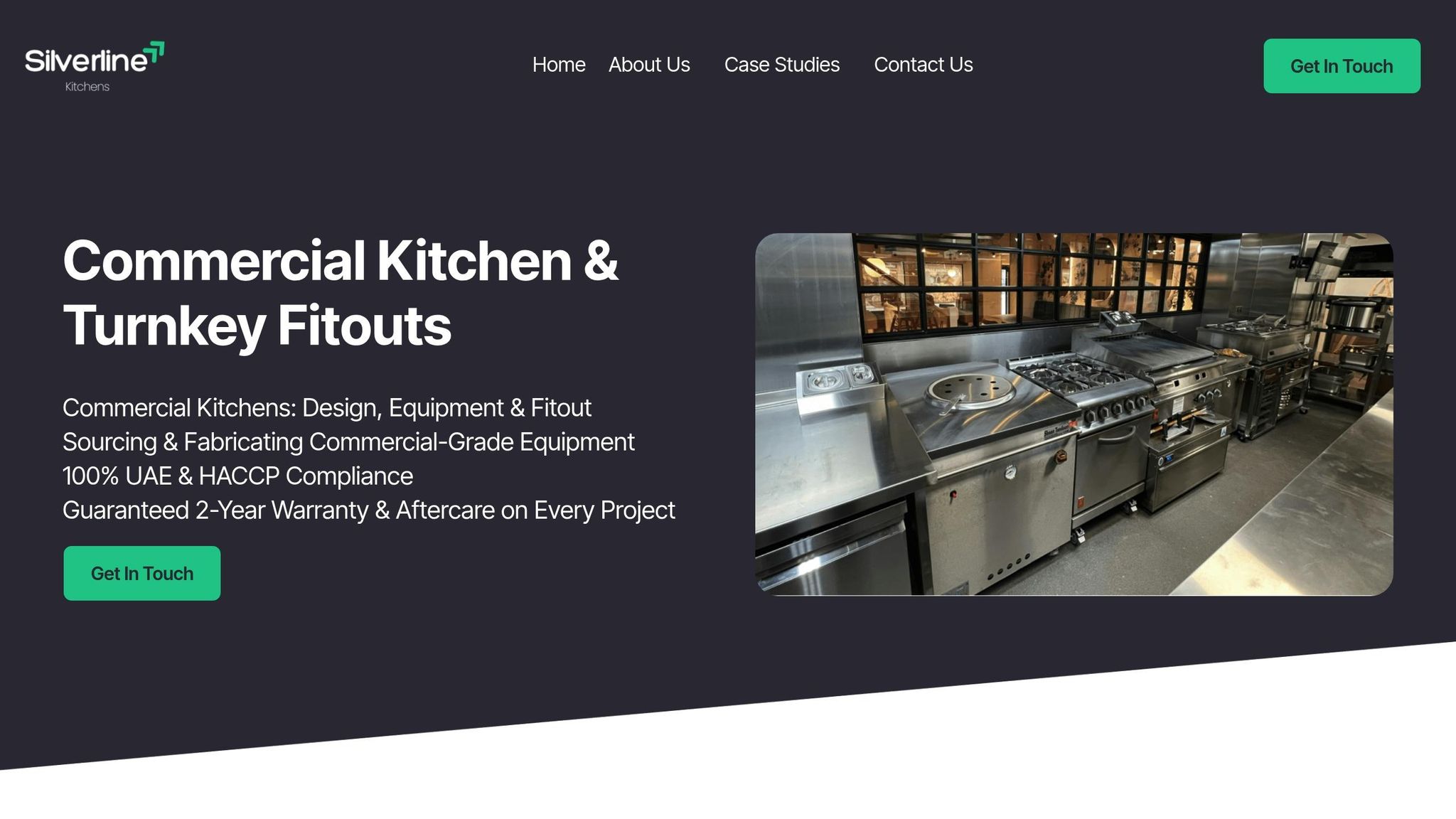
Sourcing the right equipment is just as important as selecting it. Silverline Kitchens specialises in helping businesses navigate UAE regulations, providing reliable after-sales support, and ensuring seamless integration with your kitchen design.
Silverline Kitchens offers a full range of services, including sourcing, custom fabrication, professional installation, and ongoing maintenance. They ensure compliance with Dubai Municipality, HACCP, and Civil Defence standards. Their local expertise allows them to source equipment from manufacturers with strong service networks, ensuring quick maintenance support and easy access to spare parts.
For unique spaces or specific needs, Silverline Kitchens can create custom stainless steel solutions like counters, shelving, and prep tables. These are tailored to fit your space perfectly while maintaining hygiene standards.
Their installation services cover everything from positioning and connecting equipment to testing its functionality. This includes electrical connections, gas line setups, water supply hookups, and ventilation integration. Professional installation reduces the risk of equipment failure and ensures compliance with safety regulations from the start.
Silverline Kitchens also provides ongoing maintenance to keep your equipment running smoothly. Regular servicing helps identify potential issues early, avoiding costly breakdowns. For existing kitchens, they offer renovation and equipment replacement services, allowing you to upgrade gradually with minimal disruption.
When planning your budget, remember that the initial purchase price is just one part of the total cost. Factor in energy usage, maintenance needs, and equipment lifespan to make a smart, long-term investment.
With your equipment in place, you’ll be ready to focus on implementing strong food safety practices and training your team effectively.
sbb-itb-19c3c9a
Step 4: Set Up HACCP and Food Safety Practices
After optimising your kitchen layout and installing the necessary equipment, the next step is implementing HACCP (Hazard Analysis and Critical Control Points) practices. Not only is HACCP a regulatory requirement in the UAE, but it also forms the backbone of safe food handling, ensuring compliance and safeguarding public health.
HACCP involves identifying potential hazards at every stage of food preparation, from receiving ingredients to serving meals. This system depends on clear procedures, a well-trained team, and ongoing monitoring, all of which help streamline daily operations. With your equipment ready, the next priority is equipping your staff with the skills they need to implement HACCP effectively.
Staff Training on Food Safety Protocols
Your team is your first line of defence against food contamination. Even with the best equipment and protocols, food safety can fail if employees aren’t properly trained. Ensure all staff members receive HACCP training tailored to their roles, from basic food handling to advanced system management. Keep detailed records of these training sessions to demonstrate compliance.
- Level 1 and Level 2 HACCP Training: Ideal for food handlers and employees in catering, retail, packaging, and delivery. Level 2 training includes topics like the importance of food safety, the seven HACCP principles, legal responsibilities, and practical applications such as identifying critical control points and monitoring processes.
- Level 3 HACCP Training: Designed for managers, supervisors, and those responsible for creating and maintaining HACCP systems. This level covers hazard analysis, legal obligations, verification methods, and overall HACCP management.
- Level 4 HACCP Training: Aimed at management-level staff and quality assurance professionals, this training focuses on evaluating HACCP plans, supporting system implementation, and understanding its role within the organisation.
Use interactive approaches like case studies, hands-on exercises, and role-playing to ensure staff fully understand international HACCP standards. For instance, encourage kitchen staff to practise proper handwashing techniques, demonstrate safe food storage methods, and simulate responses to contamination scenarios.
Key training areas include:
- Personal Hygiene: Teach staff proper handwashing, the use of clean uniforms and gloves, and the importance of staying home when unwell.
- Cross-Contamination Prevention: Emphasise using separate tools for raw and cooked foods, proper storage practices, and maintaining clean workspaces.
- Temperature Control: Train employees on safe cooking temperatures, cooling methods, and monitoring refrigeration units.
- Allergen Management: Staff should identify common allergens, prevent cross-contact, and communicate ingredient information clearly to customers.
- Cleaning and Sanitation: Provide guidance on cleaning chemicals, dilution ratios, and cleaning schedules for different surfaces and equipment.
With the UAE’s diverse workforce, training is often available in multiple languages to ensure accessibility. On-site training can also be customised to address your specific operational needs. Schedule refresher courses annually or whenever procedures change. For new hires, provide thorough training before they start handling food independently. Assigning a Person in Charge (PIC) for each shift - someone with advanced training to oversee food safety in real time - is a smart way to maintain high standards.
Document all training sessions, including dates, attendees, topics, and results. This not only helps during inspections but also highlights any gaps that need further attention. Once your team is well-trained, focus on maintaining detailed records to uphold compliance.
Record-Keeping and Monitoring Systems
Accurate and organised record-keeping is the backbone of a reliable HACCP system. These records act as proof of compliance and are essential during inspections by Dubai Municipality or other health authorities.
Key areas to document include:
- Temperature Logs: Record refrigerator and freezer temperatures at least twice daily, along with cooking, cooling, and reheating temperatures for high-risk foods. Note any deviations from safe ranges and the corrective actions taken.
- Cleaning Schedules: Maintain checklists for daily, weekly, and monthly cleaning tasks, such as wiping down surfaces, deep-cleaning equipment, and descaling machinery. Include records of professional cleaning services and pest control visits.
- Supplier Documentation: Log deliveries, noting the condition of ingredients and supplier certifications. Record rejected items and reasons for rejection.
- Corrective Action Logs: Document issues like equipment malfunctions, the steps taken to address them, and how affected food was managed.
- Internal Audit Records: Conduct self-inspections using criteria similar to health inspectors and document findings. Regular audits help identify areas for improvement and ensure HACCP plans stay up to date.
Modern tools like smart sensors can simplify food safety monitoring by automatically logging temperatures and alerting staff to potential issues. Tablet-based checklists reduce paperwork and help track recurring problems, while cloud storage ensures records are secure and easily accessible during inspections. Keep paper logs as a backup and train staff on both digital and manual record-keeping methods.
Organise records so they’re easy to retrieve during inspections, and review them regularly to spot trends or recurring issues. This proactive approach allows you to address problems before they escalate.
With a well-trained team and robust record-keeping in place, your kitchen will be equipped to maintain high food safety standards, protect your customers, and meet all regulatory requirements.
Step 5: Maintain Equipment and Stay Compliant
Once your kitchen is up and running and your team is fully trained, the next priority is keeping your equipment in top condition and staying aligned with UAE regulations. Ignoring maintenance can lead to costly repairs, safety issues, and even fines. A proactive approach not only ensures smooth operations but also safeguards your investment and reputation.
Commercial kitchen equipment faces heavy use, high temperatures, and constant exposure to grease. Without regular upkeep, even the most dependable appliances can wear out, causing inefficiencies, safety risks, and compliance problems. Equipment labelled "out of order" is often a sign of preventable issues that could have been avoided with proper care. To avoid such setbacks, it’s essential to stick to a solid maintenance plan.
Regular Equipment Maintenance Schedules
Setting up a preventative maintenance programme is a smart way to avoid sudden breakdowns and maintain compliance. Instead of waiting for something to go wrong, routine servicing can catch potential problems early, saving you from expensive repairs and regulatory headaches.
Start by creating a detailed maintenance calendar that includes all essential equipment. Items like ovens, refrigerators, walk-in chillers, freezers, and bakery machines each have specific servicing needs based on their usage and the manufacturer’s recommendations. For example, commercial refrigerators need regular upkeep to stay energy-efficient, while deep fryers require frequent checks on their oil filtration systems to prevent hazards.
- Daily tasks: Clean and inspect equipment to catch any visible issues.
- Weekly tasks: Check filters, gauges, and other components that may need attention.
- Monthly tasks: Schedule professional servicing for critical systems.
Keep accurate records of maintenance activities, including dates, technician details, work done, and any parts replaced. These records are invaluable during inspections and can help spot recurring issues that might signal the need for a replacement. When equipment is undergoing maintenance, clearly mark it to prevent unauthorised use and ensure staff safety.
Always use genuine spare parts to maintain the equipment’s performance and warranty. While cheaper alternatives might seem tempting, they can lead to faster wear and tear or even safety risks. For example, if a walk-in chiller stops cooling or a mixer breaks down, having access to authentic parts ensures the equipment is restored to its original functionality.
To minimise downtime during emergencies, consider a 24-hour repair service agreement. For instance, a broken refrigerator during peak hours can result in food spoilage and lost revenue. A reliable maintenance partner who can respond quickly can save you from these disruptions.
How to Conduct Compliance Audits
Regular compliance audits are crucial to ensure your kitchen meets Dubai Municipality standards and other regulatory requirements. These audits involve a combination of self-inspections and professional third-party reviews.
Conduct monthly internal checks using the same criteria as health inspectors. Walk through your kitchen to review temperature logs, cleaning schedules, staff hygiene, and equipment condition. Watch out for risks like cross-contamination, insufficient handwashing stations, or faulty refrigeration units.
Your Food Safety Management System (FSMS), based on HACCP principles, must be implemented and properly documented. During audits, confirm that critical control points are monitored, temperature logs are updated, and corrective actions are recorded when issues arise. Ensure all staff have valid food safety certifications, and keep training records current.
Hiring professional auditors can provide an unbiased evaluation of your kitchen operations. They can point out blind spots and suggest improvements, helping you prepare for unannounced inspections by the Dubai Municipality Food Safety Department.
Pay special attention to fire safety compliance. Kitchen hood fire suppression systems must adhere to Dubai Civil Defence regulations and NFPA 96 standards. Regular testing and maintenance of these systems are mandatory, and all documentation should be readily available during inspections.
Keep detailed records to show your commitment to food safety laws. This includes tracking food from receipt to distribution, ensuring proper labelling for traceability, and maintaining supplier certifications. During official inspections, having these documents ready makes the process smoother for everyone involved.
The Dubai Municipality Food Safety Department operates under a regulatory framework aligned with international standards from the WHO and Codex Alimentarius. Familiarising yourself with these guidelines helps you anticipate inspection requirements and maintain compliance. Partnering with experts for maintenance can also simplify this process.
Maintenance Support from Silverline Kitchens
Silverline Kitchens offers a full range of maintenance and after-sales services for the equipment they supply and install. This includes regular servicing, repairs, and commissioning of new appliances to keep your kitchen running at peak performance.
They provide 24-hour repair services, genuine spare parts, and support for renovations, all while ensuring compliance with UAE standards. Routine check-ups can reduce unexpected repair costs and extend the lifespan of your equipment, helping you avoid downtime during busy periods.
Whether it’s ovens, refrigerators, or bakery machines, their technicians can quickly diagnose and resolve issues, minimising disruptions to your operations. Their fast response times protect your business from prolonged setbacks that could impact customer service and revenue.
Silverline Kitchens also specialises in renovation and equipment replacement projects. They can upgrade your kitchen to meet evolving UAE regulations, replace outdated appliances, and improve overall efficiency. This service is especially useful as older equipment becomes less reliable or compliant over time.
Having a dedicated maintenance partner who understands your kitchen’s layout and equipment ensures seamless servicing. Their expertise in UAE regulations means all maintenance work supports your compliance efforts, giving you peace of mind during inspections.
Conclusion: Building a Compliant and Efficient Kitchen
Setting up a café or restaurant in the UAE requires more than just passion for food - it demands strict compliance with regulations, efficient kitchen design, and reliable equipment.
Compliance is non-negotiable. Meeting fire safety standards, installing grease traps, and adhering to food safety guidelines not only protects public health but also safeguards your business from potential fines, closures, and damage to its reputation.
An efficient kitchen layout is equally important. By reducing unnecessary movement and errors, a well-thought-out design speeds up service and enhances workflow. Features like proper ventilation, sufficient spacing, and strategically planned zones ensure your team operates smoothly while meeting UAE regulatory requirements.
Investing in durable, regulation-compliant equipment is another cornerstone of success. Regular maintenance and accurate record-keeping help prevent costly breakdowns and keep your kitchen inspection-ready at all times.
Professional support can make all the difference. Companies like Silverline Kitchens provide tailored design solutions, equipment sourcing, and installation services that align with UAE standards. Their after-sales support and maintenance services ensure your kitchen stays compliant and functions seamlessly.
Whether you're starting a new café or expanding your restaurant, thoughtful planning and adherence to these principles set the foundation for long-term success, allowing you to focus on what truly matters - delivering outstanding food and service.
FAQs
What are the essential steps to comply with Dubai Municipality's food safety and hygiene regulations when opening a new café or restaurant?
To comply with Dubai Municipality's food safety and hygiene regulations when opening a café or restaurant, here are the essential steps to follow:
- Prepare a detailed kitchen design plan: Ensure your plan includes proper space allocation, ventilation systems, drainage solutions, and an organised equipment layout that meets the specified guidelines.
- Follow the Dubai Food Code: This code serves as your comprehensive guide to all required food safety standards and practices, covering everything from storage to preparation.
- Undergo an inspection: Schedule an inspection with Dubai Municipality to verify compliance. Passing this inspection is mandatory to secure your final operating permit.
By following these steps, you'll not only meet the necessary regulations but also set the foundation for a well-run and compliant establishment in the UAE.
What are the key steps to design a commercial kitchen that is efficient and meets UAE regulations?
Designing a commercial kitchen in the UAE requires a thoughtful approach to ensure it operates smoothly while meeting all necessary regulations. Start by organising the layout to optimise workflow. Clearly define zones for key tasks like food preparation, cooking, and cleaning to minimise bottlenecks and enhance efficiency. Choose materials that are not only durable but also easy to clean, as they must align with hygiene standards. Don’t overlook the importance of proper ventilation and waste management systems to maintain a safe and sanitary environment.
To comply with UAE regulations, including HACCP standards, fire safety protocols, and the Dubai Universal Design Code, specific measures are necessary. Equip the kitchen with fire safety tools, opt for energy-efficient appliances to reduce operational costs, and integrate accessible design elements to accommodate all users. Ensure adequate lighting and ventilation as well - ventilation openings should cover at least 5% of the floor area to meet local requirements. By balancing functionality with compliance, you can create a kitchen that not only meets operational demands but also adheres to UAE standards seamlessly.
What factors should I consider when choosing equipment for my café or restaurant in the UAE to meet compliance and operational requirements?
When choosing equipment for your café or restaurant in the UAE, it's crucial to focus on both compliance with local regulations and achieving smooth operations. Begin by following the Dubai Municipality guidelines, which require proper ventilation, adequate lighting, and a kitchen area that is at least 28 square metres or 40% of the total space - whichever is greater.
Select equipment that aligns with health and safety standards, such as commercial-grade refrigerators, dedicated handwashing stations, and fire safety tools. Ensure that all equipment carries the necessary certifications, such as ECAS for regulated items or EQM, which confirms compliance with UAE national standards. It's equally important to implement a Food Safety Management System (FSMS) based on HACCP principles to maintain high levels of hygiene and safety.
If you're planning to import equipment, verify that it meets the specific certifications required in the UAE market. This step is essential to ensure smooth customs clearance, avoid regulatory issues, and prevent unnecessary delays or fines.
