


HACCP (Hazard Analysis Critical Control Point) is a globally recognized system for managing food safety risks. For pastry sheeters, compliance ensures equipment is safe, clean, and properly maintained to prevent contamination. In the UAE, HACCP is mandatory for food businesses, guided by the Dubai Food Code and Abu Dhabi Food Control Authority regulations. Key steps include:
- Identifying hazards (physical, biological, chemical) linked to pastry sheeters.
- Monitoring Critical Control Points (CCPs) like metal detection and temperature control.
- Keeping detailed records of cleaning, maintenance, and corrective actions.
- Using food-safe materials like stainless steel and ensuring easy-to-clean designs.
- Training staff and appointing a Person In-Charge (PIC) to oversee compliance.
Following these measures helps businesses meet UAE food safety standards, avoid recalls, and maintain hygiene. Silverline Kitchens supports compliance by designing HACCP-aligned kitchens, sourcing approved equipment, and providing ongoing maintenance and training.
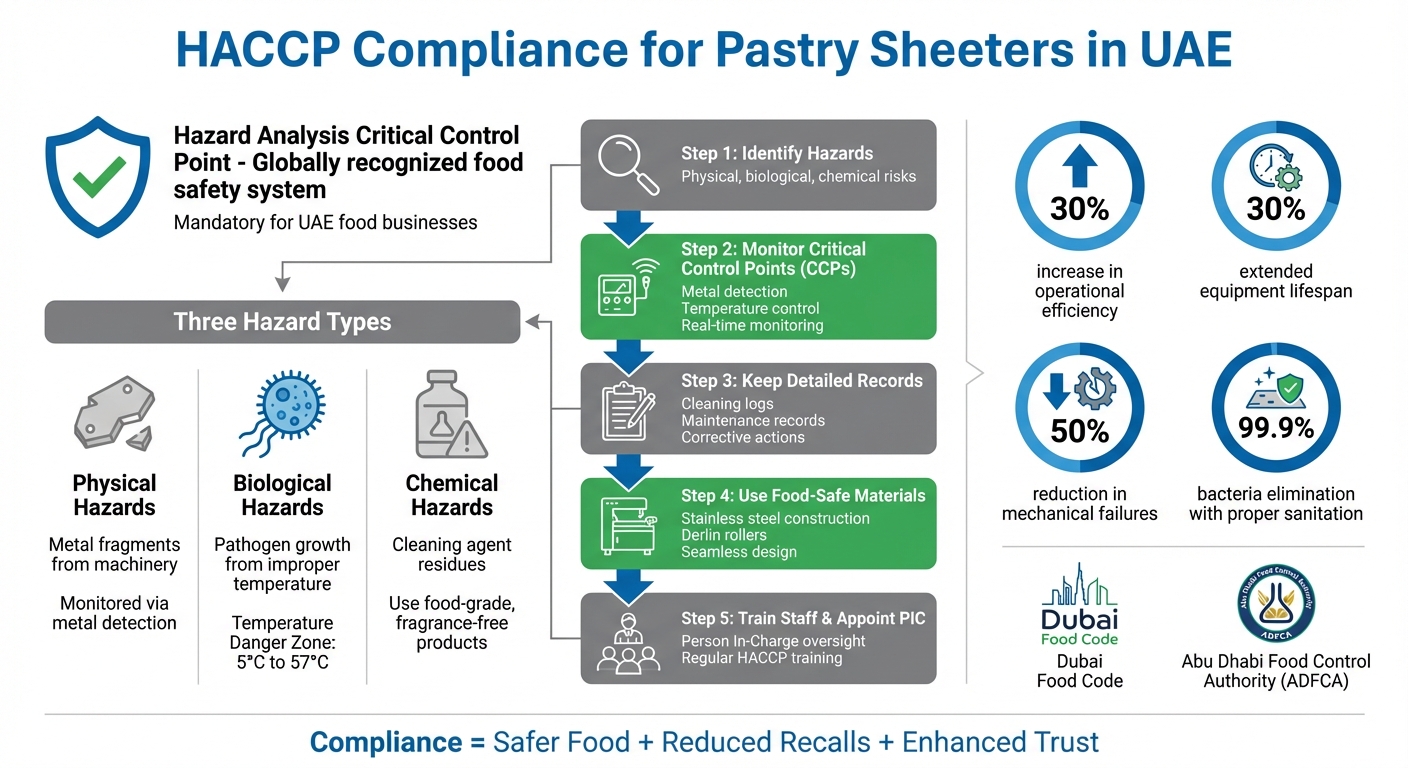
HACCP Compliance Process for Pastry Sheeters in UAE
HACCP Principles for Pastry Sheeters
Critical Control Points in Pastry Sheeters
A Critical Control Point (CCP) is a step in food production where measures can be applied to prevent, eliminate, or reduce food safety hazards to an acceptable level. For pastry sheeters, CCPs typically address three main hazard types: physical hazards (like metal fragments from machinery), biological hazards (such as pathogen growth caused by improper temperature control), and chemical hazards (like cleaning agent residues).
"A Critical Control Point (CCP) is a raw material, stage, practice or operation within the process where a hazard has been recognised and steps are in place to eliminate, prevent or reduce the possibility of the hazard occurring." – Dubai Municipality
A CCP Decision Tree can be used to pinpoint critical safety steps in the process. For pastry sheeters, common CCPs include metal detection to catch physical contaminants and temperature control to prevent biological risks. These points are usually monitored through physical, chemical, or visual checks, as microbiological testing can be time-intensive.
Before implementing CCPs, facilities must establish Prerequisite Programmes (PRPs) - such as routine equipment maintenance and cleaning protocols - that form the groundwork for an effective HACCP system. In the UAE, food establishments are required to have at least one Person In-Charge (PIC) responsible for managing these safety measures.
These CCPs provide a framework for monitoring processes and implementing corrective actions when needed.
Monitoring and Record-Keeping
Monitoring involves a planned series of observations or measurements to ensure that a CCP remains under control. Each monitoring activity should clearly define the method, timing, and person responsible (e.g., pre-shift hygiene checks or temperature readings).
"Monitoring can warn the plant if there is a trend towards loss of control so that it can take action to bring the process back into control before the limit is exceeded." – Centre for Food Safety
Accurate record-keeping is crucial for verifying compliance with HACCP requirements. Documentation should include the HACCP plan, CCP monitoring logs, records of any deviations, and the corrective actions taken. Employees must log data immediately to ensure accuracy and avoid backdated entries. Follow local guidelines for how long records should be retained. Additionally, regularly calibrate monitoring devices, such as thermometers and timers, to maintain reliable data.
Corrective Actions for Non-Compliance
When monitoring identifies a deviation from critical limits, immediate corrective actions are necessary. Production should be stopped right away, and any products made since the last compliant check must be isolated. Equipment or processes should then be adjusted, which may involve recalibrating sensors or making other technical fixes.
"A deviation is a failure to meet a CL. It indicates that a possible food safety hazard may have occurred and that unsafe product may have been produced. Thus, corrective actions must be immediate and must trigger an automatic review of the HACCP plan." – Ronald H. Schmidt and Debby L. Newslow, University of Florida (IFAS)
All deviations, along with the corrective actions and the personnel involved, should be documented immediately. The HACCP team should review the incident to assess whether updates to the HACCP plan are necessary to prevent future occurrences. An analysis should also determine whether the affected product can be safely released, reworked, or needs to be discarded. In the UAE, the Person In-Charge (PIC) is responsible for overseeing these actions and maintaining a dedicated HACCP Corrective Action Log.
Design Features for HACCP-Compliant Pastry Sheeters
Material and Build Quality
In the UAE, pastry sheeters are often crafted from high-grade stainless steel, a material known for its resistance to corrosion and durability in the demanding environments of commercial kitchens. This ensures the equipment can endure daily cleaning with approved sanitisers without deteriorating. For the rollers, food-grade materials like Derlin, a high-performance acetal resin, provide a non-stick and food-safe surface that's easy to sanitise.
A seamless design plays a critical role in meeting UAE food safety standards. It not only reduces manual cleaning efforts but also prevents dough from accumulating in crevices where bacteria could thrive. To obtain HACCP certification, equipment must comply with the Dubai Food Code and the Abu Dhabi Food Control Authority (ADFCA) Codes of Practice. These thoughtful design elements make cleaning more efficient and improve overall sanitation, as explored further in the next section.
Ease of Cleaning and Maintenance
The design of pastry sheeters significantly influences how easily they can be cleaned and maintained, which is a key factor in HACCP compliance. Features like smooth surfaces on rollers and scrapers help prevent flour and dough buildup - common sources of bacterial growth and contamination. Additionally, components such as catch trays, rollers, and belts should be easy to disassemble, enabling staff to clean hard-to-reach areas where debris might accumulate.
Regular cleaning and maintenance routines can boost operational efficiency by up to 30%, extend the lifespan of equipment by up to 30%, and reduce mechanical failures by 50%. To maintain hygiene, rollers should be cleaned after every use to avoid dough buildup. Following manufacturer guidelines for lubricating moving parts is equally important, as it prevents mechanical wear and reduces the risk of physical contamination. Controlling processing conditions is another crucial aspect, ensuring ingredients remain safe throughout the operation.
Temperature and Process Controls
Adhering to HACCP principles requires constant monitoring of processing temperatures and parameters. Real-time temperature monitoring is essential to keep dough and ingredients out of the Temperature Danger Zone - between 5°C and 57°C - where pathogens can multiply rapidly. Automated data logging systems are particularly useful for continuously recording temperatures and other process data, which is vital for traceability during UAE audits.
Modern systems often include alarm features that notify operators via SMS, email, or on-site alerts if process parameters exceed critical limits, aligning with UAE food safety standards. All monitoring devices and sensors integrated into the equipment must have documented calibration to ensure accurate measurements of critical limits. Operators should also have the ability to set and monitor specific parameters, such as processing time and surface temperature, to maintain consistent food safety measures.
Cleaning and Sanitation Protocols for Pastry Sheeters
Daily Cleaning Procedures
Keeping pastry sheeters clean and sanitised is essential for maintaining hygiene and ensuring safe food production. Start each day by cleaning the rollers and gears with a soft brush and applying food-grade oil to prevent dough from sticking. After use, thoroughly sanitise the equipment to eliminate bacteria - effective sanitation can remove up to 99.9% of harmful bacteria.
Disassemble any removable parts, such as rollers and belts, and wash them using a food-grade detergent. Rinse these components thoroughly and apply an approved sanitiser. Always follow lock-out/tag-out procedures during cleaning to avoid accidental equipment operation. Once cleaned and sanitised, ensure all parts are completely dry before reassembly to prevent moisture buildup.
In the UAE, HACCP compliance requires detailed records of all cleaning activities. Document the time, date, cleaning products used, and the person responsible. For immediate confirmation that surfaces are clean, use ATP (Adenosine Triphosphate) swabs, which provide quick results on sanitation levels.
With these daily cleaning practices in place, choosing the right cleaning products is the next critical step.
Approved Cleaning Products
To maintain safety, all cleaning products must be food-grade and fragrance-free, ensuring no contamination of dough or pastries. Sanitisers for food-contact surfaces, such as rollers and belts, should meet recognised microbiological standards and be non-tainting.
In the UAE, popular approved products include KLEANZ for heavy-duty cleaning and Zenith Hygiene sanitisers. Additionally, biodegradable and phosphate-free products are recommended to meet environmental standards. All cleaning agents must have approval from the Dubai Municipality or the Abu Dhabi Agriculture and Food Safety Authority (ADAFSA).
To avoid cross-contamination, implement a colour-coded hygiene chart, which helps staff identify the correct cleaning products for different surfaces. For example, food-contact areas should be cleaned with specific products distinct from those used in heavy-grease zones. The Person In-Charge (PIC) should train staff on proper dilution ratios and the required contact times for disinfectants. Using hydromixing dispensers for bulk cleaning chemicals ensures accurate dilution, reducing the risk of chemical residues on equipment.
Scheduled Maintenance and Deep Cleaning
Daily cleaning is essential, but scheduled maintenance keeps your pastry sheeter running smoothly and ensures long-term hygiene compliance. Lubricate moving parts weekly, and inspect belts and rollers monthly for alignment or pressure issues that could impact performance and cleanliness.
In Dubai, kitchen extraction systems must be deep cleaned at least quarterly, though high-volume operations may require monthly cleaning. Deep cleaning involves disassembling the equipment entirely, inspecting internal components, and validating sanitation procedures with scientific documentation or internal records. All cleaning programmes should have detailed Standard Operating Procedures (SOPs) outlining the methods, frequency, and assigned responsibilities.
Regular internal audits help ensure that cleaning protocols align with the HACCP plan. Monitoring records should be reviewed frequently to confirm compliance. Additionally, annual audits by the Dubai Municipality or third-party assessors verify adherence to hygiene and maintenance standards. Proper maintenance not only ensures safety but also extends the lifespan of a pastry sheeter, which can last over a decade with consistent care.
sbb-itb-19c3c9a
Silverline Kitchens' Approach to HACCP Compliance

Custom Kitchen Design for HACCP Standards
Silverline Kitchens specialises in crafting commercial kitchens that align with HACCP guidelines and UAE regulatory requirements. Their process ensures all layout assessments, approvals, and permits are secured, confirming compliance with spatial, ventilation, and lighting standards.
A key part of the design process involves creating flow diagrams that map the entire pastry production journey - from handling raw materials to waste disposal. This approach ensures no hazard points are overlooked when integrating pastry sheeters and other bakery equipment into the workflow. The spatial planning also accounts for elements like floor drains, ventilation, and lighting, adhering to the Dubai Food Code and Abu Dhabi Codes of Practice.
This meticulous planning lays the groundwork for selecting and installing equipment that meets HACCP standards.
Sourcing and Installing HACCP-Compliant Equipment
Silverline Kitchens carefully selects pastry sheeters and bakery equipment built to strict specifications, such as stainless steel construction and food-safe materials. During installation, they conduct a hazard analysis to identify potential biological, chemical, and physical risks at every stage. Monitoring devices are calibrated regularly to ensure precise tracking of Critical Control Points (CCPs). Using a decision tree, CCPs are established to prevent, eliminate, or minimise hazards.
Before the equipment is operational, the validation process ensures all control measures are functioning effectively.
After-Sales Support and Maintenance
HACCP compliance doesn’t end with installation - it requires ongoing effort. Silverline Kitchens provides continuous support to help businesses pass annual HACCP audits conducted by Dubai Municipality or third-party assessors. This includes services like equipment calibration, assistance with maintaining detailed logs for temperature checks, hygiene protocols, and supplier audits. They also support businesses in implementing corrective actions when deviations from critical limits occur.
Additionally, the team offers staff HACCP refresher training to keep safety protocols up to date. They recommend regularly validating the HACCP plan after system updates to ensure continued effectiveness. By maintaining consistent daily records and monitoring Prerequisite Programmes (PRPs), businesses can demonstrate compliance during unannounced inspections and avoid delays in certification.
Conclusion
In the UAE, adhering to HACCP regulations isn't just a requirement - it’s a crucial step in managing biological, chemical, and physical hazards throughout the food production process, from raw materials to final products. Beyond meeting these regulatory demands, implementing HACCP principles brings tangible advantages, such as minimising product waste, reducing recalls, and enhancing overall operational efficiency.
"Certification of your safety system to HACCP requirements provides an effective means of communicating with stakeholders and other interested parties." – DNV
As mentioned earlier, using food-safe stainless steel equipment and maintaining thorough records can significantly ease the compliance process during inspections.
Silverline Kitchens takes this a step further by offering tailored solutions to support businesses in the UAE. Their expertise lies in designing layouts that align with spatial and ventilation guidelines, sourcing HACCP-compliant equipment like pastry sheeters, and providing ongoing maintenance. This all-encompassing approach ensures that equipment placement, flow diagrams, and monitoring systems fully comply with the Dubai Food Code and Abu Dhabi Codes of Practice. By seamlessly integrating these elements, they help businesses consistently apply HACCP principles across their operations.
Sustaining HACCP standards requires dedication, but the payoff is evident: safer food, stronger regulatory relationships, and heightened trust. With well-designed systems, rigorous protocols, and expert guidance, businesses can embed compliance into their daily practices, creating a robust framework essential for thriving in the UAE's food industry.
FAQs
What are the potential hazards of using pastry sheeters under HACCP guidelines?
Pastry sheeters can bring about a range of risks under HACCP guidelines. These risks fall into three main categories: biological contamination, such as microbial growth caused by inadequate cleaning; chemical contamination, which might occur due to leftover cleaning agents or allergen cross-contact; and physical contamination, like broken machine parts or foreign objects ending up in the dough.
To minimise these risks and stay compliant, it's crucial to prioritise regular maintenance, ensure thorough cleaning routines, and provide proper training for your staff. By aligning with UAE food safety regulations, you can uphold the highest hygiene standards in your bakery operations.
What steps should businesses take to monitor and document HACCP compliance effectively?
For businesses aiming to meet HACCP standards, having a well-structured system for monitoring and record-keeping is crucial. The first step? Develop a written HACCP plan. This document should clearly outline all critical control points (CCPs), acceptable limits, monitoring methods, and assign specific responsibilities to your team. Including standard operating procedures (SOPs) in this plan will provide clear guidelines for daily tasks and help maintain compliance.
Building a trained HACCP team is equally important. This team will handle regular checks, keep detailed records, and act quickly to address any deviations. To make the process more efficient, consider using digital tools or log sheets for monitoring. These solutions can simplify tracking and provide real-time updates. Regular internal audits are also key - they help confirm compliance and catch potential issues before they escalate.
For bakeries and pastry businesses in the UAE, Silverline Kitchens offers valuable support. They design kitchens equipped with integrated monitoring systems and provide tools to simplify record-keeping. By adopting these practices, businesses can confidently meet HACCP, Dubai Municipality, and Civil Defence requirements while upholding top-tier food safety standards.
What materials and design features should pastry sheeters have to comply with HACCP standards?
To meet HACCP standards, pastry sheeters must be constructed from food-grade, non-toxic materials like stainless steel. This material is not only long-lasting but also easy to clean and resistant to rust, making it ideal for maintaining hygiene. The design should focus on cleanliness, with smooth, non-porous surfaces that minimise the risk of food residue and bacterial buildup.
Important features to look for include removable parts to allow deep cleaning, sealed edges to prevent contamination, and easily accessible components for straightforward maintenance. It's also crucial that the equipment adheres to UAE food safety requirements, aligning with HACCP and Dubai Municipality regulations. Routine cleaning and proper upkeep are vital to ensure compliance and maintain safe food preparation practices.
