


In commercial kitchens, workflow is the backbone of smooth operations. It impacts everything from food preparation speed and staff safety to compliance with UAE regulations. Poor layouts can lead to delays, inefficiency, and costly redesigns, especially in Dubai, where kitchen fit-outs range between AED 200,000–800,000.
Key Takeaways:
- Workflow Layouts: Common designs include assembly line, island, zoning, and galley layouts, each catering to specific kitchen types like quick-service or fine dining.
- Regulatory Compliance: Dubai Municipality mandates a unidirectional workflow (e.g., receiving → preparation → cooking → cleaning) to prevent cross-contamination.
- Zoning: Dividing kitchens into prep, cooking, plating, and cleaning zones boosts efficiency and meets HACCP standards.
- Tools & Expertise: Software and services like Silverline Kitchens help design layouts that reduce bottlenecks and comply with local regulations.
Streamlined workflows save time, reduce costs, and enhance productivity, making them essential for UAE kitchens.

Commercial Kitchen Workflow Zones and Layout Types
Basic Principles of Workflow Optimization
How Layout Affects Workflow Efficiency
The design of a kitchen layout plays a huge role in how smoothly operations run. A well-thought-out layout follows a logical flow: receiving → storage → prep → cooking → plating → service → cleaning. This straightforward sequence helps reduce unnecessary movement, avoiding collisions and backtracking, which can slow things down.
Ergonomics also come into play. Walkways about 90 cm wide and work surfaces set at a height of 85–90 cm help reduce fatigue for staff. During peak hours, allocating approximately 0.9 m² per cook can make a noticeable difference in efficiency. This is especially critical in an industry where labour costs often represent 25–30% of total operational expenses.
The layout should align with your business model. For instance, a 35-seat café has very different requirements compared to a 200-cover restaurant or a delivery-focused cloud kitchen. Placing frequently used items at eye level and situating cold storage near prep areas are simple but effective ways to streamline operations. These foundational principles can be adapted to suit various workflow models.
Common Workflow Layout Types
Different kitchen setups require tailored layouts to maximise functionality:
- Assembly Line Layouts: Ideal for high-volume, quick-service kitchens, this layout ensures a strict linear flow from prep to cooking.
- Island Layouts: Best for fine dining, this setup places cooking stations at the centre, surrounded by prep and cleaning areas along the perimeter.
- Zoning Layouts: Perfect for kitchens with diverse menus, this layout divides the space into specialised areas, each dedicated to a specific task.
- Galley Layouts: Designed for compact spaces, this layout arranges stations along walls, making it a practical choice for many UAE kitchens. While the average commercial kitchen in the UAE measures about 1,051 square feet, many establishments operate in much smaller spaces, making efficient layout planning essential.
Zoning Strategies for Efficient Kitchen Design
Zoning turns a busy, disorganised kitchen into a well-oiled machine. The idea is simple: break your kitchen into specific areas where certain tasks are carried out without disruptions. This setup reduces staff collisions, limits cross-contamination, and ensures a seamless workflow.
In the UAE, zoning is especially important to meet HACCP standards and pass inspections from Dubai Municipality and Civil Defence. Here's a closer look at how zoning divides a kitchen into functional areas.
Preparation Zones
This is where raw ingredients are prepped and turned into components ready for cooking. Key elements in this zone include cold prep stations, meat processing areas, and baking counters. To keep things efficient, place cold prep areas near cold rooms - this helps maintain food temperature and cuts down on unnecessary movement.
Under-counter fridges and prep tables are excellent additions, keeping ingredients and tools within arm's reach. For kitchens with varied menus, it’s a good idea to set up separate prep stations for different food types, such as one for vegetables and another for proteins. This not only keeps things organised but also aligns with the UAE’s strict food safety regulations. Surfaces in this zone should meet specific cleaning standards, especially in areas with high moisture where raw food is handled.
Cooking and Plating Zones
Once ingredients are prepped, the kitchen moves into the cooking phase. The cooking zone, or "hot line", is the core of meal production. Proper ventilation and heat management are crucial here, and Dubai’s F&B regulations even require heat-mapping around hot line equipment. Arranging combi ovens, ranges, and fryers in a logical order that matches your menu’s flow can make a big difference in efficiency.
Next to the cooking area is the plating zone, often called the "Expo." This space is all about getting dishes out quickly while keeping them at the right temperature. Bain-marie units and heated display cases are great for holding finished dishes during final assembly and garnishing. To stay HACCP-compliant, it’s vital to keep raw and cooked food areas separate in this zone.
Cleaning and Waste Management Zones
Zoning isn't just about efficiency - it’s also key to meeting UAE standards.
The cleaning zone handles dishwashing, pot washing, and waste disposal. To avoid contamination, it should be physically separated from food prep and cooking areas. A "Dish Drop" area can help keep used items away from the main washing station.
Grease traps are another essential feature. They need to be easy to access for maintenance and must comply with Dubai Municipality’s drainage rules. Planning the drainage system early in the design process can save you from costly delays or inspection issues later. Lastly, handwashing stations should be included in every zone to maintain high hygiene levels.
Tools and Services for Workflow Optimization
In commercial kitchens, digital tools and expert services play a crucial role in streamlining operations. They help map workflows, pinpoint bottlenecks, and ensure compliance before equipment installation even begins.
Using Kitchen Layout Software
Kitchen layout software provides a detailed visualisation of food flow, covering every step from receiving and storage to preparation, cooking, plating, service, and cleaning. This software is particularly helpful for identifying trouble spots, such as areas prone to staff collisions or blocked doorways. It also includes templates tailored to different service styles - whether fast service, fine dining, or compact kitchen setups.
Before starting a remodel, it’s important to document any existing issues, such as delivery delays, overcrowded storage, or staff crossing paths unnecessarily. Once these challenges are identified, you can select a layout template that aligns with your menu and service style. For example, an Assembly Line layout is ideal for quick-serve restaurants, while an Island layout fosters teamwork in kitchens focused on high-quality dining. The software also ensures compliance with UAE standards, mapping out handwashing stations, unobstructed walkways, and properly zoned areas.
While digital tools provide a strong foundation, expert services are essential for turning these virtual designs into functional, real-world kitchens.
Silverline Kitchens: Complete Workflow Solutions
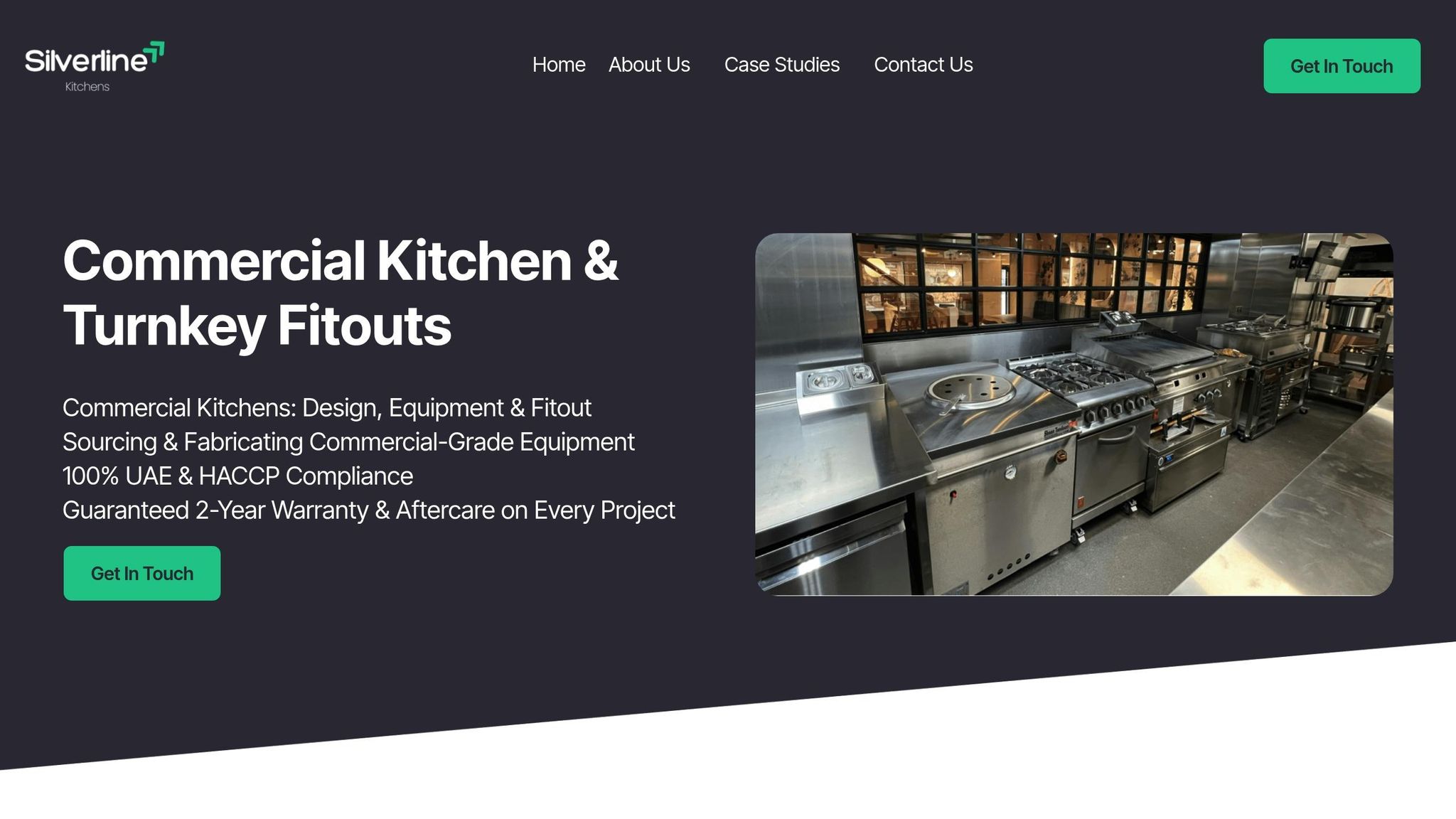
Silverline Kitchens takes digital planning a step further by combining workflow principles with expert design services. Their comprehensive design package, priced at AED 5,000 + VAT, includes 2D/3D layouts and MEP drawings that meet Dubai Municipality standards. By focusing on operational mapping, they aim to eliminate bottlenecks and ensure compliance throughout the design process.
"Workflow is a core part of how we design our commercial kitchens. We carefully plan how food, staff, equipment, and waste move through the kitchen to ensure smooth operations from receiving and storage through to preparation, cooking, service, and wash up." - Silverline Kitchens
Silverline Kitchens also addresses technical infrastructure needs, such as Civil Defence and Fire Life Safety requirements, extraction systems, fire suppression, and mechanical ventilation. They integrate essential elements like grease trap placement, drainage slopes, and appropriate floor finishes into the workflow to meet plumbing and sanitation regulations. With over 40 years of experience spanning 18 countries and a 2-year warranty on every project, Silverline Kitchens delivers designs that not only support smooth operations but also meet all necessary regulatory standards.
sbb-itb-19c3c9a
Measuring Workflow Efficiency and Its Impact
Key Metrics for Workflow Efficiency
To understand how well your kitchen is running, you need to keep an eye on several key metrics. Start with operational flow metrics like service speed targets, daily covers, seating capacity, and the ratio of delivery to dine-in orders. These figures show how quickly meals are prepared and how efficiently different service models are handled.
Next, focus on staff performance indicators. Pay attention to how often staff members collide, double-handle tasks, or face delays in plate circulation. If these issues are frequent, it’s a sign your kitchen layout might need tweaking. Compliance and safety metrics are also crucial. In the UAE, adherence to HACCP (Hazard Analysis and Critical Control Points) principles is non-negotiable for food safety. For example, dishwashers must reach a sanitising rinse temperature of 82°C to meet local health regulations.
Finally, consider resource efficiency, especially under Dubai’s Green Building Regulations (Al Sa’fat). Monitor energy and water usage closely. For instance, induction technology transfers over 90% of its energy to cookware, far outperforming traditional gas equipment, which only achieves 40–50% efficiency. High-efficiency kitchen ventilation systems can also cut energy consumption by up to 25% compared to standard systems. These metrics not only reflect your kitchen’s environmental impact but also directly influence your operating costs.
ROI of Optimised Kitchen Workflows
Improving your kitchen workflow doesn’t just save time - it saves money and drives revenue. A well-organised setup reduces "double handling" of food, avoids staff collisions, and minimises downtime during busy periods. This allows for quicker service and the ability to handle more covers, boosting overall efficiency.
"A failing kitchen workflow undermines the entire business."
In Dubai, fit-out costs vary widely depending on the size of the kitchen and the type of cuisine. While these initial expenses can be steep, the long-term benefits - like lower energy bills, less waste, and better staff retention - make the investment worthwhile.
Conclusion: The Value of Workflow-Driven Kitchen Design
Workflow isn’t just about where you place equipment - it’s the backbone of a thriving commercial kitchen in the UAE. A well-thought-out design incorporates compliance with essential standards like HACCP, Dubai Municipality regulations, and Civil Defence fire safety measures directly into the layout.
"A commercial kitchen is the engine of the business - if it fails, the entire restaurant fails." - Muhammad Rady, RadyInterior
By focusing on workflow, businesses can optimise their substantial fit-out investments, which often range between AED 200,000 and AED 800,000. This approach doesn’t just save money on energy bills and reduce waste - it also cuts down service delays.
On a practical level, having a clear workflow boosts efficiency. Staff can navigate the space with fewer collisions and less unnecessary movement, leading to better morale and higher retention rates. Thoughtful zoning also reduces the chance of cross-contamination, keeps food fresh, and ensures operations run smoothly even during the busiest hours.
FAQs
How does zoning enhance the efficiency of a commercial kitchen layout?
Zoning in a commercial kitchen layout involves creating specific areas for tasks like food preparation, cooking, and cleaning. This thoughtful organisation streamlines workflow by cutting down on unnecessary movement, reducing the risk of accidents, and promoting a more efficient working environment.
By clearly dividing workstations, zoning also plays a key role in maintaining hygiene standards. It helps prevent cross-contamination between raw ingredients and prepared dishes, which is crucial for food safety. A properly zoned kitchen aligns with UAE kitchen design regulations and boosts staff efficiency, making daily operations run more smoothly.
How do digital tools improve workflow efficiency in commercial kitchen design?
Digital tools play a key role in boosting workflow efficiency in commercial kitchens by enhancing organisation, communication, and automation. Take inventory management systems, for example - they help keep track of stock levels, monitor expiry dates, and even send alerts when supplies run low. This not only reduces waste but also simplifies the procurement process. Another great example is Kitchen Display Systems (KDS), which replace traditional paper orders with real-time digital screens. This upgrade ensures orders are processed faster and with greater accuracy, keeping operations smooth.
Automation technologies, like IoT sensors and AI-driven software, take things a step further. They can monitor food safety conditions, optimise energy consumption, and even automate inventory management tasks. These tools not only save time but also ensure compliance with UAE kitchen design standards, fostering a safer and more productive workspace. By incorporating these technologies into your kitchen design, you can meet functional needs, adhere to regulations, and maintain a modern, efficient operation.
Why is it essential to follow UAE regulations when designing a commercial kitchen?
In the UAE, ensuring regulatory compliance when designing commercial kitchens is essential to meet the country's rigorous safety, hygiene, and operational standards. Authorities like Dubai Municipality and Dubai Civil Defence strictly enforce these rules to safeguard public health, minimise contamination risks, and prevent accidents.
Failing to comply with these regulations can lead to severe consequences. Penalties can range from AED 5,000 to AED 1,000,000, and businesses may face delays in project approvals or outright permit rejections. Such setbacks can severely disrupt operations and impact profitability.
Adhering to frameworks like HACCP and the Dubai Food Code goes beyond just meeting legal requirements. These standards ensure food safety, build customer confidence, and contribute to maintaining a reputable and reliable business. Ultimately, compliance is key to creating a secure and efficient kitchen environment that aligns with the UAE's high standards for the food industry.
