


Designing a commercial kitchen in the UAE is all about balancing space, efficiency, and compliance. Whether you're managing a compact café or a large restaurant, the layout impacts workflow, safety, and costs. Here's what you need to know:
- Small Kitchens: Focus on maximizing limited space with compact equipment, vertical storage, and efficient workflows. Common layouts include galley, L-shaped, or single-wall setups. Initial costs range from AED 50,000–200,000, with monthly expenses between AED 8,000–25,000.
- Large Kitchens: Designed for high-volume operations with zoned areas for preparation, cooking, and cleaning. They feature wider aisles, specialised equipment, and advanced ventilation. Expect upfront costs of AED 300,000–1.5M+ and monthly costs of AED 40,000–150,000+.
- Compliance: Both setups must meet UAE regulations, including food safety (HACCP), ventilation, fire safety, and drainage standards.
Quick Comparison
| Aspect | Small Kitchens | Large Kitchens |
|---|---|---|
| Workflow | Compact, multitasking staff | Zoned, specialised teams |
| Equipment | Multi-functional, space-saving | Dedicated, high-capacity |
| Costs | AED 50k–200k (setup), AED 8k–25k/month | AED 300k–1.5M+ (setup), AED 40k–150k/month |
| Capacity | 50–200 covers | 300–2,000+ covers |
| Compliance Complexity | Basic systems | Multi-zone monitoring |
Choosing the right layout depends on your business size, menu, and budget. Both require careful planning to ensure efficiency and compliance with UAE regulations.
How to Design a Commercial Kitchen in a SMALL Space
Space Planning Basics for UAE Commercial Kitchens
Designing a commercial kitchen in the UAE is a balancing act between operational efficiency and meeting strict regulatory standards. Silverline Kitchens focuses on achieving both, creating spaces that are functional and compliant. At the heart of any successful kitchen layout is an understanding of how workflows, local regulations, and environmental conditions come together to shape efficient designs.
Workflow Design and Kitchen Zones
Good kitchen planning revolves around workflows that minimise unnecessary movement while ensuring food safety - a critical factor in the UAE's hospitality industry. Efficient workflows not only improve service quality but also help control costs.
One key element is establishing clearly defined zones. For example, raw food preparation areas should always be separate from cooked food zones to prevent cross-contamination. This is especially important in kitchens handling diverse cuisines in cities like Dubai and Abu Dhabi. Similarly, cold prep areas should be located away from heat-generating equipment, while hot cooking zones benefit from proximity to effective ventilation systems.
The flow from storage to preparation to service is the backbone of any commercial kitchen. Dry storage works best near receiving docks, while refrigerated storage should connect directly to prep areas. Cooking stations should naturally lead to plating zones, which then connect to service areas. This streamlined progression reduces handling time and ensures food quality during peak hours.
Ergonomics also plays a big role, especially since kitchen staff in the UAE often work long shifts. Work surfaces should maintain a height of 85–90 cm, and frequently used tools and equipment should be within easy reach. Aisle widths of 120–150 cm provide enough space for smooth movement, even during busy service times, and allow for easy cleaning and maintenance. Thoughtful equipment placement, like integrating dishwashing and waste management areas into the workflow, further boosts efficiency.
Meeting UAE Regulatory Requirements
Commercial kitchens in the UAE must comply with detailed regulations that influence every aspect of their design. For instance, the Dubai Municipality Food Safety Department outlines minimum standards for equipment spacing, ventilation, and drainage systems.
Fire safety is another critical consideration. The UAE Fire & Life Safety Code specifies air change rates and exhaust capacities depending on the type of cooking equipment and kitchen size. Typically, commercial kitchens require 15–20 air changes per hour, with higher rates in high-heat areas. Proper placement of exhaust hoods and maintaining safe distances from walls and other equipment are also mandatory.
Fire suppression systems must be strategically placed with clear access routes, and emergency exits need careful positioning, especially in larger kitchens where multiple escape routes are necessary. Adhering to the DW172 design standard, which aligns with UAE Fire Code requirements, can help speed up Civil Defence approvals, particularly for LEED or Estidama-certified projects. This standard provides comprehensive guidelines for ventilation, fire safety, and equipment installation.
Drainage systems also play a major role in kitchen planning. UAE health codes require specific drainage capacities, floor slopes, and grease trap locations. These factors directly impact equipment placement and overall workflow, especially in areas like dishwashing and food prep.
UAE-Specific Design Considerations
Beyond regulations, the UAE's challenging climate adds another layer of complexity to kitchen design. With temperatures often exceeding 38°C, effective climate control systems are essential to ensure food safety and staff comfort.
Pre-cooled make-up air systems are particularly valuable in the UAE. Traditional ventilation systems that pull in hot outside air can significantly increase cooling loads during the summer. Advanced systems that pre-cool incoming air not only improve working conditions but also reduce energy consumption - though they do require additional planning for space and structural adjustments.
Ventilation systems designed for the MENA region help tackle extreme heat and humidity. For instance, Demand-Controlled Kitchen Ventilation (DCKV) systems like Intelli-Hood® offer energy savings while maintaining air quality.
Kitchen planning in the UAE follows metric standards for equipment dimensions, spacing, and utility connections. Standard work surface heights of 85–90 cm and aisle widths of 120–150 cm are common, with precise measurements often required in millimetres.
Cultural factors also influence design. Halal food preparation may require separate zones and dedicated equipment. Additionally, prayer time considerations can affect staff schedules and workflows, especially during Ramadan when operations need to adapt to different patterns.
Technical standards from CIBSE design guides, tailored to Abu Dhabi and Dubai, offer further insights. These guidelines address issues like sand infiltration, high humidity, and extreme temperature variations that can impact kitchen systems.
Small Kitchen Layout Planning and Design
When planning a small kitchen, the goal is to strike a balance between efficient workflow and compliance with UAE regulations. Every square metre must serve a purpose, combining functionality with safety and adherence to local codes. Here’s a look at practical layout options and design strategies tailored for small spaces.
Small Kitchen Layout Options
Galley layouts are a smart choice for narrow spaces, especially in cafés and quick-service restaurants. This design places equipment along two parallel walls, creating an intuitive flow from food preparation to service. It also ensures enough corridor space for staff to move freely. This layout works best for kitchens with a simple menu and straightforward cooking processes.
Single-wall layouts are ideal for extremely compact spaces. By aligning all equipment along one wall, this design creates a sequential setup for prep, cooking, and storage. While it requires careful planning to prevent workflow bottlenecks, it’s a practical solution for takeaway operations or small bakeries with predictable tasks.
Compact island layouts suit slightly larger small kitchens. Adding a central prep island provides extra workspace while keeping pathways around the perimeter clear. This layout also helps separate hot and cold prep areas, which is essential for maintaining food safety.
L-shaped configurations make excellent use of corner spaces, particularly in kitchens with irregular floor plans. Corners can house dishwashing stations or storage, while the adjoining walls are used for cooking zones. This natural division supports efficient workflows by keeping food preparation and cooking areas distinct.
Equipment Selection and Placement for Small Spaces
The right equipment can transform a cramped kitchen into a highly efficient workspace. Here’s how to make the most of the available space:
- Opt for multi-functional equipment. Combination ovens that can steam, bake, and roast reduce the need for multiple separate units. Refrigerated prep tables that double as work surfaces also save space.
- Use vertical storage. Install shelves, knife strips, and pot racks to free up counter space. Under-counter refrigeration units and overhead storage systems are also effective for maximising space.
- Plan for easy cleaning and maintenance. Leave enough clearance behind appliances for cleaning access. Grouping heat-generating equipment under one exhaust hood improves ventilation and reduces the need for multiple hoods.
- Maintain uniform counter heights. This creates a seamless workflow, allowing staff to move between tasks without adjusting their posture.
UAE Compliance in Limited Space
Designing a small kitchen in the UAE requires creative solutions to meet strict regulatory standards. Here’s how to ensure compliance without compromising functionality:
- Fire safety measures: Integrate fire suppression systems into compact spaces, balancing safety with operational needs.
- Efficient exhaust systems: Use compact hoods that meet UAE standards to capture heat and fumes without taking up too much space.
- Drainage and emergency exits: Ensure proper floor slopes towards drains and make sure heavy equipment placement doesn’t block grease trap access. Exit routes must remain clear and accessible at all times, even during busy periods.
- Handwashing facilities: Strategically place sinks to serve all food prep areas, meeting health code requirements.
- Digital monitoring: Use digital temperature tracking to maintain safe storage conditions and alert staff to any issues with clustered equipment.
Large Kitchen Layout Planning and Design
Designing a large commercial kitchen comes with its own set of challenges and opportunities. With more space, there’s room to create workflows that minimise unnecessary movement while supporting smooth operations across multiple teams. The trick lies in carefully planning zones and understanding how different areas interact, especially during peak service hours. Unlike smaller kitchens, these larger spaces must also account for higher volumes and stricter compliance requirements.
Large Kitchen Layout Types
Zoned kitchen designs are a go-to choice for large operations. This layout divides the kitchen into specific areas - like cold prep, hot cooking, baking, dishwashing, and storage. Each zone operates semi-independently, connected by clear pathways. Hotels and large restaurants often prefer this setup because it allows multiple teams to work without getting in each other’s way.
Assembly-line configurations are ideal for kitchens handling high volumes with standardised menus. Stations and equipment are arranged sequentially, mirroring the food preparation process. Each team member focuses on a specific task, ensuring consistent output and efficient workflows, especially during busy times.
Central island setups place key equipment or prep areas in the middle of the kitchen, with supporting stations around the edges. This design promotes a natural traffic flow and gives supervisors a central vantage point to oversee operations. The island typically houses shared equipment like large mixers or sinks, used by multiple teams.
Hybrid layouts mix elements from different designs to meet unique operational needs. For instance, a kitchen might combine zoned areas for specific cuisines with assembly-line elements for handling high-volume dishes. This approach provides flexibility, allowing the space to adapt as menus or service styles change.
These layout options help create a foundation for efficient space use in high-demand environments.
Space Allocation for High-Volume Operations
Once the layout is decided, the next step is allocating space effectively to maintain a smooth operational flow. Each area - storage, preparation, cooking, and service - needs careful consideration.
- Storage: Ensure enough room for dry goods, refrigerated items, and frozen stock. Walk-in coolers and freezers should be near receiving areas but also within easy reach of preparation zones to streamline operations.
- Preparation: Design prep areas to handle both hot and cold tasks. Multiple workstations can prevent bottlenecks when the kitchen is at its busiest.
- Cooking Zones: Group equipment by cooking method and use shared ventilation systems to cut installation costs and improve air quality. Leave enough space between stations to allow safe movement and reduce heat transfer.
- Service and Plating: These areas should have plenty of counter space to accommodate multiple staff members working at once. They should also connect smoothly with both cooking zones and serving areas.
- Traffic Corridors: Aisles and walkways need to be wide enough for staff, carts, and equipment to move safely. They should also allow for easy turning and provide clear emergency access.
Large-Scale Compliance Management
Managing compliance in a large kitchen involves addressing ventilation, fire safety, drainage, temperature control, emergency access, and pest management.
- Ventilation Systems: Large kitchens generate more heat, steam, and odours. Commercial-grade exhaust hoods with variable speed controls can help manage airflow and energy use while meeting UAE standards.
- Fire Suppression: Fire safety systems should cover all cooking equipment and be divided into zones. Automatic systems, manual activation points, and accessible emergency shut-off controls are all essential.
- Drainage: Install multiple floor drains and grease interceptors to handle waste effectively. Floors should slope toward drains, and adding channels in high-traffic areas can improve water flow during cleanups.
- Temperature Monitoring: Use multiple sensors and digital systems to track temperatures in refrigerated storage, prep areas, and dish-holding zones. This ensures quick responses to any fluctuations.
- Emergency Access and Egress: Plan exits and access routes to accommodate a larger workforce. Keep exits clear and well-marked, and strategically place first aid stations and emergency communication points throughout the kitchen.
- Pest Control: Prevent pests by installing door seals, screens, and air curtains at entry points. Storage areas should be designed for easy cleaning and inspection, with adequate clearance from walls and floors. Monitoring stations can help detect and address pest activity promptly.
These measures ensure that large kitchens operate safely, efficiently, and in compliance with regulations.
sbb-itb-19c3c9a
Small vs Large Kitchen Layouts: Direct Comparison
When it comes to kitchen layouts, small and large setups offer distinct advantages and challenges, especially in workflow, equipment, and compliance. The table below highlights the key differences, with further explanations following.
Workflow efficiency is a major factor. Small kitchens rely on compact workflows and multi-functional equipment, with cross-trained staff often juggling multiple tasks in tight spaces. While this setup promotes multitasking, it can lead to bottlenecks during busy periods. Large kitchens, on the other hand, are designed with specialised zones where teams work independently, reducing interference but requiring more coordination across departments.
Equipment strategies also differ. Small kitchens make use of multi-functional, space-saving equipment like combination ovens, which are ideal for maximising limited space. Large kitchens, however, invest in dedicated, high-capacity equipment tailored for specific tasks. While this boosts efficiency, it also comes with higher upfront costs and more complex maintenance needs.
Regulatory compliance adds another layer of complexity. Small kitchens typically require simpler systems with basic monitoring, whereas large kitchens must implement multi-zone monitoring systems to meet regulatory standards.
Layout Comparison Table
| Aspect | Small Kitchen Layouts | Large Kitchen Layouts |
|---|---|---|
| Workflow Design | Compact, multi-tasking staff, linear/L-shaped | Zoned operations, specialised teams, assembly-line workflows |
| Equipment Strategy | Multi-functional, mobile, space-efficient | Dedicated, fixed installations, high-capacity units |
| Staff Requirements | 2-8 team members, cross-trained roles | 15-50+ staff, specialised positions |
| Initial Investment | AED 50,000–200,000 | AED 300,000–1,500,000+ |
| Monthly Operating Costs | AED 8,000–25,000 | AED 40,000–150,000+ |
| Compliance Complexity | Basic systems, single-zone monitoring | Multi-zone systems, comprehensive monitoring |
| Maintenance Demands | Weekly checks, simple cleaning protocols | Daily monitoring, specialised maintenance teams |
| Adaptability for Menu Updates | High - easily reconfigured equipment | Moderate - requires zone restructuring |
| Peak Capacity | 50–200 covers | 300–2,000+ covers |
| Space Utilisation | 85-95% efficiency | 70-80% efficiency (corridors and zones) |
Costs are another important consideration. Small kitchens can be set up with an initial investment of AED 50,000 to AED 200,000, and their monthly operating costs range from AED 8,000 to AED 25,000. In contrast, large kitchens require a much larger upfront investment, starting at AED 300,000 and going beyond AED 1.5 million, with monthly expenses between AED 40,000 and AED 150,000.
Maintenance needs also vary. Small kitchens often rely on weekly checks and simple cleaning routines that staff can handle themselves. Large kitchens, however, demand daily system monitoring, specialised maintenance teams, and more rigorous preventive care to keep operations running smoothly.
Scalability is another key difference. Small kitchens excel in flexibility, making it easier to adapt to menu changes or service adjustments by reconfiguring equipment. Large kitchens, while better suited for handling increased volumes, require more planning and financial investment to make operational changes.
Ultimately, the choice between a small or large kitchen layout depends on your business model, target capacity, available space, and budget. Both layouts can be effective when executed properly and aligned with UAE regulations. These insights pave the way for Silverline Kitchens' customised solutions, which will be explored in the next section.
Silverline Kitchens' Space Planning Services
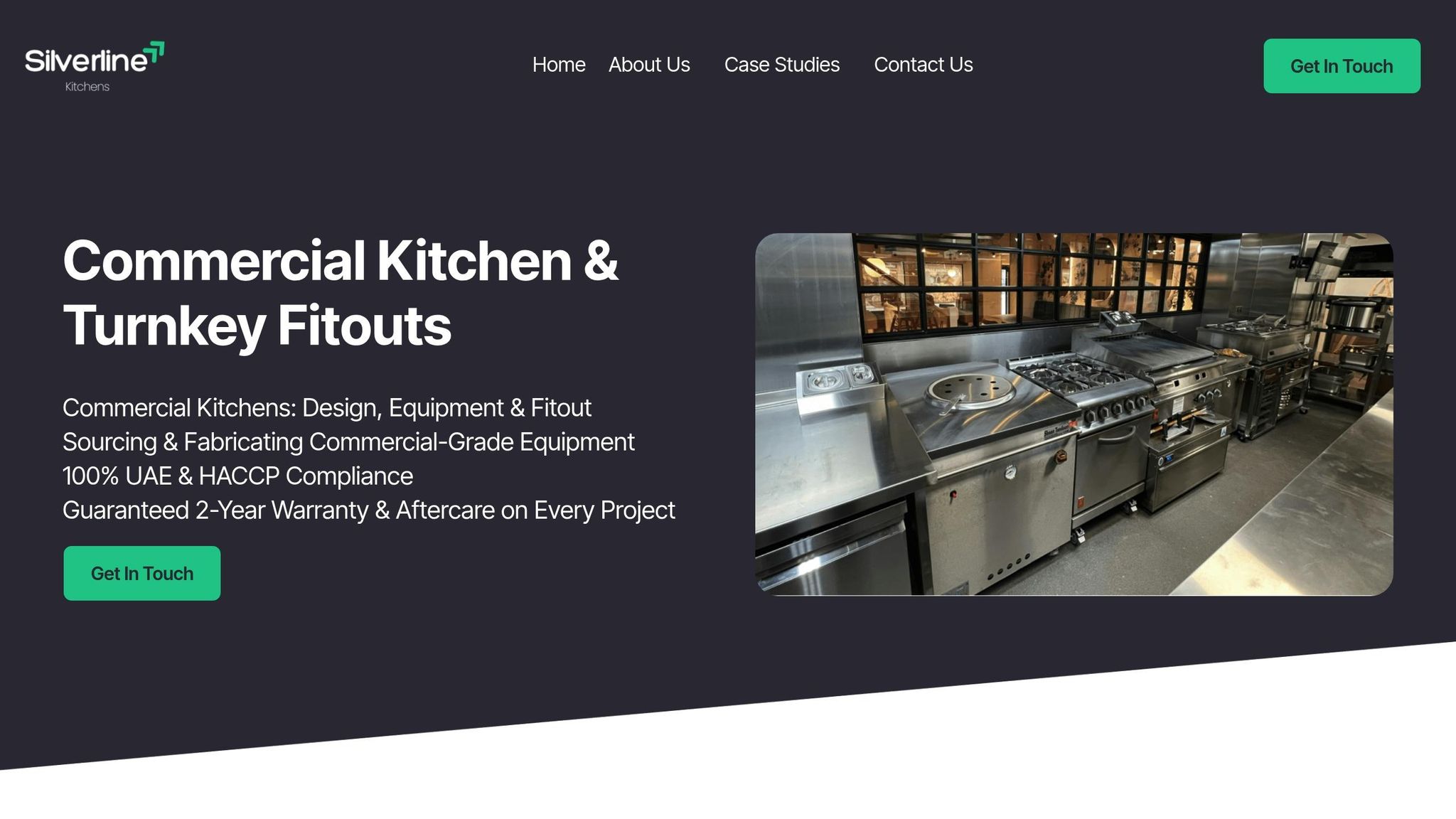
Silverline Kitchens offers comprehensive commercial kitchen design services tailored for both small and large spaces across the UAE. Their approach ensures efficient use of space while meeting all local regulatory requirements, turning thoughtful planning into fully functional and compliant kitchen setups.
Tailored Design and Installation
Silverline Kitchens begins each project with a detailed site evaluation to understand the specific needs of the client. Whether it's a compact kitchen or a large-scale operation, the team creates layouts that maximise space and functionality. Installations are carefully scheduled to minimise any disruption to existing operations, ensuring a smooth and efficient process from start to finish.
Ensuring Regulatory Compliance in the UAE
Regulatory compliance is at the heart of Silverline Kitchens' services. All projects strictly follow HACCP guidelines, as well as Dubai Municipality and Civil Defence standards. The team works closely with local authorities and stays updated on evolving regulations, providing clients with ongoing support to maintain compliance.
Comprehensive Project Management
With a strong focus on compliance and efficiency, Silverline Kitchens oversees every step of the kitchen development process. From sourcing equipment and coordinating with contractors to managing timelines and offering after-sales maintenance, they ensure your kitchen operates smoothly and efficiently at all times.
Choosing the Right Kitchen Layout for Your Business
Picking the perfect kitchen layout for your business involves balancing several factors: expected business volume, future growth plans, regulatory requirements, operational complexity, budget, and your specific cuisine needs. Each of these elements plays a role in shaping a design that works for both your current operations and long-term goals.
For instance, if you foresee expanding your menu or increasing seating capacity soon, opting for a layout that accommodates growth from the start is often more cost-effective than having to overhaul the space later. Planning ahead can save money and prevent operational disruptions down the line.
Regulatory compliance is another key consideration. Your kitchen design must meet UAE standards without sacrificing efficiency. This means ensuring workflows and equipment placement align with both operational needs and regulatory guidelines.
Operational complexity also plays a big role. A small café with a simple menu might thrive with a streamlined layout, while a full-service restaurant with multiple cooking stations will require a more spacious and segmented design to keep things running smoothly.
Budget is, of course, a factor that extends beyond the initial investment. While a smaller kitchen might cost less upfront, larger setups often come with higher ongoing expenses, including energy consumption and staffing. Weighing these costs carefully can help you make the best decision for your business.
Then there’s the matter of cuisine. The type of food you serve dictates the equipment and workflow your kitchen will need. A bakery, for example, has vastly different requirements compared to a sushi restaurant. Tailoring your layout to your menu ensures that your kitchen operates efficiently and meets the demands of your specific cuisine.
To help simplify these complex decisions, Silverline Kitchens offers a personalised consultation service. Their team conducts detailed site assessments and evaluates your operational needs to recommend the best layout for your business. This tailored approach ensures your kitchen design not only meets your immediate needs but also supports your long-term goals - all while staying fully compliant with UAE regulations.
Whether you opt for a compact or spacious kitchen, the layout you choose will have a direct impact on your efficiency, compliance, and ability to scale. In the fast-paced UAE food service market, professional guidance can make all the difference.
FAQs
What should you consider when choosing between a small or large commercial kitchen layout in the UAE?
When choosing between a small or large commercial kitchen layout in the UAE, there are a few important aspects to keep in mind to ensure the space works effectively for your operations. Start by evaluating the available space and how it matches your business type and daily output. For instance, a compact kitchen might be ideal for a limited menu, while a larger space is better suited for handling high-volume orders or offering a variety of dishes.
Next, consider your menu and equipment needs. Larger kitchens can house specialised equipment, while smaller spaces often benefit from multi-purpose appliances to conserve room. Make sure the layout adheres to local health and safety regulations, which cover essentials like ventilation, food storage, and hygiene practices.
Lastly, focus on workflow efficiency and your budget. A well-thought-out layout should reduce unnecessary movement and enhance productivity. Whether you opt for a small or large setup, the aim is to create a kitchen that operates smoothly and meets both functional demands and regulatory standards in the UAE.
How can small commercial kitchens in the UAE meet local regulations while making the most of limited space?
To comply with UAE regulations and make the most of limited space in small commercial kitchens, it's crucial to follow local safety and design standards. This means adhering to the Dubai Building Code, Civil Defence guidelines, and specific kitchen ventilation requirements, while also considering globally recognised standards like ASTM for materials and equipment.
Smart space planning is essential. Aim for a smooth workflow by arranging equipment in a logical order to reduce unnecessary movement. Opt for multi-functional appliances to save space, ensure proper ventilation, and use efficient storage solutions. Clear pathways are a must - not just for safety but also to keep operations running smoothly.
What are the benefits of using zoned layouts in large commercial kitchens, and how do they improve efficiency and compliance?
Zoned layouts in large commercial kitchens organise the space into distinct areas for tasks like food preparation, cooking, and cleaning. This setup improves workflow by cutting down on unnecessary movement and creating a more efficient process.
Additionally, clearly defined zones help meet UAE health and safety standards. For instance, keeping raw food preparation separate from cooking areas minimises cross-contamination risks, ensuring a cleaner and safer environment. This approach not only boosts operational efficiency but also supports compliance with local regulations in busy commercial kitchens.
