


The layout of your commercial kitchen directly impacts efficiency, safety, and compliance. A good design can improve productivity by up to 50%, while poor planning leads to costly delays, safety risks, and inefficiencies. In the UAE, strict regulations from Dubai Municipality, Civil Defence, and HACCP make compliance non-negotiable.
Key Takeaways:
- 5 Main Layouts: Assembly Line (for speed), Island (central hub), Zone-Style (specialised stations), Galley (space-saving), and Open Kitchen (visibility-focused).
- Core Kitchen Zones: Preparation, Cooking, Plating, and Cleaning areas must follow hygiene and workflow standards.
- UAE-Specific Requirements: Ventilation, drainage, fire safety, and one-way food flow are mandatory.
- Planning Essentials: Align layout with your menu, staff size, and space constraints to avoid redesign costs.
Silverline Kitchens handles design, compliance, and installation, ensuring your kitchen meets UAE standards while optimising operations. Whether you’re opening a restaurant, café, or food truck, the right layout is your foundation for success.
Types of Commercial Kitchen Layouts
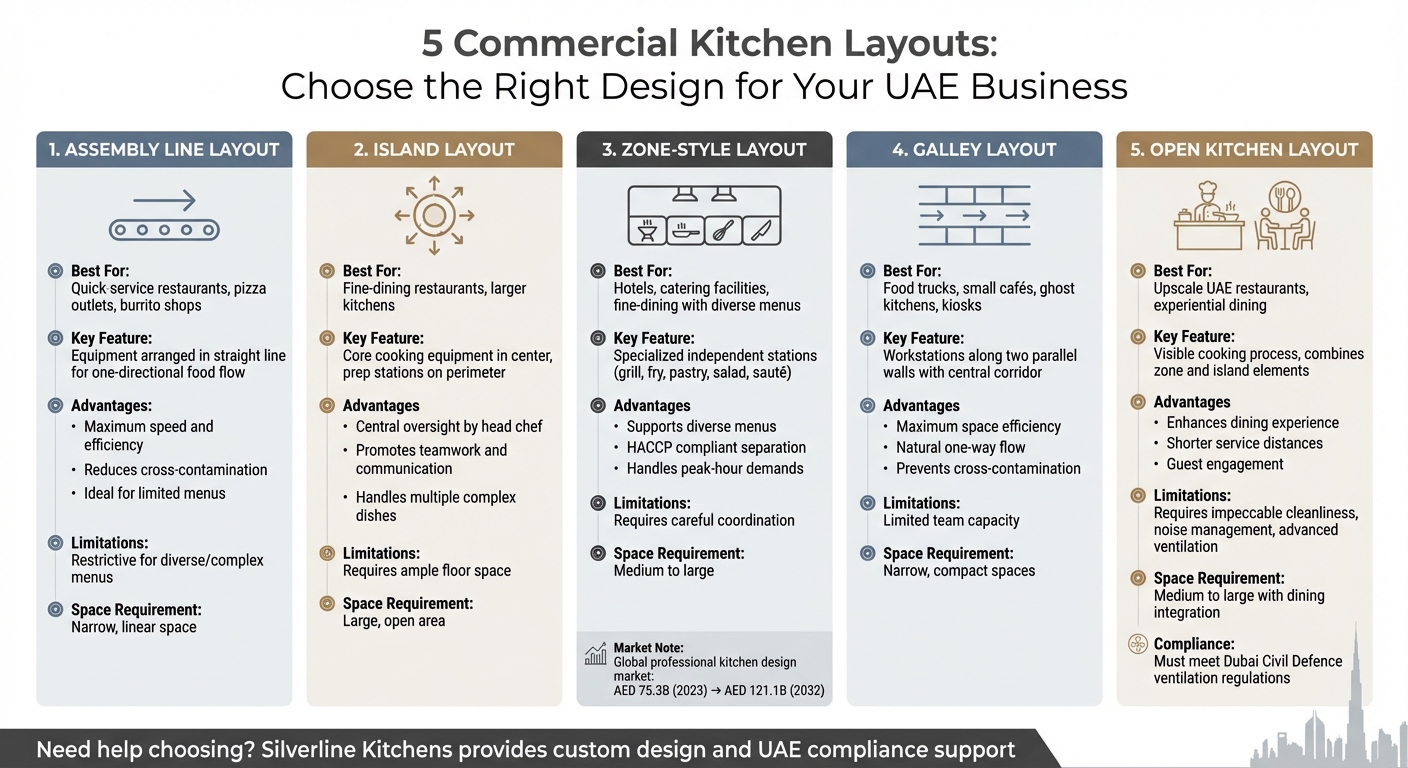
5 Commercial Kitchen Layout Types Comparison Guide
The layout of your commercial kitchen can make or break its efficiency. A well-planned design ensures smooth operations, while a poorly chosen one can create bottlenecks. In the UAE's bustling foodservice industry, five main kitchen layouts cater to different needs based on menu variety, available space, and service style. Here's a closer look at each layout and how it aligns with specific operational goals.
Assembly Line Layout
The assembly line layout is all about speed and efficiency. Equipment is arranged in a straight line, guiding food through a streamlined process - from preparation to cooking and plating. This setup is ideal for high-volume establishments like quick-service restaurants, pizza outlets, and burrito shops across the UAE.
By focusing on a single direction for food flow, this layout reduces unnecessary movement and minimises cross-contamination, meeting Dubai Municipality's hygiene standards. It’s a great choice for operations with limited menus, as it allows for faster processing and consistent quality during busy hours. However, its linear structure can feel restrictive if your menu includes diverse or complex dishes. In such cases, other layouts like the island setup might be more suitable.
Island Layout
The island layout places the core cooking equipment in the centre of the kitchen, with preparation and service stations along the outer edges. This design creates a central hub, enabling the head chef to oversee all activities and coordinate the team effortlessly.
This layout is particularly effective for larger spaces and fine-dining restaurants where chefs prepare multiple complex dishes simultaneously. The open structure promotes communication and teamwork, but it requires ample floor space to prevent congestion. Without sufficient room, this layout can lead to traffic jams, making it impractical for smaller kitchens.
Zone-Style Layout
The zone-style layout divides the kitchen into specialised stations - grill, fry, pastry, salad, and sauté - each operating independently. This compartmentalised approach allows chefs to work on different dishes without interfering with one another, making it an excellent option for diverse menus.
This setup is popular in catering facilities, hotel restaurants, and fine-dining venues. Each station is equipped with tools, prep areas, and storage specific to its function, ensuring efficiency. Additionally, the zone-style layout supports strict food safety regulations, such as HACCP, by clearly separating raw and cooked food preparation areas - an essential requirement in the UAE. When designed well, it can handle peak-hour demands seamlessly. Interestingly, the global professional kitchen design market, valued at approximately AED 75.3 billion in 2023, is expected to grow to nearly AED 121.1 billion by 2032.
Galley Layout
The galley layout is a space-saving solution for narrow kitchens. Workstations and equipment are arranged along two parallel walls or the perimeter, leaving a central corridor for movement. This layout is perfect for compact spaces, maximising efficiency without compromising functionality.
In the UAE, where urban real estate is often limited, the galley layout suits food trucks, small cafés, ghost kitchens, and kiosks. Its design allows staff to move quickly between stations, and the natural one-way flow helps prevent cross-contamination. However, the layout's capacity is limited - it can only accommodate a small team without causing delays when paths overlap.
Open Kitchen Layout
The open kitchen layout merges the kitchen and dining areas, allowing diners to watch the cooking process unfold. Combining elements of zone and island layouts, this setup prioritises visibility and aesthetics, making it a favourite in upscale UAE restaurants where the preparation process enhances the dining experience.
Cleanliness and organisation are non-negotiable in this layout. Every surface must be spotless, equipment should look appealing, and staff must maintain a professional appearance at all times. Effective ventilation systems are crucial to control heat, smoke, and odours, as required by Dubai Civil Defence regulations. While this layout engages guests and shortens service distances, noise management is key to ensuring a pleasant dining atmosphere.
Key Zones in Any Commercial Kitchen Layout
No matter the layout you choose, every commercial kitchen needs four core zones to function smoothly and meet UAE regulatory standards. These zones create a logical workflow - from storage and preparation to cooking, plating, and cleaning - minimising cross-contamination and ensuring high hygiene levels. They form the backbone of any kitchen setup, guiding the seamless movement of food from storage to service.
Preparation Zone
The preparation zone is where ingredients are washed, chopped, and mixed before cooking. Ideally, this area should be situated between storage and cooking zones, allowing staff to retrieve, prep, and transfer ingredients without unnecessary backtracking.
UAE regulations demand strict segregation in this zone. For instance, raw proteins like meat, fish, and poultry must be handled separately from ready-to-eat items and produce to avoid cross-contamination. Installing under-counter refrigerators, often referred to as "day fridges", can keep daily essentials within easy reach, reducing trips to bulk storage areas. Additionally, every prep area must include a dedicated handwashing station that’s completely separate from food prep sinks. This separation is key to maintaining the workflow and hygiene standards expected in commercial kitchens.
Cooking Zone
The cooking zone, often called the "hot line", is where the magic happens. This area houses ranges, fryers, grills, and ovens, typically grouped together for efficiency. Arranging related equipment into logical clusters - for example, placing a griddle next to a fryer - helps staff multitask with minimal movement, especially during busy periods.
To meet Dubai Civil Defence standards, heat-producing equipment should be grouped under a single exhaust hood that extends 150–300 mm beyond the equipment and is mounted 700–1,200 mm high. Proper ventilation not only ensures compliance but also improves staff comfort, which is especially important given the UAE's warm climate. Additionally, main traffic aisles in this zone should be between 90 to 120 cm wide to prevent collisions when carrying hot items.
Plating and Pass Zone
The plating and pass zone acts as the bridge between the kitchen and the dining area. This is where dishes are finalised - garnished, sauced, and plated - before being handed to the service team. To keep food hot and fresh, this zone should be located near the cooking line and close to the exit leading to the dining area.
This zone typically features heat lamps, plating surfaces, and an expo window where orders are organised and quality-checked. Maintaining a clean and organised pass zone is crucial for upholding a professional image, especially in the competitive UAE dining scene.
Cleaning Zone
The cleaning zone is where soiled dishes and utensils are handled, and it should be positioned near dish return points to avoid cross-contamination with plated food. This area must include a three-compartment sink for washing, rinsing, and sanitising, along with a high-capacity commercial dishwasher. A separate janitorial sink, located away from food prep areas, is also essential.
Proper floor drainage is critical in the UAE to prevent standing water, which can lead to bacterial growth. Ensuring this area is well-designed supports both hygiene and efficiency in high-volume operations.
As Sean Kearney, Founder of The Restaurant Warehouse, puts it: "A layout that doesn't respect the natural progression of food through these zones is just setting itself up for inefficiency".
Meeting UAE Regulations and Standards
Designing a commercial kitchen in the UAE isn’t just about creating an efficient workspace - it’s about navigating a maze of regulations designed to protect food safety, staff wellbeing, and public health. Three main authorities oversee the approval process: Dubai Municipality (DM), which focuses on food safety, hygiene, drainage, ventilation, and interior finishes; Dubai Civil Defence (DCD), responsible for fire safety measures like alarms, suppression systems, and emergency exits; and DEWA, which ensures proper electrical capacity, water load, and plumbing networks. Depending on your kitchen’s location, you might also need clearance from entities like Trakhees or the Dubai Development Authority (DDA). Together, these regulations create a structured approval process.
To get started, you’ll need a DM- and DCD-registered consultant to prepare architectural and MEP (Mechanical, Electrical, and Plumbing) designs. These plans must include details like kitchen ventilation and fire safety systems that comply with HACCP standards. Once the designs are ready, the process moves on to securing fit-out permits and passing final inspections before you can obtain an operating permit.
HACCP Compliance
HACCP (Hazard Analysis and Critical Control Points) guidelines are at the heart of commercial kitchen design in the UAE. These rules require a layout that keeps raw and cooked food preparation areas completely separate, along with distinct zones for dishwashing and food prep. The idea is to maintain a one-way flow of ingredients - from receiving and storage to preparation, cooking, and plating - minimising contamination risks. High-risk, ready-to-eat foods must have their own dedicated preparation areas, while handwashing sinks must be kept separate from food prep and dishwashing zones. These design elements are essential for passing DM inspections and keeping your operating permit intact.
Space Requirements for UAE Businesses
When planning your kitchen’s layout, it’s crucial to balance operational efficiency with compliance. For instance, traffic aisles need to be at least 1.2 metres wide to ensure safe movement and meet the accessibility standards outlined in the Dubai Universal Design Code. Surfaces in food areas - such as floors, walls, and ceilings - must be non-absorbent, washable, light-coloured, and free of cracks to meet DM hygiene standards. Mechanical exhaust systems, supported by grease traps and odour control mechanisms, are also required to maintain air quality compliance. Additionally, your kitchen should include well-defined zones for staff hygiene, utility tasks, and waste disposal, with provisions for recycling, composting, and general waste management.
How Silverline Kitchens Ensures Compliance
Silverline Kitchens takes the guesswork out of compliance. From the initial design phase to the final inspection, their team ensures that every aspect of your commercial kitchen meets UAE standards. They liaise directly with Dubai Municipality, Dubai Civil Defence, and DEWA, handling everything from detailed MEP layouts to grease trap and drainage plans. They also integrate DCD-approved fire detection and suppression systems before construction begins, ensuring your kitchen is ready to pass all inspections.
sbb-itb-19c3c9a
Choosing the Right Layout for Your Business
Assessing Your Needs
Your menu is the cornerstone of every decision about your kitchen layout. For instance, a pizzeria will need ample space for dough preparation and high-powered pizza ovens, while a steakhouse demands heavy-duty charbroilers and sufficient plating areas to handle its menu requirements. Collaborate with your head chef to create a detailed list of menu items. This will guide your equipment choices, define the size of your kitchen zones, and determine the overall footprint of your space.
Staff size and workflow are equally critical. A kitchen designed for 50 covers operates very differently from one catering to 200, and this affects how zones are arranged and where equipment is placed. A well-planned layout can improve staff efficiency by as much as 50%. On the other hand, a poorly designed space not only hampers productivity but also increases the likelihood of workplace injuries.
Additionally, don’t overlook how the UAE’s specific climate and regulations could influence your design.
Factors to Consider in the UAE
The UAE presents unique challenges, particularly with its extreme summer temperatures, which can exceed 50°C. This makes a well-designed ventilation system essential. It should be tailored to the BTU output of your cooking equipment to maintain a safe and comfortable environment. Induction cooking technology is a smart alternative here, as it transfers over 90% of energy directly to cookware compared to just 40–50% with gas. This not only reduces the heat in your kitchen but also cuts down on air conditioning costs - an important consideration for operators aiming to align with sustainability initiatives like Dubai’s Green Building Regulations (Al Sa’fat).
Space planning is another crucial aspect. The average commercial kitchen in the UAE is approximately 97.6 m², with a general guideline of allocating around 0.46 m² per customer seat. Traffic aisles should be at least 1.2 metres wide to ensure smooth and safe movement throughout the kitchen. Beyond cooking zones, remember to allocate sufficient space for support areas such as receiving, storage, and warewashing.
Sean Kearney, Founder of The Restaurant Warehouse, highlights a common oversight: "The single biggest mistake I see? It's always underestimating the space needed for your support zones... Skimping on space for these 'unseen' areas will cripple your kitchen's efficiency when you're deep in the weeds".
Custom Solutions with Silverline Kitchens
Silverline Kitchens offers tailored solutions that address both operational needs and UAE-specific compliance requirements. Their team collaborates with your head chef to translate your menu into a detailed plan, including equipment lists and zone layouts. They also manage the mapping of gas, water, and electrical connections to ensure that all high-power equipment is properly set up, eliminating potential issues during installation.
Their designs often incorporate modular components and mobile equipment on casters, making it easy to adapt your layout as your menu evolves or your business scales. From the initial consultation to final commissioning and staff training, Silverline Kitchens ensures that your kitchen layout aligns with your goals while meeting UAE regulatory standards. They also handle coordination with key authorities like Dubai Municipality, Civil Defence, and DEWA, letting you focus on running your business.
Conclusion
Your kitchen layout is much more than just a floor plan - it's the backbone of your operations. A well-thought-out design can increase productivity by up to 50%, while a poorly planned one can lead to inefficiencies, safety risks, and revenue losses. In the UAE, where the professional kitchen design market was valued at around AED 75.3 billion in 2023 and is expected to grow to nearly AED 121.1 billion by 2032, getting your layout right isn't just important - it's a necessity.
In such a fast-paced and competitive environment, your kitchen layout must streamline workflows, minimise cross-contamination, and comply with strict local regulations, including those set by Dubai Municipality, HACCP, and Civil Defence. Proper ventilation and adherence to these standards are not optional - they're mandatory.
"The right commercial kitchen space represents more than just a cooking area, but it is the foundation of operational efficiency, food safety, and scalable growth." - CloudKitchens
This statement highlights the importance of having expert support to tackle these challenges effectively. Silverline Kitchens steps in with a comprehensive approach that covers everything from meticulous planning to liaising with local authorities. Their modular designs ensure your kitchen can evolve alongside your business while staying fully compliant, helping you avoid costly delays or fines. Whether you're launching a new concept or upgrading an existing space, Silverline Kitchens is here to turn your kitchen into a powerhouse of efficiency and success.
FAQs
What are the benefits of selecting the right commercial kitchen layout in the UAE?
Selecting the ideal commercial kitchen layout in the UAE can make a world of difference in how efficiently your kitchen operates and how well it meets regulatory standards. A thoughtfully planned layout optimises the use of available space, creating a seamless workflow that reduces unnecessary staff movement and speeds up food preparation. This streamlined process not only lowers labour costs but also improves how quickly orders are served, elevating the dining experience for customers.
Given the UAE's stringent health and safety regulations - such as HACCP guidelines, Dubai Municipality requirements, and Civil Defence standards - having a well-structured kitchen is essential. Key design elements like ergonomic workstations, designated areas for raw and cooked foods, and energy-efficient equipment help minimise cross-contamination risks, enhance staff safety, and even lower utility costs.
Collaborating with professionals like Silverline Kitchens ensures that your kitchen layout is not just functional but also tailored to meet local compliance standards. Their expertise helps create spaces that blend practicality with aesthetics, setting the stage for long-term success in the UAE’s competitive hospitality scene.
What are the key UAE regulations to consider when designing a commercial kitchen?
In the UAE, following local regulations is a must when setting up a commercial kitchen. Authorities like Dubai Municipality, Civil Defence, and DEWA enforce strict rules to ensure food safety, fire prevention, and proper infrastructure.
Some key factors to keep in mind include installing effective ventilation systems, implementing robust fire safety measures (such as alarms, extinguishers, and clearly marked emergency exits), and creating separate zones for raw and cooked food to avoid cross-contamination. Materials used in the kitchen should be resistant to both heat and moisture, and all designs must comply with HACCP guidelines, which focus on maintaining food safety standards. Additionally, the kitchen's utility systems, like electrical and water networks, need to be capable of handling the heavy demands of a commercial environment.
Silverline Kitchens ensures that every design not only meets these regulations but also delivers fully functional and customised kitchens that cater to the specific needs of their clients.
How can I design a commercial kitchen layout that suits my menu and staff size?
When planning a commercial kitchen, the layout should align closely with your menu and the size of your team. If your menu includes a variety of cooking methods - like grilling, frying, or baking - you'll need specialised stations, extra workspace, and wider aisles to keep things running smoothly. In contrast, a simpler menu might allow for a more compact design, leaving room for additional storage or seating. The anticipated order volume also plays a role. A fast-paced lunch service demands more cooking zones compared to a slower dinner service.
The size of your team and their workflow are just as critical. For larger teams, wider walkways and clearly defined stations for tasks such as plating and dishwashing are essential. A well-thought-out flow, from ingredient prep to plating, reduces congestion and fatigue. Taking the time to map out these steps ensures an ergonomic and efficient workspace. Don’t forget to factor in compliance with UAE regulations, including HACCP and fire safety standards, which are mandatory.
Silverline Kitchens can assist in designing a fully compliant commercial kitchen tailored to your specific needs. They ensure your space supports your menu’s requirements and your team’s workflow, adhering to all local standards. All measurements are provided in metric units, temperatures in °C, and pricing in AED (د.إ), with dates formatted as DD-MM-YYYY.
