


When setting up a commercial kitchen in the UAE, compliance with strict regulations and efficient design are critical. Experienced professionals ensure kitchens meet Dubai Municipality, Civil Defence, and HACCP standards while preventing costly delays and redesigns. They focus on:
- Regulatory Compliance: Adhering to hygiene, fire safety, and zoning laws.
- Efficient Layouts: Creating workflows that minimise bottlenecks and ensure smooth operations.
- Equipment Selection: Choosing durable, compliant machinery that reduces energy costs.
- Flawless Installation: Preventing issues like voided warranties and operational downtime.
- Long-Term Support: Maintenance plans and after-sales services to keep kitchens running efficiently.
Investing in professional expertise safeguards your business, ensuring compliance, efficiency, and scalability from day one.
Meeting UAE Compliance Standards Through Professional Expertise
Navigating UAE regulations for commercial kitchens requires specialised knowledge across multiple authorities. For example, a kitchen project in Dubai must meet the requirements of Dubai Municipality's Food Safety Department, Dubai Civil Defence, DEWA, and potentially free-zone authorities like Trakhees or DIFC. Each authority has its own processes and timelines, demanding well-coordinated planning to ensure compliance with every design detail.
HACCP and Food Safety Zoning Requirements
In the UAE, compliance with HACCP (Hazard Analysis and Critical Control Points) is non-negotiable for food establishments. This system identifies potential hazards and establishes Critical Control Points throughout operations. It directly impacts kitchen design by requiring specific zoning to maintain hygiene standards. Professional designers create workflows with distinct zones - Receiving → Storage → Preparation → Cooking → Serving → Washing - to ensure seamless operations and avoid permit delays. Dubai Municipality inspectors pay close attention to these zoning layouts during evaluations, and failing to implement them correctly is a common reason for permit rejections, often leading to costly delays.
Dubai Municipality and Civil Defence Standards
Fire safety is a top priority in kitchen design. Dubai Civil Defence requires certified fire suppression systems for grease-heavy equipment, along with smoke alarms, fire-rated partitions, emergency exits, and other safety measures. Material choices also play a crucial role; floors, walls, and ceilings must be finished with non-absorbent, washable, and light-coloured materials to pass inspections. Additionally, grease traps must be installed strategically to ensure environmental compliance and facilitate maintenance. For dishwashing, commercial-grade machines are required to reach a final rinse temperature of at least 82°C to effectively kill pathogens.
Staying Current with Regulatory Changes
UAE food safety regulations are constantly evolving. For instance, updates in 2025 introduce stricter requirements for workflow efficiency, environmental standards, and digital tracking systems. Professionals stay ahead by consulting Dubai Municipality, Civil Defence, and federal food safety authorities regularly. They also keep a close eye on updates to key legislation, such as the UAE Food Safety Law (Federal Law No. 10 of 2015) and the UAE Fire and Life Safety Code, ensuring kitchens remain compliant long after launch.
Sustainability is now a major focus, influencing equipment choices and operational strategies. Cloud kitchens, in particular, face heightened scrutiny due to their high production volumes. These facilities must adhere to strict brand separation and advanced hygiene protocols. Without expert oversight, a kitchen can quickly fall out of compliance. Staying vigilant with regulatory updates not only ensures a kitchen meets current standards but also supports long-term operational success.
Creating Efficient Kitchen Workflows Through Expert Layout Planning
Expert layout planning is the backbone of a productive kitchen, ensuring operations run smoothly while adhering to strict regulations.
A well-designed kitchen layout organises movement like a choreographed dance. Designers focus on three main principles: workflow efficiency, hygiene separation, and safety compliance. The goal is to create a logical flow - from receiving ingredients to waste disposal - minimising unnecessary movement and avoiding bottlenecks during busy service hours.
"Workflow is a core part of how we design our commercial kitchens. We carefully plan how food, staff, equipment, and waste move through the kitchen to ensure smooth operations." - Silverline Kitchens
To achieve this, professional designers divide kitchens into functional zones: Receiving & Storage, Preparation (further separated by food type), Cooking & Production, Assembly & Pick-up (commonly called The Pass), and Washing/Sanitisation. These zones are designed to comply with HACCP standards and Dubai Municipality regulations. For instance, preparation areas must be physically separated from waste and dishwashing zones to pass inspections. Designers also ensure practical dimensions, such as pathways between 107–122 cm wide and prep counters at 85–95 cm high, to prevent staff collisions and reduce physical strain.
Layout Designs for High-Volume Operations
High-volume kitchens require layouts tailored to their specific needs. Quick-service establishments benefit from assembly line layouts, while island hub designs are ideal for large hotel kitchens or fine dining venues. For kitchens with diverse menus, a zoned approach works best.
In the UAE, the climate plays a significant role in layout planning. Designers must consider the extreme heat when placing equipment, ensuring energy-efficient appliances are spaced out to avoid creating "hot spots" that overburden air conditioning systems. Induction cooking, which transfers over 90% of its energy directly to cookware compared to gas ranges (40–50%), is a popular choice. It not only improves energy efficiency but also eliminates open flames, meeting Civil Defence safety standards. Additionally, Demand-Controlled Kitchen Ventilation systems, which can adjust fan speeds between 10–100%, offer energy savings of up to 97% - a critical feature during Dubai's sweltering 50°C summers.
Planning for Business Growth and Expansion
A well-thought-out kitchen layout also supports future growth. Experienced designers plan for scalability by incorporating modular furniture and mobile equipment on wheels, which allow for quick reconfiguration as the business expands. Early integration of comprehensive MEP (Mechanical, Electrical, and Plumbing) drawings ensures that adding or upgrading equipment later won't require costly structural changes. This proactive approach ensures kitchens can handle increased demand without compromising efficiency.
For businesses in Dubai, professional kitchen design packages that meet Dubai Municipality standards - including 2D/3D layouts and MEP drawings - are available for around AED 5,000 + VAT. Investing in such planning not only ensures compliance but also sets the stage for long-term operational success.
Reducing Costs Through Expert Equipment Selection and Installation
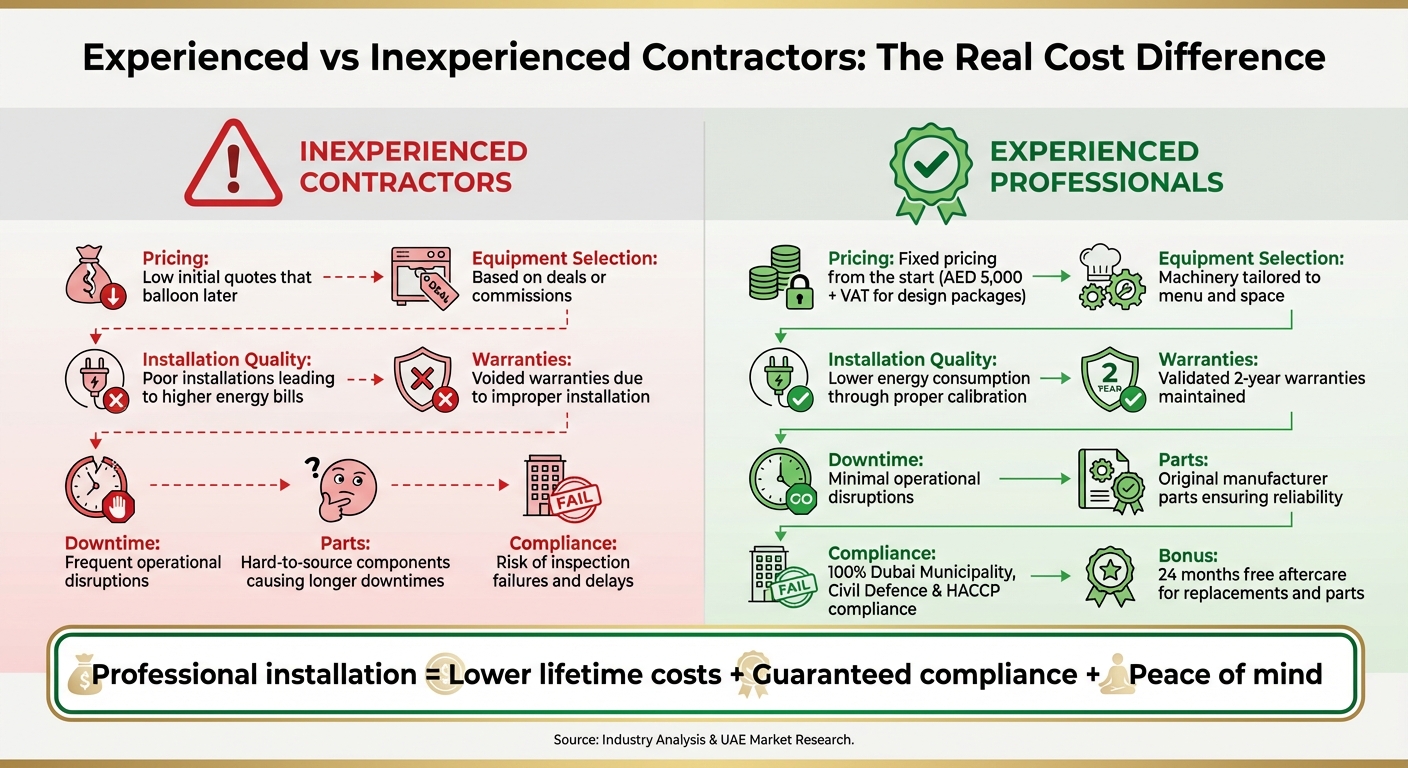
Experienced vs Inexperienced Commercial Kitchen Contractors Comparison
After careful layout planning, the next step to cutting long-term expenses is selecting the right equipment and ensuring flawless installation. The choices made here can significantly affect lifetime costs. Experienced professionals take a strategic approach, focusing on long-term value rather than short-term savings, which sets them apart from less experienced contractors.
Selecting Equipment That Meets UAE Standards
Professional teams rely on independent sourcing to secure commercial-grade equipment that complies with the UAE Food Code, Dubai Municipality standards, and Civil Defence requirements.
Expert installers go a step further by calibrating equipment to achieve precise operating temperatures, ensuring maximum efficiency. This reduces energy consumption, which translates to lower utility bills over time. Additionally, they use MEP (Mechanical, Electrical, and Plumbing) drawings to allocate dedicated circuits and proper drainage for heavy-duty machinery. This prevents frequent breakdowns and avoids unnecessary energy waste. Another critical point: many manufacturers require professional installation to maintain warranty coverage. DIY or unlicensed setups often void warranties entirely.
How Professional Installation Reduces Downtime
Professional installation teams coordinate delivery, assembly, and testing to keep your kitchen running smoothly. They also design "maintenance space" into the setup, making cleaning and servicing easier. Equipment undergoes rigorous performance tests to ensure it can handle the UAE's extreme climate conditions.
Given the region's harsh weather, proper calibration and installation are even more crucial. When equipment is installed correctly, it operates at peak efficiency, consuming less energy and keeping utility costs consistently low.
Inexperienced vs Experienced Approaches: A Comparison
The contrast between inexperienced contractors and seasoned professionals is stark. Inexperienced teams often offer low initial quotes that balloon later, while experienced providers stick to fixed pricing from the start. Inexperienced installers may choose equipment based on deals or commissions, whereas professionals recommend machinery tailored to your menu and space. Poor installations by less experienced teams lead to higher energy bills, voided warranties, and frequent operational disruptions. In contrast, professional setups deliver lower energy consumption, validated 2-year warranties, and minimal downtime.
In the UAE, professional kitchen design packages, including 2D/3D layouts and MEP drawings, typically cost around AED 5,000 + VAT. Some providers even include 24 months of free aftercare for replacements and parts as part of their installation contracts. While this may seem like a larger upfront expense, it protects your business from costly errors and ensures compliance with local standards. This investment complements the long-term benefits of expert kitchen design.
Relying on professional expertise not only ensures a seamless installation process but also helps maintain performance and control costs in the future.
sbb-itb-19c3c9a
Long-Term Advantages of Working with Experienced Professionals
The benefits of partnering with seasoned professionals become evident once your kitchen is fully operational. Their expertise helps safeguard your investment through structured maintenance plans and comprehensive support, ensuring smooth and efficient operations for years to come.
Planned Maintenance and Equipment Replacement
A carefully crafted Preventive Servicing Schedule ensures your kitchen equipment consistently meets UAE Food Code and Dubai Municipality standards beyond the initial inspection stage. This proactive approach identifies and addresses wear and tear before it escalates into costly equipment failures, reducing the risk of unexpected downtime during busy service hours. Regular kitchen audits also highlight when equipment needs replacing or layouts require adjustments to accommodate business growth, all while staying compliant with evolving regulations such as the Dubai Green Building Regulations (Al Sa’fat) and updated HACCP guidelines. For example, commercial dishwashers must maintain a final rinse temperature of at least 82°C to meet municipal sanitisation standards.
Fire suppression systems are another critical area requiring specialised attention. Maintenance of systems like ANSUL must be carried out by Civil Defence-approved vendors, as this is both a legal requirement and essential for keeping your kitchen safe and operational. Failing to use approved contractors for servicing can lead to delays - or outright denials - of license renewals.
"Our service doesn't stop at handover - it's just getting started."
– Silverline Kitchens
Experienced providers also prioritise using original manufacturer spare parts, ensuring equipment operates safely and efficiently. In contrast, less experienced contractors might supply equipment with hard-to-source components, leading to longer downtimes and potential compliance issues.
This systematic approach provides the foundation for dependable, long-term support.
Complete After-Sales Support
Silverline Kitchens offers unmatched after-sales support, including a 2-year warranty that covers 24 months of free replacements and parts service. This extensive coverage includes emergency repairs, full renovation services, and equipment replacement for kitchens needing improved workflow and productivity. With over 40 years of experience in the foodservice industry, their team identifies and addresses operational challenges before they become major issues. Their turnkey approach covers every stage of the process - from initial layout and MEP planning to final handover and ongoing servicing.
Additionally, experienced professionals handle manufacturer warranty policies to ensure clients understand coverage terms and meet servicing requirements. Many manufacturers stipulate that professional installation and servicing are necessary to maintain warranty validity. DIY setups or unlicensed installations can void warranties, leaving heavy-duty equipment at greater risk.
UAE Success Stories: Results from Experienced Design and Installation
Examples of Efficient and Compliant Kitchens
Across the UAE, real-world projects highlight how expert design and installation can lead to tangible business improvements. These examples showcase how professional kitchen planning ensures smooth operations and full compliance with local regulations.
Take Talabat, for instance. They collaborated with Silverline Kitchens to design a commercial kitchen that achieved 100% compliance with UAE and HACCP standards. By offering a complete solution - from 2D layouts and MEP drawings to final installation - Silverline Kitchens ensured the facility met all requirements set by Dubai Municipality and Civil Defence right from the start.
Kitopi, a Dubai-based company launched in 2018, is another standout. By utilising top-tier kitchen infrastructure across the GCC and their proprietary Smart Kitchen Operating System (SKOS), Kitopi managed over 200 kitchens. This approach drove an impressive 300% year-on-year growth in orders during 2020, culminating in a valuation of $1.55 billion by 2022.
Zaytoon Catering in Al Quoz offers a different kind of transformation. Originally a home-based operation, it grew into a HACCP-certified industrial kitchen with the help of Excel Kitchen LLC. By introducing centralised cooking lines, precision chillers, and digital prep counters, the company streamlined its workflow and scaled up to meet the demands of large-scale catering.
In Abu Dhabi's luxury hotel scene, Chef Ali Rahman worked with major hotel groups to modernise Emirati cuisine. By incorporating smart combi ovens and adapting plating techniques to local tastes, he ensured consistent quality and efficiency, even in high-volume settings.
"Modernizing local dishes without losing soul – that's my purpose."
These examples underscore the importance of working with experienced professionals to create efficient, regulation-compliant, and future-ready commercial kitchens in the UAE.
Conclusion: Why Experience Matters in Commercial Kitchen Design
Designing a commercial kitchen in the UAE involves much more than arranging equipment. It demands a thorough understanding of regulations, efficient workflow planning, and foresight to ensure the space performs well from day one and remains effective over time. This expertise ensures both regulatory compliance and operational success.
Experienced professionals ensure your kitchen meets Dubai Municipality, Civil Defence, and HACCP standards right from the start. This avoids inspection failures, expensive redesigns, and delays in opening. They incorporate precise compliance measures to secure municipality approval without hassle.
But it’s not just about meeting regulations. A well-planned layout enhances efficiency and supports business growth. Thoughtful equipment selection ensures you’re investing in machinery with accessible spare parts, reducing downtime and protecting your revenue stream.
Additionally, fixed pricing and comprehensive aftercare - like preventive maintenance and emergency support - help safeguard your investment long after installation. With a 2-year warranty and ongoing support, you can count on your kitchen staying functional and profitable for the long haul.
FAQs
Which regulatory bodies oversee commercial kitchen design in the UAE?
When setting up a commercial kitchen in the UAE, meeting the requirements of regulatory authorities is a must to ensure safety, hygiene, and compliance with legal standards. For operations in Dubai, the Dubai Municipality (DM) plays a key role by providing guidelines on kitchen layouts, space usage, and equipment standards. At the same time, the Dubai Civil Defence (DCD) focuses on fire safety, requiring proper fire suppression systems and adherence to emergency procedures.
Across the UAE, kitchens must align with the UAE Food Safety Law (Federal Law No. 10 of 2015) and follow HACCP standards to maintain food safety and hygiene. Organisations like the Dubai Food Control Authority (DFCA) and the Abu Dhabi Food Safety Authority (ADAFSA) handle licensing, permits, and regular inspections to ensure businesses remain compliant.
Following these regulations not only simplifies the approval process but also helps create a safe and efficient kitchen that meets UAE standards.
How does a well-designed kitchen layout boost efficiency in commercial kitchens?
In the fast-paced foodservice industry of the UAE, having a thoughtfully designed kitchen layout can make all the difference in improving efficiency. By dividing the kitchen into specific zones - like receiving, preparation, cooking, and cleaning - you establish a logical workflow. This setup reduces unnecessary movement, prevents bottlenecks, and lowers the risk of cross-contamination. Such measures are crucial for adhering to the UAE’s stringent safety and hygiene regulations.
Space efficiency is another key benefit. Features like vertical storage, multi-functional equipment, and ergonomic workstations help make the most of limited space. This is especially critical in high-rent cities like Dubai, where maximising every square metre can lead to noticeable cost savings. Additionally, a well-organised layout ensures your kitchen meets HACCP, Dubai Municipality, and Civil Defence standards, helping you avoid fines while prioritising safety.
In the end, a smartly designed kitchen layout doesn’t just improve daily operations - it speeds up service, enhances safety, and delivers long-term financial benefits for your business.
Why is it important to have professional installation for commercial kitchen equipment?
Professional installation of commercial kitchen equipment is crucial for safeguarding your warranty and ensuring the equipment operates safely and effectively. Incorrect installation can lead to damage, create safety risks, or cause performance problems - all of which could void the manufacturer's warranty.
Certified technicians adhere to strict safety protocols and manufacturer instructions during installation. This approach not only helps meet UAE regulations, such as HACCP standards and fire safety requirements, but also ensures your equipment remains dependable for the long haul.
