


Cloud kitchens in the UAE are designed exclusively for food delivery, eliminating the need for dining areas or walk-in customers. Setting up a cloud kitchen involves careful planning to meet regulatory requirements, manage costs, and ensure operational efficiency. Here's a quick overview:
- Costs: Initial setup costs range from AED 350,000 for small kitchens to over AED 4.5 million for larger, central production kitchens. Pre-equipped facilities can lower upfront costs but come with higher monthly expenses.
- Space Requirements: Kitchen size depends on the number of brands and daily order volume. Small kitchens need 30–60 m², while larger setups may require 150–400+ m².
- Regulatory Approvals: Key permits include a Fit-out Permit, Fire Safety NOC, and Food Safety Permit. By 2026, kitchens must connect fire alarms to a 24/7 monitoring station approved by Dubai Civil Defence.
- Key Design Elements: Efficient layouts include zones for storage, preparation, cooking, and dispatch. Compliance with hygiene, ventilation, and safety standards is mandatory.
- Equipment: Invest in commercial-grade appliances suited to your menu, ensuring they meet UAE food safety regulations.
The right planning minimizes delays, reduces costs, and ensures compliance with UAE standards.
Planning and Budgeting for a Cloud Kitchen in the UAE
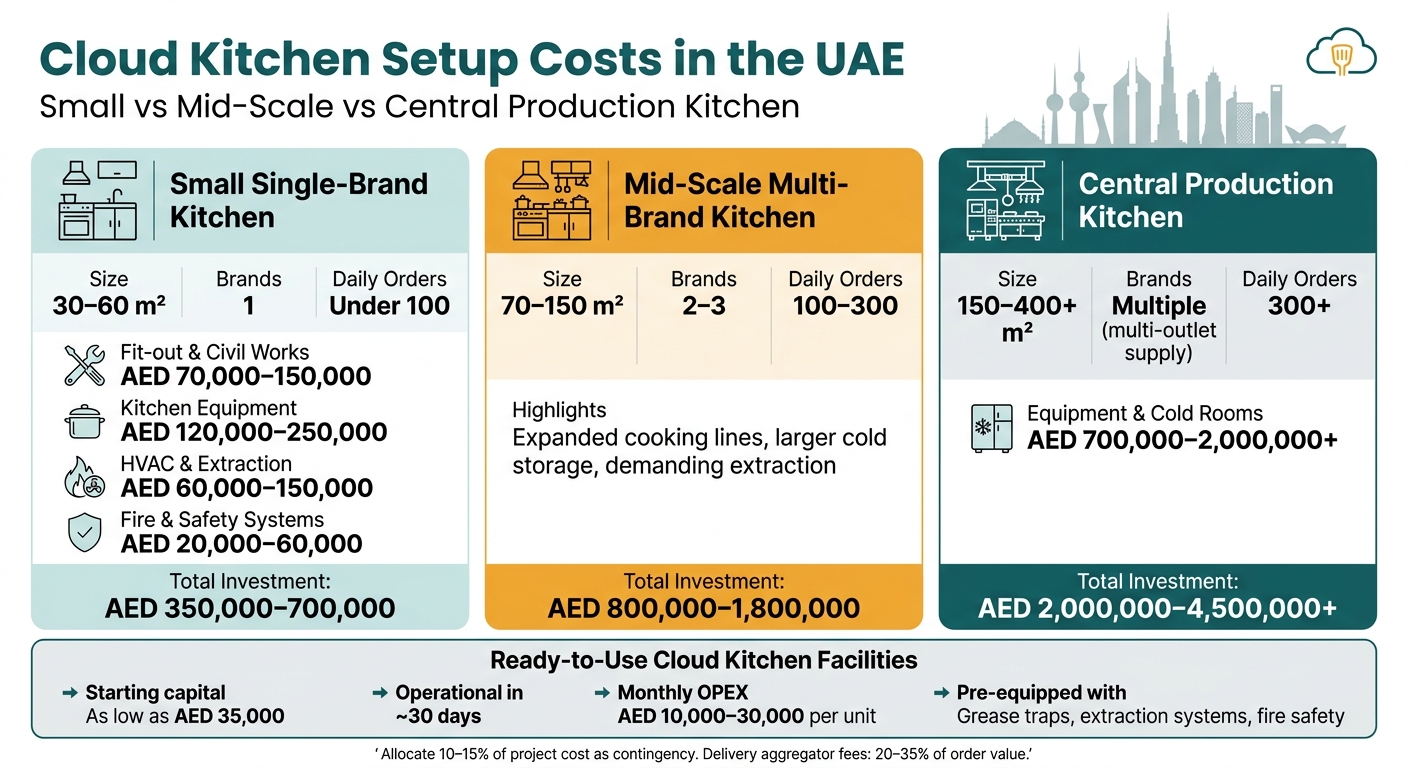
Cloud Kitchen Setup Costs in the UAE: Small vs Mid-Scale vs Central Production
Defining Your Concept and Scale
The first step in setting up a cloud kitchen is defining your concept and production volume. These decisions will determine the size of your space and the equipment you'll need.
For example, a single-brand kitchen focusing on one cuisine, like burgers and wings, can operate efficiently within 40–80 m². If you plan to add two or three virtual brands to the same space, you'll need 70–150 m² to accommodate extra prep stations, cold storage, and packaging areas. Larger central production kitchens, which supply multiple outlets across cities like Dubai or Abu Dhabi, require 150–400+ m² and are typically located in industrial zones such as Al Quoz or Musaffah.
Order volume also influences your layout. Kitchens handling under 100 orders per day can fit into 30–45 m², while those managing 100–300 orders need 45–80 m². For operations exceeding 300 orders daily, a larger, well-structured space is essential. Don't forget to allocate 15–30% extra space for circulation, handwash stations, and dry storage.
Your concept and scale are the foundation for your layout and cost decisions.
Cost Breakdown for Cloud Kitchens
The costs of setting up a cloud kitchen in the UAE depend on factors like size, location, and the number of brands you plan to operate. Below is a cost outline for three common setups:
Small single-brand kitchen (30–60 m²):
- Fit-out and civil works: AED 70,000–150,000
- Kitchen equipment: AED 120,000–250,000
- HVAC and extraction: AED 60,000–150,000
- Fire and safety systems: AED 20,000–60,000
When you add professional fees and six months of working capital, the total investment ranges from AED 350,000–700,000.
Mid-scale multi-brand kitchen (70–150 m²):
With expanded cooking lines, larger cold storage, and more demanding extraction systems, the total cost typically falls between AED 800,000 and AED 1.8 million.
Central production kitchen (150–400+ m²):
This setup requires a much larger investment. Equipment and cold rooms alone can cost AED 700,000–2 million+, while total project costs usually range from AED 2 million to AED 4.5 million+.
For those with limited capital, ready-to-use cloud kitchen facilities offer a more affordable alternative. In the UAE, some providers allow brands to begin operations with as little as AED 35,000 in working capital. These facilities, which come pre-equipped with grease traps, extraction systems, and fire safety measures, can make your kitchen operational in about 30 days. However, the trade-off is a higher monthly operating expense (OPEX), typically AED 10,000–30,000 per month per unit, compared to the upfront capital expenditure (CAPEX) of an independent setup.
These estimates provide a starting point for your financial planning.
Budgeting for Approvals and Hidden Costs
Regulatory and hidden costs are often overlooked but can significantly impact your budget. For instance, obtaining a commercial trade licence in the UAE costs AED 10,000–20,000+, depending on your emirate and whether you're operating on the mainland or in a free zone. Design consultancy fees for securing kitchen drawing approvals from Dubai Municipality or other authorities add another AED 5,000–20,000+, while Civil Defence approval for fire suppression and alarm systems can cost AED 15,000–60,000+, depending on the setup's size and complexity.
Unexpected site-specific costs can also arise. Before signing a lease, check the grease trap capacity, electrical load, gas supply type, and extraction routes. Retrofitting these systems later can add tens of thousands of dirhams to your budget. Companies like Silverline Kitchens offer end-to-end project management services, including grease trap and drainage planning, to help address these issues upfront.
It's wise to allocate 10–15% of the project cost as a contingency for unforeseen expenses like variations, re-submissions, or additional mechanical, electrical, and plumbing (MEP) work. Additionally, set aside three to six months of operating expenses for rent, salaries, utilities, packaging, and aggregator commissions. Delivery aggregator fees in the UAE typically range from 20–35% of the order value, so factor these into your pricing strategy from the start.
A well-thought-out financial plan ensures your kitchen meets both operational needs and UAE regulatory standards.
sbb-itb-19c3c9a
Designing an Efficient and Compliant Cloud Kitchen Layout
Once your concept is clear and costs are planned, the next step is to develop a layout that prioritises efficiency while meeting regulatory requirements.
Key Zones in a Cloud Kitchen
To maintain food safety and streamline operations, divide your cloud kitchen into specific zones. Allocate areas for receiving goods, dry and cold storage, food preparation (separating raw and ready-to-eat items), cooking, and packaging/dispatch. This setup ensures a smooth, unidirectional workflow, which is essential to meet the standards set by the Food Control Department (FCD).
Common Layout Types
The best layout for your kitchen depends largely on the size and shape of your space:
- Linear Layout: Ideal for smaller kitchens, this layout arranges workstations in a straight line, progressing from preparation to dispatch.
- Zone-Based Layout: Suitable for kitchens handling multiple brands or cuisines, this design dedicates separate areas to each concept while sharing common resources like cold storage and a dispatch counter. This approach reduces the risk of cross-contamination.
- L-Shaped or U-Shaped Layouts: These configurations work well in wider spaces, offering more room for cooking while keeping warewashing areas distinct from food preparation zones.
While functionality is important, your kitchen must also adhere to specific compliance standards to avoid setbacks during inspections.
Compliance and Design Details
Planning for compliance from the start can save you from costly adjustments later. Here are some critical design elements to consider:
- Flooring: Use non-slip, non-porous materials like epoxy or ceramic tiles to ensure safety and hygiene.
- Walls: Opt for smooth, washable surfaces in food prep and cooking areas to meet hygiene standards.
- Handwash Basins: Place these near entry points and cooking lines, ensuring they are equipped with hot and cold water, soap, and disposable towels. These are a focal point during Dubai Municipality FCD inspections.
- Drainage: Install systems capable of handling heavy grease loads, particularly in cooking and dishwashing areas.
- Ventilation: Ensure proper extraction systems that comply with Dubai Civil Defence (DCD) standards to effectively remove airborne contaminants.
Silverline Kitchens incorporates these compliance requirements into its design plans from the beginning, helping to minimise the risk of costly revisions during the FCD review process.
Selecting the Right Equipment for UAE Cloud Kitchens
Choosing the right equipment is just as important as designing an efficient layout. The tools you select will determine how smoothly your kitchen operates, whether it meets inspection standards, and how well it supports your menu. Let’s break down the key equipment considerations for cloud kitchens in the UAE.
Core Equipment Categories
Once your layout is set, it’s time to focus on the essentials. Every cloud kitchen needs equipment across four main areas: cooking appliances, refrigeration, food preparation, and cleaning systems.
- Cooking appliances: Depending on your menu, this could include combi ovens, commercial ranges, fryers, or grills.
- Refrigeration: Options range from upright chillers and under-counter units to blast chillers for safe food storage.
- Food preparation: Work tables, slicers, mixers, and food processors are indispensable for prepping ingredients.
- Cleaning systems: A commercial dishwasher and a three-compartment sink are necessary for maintaining hygiene.
For a standard cloud kitchen setup in the UAE, expect to spend between AED 10,000 and AED 25,000 on basic equipment. However, costs can climb quickly if your concept requires specialised appliances.
Specifying Equipment for Compliance
Meeting UAE regulations is non-negotiable. Using domestic or home-style appliances in a commercial cloud kitchen is strictly forbidden. All equipment must be commercial-grade to pass inspections by the Dubai Municipality Food Control Department (FCD).
Additionally, your kitchen must be registered on the Food Watch platform, Dubai’s digital tool for monitoring food safety. Equipment placement should follow the guidelines in the Dubai Food Code. A designated Person in Charge (PIC) is required to oversee hygiene standards, and all staff operating the equipment must hold valid food handler certificates.
For a seamless process, companies like Silverline Kitchens provide commercial-grade equipment that complies with HACCP, Dubai Municipality, and Civil Defence standards, helping you avoid compliance issues before your FCD inspection.
Matching Equipment to Your Concept
Your equipment should align with the specific needs of your menu. Finalising your menu before purchasing equipment is essential. For instance, a pizza-focused kitchen will need a deck oven, while a fast-food concept might require fryers and holding units. Buying equipment without a clear menu plan could lead to unnecessary expenses and replacements.
Step-by-Step Process for Setting Up a Cloud Kitchen in the UAE
From Concept to Design Approval
Before diving into construction or design, start with careful planning. Your first major decision is selecting the right business jurisdiction. If you want to trade freely within the local market, Dubai Mainland (DED) is the way to go. However, if you prefer 100% foreign ownership, a UAE Free Zone might be the better option. Make sure your trade licence clearly specifies your food service activity.
To move forward, gather essential documents: passport copies, valid UAE visas, three potential trade names, a business plan, and a signed tenancy agreement. These steps align with earlier design considerations and ensure you're on the right track with regulations. With proper preparation, you can potentially shorten the approval process to around 4–6 weeks.
Another critical step is ensuring your kitchen layout complies with the Dubai Food Code. Before signing a lease, confirm that the space can accommodate a compliant design. Fixing layout issues later can be expensive and time-consuming. It’s a good idea to work with specialists familiar with Dubai Municipality and Civil Defence standards. This approach ensures smoother progress when it’s time for the fit-out stage.
Fit-Out and Launch Readiness
Once approvals are in place, the fit-out phase begins. Start with civil works like flooring, wall cladding, ceiling finishes, and drainage. Then move on to mechanical, electrical, and plumbing (MEP) installations, which include ventilation systems, gas lines, and planning for the electrical load. After these steps, you can install the kitchen equipment.
Before scheduling the Food Control Department (FCD) inspection, make sure to register on the Food Watch platform and appoint a certified Person in Charge (PIC). Additionally, all kitchen staff must have valid food handler certificates. Once the FCD approves your setup and issues your food permit, you can finalise partnerships with delivery platforms like Talabat, Deliveroo, Keeta, and Noon.
Conclusion and Key Takeaways
Setting up a cloud kitchen in the UAE comes with its fair share of regulatory, operational, and financial hurdles, but careful planning can make all the difference. Interestingly, the most expensive mistakes in these projects don’t usually involve choosing the wrong oven or fryer. Instead, they stem from poor layout planning, failed inspections, or unexpected utility upgrades - all of which can be avoided with thorough preparation.
When it comes to budgeting, being realistic is crucial. For smaller, single-brand kitchens (40–60 m²), you’re looking at an investment of AED 250,000–400,000. Larger, multi-brand operations (80–120 m²) often exceed AED 400,000–800,000+. To stay on the safe side, include a contingency fund of 10–20% to cover unexpected costs like approval fees, MEP upgrades, or rent during the fit-out phase before you even start operations. This approach helps ensure your setup not only complies with UAE standards but also remains financially viable.
Your kitchen layout is another critical factor. Aim for a clear, linear workflow - from receiving ingredients to dispatching orders - without any overlap between raw and ready-to-eat food. Compliance isn’t just about ticking boxes at the end; it’s about embedding regulatory requirements into every design decision, from the placement of handwashing sinks to the size of extraction hoods. A well-thought-out, compliant layout not only helps you pass inspections but also improves efficiency.
When it comes to equipment, the rule is simple: buy what you need now, based on your menu and expected order volume, rather than planning for hypothetical future needs. Given the UAE’s hot climate, refrigeration and ventilation systems will need to work harder, so size them appropriately. Opt for equipment from brands with local support to reduce downtime and ensure smooth operations in the long run.
FAQs
How do I choose the right kitchen size for my order volume?
When selecting your kitchen size, think about your expected order volume, the size of your team, and how your workflow will function. For businesses focused on delivery, a compact kitchen of around 200 square feet can be enough. However, if you plan to expand your menu or handle higher order volumes, you’ll need a larger space - something 300 square feet or more.
To ensure smooth operations, aim to allocate approximately 0.9 m² per cook during peak hours. This helps prevent overcrowding and keeps things running efficiently. Even in smaller spaces, you can boost productivity by designing your layout carefully. Create distinct zones for receiving, preparation, cooking, and packing - this kind of organisation can make a big difference in how efficiently your team works.
Which permits do I need before starting the fit-out in the UAE?
Before kicking off a cloud kitchen fit-out in the UAE, securing the right permits is a must. Here's what you'll need:
- Fit-out Permit: Obtain this from the relevant authority, such as Dubai Municipality, DDA, or Trakhees, especially if you're planning structural or MEP (Mechanical, Electrical, and Plumbing) modifications.
- Civil Defence Fire Safety NOC: This ensures your premises meet the required fire safety regulations.
- Dubai Municipality Food Safety Permit: This permit confirms your kitchen complies with hygiene and food safety standards.
These approvals are essential and must be in place before construction can start.
What should I prioritise first: layout, equipment, or approvals?
Before diving into layout planning or choosing equipment, securing the necessary approvals should be your top priority. In the UAE, this includes obtaining essential permits like the Dubai Municipality food permit and Civil Defence approvals. These permits are crucial for ensuring your operations comply with food safety, fire safety, and hygiene regulations. Once you've secured these approvals, you can move on to designing your layout and selecting equipment that aligns with these regulatory standards.
