


Setting up a commercial kitchen in the UAE is complex and requires strict adherence to regulations. From meeting Dubai Municipality (DM) guidelines to ensuring food safety through HACCP protocols, every decision impacts functionality, compliance, and efficiency. Key considerations include:
- Regulatory Compliance: DM approval is mandatory, covering kitchen layouts, zoning, and ventilation systems.
- Hygiene Standards: Anti-slip floors, washable walls, and food-grade equipment are essential.
- Workflow Design: Kitchens must follow a unidirectional food flow to prevent contamination.
- Equipment Selection: Use certified appliances (e.g., NSF, CE) made from durable materials like AISI 304 stainless steel.
- Ventilation and Fire Safety: Proper exhaust systems and grease traps are critical for inspections.
- Maintenance: Routine checks and Annual Maintenance Contracts (AMC) reduce downtime and ensure long-term performance.
Whether you're opening a restaurant, cloud kitchen, or catering service, focusing on compliance, efficient layouts, and regular maintenance ensures smooth operations while meeting UAE standards.
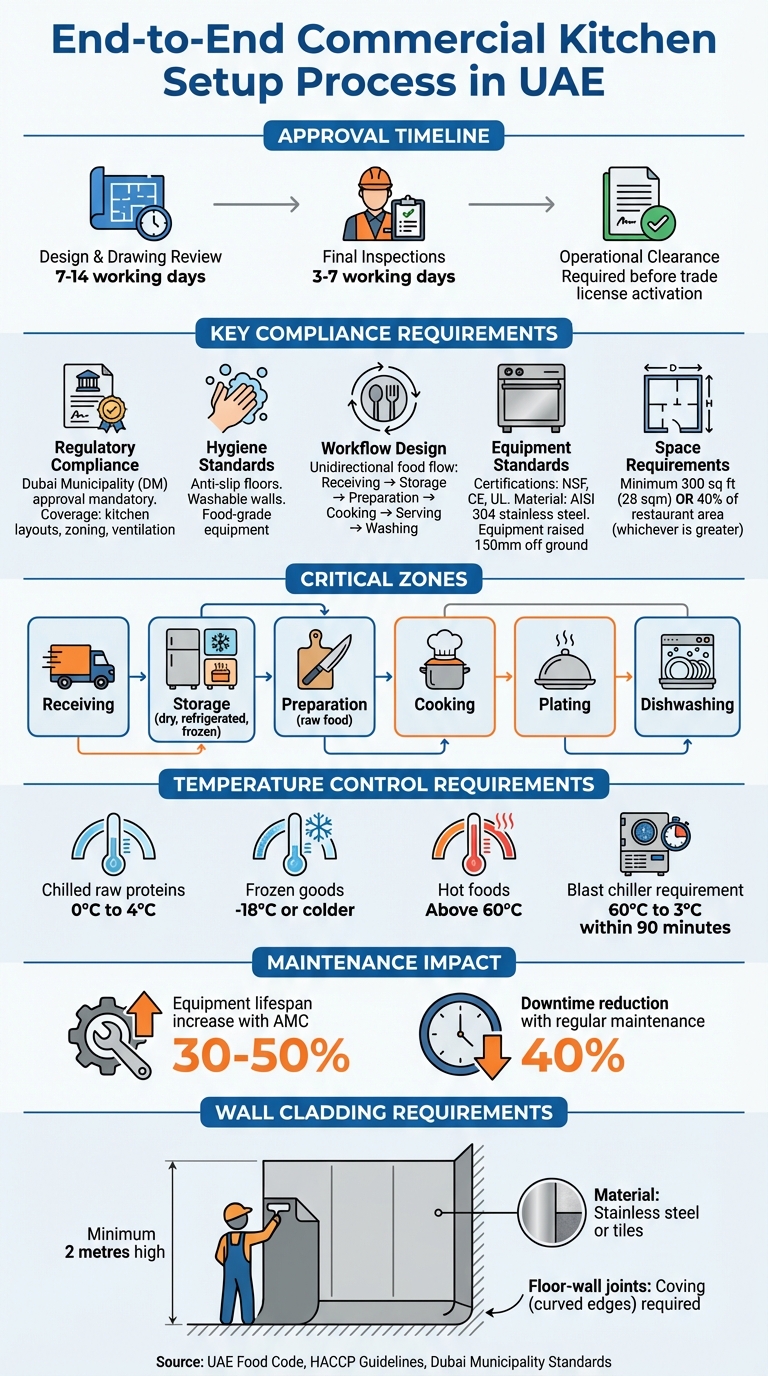
UAE Commercial Kitchen Setup: Complete Process Timeline and Requirements
UAE Commercial Kitchen Regulations Explained
If you’re planning to run a commercial kitchen in the UAE, getting Dubai Municipality (DM) approval is non-negotiable. Whether it’s a restaurant, cloud kitchen, catering service, or food factory, this approval ensures your operations meet strict public health standards.
The regulations are anchored in the UAE Food Code, HACCP principles, and international food safety guidelines. These rules cover everything from kitchen workflows to construction materials. A key aspect is maintaining a unidirectional food flow: food must move in one direction - Receiving, Storage, Preparation, Cooking, Serving, and Washing - with no overlap between raw and cooked areas. This design minimises contamination risks and is a cornerstone of any approved kitchen layout.
Starting construction without layout approval is risky and often results in rejection. The approval process typically takes 7–14 working days for design and drawing reviews, followed by another 3–7 working days for final inspections and operational clearance. Even minor deviations from approved plans, like shifting equipment placement, can lead to inspection failures and costly redesigns.
HACCP and Food Safety Requirements
HACCP protocols are a critical part of DM’s food safety framework, influencing everything from infrastructure to operational practices. For example, your kitchen must include dedicated hand wash stations with non-manual taps, soap, and sanitiser in preparation areas. Inspectors will check these during their visits.
The physical design of your kitchen must also prioritise hygiene. Floors need to be anti-slip, walls should have smooth, washable finishes, and ceilings must be light-coloured with no exposed wiring to simplify cleaning and reduce contamination risks. All equipment should be food-grade, with smooth surfaces and adequate space for cleaning.
Zoning is another major requirement. Kitchens must have clearly defined areas for raw food prep, cooked food handling, washing, and storage. For cloud kitchens handling high production volumes, it’s essential to have separate storage zones for each brand to maintain proper organisation and food safety.
These measures are part of a broader framework that integrates DM and Civil Defence standards, ensuring both food and operational safety.
Dubai Municipality and Civil Defence Requirements
In addition to food safety, your kitchen must comply with environmental and fire safety standards set by DM and Civil Defence. Grease traps are mandatory for drainage systems and must be installed with the proper slope to avoid backflow and allow for easy cleaning. This not only protects the sewage system but also reduces fire risks.
Ventilation systems are another critical focus during inspections. Your setup must include adequate hood coverage, effective grease filters, and external exhaust ducting. Detailed Mechanical, Electrical, and Plumbing (MEP) drawings showing exhaust, ventilation, and grease trap layouts are required for approval. Poor ventilation can lead to failed inspections, uncomfortable work environments, and increased fire hazards.
Operational clearance from DM is directly tied to activating your trade license. Without it, you can’t legally operate your kitchen. To avoid delays, submit your kitchen layouts and MEP drawings for approval before purchasing equipment or starting construction. Working with designers familiar with the UAE Food Code and HACCP can help streamline the process through DM or DET portals.
Meeting these regulations is a crucial step before you can move forward with installation, maintenance, and full-scale operations.
sbb-itb-19c3c9a
How to Design and Optimise Commercial Kitchen Layouts
A well-thought-out kitchen layout is essential for smooth operations, safety, and compliance with regulations. A unidirectional workflow - from receiving ingredients to serving dishes - not only boosts efficiency but also ensures food safety by minimising the risk of cross-contamination between raw and cooked foods.
To achieve this, it's crucial to follow specific structural standards. For example, all equipment must be raised at least 150 mm off the ground to allow for easy cleaning underneath. Floors should have a seamless finish, with polyurethane or epoxy coatings being ideal since they eliminate grout lines where bacteria can accumulate. In food handling areas, walls should be clad with stainless steel or tiles that extend at least 2 metres high, and the joints between the floor and walls should have coving (curved edges) instead of sharp 90-degree angles.
Given the space constraints often found in UAE properties, efficient use of available space is critical. Kitchens should measure at least 300 sq ft (28 sqm) or constitute 40% of the total restaurant area, whichever is greater. Adhering to these dimensions directly impacts workflow and overall efficiency.
Workflow Zones in Kitchen Design
Dividing the kitchen into specific zones is key to maintaining a smooth operation and aligning with HACCP (Hazard Analysis and Critical Control Points) standards. Typical zones include:
- Receiving: For accepting and inspecting deliveries.
- Storage: Separate areas for dry goods, refrigerated, and frozen items.
- Preparation: Dedicated spaces for handling raw ingredients.
- Cooking: The heart of the kitchen where all cooking equipment is placed.
- Plating: For assembling and finalising dishes.
- Dishwashing: For cleaning and sanitising utensils and equipment.
Each zone must be clearly separated to prevent cross-contamination. For instance, raw meat should only be handled in designated areas, away from where cooked food is plated.
Maximising Space in UAE Commercial Kitchens
For kitchens with limited space, meeting the minimum size requirements is essential. Clear workflow paths can be maintained by using elevated equipment, seamless flooring, and proper wall cladding. These measures not only maximise efficiency but also ensure compliance with safety and hygiene standards.
Selecting Equipment for UAE Commercial Kitchens
After designing an efficient kitchen layout and ensuring compliance with UAE regulations, the next step is choosing the right equipment. This decision isn't just about cost - it’s about meeting regulatory standards and ensuring smooth operations. A good starting point is selecting materials that can withstand the UAE's humid conditions while adhering to food safety protocols. For instance, AISI 304 food-grade stainless steel is the standard for cooking and dishwashing equipment, offering durability and alignment with HACCP requirements.
All equipment must have certifications like NSF, CE, or UL, which are recognised by UAE authorities. Refrigeration units, in particular, should feature digital thermostats with external displays to simplify compliance monitoring. Since inconsistent temperature control is a common issue flagged during inspections by Dubai Municipality or ADAFSA, this feature is essential.
When sourcing equipment, consider consolidating suppliers. Working with a single provider for design, supply, and installation can minimise compatibility issues and streamline warranty management. Space efficiency is also crucial - invest in multi-functional appliances like combi ovens or tilting braising pans to make the most of limited kitchen space.
Core Cooking and Refrigeration Equipment
A well-equipped kitchen requires a variety of cooking and refrigeration appliances. For cooking, this typically includes high-intensity burners, combi ovens for versatile preparation, fryers, grills, steamers, and other specialised items as needed. Look for equipment with precision controls and AISI 304 stainless steel finishes to ensure both performance and durability.
Refrigeration needs are just as critical. Invest in chillers, freezers, blast chillers, refrigerated worktables, and ice machines. These should come with advanced insulation and digital temperature controls to maintain the cold chain integrity required by UAE health authorities.
To meet hygiene standards, equipment surfaces should be smooth, with rounded or "coved" corners to prevent bacteria buildup. Avoid sharp edges or exposed bolts. Similarly, prep tables and sinks should be free of crevices, aligning with HACCP principles that inspectors actively look for. Keep an inventory of essential spare parts like heating elements, thermostats, and sensors to reduce downtime and extend the life of your equipment. Reliable after-sales support, including technical consultations and commissioning services, is key to keeping operations running smoothly.
Ventilation Systems and Grease Management
Proper ventilation is vital for safety and compliance in commercial kitchens. Exhaust systems must handle the heat load of your cooking equipment and meet UAE Civil Defence regulations. These systems should integrate with fire suppression setups, such as Ansul-type installations, and use heat-resistant materials that comply with local fire safety codes.
Grease management is another critical aspect. Install approved grease traps and high-efficiency filters to prevent fat buildup, which can lead to fire hazards and hygiene issues. Large appliances like combi ovens or kettles should have indirect drainage connections to avoid sewage backflow, a key inspection point for UAE health authorities. Maintaining a logbook for grease trap cleaning and equipment calibration is a practical way to demonstrate compliance during inspections.
Silverline Kitchens: Complete Services for UAE Businesses
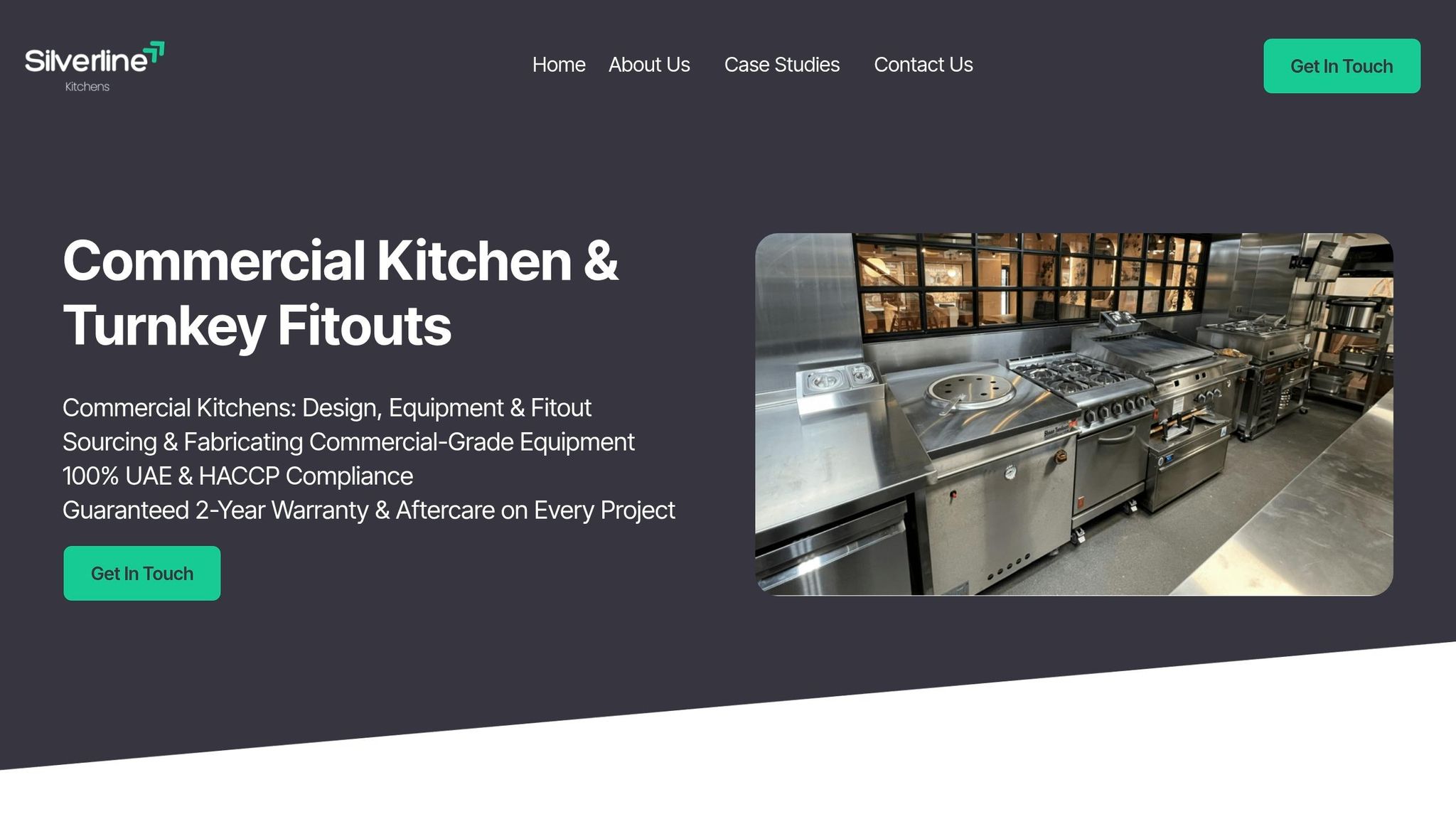
Silverline Kitchens handles every aspect of kitchen projects across the UAE - from initial consultation and design to sourcing equipment, custom fabrication, installation, and final handover. With 30 years of expertise brought from the UK to the UAE, the company ensures full compliance with the UAE Food Code, Dubai Municipality, and Civil Defence regulations. This all-inclusive service approach allows businesses to focus on their core operations without juggling multiple contractors. Each phase, from planning to completion, is seamlessly aligned with your operational needs.
Every project includes a 2-year warranty and aftercare, offering peace of mind to clients such as restaurants, cafés, bakeries, catering facilities, hotels, cloud kitchens, and even large villa kitchens with commercial-grade setups. Silverline Kitchens' impressive portfolio features notable names like Tesco, Choithrams, and Filli Cafe, showcasing their ability to manage projects of various sizes and complexities.
Custom Kitchen Design and Installation Services
The design process begins with a clear understanding of your specific requirements, including menu needs, workflow patterns, and space limitations. Layouts are customised to enhance staff efficiency and productivity while strictly following HACCP guidelines for hygiene and food safety. This phase also involves detailed planning for key infrastructure components like grease traps, drainage systems, and floor finishes, helping to avoid expensive changes during inspections.
Local regulations are prioritised when designing extraction systems, fire suppression setups, and mechanical ventilation. Equipment is carefully sourced with the required certifications, and custom fabrication ensures a perfect fit for your space. The installation team manages the entire setup process, including testing and calibration, so the kitchen is fully operational and inspection-ready upon handover. A well-thought-out design and installation not only meet immediate needs but also ensure long-term reliability through Silverline Kitchens' aftercare services.
Maintenance, Support, and Kitchen Renovations
After installation, ongoing performance is maintained with dedicated maintenance and renovation services. A skilled support team handles technical consultations, equipment troubleshooting, and component replacements to minimise downtime and keep operations running smoothly.
For kitchens in need of updates, Silverline Kitchens provides renovation services that include replacing equipment, improving workflows, and ensuring compliance with current UAE standards. Whether dealing with outdated equipment, inefficient layouts, or regulatory shortfalls, these renovations can modernise your kitchen into a safer, more efficient space that supports productivity and meets all safety requirements.
Installation, Testing, and Maintenance Procedures
Getting the installation, testing, and maintenance right is crucial for ensuring a UAE commercial kitchen meets compliance standards. Without these steps, even the best-designed kitchen can run into inspection issues, expensive breakdowns, or food safety risks. Every phase must align with Dubai Municipality and Civil Defence regulations for smooth, reliable operation from the start.
Planning and Assembly Steps
Detailed planning is key to ensuring everything fits perfectly and meets regulations. This includes verifying floor drainage slopes, checking electrical and gas connections, and mapping out equipment placement to maintain safe workflow zones and proper fire safety clearances. Professional assembly teams handle the heavy lifting, positioning items like ovens, ranges, and walk-in coolers while ensuring adequate ventilation and spacing. If assembly is rushed or incorrect, issues like misaligned grease traps, poor ventilation, or unstable setups can arise, leading to failed Civil Defence inspections. Proper assembly lays the foundation for accurate equipment calibration.
Equipment Calibration and Testing
Once assembly is complete, all temperature-sensitive equipment must be calibrated to meet UAE standards. For instance, chilled raw proteins should be stored between 0°C and 4°C, frozen goods at -18°C or colder, and hot foods above 60°C. Blast chillers, on the other hand, need to cool food from 60°C to 3°C within 90 minutes. Use calibrated thermometers to test reach-in refrigerators, freezers, and heated cabinets to ensure they maintain these essential temperature ranges. These tests not only confirm operational efficiency but also ensure compliance with Dubai Municipality and Civil Defence requirements.
Regular Maintenance and Repair Services
Routine maintenance is vital to keeping a kitchen running smoothly and extending the life of its equipment. Monthly tasks should include cleaning filters and grease traps, while quarterly checks should focus on calibrating thermometers and refrigeration units. Certified technicians should conduct annual inspections to assess the entire system. Key maintenance activities include cleaning exhaust ducts to reduce fire risks, lubricating equipment wheels, testing fire alarms, and inspecting stainless steel surfaces for signs of corrosion. An Annual Maintenance Contract (AMC) can boost equipment lifespan by 30–50% and cut downtime by 40%. By sticking to a regular maintenance schedule and addressing repairs promptly, you can minimise disruptions, ensure safety, and keep your kitchen ready for inspections year-round.
Conclusion
Creating a successful commercial kitchen in the UAE requires careful planning, strict adherence to regulations, and thoughtful design. From the initial concept to installation, testing, and maintenance, meeting regulatory standards is non-negotiable. Addressing these requirements early helps businesses avoid unnecessary costs, failed inspections, or downtime - issues that can disrupt even the most promising foodservice ventures. These steps lay the groundwork for smooth operations throughout the kitchen’s lifespan.
A well-designed kitchen isn’t just functional - it impacts profitability. Thoughtful layouts with streamlined workflows, proper ventilation, and equipment tailored to your menu can improve service speed, reduce staff fatigue, and maintain consistent food quality. Features like modular systems, energy-efficient appliances, and smart monitoring tools make it easier to adjust or expand without significant renovations. This kind of planning not only boosts efficiency but also ensures quicker returns on investment while keeping long-term operational costs in check.
Maintaining your kitchen is just as critical as designing it. Routine servicing and timely repairs help extend the lifespan of equipment and keep the kitchen inspection-ready. A preventive maintenance plan can minimise unexpected breakdowns, especially during busy periods, ensuring smooth operations year-round.
The UAE’s foodservice industry is evolving with trends such as ghost kitchens, plant-based dining, and zero-waste initiatives. Kitchens designed with adaptability, sustainability, and staff wellbeing in mind are better suited to meet these shifting demands while maintaining high standards of operation. Whether you’re opening a new restaurant, upgrading an existing kitchen, or scaling up to multiple locations, a comprehensive focus on design, equipment, compliance, and maintenance will ensure your kitchen performs consistently and supports long-term growth. By adopting this approach, your kitchen will be ready to tackle today’s challenges and adapt to tomorrow’s opportunities.
FAQs
What documents do I need for Dubai Municipality approval?
To proceed, you’ll need to prepare detailed engineering drawings and HACCP plans. Additionally, it’s essential to obtain approvals for fire safety, hygiene, ventilation, and waste management from Dubai Municipality and any other relevant authorities. Make sure all your documents align with local regulatory standards to ensure full compliance.
How can I plan a compliant kitchen layout in a small space?
Designing a kitchen that meets compliance standards in a small space requires careful planning. Opt for layouts like galley kitchens or single-wall designs to make the most of the available area while maintaining functionality. Focus on creating a unidirectional workflow - from receiving ingredients to cleaning - to minimise the risk of cross-contamination.
To maximise storage and usability, consider vertical storage solutions and multi-functional equipment. Clearly define zones for preparation, cooking, and cleaning to keep the workspace organised and efficient.
Remember, adhering to UAE regulations is essential. Ensure your kitchen complies with fire safety, proper ventilation, and drainage requirements. For the best results, consult professionals who understand local standards to create a solution tailored to your needs.
What should an AMC include for my kitchen equipment?
An Annual Maintenance Contract (AMC) for kitchen equipment is essential to keep your appliances running smoothly, safely, and in line with UAE regulations. A good AMC typically includes regular inspections, preventive maintenance, and emergency repair services.
Key services covered often include:
- Inspecting for wear and tear: Identifying and addressing potential issues before they escalate.
- Cleaning filters: Ensuring proper airflow and efficiency.
- Calibrating temperature controls: Keeping your equipment functioning at the correct settings.
- Replacing faulty parts: Swapping out damaged components to avoid breakdowns.
Additionally, AMCs often offer staff training to ensure proper use of equipment and scheduled inspections to maintain compliance with local safety standards. These efforts help minimise downtime and extend the life of your kitchen appliances, making it a smart investment for any food service business.
