


Running a commercial kitchen in Dubai requires strict compliance with HACCP standards and the UAE Food Code. Without meeting these, you can't secure a Dubai Municipality licence, which is mandatory for operating food-related businesses like restaurants, cafeterias, and cloud kitchens.
Here’s a quick breakdown of what you need to know:
- HACCP Explained: A food safety system focusing on identifying and controlling hazards at critical points in food preparation.
- Dubai Municipality Requirements: Minimum space for kitchens (300 sq. ft.), unidirectional workflows, separate zones for raw and cooked food, and CE-certified equipment.
- Key Equipment: Stainless steel workstations (Grade 304/316), precise refrigeration units, colour-coded tools, and compliant ventilation systems.
- Approval Process: Includes design submissions, inspections, and adherence to Civil Defence and Fire Life Safety standards.
- Daily Compliance: Regular monitoring, updated HACCP documentation, and staff training are essential to maintain standards.
Silverline Kitchens offers tailored design, installation, and project management solutions to ensure your kitchen meets all HACCP and Dubai Municipality requirements from day one. Their services include layout planning, equipment sourcing, and certification support, starting at AED 5,000 + VAT.
Failure to comply can lead to fines, delays, or even business closure. Prioritising HACCP compliance ensures smooth operations, customer safety, and regulatory approval.
Designing HACCP-Compliant Commercial Kitchens

HACCP Kitchen Workflow: 6-Step Process from Receiving to Washing
Creating a well-designed commercial kitchen is essential for meeting HACCP standards and ensuring efficient operations in Dubai. A properly planned layout not only supports compliance but also helps secure Dubai Municipality approvals. In fact, poor kitchen design and workflow are among the top reasons applications get rejected. Since drawing approvals typically take 7–14 working days, careful planning can save you from unnecessary delays. Below, we’ll explore the zoning and workflow strategies that are key to compliance.
Space and Zoning Requirements
To meet HACCP standards, your kitchen must have clearly defined zones for different stages of food handling. The required workflow is: Receiving → Storage → Preparation → Cooking → Serving → Washing. This means raw meat and poultry preparation zones must be physically separated from areas handling ready-to-eat foods.
Storage areas should also be distinct, with separate spaces for dry goods, chilled items, and frozen products. Additionally, the receiving area must be isolated from the dispatch zone to avoid cross-contamination. For the washing station, proper drainage and grease traps are essential to prevent backflow, which poses a significant hygiene risk.
Workflow Optimization
Optimising your kitchen’s workflow goes beyond zoning - it’s about ensuring every step of the process aligns with Dubai Municipality regulations. From the start, design your kitchen to meet these guidelines rather than trying to adapt an existing space later. Equipment placement must strictly follow approved drawings, as any deviations during installation can lead to inspection failures and disrupt both compliance and food safety.
Key considerations include placing equipment to allow easy access for cleaning and maintenance, which helps reduce debris and bacterial growth. Non-manual hand wash stations should be installed in preparation areas, and all wall finishes must be smooth and washable. Anti-slip flooring is another requirement to uphold hygiene standards throughout the kitchen.
Once construction is complete, the final site inspection and operational clearance typically take 3–7 working days, as long as everything matches the approved design.
sbb-itb-19c3c9a
Required Equipment for HACCP Compliance
Once your kitchen layout aligns with HACCP standards, the next step is to select equipment that supports both safety and efficiency. In the UAE, this means ensuring your equipment complies with the UAE Food Code, endures Dubai's climate, and maintains the highest hygiene standards.
Key Equipment Specifications
Stainless steel workstations are a cornerstone of HACCP-compliant kitchens. Opt for Grade 304 or 316 stainless steel to ensure surfaces are non-porous, easy to clean, and resistant to corrosion. For durability, heavy-duty work tables should have a thickness of 1.2mm, as thinner options (below 0.9mm) are more susceptible to damage and may not withstand the rigours of a busy kitchen.
Refrigeration units with precise temperature controls are critical for keeping food storage conditions safe and preventing bacterial growth, as required by HACCP and the Dubai Municipality Food Code. Additionally, ventilation systems should feature stainless steel ducts, high-efficiency filters, and integrated grease traps to ensure proper air circulation and hygiene. These systems must also meet Civil Defence and Fire Life Safety (FLS) standards to pass inspections.
Large kitchens, especially those in restaurants and hotels, must install fire suppression systems, particularly if fryers and grills are in use. Furthermore, ensure that all ovens, fryers, and mixers comply with ESMA (Emirates Authority for Standardisation & Metrology) standards for heat resistance and safety.
To prevent cross-contamination, use colour-coded tools: red for raw meat, blue for seafood, and green for vegetables.
Stainless Steel Grades: 304 vs 316
The choice between Grade 304 and Grade 316 stainless steel depends on your kitchen's environment and exposure to harsh conditions. Grade 304 is widely used in commercial kitchens due to its excellent corrosion resistance and cost-effectiveness. It is ideal for general work tables, cabinets, sinks, and shelving.
Grade 316, on the other hand, contains molybdenum, which enhances its resistance to chlorides and salt air. This makes it a better option for kitchens near coastal areas or those exposed to harsh cleaning chemicals. While more expensive, Grade 316 is recommended for wet zones, dishwashing areas, and equipment used with brine or acidic foods.
"In a busy kitchen, materials matter. Stainless steel wins because it is hygienic, tough, and easy to clean... For restaurants in the UAE and GCC, it handles heat, humidity, and heavy use." - ALPHA UAE
For the best results, use Grade 316 in areas with high chemical exposure or coastal proximity, and Grade 304 for general kitchen applications. Both grades are non-porous and easy to sanitise, but matching the right grade to the right zone ensures long-term durability, compliance with Dubai Municipality standards, and smoother daily operations.
Silverline Kitchens: Your Partner for HACCP Compliance
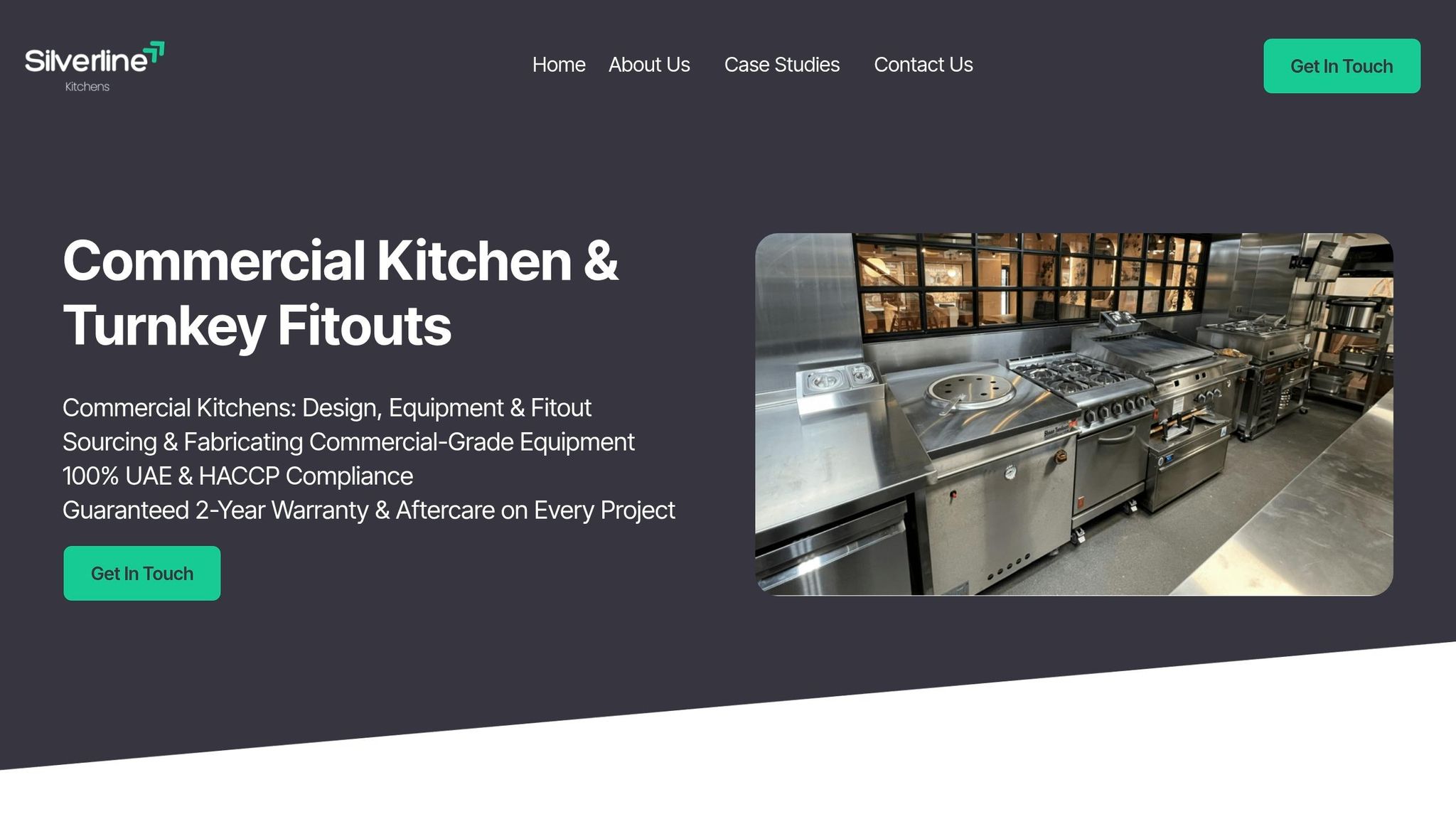
Creating a HACCP-compliant kitchen in Dubai isn’t just about buying the right equipment. It requires a deep understanding of the UAE Food Code, Dubai Municipality standards, and Civil Defence regulations. From the initial design to the final handover, Silverline Kitchens offers expertise honed over 30 years, bringing UK design standards to the UAE market. Their approach ensures full alignment with local regulations, covering both design and operational requirements.
Custom Kitchen Design and Installation
Every project at Silverline Kitchens starts with a detailed consultation. They assess your menu, workflow, and space limitations to craft layouts that follow HACCP principles. This means keeping raw materials, preparation areas, cooking zones, and dishwashing stations clearly separated to minimise cross-contamination risks. Additionally, they source and customise equipment suited for various kitchen types, whether it’s a cloud kitchen, bakery, or a large catering operation.
"Every kitchen we deliver is built to meet UAE Food Code and Dubai Municipality standards, ensuring smooth inspections and approvals." – Silverline Kitchens
Their service doesn’t end with installation. All projects come with a 2-year warranty covering maintenance, servicing, and repairs, ensuring your kitchen remains compliant and fully functional. Their impressive client list includes Tesco, HMP Prisons, Choithrams, and Filli Cafe.
Once the layout and equipment are in place, the focus shifts to essential systems like drainage and ventilation.
Grease Trap and Ventilation Planning
Proper drainage and ventilation are essential for passing Dubai Municipality inspections. Silverline Kitchens ensures these systems are planned meticulously, factoring in drainage slopes, grease trap placements, and floor finishes to meet local plumbing and sanitation standards. They also handle extraction systems, fire suppression units, and mechanical ventilation, all designed to comply with Fire Life Safety and Civil Defence regulations.
End-to-End Project Management
Silverline Kitchens doesn’t just design and equip your kitchen - they manage the entire project. From securing documentation and certifications to obtaining Dubai Municipality and Civil Defence approvals, they handle every step to simplify the process.
As a trusted partner for major UAE developers, Silverline Kitchens supports projects for restaurants, cafés, hotels, and large-scale food production facilities. Whether you’re starting from scratch or upgrading an existing kitchen, their team ensures workflows are efficient, safety is prioritised, and all regulatory requirements are met.
Maintaining HACCP Compliance: Daily Operations
Setting up an HACCP-compliant kitchen is just the beginning. Sustaining that compliance requires consistent daily routines, accurate documentation, and vigilant monitoring. Dubai Municipality audits focus heavily on proof that safety measures are actively followed during operations - not just outlined in manuals. This means your team needs to stick to these practices every single shift.
Documentation and Certification
Your HACCP plan must be tailored to your kitchen's specific processes and equipment. Avoid using generic templates that don’t reflect your actual operations. Daily updates to your CCP logs are crucial to show that temperature and time limits are consistently met. For example, if a refrigerator’s temperature exceeds its limit, record both the deviation and the corrective action taken.
Staff training records should also be current, as HACCP certifications in Dubai are valid for just one year. These certifications - Levels 1, 2, or 3 - require annual renewal or surveillance audits. Additionally, keep internal audit reports handy to demonstrate your proactive approach to food safety. Whenever you add a new menu item, ingredient, or piece of equipment, update your HACCP plan immediately to reflect these changes.
Once your documentation is in order, the next step is to focus on maintenance and monitoring.
Maintenance and Monitoring
Proper monitoring ensures your HACCP compliance remains intact over time. Start with daily temperature checks for food storage, cooking, and distribution to ensure critical limits are met. Pay close attention to how long food stays in the "danger zone" during preparation and cooling. Hygiene checks should verify that staff maintain personal cleanliness and follow cleaning protocols effectively.
Training your team is key - not just on how to monitor CCPs, but why they’re critical. This understanding ensures staff stay consistent, even during busy or stressful periods.
Regular internal reviews are essential to identify and fix any gaps in documentation or monitoring. Additionally, ensure that at least one supervisor has completed Dubai Municipality-approved Person In Charge (PIC) training. This individual will oversee compliance during all operating hours, providing an extra layer of accountability.
Conclusion
In Dubai, HACCP compliance isn't optional - it's a legal requirement under the UAE Food Code and Dubai Municipality regulations. Non-compliance can lead to severe penalties or even business closure. Beyond avoiding fines, implementing HACCP shows a commitment to food safety, builds trust with your customers, and helps cut long-term costs related to waste and product recalls.
To stay compliant, every detail of your kitchen's design and operations must align with HACCP principles. This includes everything from optimising workflows to minimise cross-contamination to selecting stainless steel equipment that meets hygiene standards. A well-thought-out kitchen design, combined with consistent documentation and staff training, ensures your business is always ready for inspections.
Silverline Kitchens offers "Compliant From Day One" solutions, covering every step from design and MEP drawings to equipment installation and grease trap planning. With over 30 years of experience meeting European standards and a 100% UAE compliance guarantee, their services include a 2-year warranty and aftercare support. This end-to-end approach ensures your kitchen passes Dubai Municipality inspections right from the start.
Whether you're opening a new restaurant, upgrading your space, or expanding your catering business, following these HACCP principles eliminates unnecessary costs and delays. Professional design services start at AED 5,000 + VAT and include tailored 2D/3D layouts and MEP drawings for local approvals. Prioritising HACCP compliance today safeguards your business for tomorrow.
FAQs
What are the most common Dubai Municipality inspection failures for kitchens?
Kitchens inspected by Dubai Municipality often fail due to several common issues. These include insufficient space planning, which can lead to overcrowding and inefficiency, and poorly designed layouts that disrupt workflow and hygiene. Another frequent problem is non-compliance with ventilation, drainage, and fire safety standards, all of which are critical for maintaining a safe and functional environment. Additionally, inadequate HACCP (Hazard Analysis and Critical Control Points) implementation and the use of substandard equipment often contribute to inspection failures.
Proper planning and strict adherence to these requirements are key to passing inspections and upholding food safety standards.
How do I choose Grade 304 vs 316 stainless steel for my kitchen?
The decision between Grade 304 and Grade 316 stainless steel comes down to the specific conditions of your kitchen and what it demands.
Grade 304 is a solid choice for most indoor environments. It's durable, budget-friendly, and handles typical kitchen use well.
On the other hand, Grade 316 includes molybdenum, which boosts its resistance to moisture, saltwater, and harsh chemicals. This makes it the better option for kitchens in coastal areas or places with high humidity. If maintaining hygiene and preventing corrosion are top priorities, Grade 316 is the way to go.
What HACCP records must I keep daily to pass audits in Dubai?
To successfully pass audits in Dubai, it's crucial to keep daily records of several key areas:
- Temperature monitoring: Track temperatures at critical control points to ensure food safety.
- Cleaning schedules: Maintain detailed logs of cleaning routines to demonstrate sanitation practices.
- Staff hygiene practices: Document hygiene checks and measures for all staff members.
These records are essential for meeting HACCP standards and complying with UAE food safety regulations.
