


In the UAE, ventilation systems in commercial kitchens are not optional - they're a legal requirement. From securing trade licences to preventing fires, these systems are critical for safety, compliance, and efficient operations. Poor ventilation can lead to grease buildup, fires, and hefty fines of up to AED 30,000. Additionally, without proper airflow, extreme heat and humidity can harm staff productivity and comfort.
Here’s what you need to know:
- Fire Safety Standards: UAE regulations require fire-rated (120 minutes) stainless steel ducts, automatic fire suppression systems, and regular inspections.
- Compliance: Meeting Dubai Municipality and Civil Defence standards is mandatory for operating licences and insurance validity.
- Energy Efficiency: Modern systems, like Demand-Controlled Ventilation, reduce energy use by up to 97%.
- Maintenance: Regular cleaning and inspections are crucial to avoid fines, closures, and fire risks.
A well-maintained ventilation system ensures safety, comfort, and compliance, making it a smart investment for any commercial kitchen in the UAE.
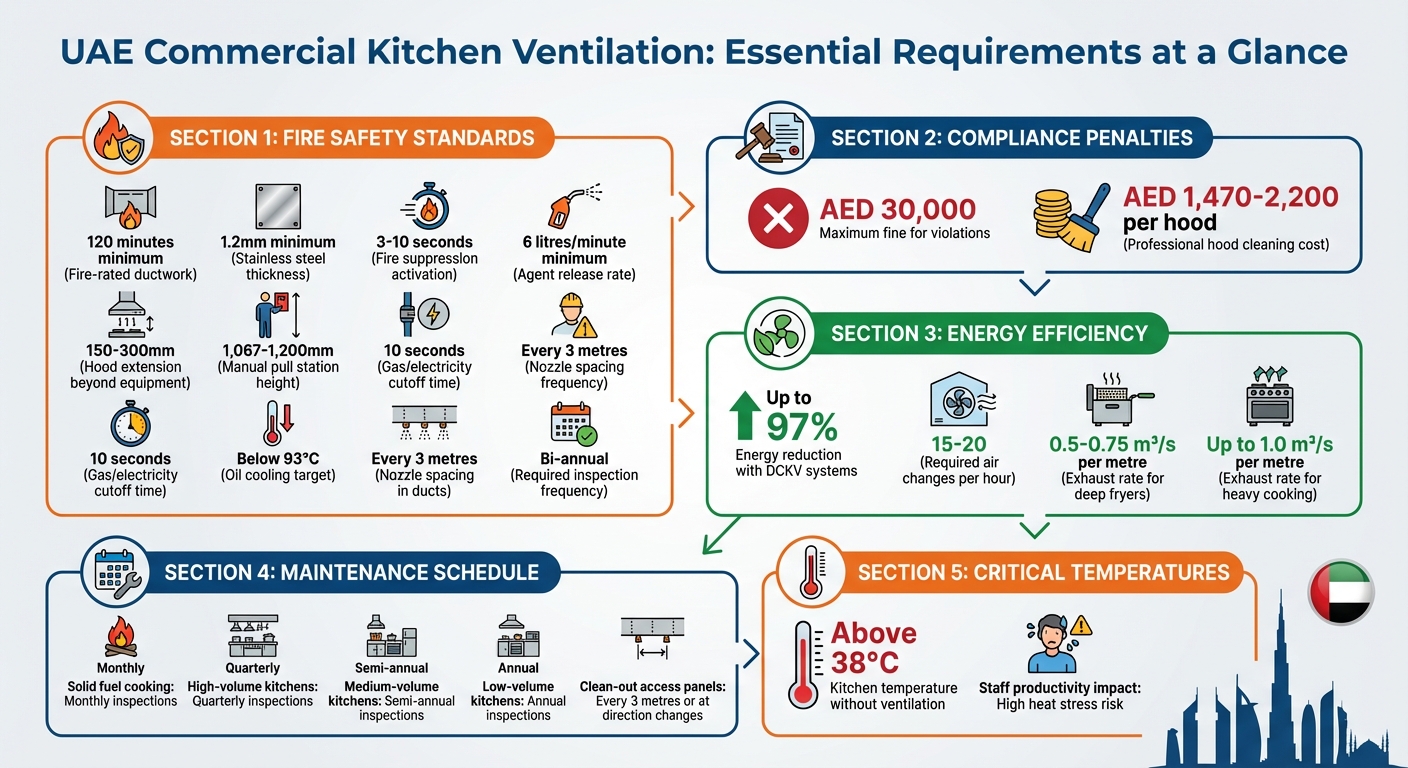
UAE Commercial Kitchen Ventilation: Key Requirements and Standards
Fire Safety in Commercial Kitchens
Fire safety in commercial kitchens heavily depends on well-designed ventilation systems that prevent fires from starting and spreading. In high-temperature environments where grease-filled vapours are common, a reliable ventilation system acts as the first barrier against potentially devastating fires.
UAE Civil Defence Standards for Kitchen Ventilation
The UAE Fire & Life Safety Code sets stringent rules for kitchen ventilation to ensure safety. For instance, exhaust ducts must be made from stainless steel with a minimum thickness of 1.2 millimetres and must be fire-rated for 120 minutes. This ensures the ducts can endure both internal and external fire conditions without failing or allowing flames to spread.
Fire suppression systems in these kitchens must be UL 300 or LPCB-certified, using wet chemical agents that trigger saponification. This process transforms cooking fats into a foam-like substance that doesn’t burn. These systems are required to activate within 3 to 10 seconds of detecting flames, releasing the agent at a rate of at least 6 litres per minute. Nozzles should be installed no higher than 0.9 metres above cooking surfaces, with additional nozzles placed every 3 metres along the duct length for thorough coverage.
The hood canopy must extend 150 to 300 millimetres beyond the edges of the cooking equipment to capture grease-laden vapours before they escape. Fire suppression manual pull stations should be installed at a height of 1,067 to 1,200 millimetres from the floor, ensuring easy access during emergencies.
Once a fire is detected, the system must automatically cut off gas and electricity to cooking equipment within 10 seconds, stopping the fuel supply while the suppression system activates. The wet chemical agent also cools cooking oil to below 93°C, reducing the chance of re-ignition.
Regular inspections are critical, with bi-annual checks required by a Dubai Civil Defence-approved contractor. Only ESMA-certified wet chemical agents are allowed to ensure compliance during Civil Defence inspections. Additionally, clean-out access panels must be installed in the ductwork at every change in direction or every 3 metres to allow for proper grease removal. As MMJSS highlights:
Without a suppression system, grease buildup and high heat make for a recipe of disaster.
These measures are not just about meeting regulations - they form the backbone of effective fire prevention in commercial kitchens.
How Proper Ventilation Reduces Fire Hazards
Adhering to these standards, proper ventilation significantly reduces fire risks by eliminating conditions that lead to ignition. Ventilation systems do more than just remove smoke - they actively extract grease-laden vapours, which are highly flammable. Without proper extraction, these vapours can settle on surfaces or inside ductwork, creating a dangerous fuel source. By capturing them right at the source, exhaust hoods prevent such buildups in high-temperature zones.
Maintaining good airflow is equally important for controlling the temperature in the cooking area. Inefficient ventilation can cause ambient temperatures to rise, potentially reaching the ignition point of grease or oils. To prevent this, exhaust rates for high-heat equipment like deep fryers should typically range between 0.5 and 0.75 cubic metres per second per metre of hood.
Fire-rated ductwork plays a crucial role in containing fires, ensuring that ducts don’t collapse or allow flames to spread through the ventilation system. For smoke extraction applications, these ducts must retain at least 75% of their original cross-sectional area during fire testing.
Modern ventilation systems often integrate fire suppression directly into the hood design, allowing wet chemical agents to reach the centre of the cooking surface effectively. Maintaining neutral or slightly negative pressure in the kitchen also prevents smoke and heat from escaping into dining areas, reducing the likelihood of building-wide alarms being triggered.
However, poor design choices can lead to serious risks. An undersized hood may allow grease to accumulate outside the suppression zone. Using non-compliant materials like aluminium or galvanised steel for ducting can result in collapse during a fire, allowing flames to spread. Misaligned nozzles may fail to deliver suppression agents effectively to hot oil, increasing the risk of re-ignition. A lack of integration in the system can also mean gas and electricity continue to fuel the fire despite suppression efforts. As Resco aptly puts it:
The cost of prevention is always less than the cost of recovery.
sbb-itb-19c3c9a
Meeting UAE Regulatory Standards
Commercial kitchens in the UAE must adhere to strict hygiene, air quality, and safety standards to obtain and maintain their business licences.
Dubai Municipality and HACCP Requirements
Dubai Municipality enforces rigorous ventilation standards to align with food safety protocols. Proper ventilation plays a key role in achieving HACCP certification, as it prevents grease and heat build-up, which can lead to bacterial growth and food safety breaches. Insufficient extraction systems risk contamination and HACCP violations.
To comply, businesses must submit detailed documentation to Dubai Municipality and Civil Defence, including approved HVAC and fire suppression drawings, product certifications (UL, CE, LPCB), airflow calculations, and Arabic-translated documents. This paperwork must prove the system maintains a balance between exhaust and replacement air (make-up air) to prevent pressure imbalances. Such imbalances can cause backdrafts or allow cooking odours to spread into dining spaces. Annual inspections ensure this balance is maintained.
Dubai Municipality also requires regular maintenance checks. Detection systems and manual controls must undergo monthly visual inspections, certified technicians must conduct quarterly operational tests, and full system certification is required annually. Missing these deadlines can lead to immediate closures and fines.
Although the DW172 standard originates in the UK, it is widely accepted in the UAE due to its alignment with UAE Fire Code requirements. Following this standard can expedite Civil Defence approvals.
Beyond meeting regulatory expectations, ventilation systems must also account for the UAE's challenging environmental factors.
Designing Ventilation for UAE Environmental Conditions
Ventilation systems in the UAE must address not only compliance but also the region's extreme climate. With temperatures soaring and humidity levels high, standard designs often fall short. Systems must incorporate pre-cooled replacement air to maintain a comfortable indoor environment and protect staff from the harsh conditions outside. Without pre-cooled air, incoming replacement air could undermine cooling systems.
Insulated or double-wall ducts are a necessity to prevent condensation caused by the temperature difference between hot kitchen air and cooler external surfaces. Condensation can lead to water damage, corrosion, and mould, which compromise both system performance and hygiene.
In tightly sealed UAE buildings, achieving proper airflow balance is critical. Kitchen zones should maintain neutral to slightly negative pressure to stop cooking odours from spreading into dining areas while ensuring adequate fresh air circulation. This is particularly important in modern buildings designed for energy efficiency.
Kitchens with heavy cooking loads, such as those using tandoors, grills, or solid fuels, require specialised systems. Water mist systems, UV-C filters, and higher exhaust rates - up to 1.0 cubic metre per second per metre of hood - are necessary for these setups, compared to 0.5–0.75 cubic metre per second for deep fat fryers.
Key Components of Commercial Kitchen Ventilation Systems
A proper ventilation system in the UAE depends on several interconnected components to handle heat, smoke, and grease while adhering to strict fire safety regulations.
Stainless Steel Exhaust Hoods and Ducting
For hood canopies and ductwork, 304-grade stainless steel is the go-to material. It's non-combustible, resistant to grease and moisture, and compliant with Dubai Municipality cleaning requirements. Type I hoods are designed to manage grease, smoke, and heat from fryers and grills, while Type II hoods handle steam and vapour from dishwashers and steamers. To ensure effective capture, the hood should extend 150mm to 300mm beyond the edge of the cooking surface.
Ductwork must meet a 120-minute fire rating as per the UAE Fire & Life Safety Code. Additionally, clean-out access panels should be installed every 3 metres or at each directional change. Insulated or double-wall ducts are recommended to maintain performance, especially in the UAE's humid climate. Effective grease management and air balancing further enhance safety and efficiency in commercial kitchens.
Grease Traps and Air Balancing
Baffle filters play a critical role by capturing grease particles before they reach the ductwork, reducing the risk of fire. In high-grease environments, UV-C filtration systems can neutralise grease vapours, cutting down on cleaning frequency. Approved grease troughs and drip pans are also essential.
Proper air balancing is achieved by matching the exhaust flow with pre-cooled make-up air units. This creates neutral or slightly negative pressure in the kitchen, keeping cooking odours contained and preventing dangerous backdrafts. Pre-cooled make-up air units not only maintain pressure balance but also improve staff comfort in the hot UAE climate. Beyond grease control, integrating the ventilation system with HVAC ensures a seamless kitchen environment.
Integration with HVAC Systems
To maintain consistent air quality and meet regulatory requirements, ventilation systems must integrate with the building's HVAC setup. Supply air diffusers should be strategically placed to complement the hood's capture area and avoid cross-drafts. Depending on the intensity of the kitchen equipment, commercial kitchens typically require 15 to 20 air changes per hour.
Demand-Controlled Kitchen Ventilation systems use sensors to adjust fan speeds, offering energy savings of up to 97%. For fire safety, the ventilation system must connect to the building's fire alarm. This ensures automatic shut-offs for gas and electrical cooking equipment if a fire is detected. All integration points should be thoroughly detailed in engineering drawings to secure Civil Defence approval.
Energy Efficiency and Air Quality Benefits
Modern ventilation systems are transforming energy consumption and indoor air quality, especially in regions like the UAE, where air conditioning dominates operational costs. By integrating smart ventilation technologies, businesses can achieve measurable energy savings while adhering to local regulations. These advancements not only enhance operational efficiency but also ensure compliance with fire safety and regulatory standards.
Demand-Controlled Ventilation Systems
Demand-Controlled Kitchen Ventilation (DCKV) systems are game-changers for energy management in commercial kitchens. Using temperature and optical sensors, these systems monitor heat and smoke levels in real time. Instead of running exhaust fans at full speed all day, they adjust fan speeds based on actual cooking activity. For example, during idle times, airflow is reduced, significantly lowering the cooling demand.
The energy savings are impressive. Systems like Intelli-Hood® can achieve up to 97% energy reduction. This is primarily due to the decreased volume of air needing to be exhausted, which directly reduces the load on HVAC systems. Advanced designs even segment hoods based on cooking methods - like frying versus steaming - allowing for precise airflow control in different zones. Many DCKV systems also integrate with Building Management Systems (BMS), enabling centralised monitoring and optimised energy usage across the facility. Additionally, these systems contribute to green building certifications, such as LEED and the UAE's Estidama Pearl Rating System. Heat recovery systems further amplify these energy savings by reusing wasted heat.
Heat Recovery Systems
While DCKV systems limit the amount of air requiring treatment, heat recovery systems ensure efficient air replacement. These systems balance exhaust flow with pre-cooled make-up air units, maintaining a neutral or slightly negative pressure in the kitchen. This setup is critical for preventing odours from spreading into dining areas and avoiding excessive strain on the primary air conditioning system.
In the hot and humid conditions of the MENA region, introducing pre-cooled air through back-of-hood plenums ensures kitchen staff remain comfortable without overburdening the AC system. To maintain optimal performance, regular Test, Adjust, and Balance (TAB) services are essential. These adjustments keep HVAC and ventilation systems working in harmony, reducing energy waste while maintaining high indoor air quality.
Improving Indoor Air Quality
Beyond energy savings, modern ventilation systems significantly improve workplace conditions. Poor ventilation in UAE kitchens can push temperatures above 38°C, leading to heat stress, reduced productivity, and high staff turnover. These conditions not only affect staff well-being but also increase fire risks when grease extraction is inadequate. UV-C filters play a vital role here by neutralising grease vapours and odours - essential for commercial kitchens in densely populated areas. By preventing grease build-up and airborne contaminants, these filters create a healthier and safer environment for kitchen staff.
Proper air balancing is equally important. Without it, negative pressure can draw in unconditioned air from outside, making cooling inefficient and uncomfortable. All ventilation systems must comply with the UAE Fire & Life Safety Code, which requires fire-rated ductwork with at least 120 minutes of fire resistance and integration with Dubai Civil Defence-approved fire suppression systems.
Maintenance Strategies for Ventilation Systems
Keeping ventilation systems in top condition is crucial for safety, compliance, and efficiency. Without regular maintenance, grease buildup can pose a fire risk, missed inspections might lead to fines, and equipment malfunctions could result in expensive downtime. A well-planned maintenance routine ensures your system stays aligned with UAE regulations while operating smoothly.
Periodic Preventive Maintenance (PPM) Checklists
A well-rounded PPM checklist is essential for maintaining every part of your ventilation system. Start with daily cleaning of cooker surfaces and hood undersides using non-abrasive, food-safe cleaners, and deep-clean grease filters weekly to maintain proper airflow. For ductwork, grease gauges can help monitor buildup, and ducts should be cleaned thoroughly when grease or sludge becomes excessive.
Inspection frequency should match the intensity of kitchen operations. Dubai Municipality Technical Guideline TG19 and NFPA 96 standards recommend:
- Monthly inspections for solid fuel cooking (like charcoal or wood).
- Quarterly inspections for high-volume kitchens, such as 24-hour operations or those using woks.
- Semi-annual inspections for medium-volume kitchens.
- Annual inspections for low-volume facilities.
Given the UAE's dusty environment, installing dust filters on ventilation systems and cleaning vents weekly can prevent sand and dust from overloading the equipment.
Proper record-keeping is equally important. Maintain detailed logs - whether digital or physical - of service dates and technician certifications to meet inspection requirements. Cleaning should always be handled by certified professionals, such as those accredited by IKECA or NFPA. For context, professional hood cleaning aligned with NFPA 96 standards typically costs between AED 1,470 and AED 2,200 per hood.
By sticking to a consistent PPM schedule, you can avoid unnecessary disruptions and keep your system running efficiently.
Avoiding Fines and Downtime with Regular Maintenance
Routine maintenance does more than just keep systems efficient - it shields businesses from steep fines and operational setbacks. Neglected ventilation systems are a major fire hazard. In Dubai, grease buildup in hoods is a leading cause of commercial kitchen fires, often resulting in extended closures and costly repairs due to grease accumulation in ducts.
"Even the best-designed, impeccably-constructed, expertly-installed kitchen exhaust systems can fall victim to fires without an ongoing inspection, cleaning and maintenance routine." – Clean Middle East
Regular inspections by Dubai Municipality and Civil Defence ensure compliance with safety standards. Failure to meet these standards can result in immediate shutdowns and hefty fines. Additionally, insurance claims for fire damage may be denied if maintenance records for ventilation and suppression systems are incomplete or non-existent. Beyond compliance, proper upkeep reduces kitchen heat, prevents smoke and odours from reaching dining areas, and may even improve staff retention by creating a more comfortable work environment.
To stay ahead, schedule monthly visual checks of detection systems and manual controls. Perform quarterly operational tests of suppression agents and nozzles, and arrange annual system testing and certification to renew your licence. Installing clean-out access panels at every 3-metre interval or at duct direction changes makes thorough cleaning easier. Finally, train staff to recognise early warning signs, such as strange noises or odours, so issues can be addressed promptly.
Silverline Kitchens: Your Partner for Compliant Ventilation Solutions

Creating and maintaining ventilation systems that meet UAE regulations is no small task - it requires a deep understanding of engineering principles and local compliance standards. Silverline Kitchens steps up to this challenge with tailored solutions that align with Dubai Municipality, Civil Defence, and HACCP requirements. Their expertise ensures your kitchen's ventilation system works smoothly while staying fully compliant.
Custom Design and Installation Services
Every commercial kitchen is different, with its own set of demands based on equipment, layout, and the intensity of daily operations. Silverline Kitchens offers end-to-end design and installation services that consider these unique needs while meeting the UAE Fire & Life Safety Code, NFPA 96, and DW172 standards. Whether your setup requires wall-mounted, island, under-cabinet, or downdraft hood configurations, they craft solutions designed to fit your kitchen perfectly.
The systems include high-efficiency filtration options like Baffle, UV-C, or Water Mist filters, ensuring hygiene standards are upheld. Automated safety features, such as gas and electrical shut-off mechanisms triggered by fire detection, provide an extra layer of security. To avoid delays, all necessary pre-approval documentation - HVAC drawings, airflow calculations, and more - is meticulously prepared in advance.
After-Sales Maintenance and Support
Staying compliant isn’t just about installation - it’s an ongoing process. Silverline Kitchens supports this with Periodic Preventive Maintenance (PPM) programmes that align with Dubai Municipality requirements. These include monthly visual inspections, quarterly fire suppression system tests, and annual certifications, which are essential for renewing trade licences.
Their professional cleaning services cover everything from disassembling and pressure-washing ductwork to cleaning exhaust fan blades. Certified technicians handle these tasks to ensure thorough results. In case of emergencies, such as fire suppression discharges or fan malfunctions, their 24/7 response team is ready to minimise downtime.
To keep your kitchen inspection-ready, detailed maintenance logs are maintained for every service. This not only helps with municipality inspections but also streamlines insurance claims. Staff training is also part of the package, covering daily cleaning routines, filter care, and emergency procedures. As RESCO wisely states:
The cost of prevention is always less than the cost of recovery.
Conclusion
A well-planned ventilation system forms the core of fire safety, compliance, and efficiency in UAE commercial kitchens. These systems play a crucial role in removing grease-laden vapours - key contributors to kitchen fires - while also ensuring a comfortable environment that helps retain staff. When paired with certified wet chemical suppression, they create a robust safety net, reducing the risk of severe losses.
Adhering to the UAE Fire & Life Safety Code, along with NFPA 96 and DW172 standards, isn't just advisable - it's a legal necessity. Falling short of these standards can result in hefty penalties.
But compliance isn't just about avoiding fines; it also enhances operational performance. For instance, Demand-Controlled Ventilation can slash fan energy consumption by up to 97%, while 120-minute fire-rated ductwork ensures system reliability during emergencies. Beyond installation, efficient ventilation systems tackle heat, smoke, and odours, contributing to food safety, employee comfort, and uninterrupted operations.
Silverline Kitchens takes a comprehensive approach to ventilation systems, offering services that span from initial CAD and BIM designs to certified maintenance programmes. Whether you're launching a new restaurant, upgrading your current kitchen, or aligning with updated standards, their expertise ensures your system is always prepared for inspections.
"Designing a safe, efficient, and code-compliant kitchen hood system is not just a regulatory requirement - it's a business-critical investment."
– Klima Global
FAQs
What are the UAE regulations for ventilation systems in commercial kitchens?
In the UAE, commercial kitchen ventilation systems must adhere to the UAE Fire and Life Safety Code of Practice, which prioritises safety, hygiene, and fire prevention. These systems play a crucial role in managing heat, smoke, and odours - an absolute necessity given the region's hot climate. Proper ventilation not only ensures a comfortable environment but also safeguards air quality for both employees and customers.
The Dubai Municipality also enforces strict guidelines, requiring ventilation systems to meet technical standards for indoor air quality and fire safety. This includes the use of advanced technologies to control heat and odours effectively, alongside compliance with international fire codes such as NFPA 96. Meeting these regulations is essential for obtaining permits and passing inspections, ensuring your kitchen runs both safely and legally.
How does Demand-Controlled Ventilation help save energy in a commercial kitchen?
Demand-Controlled Ventilation (DCV) improves energy use by automatically adjusting exhaust and air supply systems to match the intensity of cooking activities. This means the system runs only when required, cutting down on wasted energy.
By fine-tuning airflow, DCV systems reduce the load on HVAC systems, lower energy bills, and help maintain a comfortable workspace. This intelligent solution not only supports energy-saving goals but also meets UAE regulatory standards, ensuring compliance while boosting operational efficiency.
Why is it important to maintain commercial kitchen ventilation systems regularly?
Keeping your commercial kitchen's ventilation system in check isn’t just a routine task - it’s a safety necessity. Over time, grease and cooking residue can accumulate in ducts and exhaust systems. This build-up isn’t just messy; it’s a serious fire hazard. If left unchecked, it could lead to dangerous incidents that put your kitchen, staff, and customers at risk.
Beyond safety, regular maintenance helps you stay on the right side of UAE fire safety and ventilation regulations. Ignoring these standards can lead to hefty fines or penalties, which no business wants to deal with. Plus, a well-maintained system keeps the air clean, reduces unpleasant odours, and ensures your kitchen runs smoothly by minimising breakdowns or malfunctions.
By committing to routine inspections and cleaning, you’re not just ticking a box - you’re creating a safer, more efficient environment for everyone.
