


Your kitchen exhaust system is key to safety and efficiency. It removes grease, smoke, and odours, prevents fires, and ensures compliance with UAE regulations like Dubai Municipality TG19, HACCP standards, and Civil Defence requirements. Neglecting maintenance can lead to fire hazards, fines, business closures, and voided insurance.
Key Points:
- Cleaning Frequency:
- High-use kitchens: Every 1–4 weeks.
- Moderate-use kitchens: Every 3–6 months.
- Daily cleaning of hoods and weekly cleaning of filters is mandatory.
- Fire Risks: Over 50% of restaurant fires start in the kitchen due to grease buildup.
- Benefits of Maintenance: Improved airflow, lower energy costs, extended equipment life, and better hygiene.
- Professional Cleaning Costs in UAE: AED 800–5,000, depending on system size and condition.
- Documentation: Keep detailed records (photos, reports, and certificates) for inspections and insurance.
Signs You Need Cleaning:
- Lingering smoke.
- Grease drips or odours.
- Reduced suction or unusual fan noises.
For best results, combine daily staff cleaning with professional services to meet UAE safety standards and protect your business.
Kitchen Exhaust System Components
Understanding the parts of your kitchen exhaust system is essential for proper maintenance and for spotting potential issues early. Each component plays a specific role in removing grease, smoke, and heat from the kitchen, and knowing how they work can help you keep your system running smoothly.
Main System Parts
Exhaust hoods are positioned over cooking equipment to capture grease, odours, and smoke. These hoods act as the first line of defence, directing contaminated air into the rest of the system before it spreads through the kitchen.
Grease filters are your system's initial barrier, designed to trap grease-laden vapours before they reach the ductwork. Metal filters should be cleaned every 8–10 weeks, while carbon filters need replacing every 3–12 months. Given Dubai's hot climate and the frequent use of spices and oils, grease buildup tends to occur more quickly.
Ductwork is made up of horizontal and vertical passages that carry smoke and vapours out of the building. Often hidden above ceilings, these ducts are prone to grease accumulation. To ensure proper cleaning, the industry standard requires at least one access point every 12 feet along horizontal sections.
Exhaust fans create the suction needed to pull air through the filters and ducts, venting it outside. However, grease buildup on the fan blades can cause imbalances and strain the motor. Additionally, make-up air systems help replace the air being exhausted, improving airflow and maintaining kitchen efficiency.
Areas That Need Regular Attention
Certain parts of the system require more frequent care due to constant exposure to grease and heat. While every component is important, filters, ductwork, and fan blades demand extra attention to ensure safety and efficiency.
Filters are the most maintenance-intensive component. Cleaning them weekly helps prevent grease from entering the ductwork and reduces fire risks. It's worth noting that over half of restaurant fires start in the kitchen, often due to neglected exhaust system maintenance.
Ductwork carries the highest fire risk, as grease tends to solidify on exposed surfaces, especially in hidden sections. Signs like grease drips, burnt odours, or excessive kitchen heat indicate reduced ventilation efficiency. After cleaning, the "bare metal" standard requires that no residue or oily sludge remains on any part of the system.
Exhaust fan blades collect grease and dust, which can decrease airflow and cause unusual vibrations. Routine cleaning ensures proper suction and prevents motor damage. For commercial kitchens in Dubai, professional cleaning services typically start at AED 800 and can exceed AED 2,000, depending on the system's size and condition.
Setting Up a Maintenance Schedule
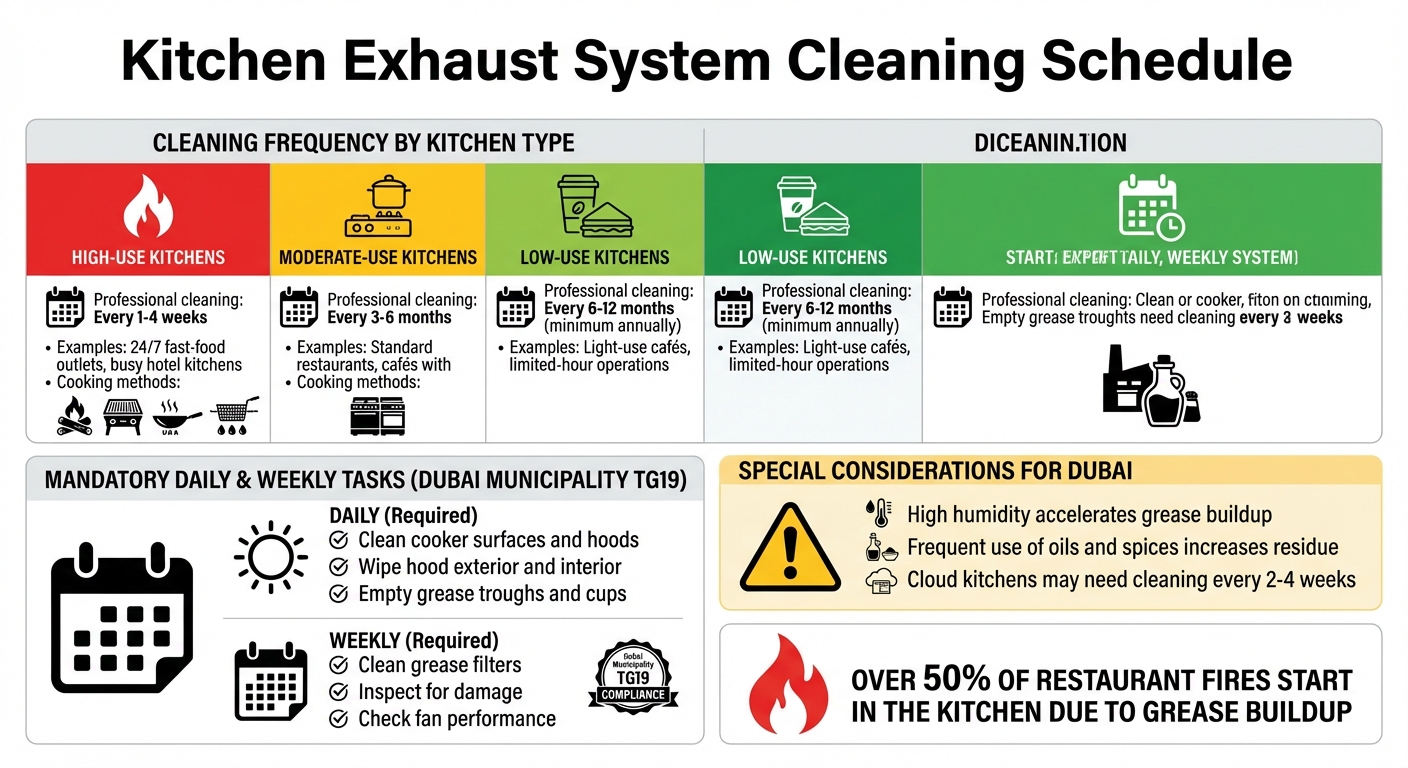
Kitchen Exhaust System Cleaning Schedule by Usage Type
Creating a maintenance schedule tailored to your kitchen's needs is crucial. The frequency and type of cleaning depend on several factors, and getting it right ensures you avoid both under-cleaning and wasting resources on unnecessary services.
What Affects Cleaning Frequency
The volume of cooking and operating hours play a significant role in determining how often maintenance is needed. For example, a 24/7 fast-food outlet or a busy hotel kitchen generates far more grease than a café operating for just six hours a day. High-use systems may need professional cleaning every one to four weeks, while kitchens with moderate activity can stretch this to every three to six months.
Cooking methods also have a big impact. Kitchens using solid fuels like wood or charcoal, charbroilers, or engaging heavily in wok cooking and deep frying will accumulate grease much faster. These setups typically require monthly professional cleaning.
Environmental factors in Dubai further accelerate grease buildup. The region’s high humidity, combined with the frequent use of oils and aromatic spices in local cuisine, creates sticky residues that accumulate quicker than in drier climates. Additionally, cloud kitchens with limited airflow and high cooking frequency may need cleaning every two to four weeks.
"In Dubai, where temperatures soar and kitchens work overtime... a dirty exhaust hood can quickly become a fire hazard, reduce air quality, and even violate municipal health codes." - Dubai Cleaning Guide
Planning Daily, Weekly, Monthly, and Annual Tasks
Dubai Municipality's Technical Guideline TG19 outlines minimum cleaning requirements: daily cleaning of cooker surfaces and hoods and weekly cleaning of filters. These are mandatory and will be checked during inspections.
For deep cleaning, the NFPA 96 standard provides four inspection frequencies: monthly, quarterly, semi-annually, and annually, depending on cooking volume. High-volume kitchens using solid fuels need monthly servicing, while moderate-use kitchens can follow a quarterly schedule. Low-use kitchens may extend to semi-annual or annual cleaning, though annual service is the minimum requirement for fire safety compliance.
Documentation is key. Keep detailed records of all inspections and professional cleanings, including reports, before-and-after photos, and service stickers on the hood. These documents are essential for Dubai Municipality Food Safety Department inspections and are often required to maintain insurance coverage.
When to Hire Professionals
While your kitchen staff can handle daily surface cleaning, professionals are necessary for reaching hidden components and achieving the "bare metal" standard required by NFPA 96. Areas like vertical ducts, fan housings, and confined spaces demand specialised training and equipment.
"According to the NFPA® 96 standard, kitchen exhaust systems must be cleaned by a properly trained, qualified and certified company or person(s)." - Clean Middle East
Call in professionals immediately if you notice smoke lingering after cooking, louder fan noises, grease drips, or persistent odours. These are signs of dangerous grease buildup that needs urgent attention.
Fire suppression systems also require separate inspections every six months by a licensed fire protection company, as these checks cannot be combined with regular exhaust cleaning.
When choosing a service provider, make sure they have certifications from the International Kitchen Exhaust Cleaning Association (IKECA) or the National Fire Protection Association (NFPA). Also, confirm they have experience with vertical ducts and confined spaces, as these areas pose the highest fire risks. Silverline Kitchens offers comprehensive maintenance support and can connect you with certified professionals who meet Dubai Municipality standards and provide proper compliance documentation.
Schedule professional cleaning during off-hours, ensuring the equipment has cooled and the kitchen is not in use. This approach minimises disruption and allows for thorough servicing.
Next, we’ll look at how your kitchen staff can manage daily and weekly tasks to complement this maintenance schedule.
Daily and Weekly Tasks for Kitchen Staff
Your kitchen team plays a vital role in ensuring the exhaust system stays safe and compliant. According to Dubai Municipality Technical Guideline TG19, daily cleaning of cooker surfaces and hoods isn’t just good practice - it’s a legal requirement. These efforts help prevent grease buildup, which can turn into a fire hazard, and ensure smooth operations between professional cleanings. Below, we’ll break down the daily and weekly tasks your staff should follow.
Daily Cleaning
Every day, staff should focus on removing grease before it hardens. Start by wiping the hood’s exterior and reachable interior surfaces using a microfibre cloth and a mild degreaser. Always ensure the power is switched off before cleaning.
Perform a quick visual check for grease drips, sticky spots, or any unusual signs like excessive heat or smoke, and report issues immediately. Additionally, empty grease troughs and removable grease cups daily to prevent overflows that could create safety hazards.
Weekly Checks
Weekly maintenance is equally important and includes filter cleaning, as required by Dubai Municipality TG19. Remove grease filters and soak them in hot water mixed with a heavy-duty degreaser for 30 minutes. Scrub them thoroughly, rinse, and ensure they’re completely dry before reinstalling to avoid electrical risks. If filters appear dark or sticky, it’s a sign they’re saturated and need immediate attention.
While the filters are out, inspect them for damage such as dents, tears, or bent frames, which could impact their effectiveness. Wipe down hood edges and areas prone to heavy grease buildup. Pay attention to unusual fan noises or reduced suction, and report any concerns to management. Finally, keep a detailed log of these weekly tasks to stay prepared for health inspections and maintain compliance records.
sbb-itb-19c3c9a
Deep Cleaning and Professional Servicing
Thorough professional cleaning is a must for maintaining safety and regulatory compliance in commercial kitchens. With neglected kitchen hoods accounting for 25% of commercial kitchen fires, professional servicing isn’t just a good idea - it’s a necessity. In Dubai, the cost of professional kitchen hood cleaning typically falls between AED 1,500 and AED 5,000, depending on the system's size and the extent of grease buildup. While routine cleaning tackles surface-level grime, deep cleaning delves into hidden areas, addressing potential hazards and ensuring compliance with safety standards. This comprehensive approach is vital for safe and efficient kitchen operations.
Professional Deep Cleaning
Professional cleaning teams follow a detailed process that goes far beyond what routine cleaning can achieve. The process starts with covering all equipment and food prep areas using heavy-duty plastic sheeting to protect them. Filters are then removed, and the hood is thoroughly degreased. Technicians access the internal ductwork, either through existing openings or by creating new access points, and manually scrape grease to meet the "bare metal" standard. For vertical ducts, power washing and spinner jets are often used to ensure thorough cleaning.
"NFPA® 96 demands that exhaust system components be cleaned to bare metal at frequent intervals prior to surface becoming heavily contaminated with grease or oily sludge." - Clean Middle East
The cleaning also includes addressing fan blades and vacuum motors to remove dust and hardened grease. This is done using caustic solutions or steam cleaning, ensuring compliance with NFPA® 96 guidelines. The entire process typically takes between 3 and 6 hours, and regular deep cleaning can even reduce utility bills by 10–15%.
Preparing Your Kitchen for Professional Service
Proper preparation ensures the cleaning process is efficient and minimally disruptive. Schedule the service during off-peak hours or overnight to avoid interrupting your operations. Before the cleaning crew arrives, clear the area around the hood by removing cooking equipment, utensils, and food. For safety, turn off and lock out power to the exhaust fan and lighting systems. Make sure all areas near the hood, ductwork shafts, and roof-mounted fans are accessible and free of obstructions. Technicians will set up containment zones to prevent grease and chemical runoff from spreading, and additional ventilation may be needed to handle fumes from powerful degreasers.
Checking Work After Cleaning
Once the cleaning is complete, it’s important to verify the results. Request documentation that includes before-and-after photos of the system's interior, particularly the vertical and horizontal duct sections. Since some duct areas are hard to access, these photos provide critical proof that the cleaning meets required standards.
"Upon completion of our service, you'll receive detailed reports and fire safety certificates, providing tangible evidence of your dedication to safety and compliance." - Freeline Specialist Hygiene
Ensure the contractor provides a fire safety certificate, which serves as evidence of compliance for both insurance and regulatory requirements. Inspect the hood for a polished finish and confirm that no chemical residue is left behind. Check that filters are reinstalled correctly and that the exhaust fan blades are clean. Most importantly, verify that the system has been cleaned to bare metal as required by NFPA 96 and Dubai Municipality Technical Guideline TG19. Finally, test the airflow to confirm that the system is functioning properly - this step ensures that your investment in professional cleaning has delivered the expected results.
UAE Compliance and Documentation
UAE Regulatory Requirements
Commercial kitchens in the UAE must adhere to the Dubai Municipality Technical Guideline TG19, which outlines health and safety standards for kitchens and food preparation areas. To ensure compliance, Dubai Municipality inspectors conduct regular inspections. Additionally, kitchens with three or more burners are required by the UAE Fire Code to install a Kitchen Hood Fire Suppression System. These systems must be pre-engineered and approved by UAE Civil Defence standards.
The UAE also enforces NFPA 96 standards, which govern duct cleaning and system maintenance. These regulations require that ducts be cleaned down to bare metal to ensure the highest safety standards. Fire suppression systems must include automatic shutoff mechanisms for all power and fuel sources to prevent fire reignition. Manual pull stations should be installed at an accessible height - between 1,067 mm and 1,200 mm from the floor - to ensure they can be easily used in emergencies.
"Dubai Municipality has also issued its own regulation, outlined in TG19: Guideline for Health and Safety in Kitchens and Food Preparation Areas, which Dubai Municipality inspectors regularly visit food preparation facilities to check for compliance against." – Clean Middle East
Non-compliance with these standards can result in severe penalties, including fines or even immediate business closure. To avoid such risks, it’s crucial to work with certified service providers who hold qualifications from recognised organisations like IKECA or NFPA. Keeping detailed records of compliance activities is equally important to meet regulatory expectations and avoid penalties.
Keeping Maintenance Records
Meeting the UAE's stringent standards requires accurate and thorough record-keeping. Both TG19 and Civil Defence standards mandate that maintenance activities be documented. After every deep-cleaning session, request a detailed report from the service provider, including before-and-after photos, to confirm the system has been cleaned to bare metal standards.
These records are also essential for insurance claims. Failure to maintain proper documentation can lead to legal complications and difficulties in recovering losses. Your maintenance file should include:
- Service reports
- Fire safety certificates
- Laboratory analyses (chemical or microbiological)
These documents demonstrate that your kitchen meets health and safety requirements. The frequency of professional inspections depends on your kitchen's cooking volume. For example, kitchens using solid fuel or high-volume wok cooking may need inspections more often than others - monthly, quarterly, or semi-annually. Expert guidance is available to help navigate these compliance requirements effectively.
How Silverline Kitchens Supports Compliance

Silverline Kitchens specialises in designing and installing commercial kitchen systems that align with all UAE regulations. Their comprehensive project management approach ensures that your exhaust system is configured correctly from the outset, streamlining maintenance and reducing costs over time. They also offer after-sales support and maintenance services for all their equipment, helping you stay compliant with regulations throughout your kitchen's operational life.
Conclusion
Keeping your kitchen exhaust system in top shape is not just about ticking compliance boxes - it’s about safeguarding your business, protecting your team, and preserving your investment. Regular maintenance clears out grease buildup in ducts, which can otherwise become a dangerous fire hazard. By following Dubai Municipality's TG19 guidelines and Civil Defence standards, you ensure your operation runs safely, efficiently, and within legal requirements.
But the benefits go beyond safety. A well-maintained system can lead to significant cost savings. Clean ducts and proper airflow reduce the workload on ventilation fans and HVAC systems, cutting down on energy consumption and extending the lifespan of your equipment. For instance, in March 2025, Galaxy Technical Services shared that their clients achieved a 20% drop in energy costs just by maintaining their exhaust systems regularly. Plus, a clean system eliminates unpleasant odours and curbs bacterial growth, creating a healthier and more pleasant environment for both staff and customers.
To stay ahead, adjust your cleaning schedule based on how heavily your kitchen is used. Keep an eye out for warning signs like grease dripping, reduced suction, or smoke failing to vent properly - these are clear signals that immediate attention is needed.
For peace of mind, rely on certified professionals like Silverline Kitchens, who bring expertise and ongoing support to the table. From designing the system to maintaining it, their team ensures everything is done right from the start. This not only helps with compliance but also keeps long-term costs and regulatory complexities under control.
FAQs
How often should I clean the components of my kitchen exhaust system?
Regular cleaning of your kitchen exhaust system is crucial for maintaining efficiency and reducing fire hazards. Below are some cleaning guidelines specifically suited for kitchens in the UAE:
- Filters: Clean them weekly to avoid grease buildup and maintain proper airflow.
- Hood canopy: For commercial kitchens, schedule cleaning every 3–12 months based on usage levels. In residential kitchens, cleaning every 6–12 months is sufficient.
- Extractor fan: Inspect and degrease at least every 6 months. If your fan operates continuously, consider cleaning it quarterly.
- Ductwork: For high-volume kitchens, such as 24-hour operations, clean ducts quarterly. Moderate-use kitchens should aim for twice a year, while low-volume or solid-fuel kitchens can stick to an annual schedule.
- Rooftop systems: Service and clean these systems annually or align their maintenance with your duct-cleaning schedule if your kitchen sees heavy use.
For kitchens running 12–16 hours daily, a quarterly duct-cleaning schedule helps prevent excessive grease accumulation. Sticking to these timelines not only ensures safety and efficiency but also keeps your kitchen compliant with UAE fire-safety regulations.
What are the warning signs that my kitchen exhaust system needs urgent cleaning?
If you spot grease dripping from your kitchen hood, notice a constant burnt or smoky odour, or experience a drop in airflow or suction, it’s a clear sign that your kitchen exhaust system needs cleaning. Additional red flags include the kitchen feeling abnormally hot or the exhaust system producing louder-than-normal sounds. Tackling these problems quickly is crucial for maintaining safety, efficiency, and meeting local UAE regulations.
Why is it important to professionally clean kitchen exhaust systems?
Professional cleaning plays a crucial role in keeping kitchen exhaust systems safe, efficient, and in line with regulations. Over time, grease, oil, and food particles build up in areas like hoods, filters, ducts, and fans. This creates a highly flammable layer, significantly increasing the risk of fire. In the UAE, strict fire safety and health regulations require exhaust systems to be free from visible grease, with regular cleaning records maintained for inspections.
Hiring a professional cleaning service ensures a deep and thorough clean. Using specialised tools and certified technicians, these services remove hidden grease and debris that DIY methods often overlook. This not only reduces fire risks but also restores proper airflow, eliminates unpleasant odours, and improves energy efficiency. Regular maintenance also helps avoid expensive equipment repairs, prevents fines for non-compliance, and ensures smooth, uninterrupted kitchen operations.
Silverline Kitchens advises incorporating scheduled professional cleanings into a comprehensive maintenance plan. This helps businesses across the UAE maintain safe, efficient kitchens that fully comply with local regulations.
