


Want to avoid costly kitchen breakdowns in the UAE? Preventive maintenance is your answer. Regular servicing not only extends the lifespan of your equipment but also keeps your operations smooth and compliant with local regulations. Here's how you can implement a maintenance plan in 5 simple steps:
- Inventory & Risk Assessment: List all equipment, document details (e.g., serial numbers, service history), and identify high-risk items like refrigerators and ovens.
- Task Scheduling: Organise tasks by frequency - daily cleaning, weekly checks, monthly inspections, and quarterly professional servicing.
- Maintenance Calendar: Use tools like CMMS or a simple spreadsheet to schedule tasks during off-peak hours, and assign responsibilities to your team.
- Recordkeeping: Maintain logs for all maintenance activities, including service dates, repairs, and compliance documentation.
- Review & Support: Regularly update schedules and partner with certified service providers for complex repairs.
Key Stats:
- Emergency repairs cost 40% more than preventive maintenance.
- Proper care extends refrigerator lifespan from 8–10 years to 15 years.
- Maintenance can cut energy bills by 25–30%, reducing DEWA costs.
This structured approach ensures your kitchen stays reliable, efficient, and compliant with Dubai Municipality, HACCP, and Civil Defence standards. Ready to protect your business and save money? Start planning today.
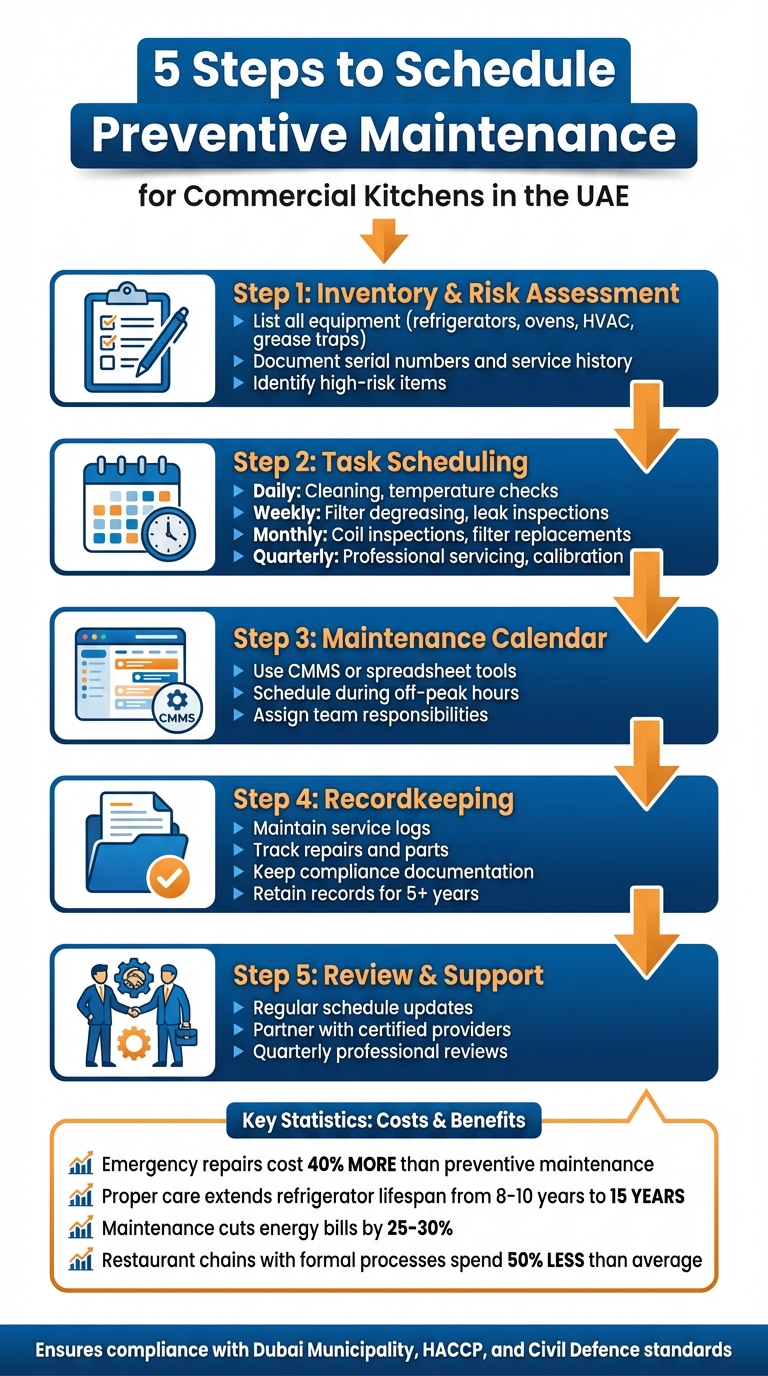
5 Steps to Schedule Preventive Maintenance for Commercial Kitchens in UAE
Step 1: Review Your Equipment and Identify Risks
Before diving into preventive maintenance, start by creating a complete inventory of your kitchen equipment. This includes everything from walk-in freezers and ovens to HVAC systems, grease traps, and exhaust fans. To keep things organised, group these items into categories like "Cold Line" (fridges, freezers, ice machines), "Cooking Line" (ovens, ranges, fryers), "Beverage Line", and "Washing Zones" (dishwashers, sinks). Make sure to document essential details such as the manufacturer, model, serial numbers, and service history. This record should also include past repairs, replaced parts, and the status of warranties or annual maintenance contracts (AMCs).
Once your inventory is ready, it’s time to assess the risks. Separate the equipment that’s critical to operations from those requiring routine maintenance. Pay extra attention to high-risk items, especially those that could jeopardise food safety, cause fires, or disrupt operations. For example, a refrigeration failure, a malfunctioning exhaust hood, or a broken primary oven could bring your kitchen to a standstill. In the UAE's harsh climate, refrigeration and HVAC systems demand extra care since they are constantly under pressure and are vital for maintaining food safety and ensuring staff comfort.
The importance of keeping your equipment reliable cannot be overstated:
"Equipment reliability is not a luxury but a need in the high-stakes setting of commercial kitchens."
– Shahid Beontop, Kitchen Warehouse UAE
Ignoring maintenance can hit your finances hard. For instance, replacing a compressor could cost anywhere between AED 1,285 and AED 18,350, and emergency repairs typically add around 40% to those costs.
To stay ahead of problems, train your staff to spot early warning signs like unusual noises or fluctuating temperatures. Equip them with digital tools that can record real-time data, helping to catch issues before they escalate. According to a 2024 report, 70% of surveyed restaurants plan to adopt digital maintenance solutions within the next two years to boost efficiency.
Step 2: Set Maintenance Tasks and Schedules
Group Tasks by Frequency
After identifying your equipment and risks, the next step is to organise maintenance tasks based on how often they need to be done. Here's a breakdown:
- Daily tasks: Focus on hygiene and safety - wipe down surfaces, check temperatures, and clean cooking ranges.
- Weekly tasks: Handle deeper cleaning, like degreasing filters, checking oil levels, and inspecting for leaks or unusual noises.
- Monthly tasks: Inspect condenser coils, replace air filters, check door gaskets, and clear grease traps.
- Quarterly tasks: Leave more complex jobs to professionals, such as deep cleaning refrigeration units, calibrating equipment, testing electrical components, and inspecting gas lines.
Consistent upkeep not only ensures performance but also improves energy efficiency. For instance, regular maintenance can extend a commercial refrigerator's lifespan from the typical 8–10 years to as much as 15 years.
Adjust Schedules for UAE Conditions
Operating in the UAE brings unique challenges, like high temperatures and dust levels, which demand more frequent maintenance:
- Condenser and evaporator coils: Clean these monthly to combat dust and heat buildup.
- HVAC air filters: Replace them every month or two to maintain airflow and reduce dust accumulation.
- Refrigerator and freezer door gaskets: Check daily to ensure they stay free of debris and maintain a proper seal against humidity.
Carewell Equipment Maintenance Solutions highlights that maintenance frequency should also consider how heavily equipment is used. Tailoring your schedule to these local conditions ensures your appliances perform reliably in the UAE's demanding environment.
Follow Manufacturer Guidelines and AMC Terms
Always refer to the OEM manual for specific maintenance tasks and intervals. Sticking to these guidelines ensures efficiency, protects warranties, and guarantees the use of genuine parts. If you have an Annual Maintenance Contract (AMC), align your schedule with its terms to take advantage of perks like 24/7 emergency support, priority service, and certified technicians.
For example, restaurant chains with a structured maintenance plan have reported savings of up to 50% compared to the industry average. Additionally, keeping detailed records of service dates, repairs, and part replacements is crucial for compliance during health and safety inspections.
Once you've determined the tasks and their frequency, the next step is to create a maintenance calendar and assign responsibilities to ensure everything runs smoothly.
Step 3: Create a Calendar and Assign Tasks
Set Up a Maintenance Calendar
Once you've grouped tasks by frequency (as outlined in Step 2), it's time to create a calendar that works around your busiest service times. Tools like Computerised Maintenance Management Systems (CMMS) make this easier by automating reminders and generating work orders when tasks are due. If you prefer a simpler approach, a well-organised spreadsheet can also do the trick.
Plan professional inspections and major maintenance during quieter hours to avoid service disruptions. For instance, if your restaurant typically closes on Monday afternoons, this might be the perfect time for quarterly deep cleaning of refrigeration units or gas line checks. In the UAE, many service providers offer flexible scheduling tailored to the hospitality industry’s demanding hours. Work with your Annual Maintenance Contract (AMC) provider to lock in times that minimise downtime. Once your schedule is set, assign these tasks to the right people to ensure everything runs smoothly.
Divide Tasks Among Your Team
Daily and weekly maintenance tasks, such as cleaning surfaces, filtering fryers, and checking for leaks, can be handled by your kitchen staff. Make sure they’re trained to spot early warning signs - like strange noises or fluctuating temperatures - so they can report issues before they escalate. For more complex monthly or quarterly tasks, like calibrating equipment, testing electrical systems, or inspecting gas lines, it’s best to rely on external professionals.
To keep everyone accountable, have your team initial checklists after completing their tasks. This simple system not only ensures that nothing is overlooked but also helps track recurring problems, making future maintenance easier. Restaurants that formalise this kind of process have seen maintenance costs drop by as much as 50% compared to the industry average.
Group Tasks to Reduce Downtime
To streamline operations further, group similar maintenance tasks together. For example, schedule all refrigeration-related maintenance on the same off-peak day. This way, your technician can handle multiple tasks in one visit, saving both time and money.
Given the UAE’s warm climate, it’s especially important to prioritise tasks like cleaning drains, filters, and exhaust systems. This helps prevent bacteria growth and pest issues, which can quickly become a problem in high temperatures. Whether you opt for software or a manual system, the ultimate goal remains the same: keep your kitchen running efficiently with as few interruptions as possible.
sbb-itb-19c3c9a
Step 4: Keep Records and Track Performance
Maintain Complete Maintenance Records
Keeping detailed records is a must for effective preventive maintenance and ensuring compliance across the UAE. Begin by compiling a comprehensive inventory of all kitchen equipment, from HVAC systems and plumbing to individual cooking appliances. For each item, maintain a log that records every service date, the specific tasks performed (like cleaning filters or lubricating components), and the technician responsible for the work. These logs are the backbone of tracking performance and staying compliant with regulations.
In addition to service logs, retain all documentation related to part replacements, invoices, annual maintenance contracts (AMCs), and parts receipts for at least 5 years, as mandated by UAE VAT Law. For real estate-related records, the retention period may extend to 15 years. The UAE permits electronic copies, provided they are exact, clear reproductions of the original documents and can be produced in English upon request by regulatory bodies.
Track Performance Metrics
Performance tracking is essential to identify areas for improvement. Keep an eye on key metrics such as equipment downtime, repair costs, and energy usage. One useful metric to monitor is PM Compliance, calculated as:
(Completed PM Tasks / Scheduled PM Tasks) × 100. Aim for at least 90% compliance to maintain efficiency and reliability.
"While intuition can provide a hunch or spark that starts you down a particular path, it's through data that you verify, understand, and quantify." - Harvard Business School
Organisations that leverage maintenance data effectively are 3 times more likely to improve their decision-making processes. If you're using tools like a CMMS or CAFM system, these can automate metrics tracking and provide real-time dashboards, allowing you to fine-tune schedules and allocate resources more efficiently. Reliable data also ensures you're always prepared to meet regulatory standards.
Meet Regulatory Requirements
Accurate and up-to-date records are critical for passing inspections by Dubai Municipality, HACCP auditors, and Civil Defence. Calibration certificates for precision instruments, like temperature probes, are particularly important for food safety compliance. Fire safety documentation, such as annual inspection tags for fire extinguishers and hood cleaning stickers, must also be current to avoid fines. Additionally, maintaining grease trap cleaning logs and refrigeration temperature records demonstrates adherence to health codes.
"Restaurant chains with a formalised maintenance process have expenditures 50% lower than average." - Andreea Dobrila, SaaS Copywriter & Conversion Optimiser
Step 5: Review and Work with After-Sales Support
Review and Update the Schedule Regularly
Keep your maintenance schedule up to date. For equipment under high stress, especially in the UAE's extreme conditions, consider scheduling professional maintenance quarterly or bi-annually. Hotels in Dubai using Annual Maintenance Contracts (AMCs) have reported 90% fewer breakdowns during the summer when adhering to these schedules.
Continuous internal reviews are equally important. Analyse performance data to identify trends. For instance, if your refrigeration units need repairs more often than expected, it might be time to shorten the maintenance intervals. Pay particular attention to door gaskets and drainage lines, as clogs are responsible for 43% of leaks in commercial cooling systems. Technician feedback is invaluable for refining maintenance schedules, ensuring they adapt to real-world conditions. This ongoing evaluation connects your initial planning with your after-sales support efforts.
Partner with After-Sales Service Providers
Use your performance data to collaborate with specialised after-sales service providers for advanced maintenance needs. While routine tasks can be handled by your staff, leave more complex repairs to certified technicians. Working with qualified providers ensures access to genuine manufacturer parts and often includes 24-hour repair services, which are crucial for maintaining the reliability and longevity of your equipment [10].
"Preventative maintenance contracts with qualified vendors ensure regular system check-ups, early issue detection, and priority service response, ultimately avoiding costly repairs and ensuring minimal downtime." - Kareem Azees, Head of Marketing, ResQ
Companies like Silverline Kitchens (https://silverlinekitchens.com) offer after-sales support tailored to the equipment they supply. Their services ensure that maintenance complies with manufacturer warranty terms and UAE standards, including HACCP, Dubai Municipality, and Civil Defence regulations. Such partnerships reduce downtime and keep your kitchen running smoothly. When choosing a provider, confirm they can handle specialised tasks like thermographic scans of electrical panels and refrigerant pressure optimisation. Aligning after-sales service with your regular reviews strengthens your overall maintenance strategy.
Maximise Preventive Maintenance Benefits
Regular maintenance and expert support not only save money but also ensure compliance with regulations. Restaurant chains with structured maintenance processes spend 50% less than the industry average. Professional servicing also boosts energy efficiency - simple steps like cleaning coils at night can cut DEWA (Dubai Electricity and Water Authority) bills by 25%. Neglecting maintenance, such as failing to clean dirty condensers or replace worn fan motors, can increase energy costs by up to 50%, making regular check-ups essential for protecting your budget.
Proper maintenance does more than save money - it extends equipment lifespan and helps you stay prepared for inspections. Dubai Municipality safety codes impose fines of AED 20,000 or more for violations related to food safety and temperature control. To avoid penalties and maintain your operating licence, keep all documentation up to date, including calibration certificates and fire safety inspection tags. A well-maintained schedule is an investment that ensures reliability, compliance, and peace of mind.
Conclusion: Why Preventive Maintenance Matters for UAE Kitchens
Taking the time to follow the five key steps - from conducting a risk assessment to working closely with after-sales support - creates a strong framework that helps avoid costly breakdowns and ensures compliance with local regulations. This structured approach is especially crucial given the demanding conditions faced by kitchens in the UAE.
The financial benefits are hard to ignore. Emergency repairs can be up to 40% more expensive, while regular maintenance can significantly extend the lifespan of equipment. For instance, commercial refrigerators can last 15 years instead of the typical 8–10 years, cutting replacement costs and lowering energy expenses by as much as 30%. This means reduced DEWA bills and a healthier profit margin, all while ensuring your kitchen stays fully operational during busy service hours - protecting both your reputation and customer satisfaction.
Staying compliant with HACCP, Dubai Municipality, and Civil Defence standards is non-negotiable. Routine maintenance ensures your kitchen is always ready for inspections, helping you avoid penalties that can exceed AED 20,000. Investing in preventive care guarantees smoother operations, greater efficiency, and much-needed peace of mind. More importantly, it strengthens your standing in the UAE market by showcasing your commitment to quality and reliability.
FAQs
How can preventive maintenance help lower energy costs in commercial kitchens?
Preventive maintenance plays a key role in cutting energy costs by keeping kitchen equipment running efficiently. When systems are well-maintained, they consume less energy to deliver the same level of performance, minimising waste caused by worn-out or neglected parts.
In addition to saving energy, regular maintenance helps extend the life of your equipment. This not only reduces the expense of frequent replacements but also ensures adherence to UAE energy efficiency standards.
What are the best tools for scheduling preventive maintenance tasks?
Using AI-powered CMMS software or preventive maintenance platforms makes managing and scheduling maintenance tasks far easier. These tools handle task scheduling automatically, monitor progress, create detailed reports, and can even forecast future maintenance requirements.
Many popular platforms stand out for their easy-to-use interfaces and advanced features, such as real-time alerts, asset tracking, and performance analytics. They’re designed to help keep your commercial kitchen in line with UAE regulations, minimise downtime, and boost overall efficiency.
Why is maintaining records important for regulatory compliance in the UAE?
Maintaining precise records is a cornerstone of regulatory compliance in the UAE. It ensures that all safety procedures, risk assessments, equipment inspections, and incident reports are thoroughly documented. These records play a vital role during audits and inspections, serving as proof of adherence to occupational safety and health standards.
In addition, proper recordkeeping aligns with UAE regulations, including HACCP guidelines and Dubai Municipality requirements. This not only helps your commercial kitchen meet legal obligations but also ensures it operates safely and efficiently.
