


Running a commercial kitchen in the UAE requires strict compliance with ventilation and hood system regulations to ensure safety, hygiene, and legal approval. Without proper systems, businesses face fines, operational delays, or shutdowns. Here’s what you need to know:
- Key Authorities: Approval from Dubai Municipality, Civil Defence, and adherence to the UAE Fire and Life Safety Code is mandatory.
- Ventilation Systems: Essential for managing heat, fumes, and grease while preventing fire risks. Systems must include grease filtration, fire-rated ducting, and make-up air to handle the UAE's extreme temperatures.
- Hood Types: Choose between Type I (for grease-heavy appliances) and Type II (for heat/steam). Proper sizing and placement are critical for compliance.
- Fire Safety: Grease filters and UL 300-compliant fire suppression systems are required for fire prevention.
- Airflow & Ductwork: Ducts must be fireproof, properly routed, and exhaust air must be balanced with make-up air to maintain pressure and comfort.
- Maintenance: Regular cleaning and inspections are necessary to prevent grease buildup and maintain compliance. Upgrades may be needed for layout changes or new regulations.
The approval process involves submitting detailed mechanical, electrical, and plumbing (MEP) drawings for inspection. Partnering with experts like Silverline Kitchens can simplify this process and ensure compliance from design to operation.
Regulations and Compliance Requirements
Failing to comply with regulations in the UAE can lead to severe consequences, including hefty fines, business shutdowns, or even criminal charges. Running a commercial kitchen without a fully operational extraction system isn't just a legal issue - it poses a serious threat to the safety of staff and customers. Here's a breakdown of the key regulatory bodies and standards you need to know.
Key UAE Codes and Authorities
In the UAE, several authorities oversee commercial kitchen ventilation. Dubai Municipality Food Control ensures that kitchens effectively extract heat, vapours, and fumes, while Civil Defence focuses on grease filtration systems and fire-resistant ductwork. Both organisations base their requirements on the UAE Fire and Life Safety Code of Practice, which sets the technical standards.
For kitchens using gas appliances, there's an additional safety measure: an interlocking system is required to automatically cut off the gas supply if the ventilation system fails. This is critical for preventing the dangerous build-up of carbon monoxide.
Approval and Inspection Requirements
Before opening a commercial kitchen, operators must go through a detailed approval process. This involves submitting documentation such as mechanical ventilation drawings, hood layout plans, and fire suppression system details. Civil Defence pays close attention to the exhaust system, particularly the grease filtration setup and the fire resistance of ducts.
Getting these approvals right the first time is essential. Incomplete or incorrect submissions can result in redesigns and delays, which can be costly. Companies like Silverline Kitchens simplify this process by handling everything - from preparing compliant documentation to working directly with Dubai Municipality and Civil Defence. This ensures approvals are obtained efficiently and without unnecessary setbacks.
sbb-itb-19c3c9a
Designing Ventilation and Hood Systems for UAE Commercial Kitchens
Type I vs Type II Commercial Kitchen Hoods: UAE Compliance Guide
When designing commercial kitchen ventilation systems in the UAE, compliance with local codes is essential for both safety and approval. The process starts in the planning phase, where selecting the right hood type, proper sizing, and effective filtration play a key role in meeting inspection standards and ensuring smooth operations.
Choosing the Right Hood Type
The first step is determining whether your kitchen needs a Type I or Type II hood.
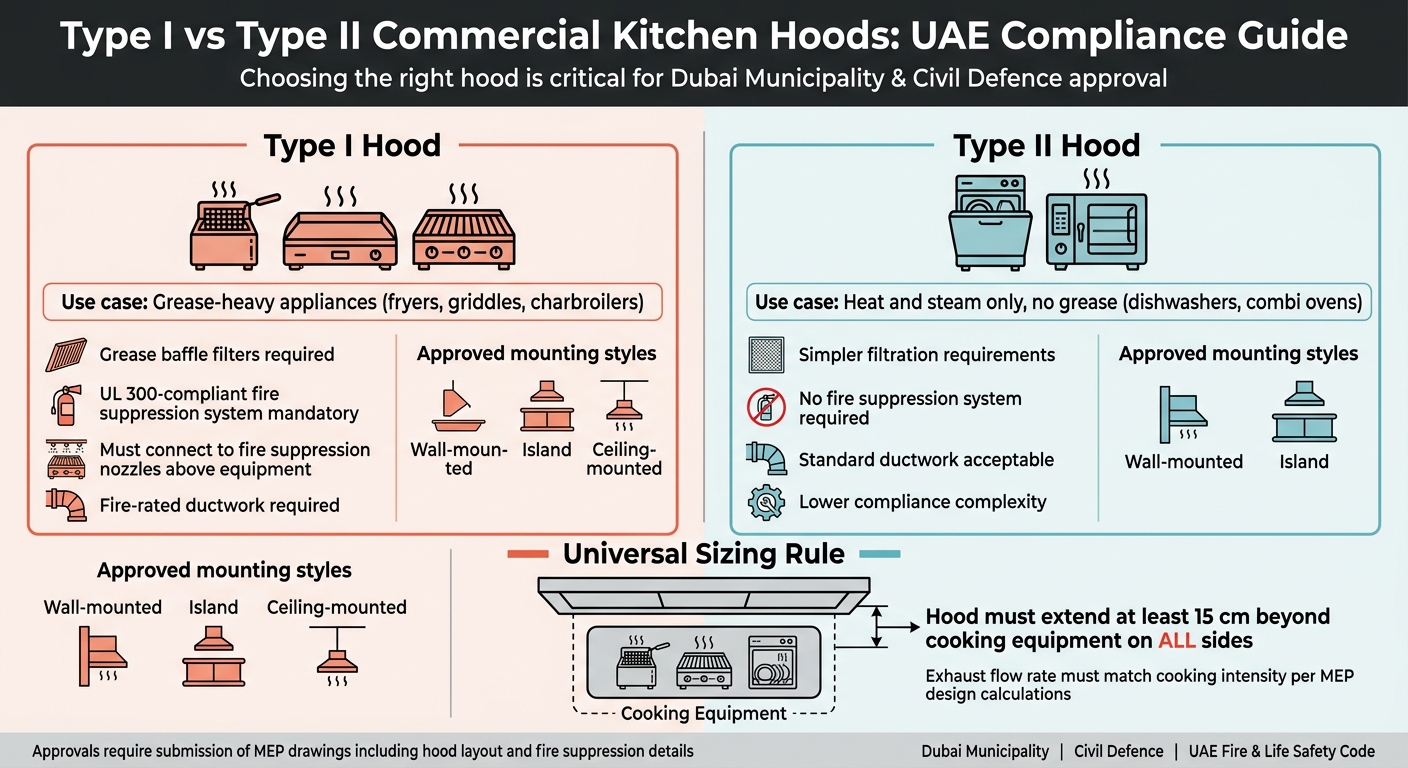
- Type I hoods are required for grease-heavy appliances like fryers, griddles, and charbroilers. These hoods include grease filters and must be connected to a fire suppression system.
- Type II hoods are designed for appliances that generate heat and steam but no grease, such as dishwashers or combi ovens. These have simpler requirements.
Next, consider the mounting style based on your kitchen layout:
- Wall-mounted hoods are ideal for equipment placed along a wall.
- Island hoods provide ventilation on all sides, making them suitable for central cooking stations.
- Ceiling-mounted hoods are an option for compact or smaller setups, although they are less common in high-volume kitchens.
After deciding on the hood type and mounting style, accurate sizing is essential to ensure proper fume capture and compliance.
Hood Sizing and Performance
Proper hood sizing is critical to avoid issues like incomplete fume capture or inspection failures. The hood should extend at least 15 centimetres beyond the cooking equipment on all sides. Additionally, the exhaust flow rate must align with the cooking intensity, as specified in the MEP design calculations. These calculations are a key part of the drawings submitted for municipal approval.
Grease Filtration and Fire Safety
Filtration and fire safety are equally important aspects of hood system design. UAE regulations require baffle filters and UL 300-compliant fire suppression systems for Type I hoods.
- Baffle filters are designed to separate grease particles from the airflow. They achieve this by directing air through angled metal baffles, causing grease to collect in a removable drip tray. These filters are durable, efficient, and easy to clean.
- The UL 300-compliant fire suppression system typically employs a wet chemical system with nozzles positioned above the cooking equipment. This system activates automatically to extinguish flames before they can spread through the ductwork. Given that more than 60% of restaurant fires originate from cooking equipment, Civil Defence inspectors pay close attention to these safety measures during the approval process.
Silverline Kitchens ensures that both filtration and fire suppression systems are designed and installed to align perfectly with the approved MEP drawings. Inspectors verify this alignment on-site before granting operational clearance.
Airflow Management and Ductwork Design
Once you’ve decided on the right hood type and filtration system, the next step is to ensure proper airflow. Without effective airflow management, even the best equipment can fail to meet compliance standards. In fact, poor airflow design is a leading cause of municipal inspection failures across the UAE.
Calculating Exhaust Airflow and Selecting Fans
Airflow requirements vary depending on factors like kitchen size, equipment density, staff numbers, and whether gas appliances are in use. Gas-powered equipment, in particular, demands extra attention. The ventilation system must provide enough air for complete combustion to prevent carbon monoxide build-up and meet safety standards.
When choosing exhaust fans, you’ll need to consider the duct length and static pressure - essentially, how much resistance the fan encounters when moving air. Fans designed for short, straight ducts won’t perform well with long, complicated duct runs. For commercial kitchens in the UAE, mechanical extraction systems must be sized correctly to handle the region’s high heat levels effectively.
Once you’ve calculated the exhaust airflow, the focus shifts to duct routing and selecting fire-safe materials.
Duct Routing and Fire-Rated Construction
The way ducts are routed is just as critical as the materials used. All exhaust ducts need to vent outside the building, and planning duct routes during the design phase is essential. Poorly planned routing is a common reason for inspection failures.
Ducts carrying grease-laden air are considered high fire-risk systems under the UAE Fire and Life Safety Code of Practice. Fireproofing is mandatory, and approved methods include vermiculite-gypsum sprays (offering up to 2 hours of fire resistance), fire-rated boards, and specialised fire wraps. These measures ensure compliance and enhance safety.
Additionally, all duct layouts must be included in the mechanical, electrical, and plumbing (MEP) drawings submitted for Dubai Municipality approval. During site inspections, authorities will verify that the installation matches the approved plans.
Proper duct routing also plays a key role in balancing airflow and integrating make-up air systems.
Balancing Airflow and Make-Up Air
Exhaust systems alone aren’t enough. If air is removed without being replaced, the kitchen can develop negative pressure. This can make doors difficult to open, allow cooking fumes to spread to other areas, and overwork the extraction system. A properly sized make-up air system replenishes the air removed by the exhaust.
In the UAE’s hot climate, make-up air is especially important. Without it, kitchens can become unbearably hot during the summer, creating unsafe working conditions. A well-balanced system brings in cooler air, removes excess heat, and avoids creating disruptive draughts. This balance not only keeps the kitchen comfortable for staff but also ensures compliance with local regulations - proving that efficiency and adherence to standards go hand in hand.
Maintenance and Upgrades for Continued Compliance
Keeping a ventilation system compliant isn't a one-and-done task - it requires consistent upkeep. In the fast-paced world of UAE commercial kitchens, grease buildup can happen quickly, turning into a serious fire hazard if not addressed.
Routine Cleaning and Inspection
According to NFPA 96 guidelines, the frequency of cleaning depends on your kitchen's activity level. High-volume kitchens or those using solid-fuel equipment, like wood-burning ovens, need monthly cleaning of hoods, filters, ducts, and exhaust fans. Moderate-volume kitchens should schedule cleanings every three months, while smaller, low-volume establishments like cafés can manage with semi-annual cleanings. Simply wiping down surfaces won’t cut it - grease can accumulate deep within ducts and around exhaust fans, blocking fire suppression nozzles and reducing airflow efficiency. Hiring a certified professional cleaning service ensures a thorough job. Pairing hood cleaning with fire suppression system servicing can further enhance safety and keep operations running smoothly. Regular cleaning also helps identify when upgrades might be necessary.
When to Upgrade or Retrofit Systems
While regular cleaning helps maintain system performance, upgrades become essential when your kitchen's needs evolve. Changes like heavier cooking techniques, adding high-output equipment, or expanding the kitchen can push your ventilation system beyond its original design limits. For instance, if your system was approved based on a specific layout and equipment list, even swapping an appliance for a higher-output model could conflict with approved MEP drawings. Additionally, regulatory updates - such as Dubai Municipality's 2025 focus on environmental compliance and improved workflow efficiency - may leave older systems out of sync with current standards. Lastly, if a municipal inspection flags issues like insufficient exhaust ducting or inadequate hood coverage, retrofitting becomes a necessity. Silverline Kitchens assists operators in navigating these changes by evaluating required upgrades, ensuring components meet approved plans, and managing the process until final inspection approval.
Conclusion
Meeting compliance standards isn't just a box to tick - it's critical for protecting your business licence, employees, and customers. Proper ventilation and effective hood systems are at the heart of this, and getting the right hood type, size, and grease filtration system is non-negotiable.
The stakes are high when it comes to inspections. A failed inspection can lead to costly delays and even require major reconstruction before operations can begin. To avoid these setbacks, it's crucial to design with compliance in mind from day one. This means submitting precise MEP and exhaust drawings before construction, sticking to approved layouts, and ensuring ducting is correctly routed to the building's exterior - all of which play a decisive role in passing inspections.
Silverline Kitchens offers comprehensive support to food businesses across the UAE, guiding them through every step of the process - from designing compliant kitchens and preparing MEP drawings to installation and ongoing maintenance. Whether you're launching a new kitchen or upgrading an existing one to meet current regulations, partnering with experts can make the entire compliance journey far smoother.
FAQs
What documents do I need for Dubai Municipality and Civil Defence approval?
To get the permits needed for your kitchen, you’ll need to provide approval documents from Dubai Municipality and Civil Defence. These documents must confirm that your kitchen meets all the required standards for safety, hygiene, ventilation, and fire safety.
How do I know if my kitchen needs a Type I or Type II hood?
To figure out the right type of hood for your kitchen, think about the kind of cooking equipment you use and whether grease vapours are part of the equation.
- Type I hoods are designed for appliances such as fryers, grills, and woks that create grease vapours.
- Type II hoods work for equipment like steamers or dishwashers, which release heat or humidity but no grease.
In the UAE, fire safety is a top priority, so Type I hoods are often mandatory for any equipment that produces grease vapours.
How often should kitchen exhaust hoods and ducts be professionally cleaned in the UAE?
Kitchen exhaust hoods and ducts in the UAE need professional cleaning every 3 to 12 months, depending on how often they're used. This routine cleaning not only keeps them running efficiently but also ensures they meet local safety standards.
